FORUM: ‘‘Forests and Economies" International Day of Forests 2026. The FAO is highlighting the profound inter-linkages between forests and water and their importance for healthy economies and gender equality. The theme will focus on the essential roles of forests in driving economic prosperity. These roles go well beyond income and jobs from forest production and the trade of renewable raw materials and foods: forests also sustain family and community agriculture, enhance agricultural productivity, and safeguard healthy watersheds. With many countries seeking to move toward a sustainable bio-economy, forest products offer nature-based solutions as replacements for carbon-intensive materials while generating new economic opportunities. Forests are indispensable for healthy economies – today and for future generations. From vital ecosystem services associated with water, climate and soils, to ecotourism, energy supply and raw materials, forests contribute trillions to the global economy and support millions of jobs worldwide. Forest landscapes reduce the cost of producing clean water and, by storing carbon and moderating temperatures, help protect economies from climate-related disasters that can cost billions. An estimated USD 44 trillion – more than half of world gross domestic product – depends on nature, including forests. The emerging bioeconomy has sustainably managed forests at its heart. Sustainably produced wood and bamboo can be used as renewable replacements for carbon-intensive materials such as steel, concrete and plastics. Demand for forest products is at an all-time high, with about 4 billion cubic meters of wood produced per year. Based on current trends, this volume is projected to rise by as much as 1 billion cubic meters of industrial round-wood by 2050 as the population grows and the world seeks to replace carbon-intensive products with renewables – adding to the imperative of ensuring sustainable forest management. Non-wood forest products, including foods, medicines, resins, ornamental plants and fodder, are worth at least USD 9.41 billion per year globally and have enormous potential to grow. Up to 5.8 billion people worldwide use non-wood forest products to support their livelihoods and well-being. Fuelwood and charcoal provide essential energy for cooking and heating to more than 2 billion people worldwide and support the livelihoods of hundreds of millions more. Healthy forests mean healthy communities. Forests are the economic backbone of many rural communities by supplying foods, medicines, fuel and income, as well as benefits such as cooling effects, clean water and soil stabilization. Investing in forest conservation, restoration and sustainable use pays off. Forest loss is expensive, leading to soil erosion, flooding, costly climate impacts and productivity loss that often far outweigh short-term economic gains. Learn more about FAO's work in forestry and make sure to catch FAO's key messages to mark the day. Follow the conversations #IntlForestDay, #SustainingForests, #21March, #Forestsandeconomies.

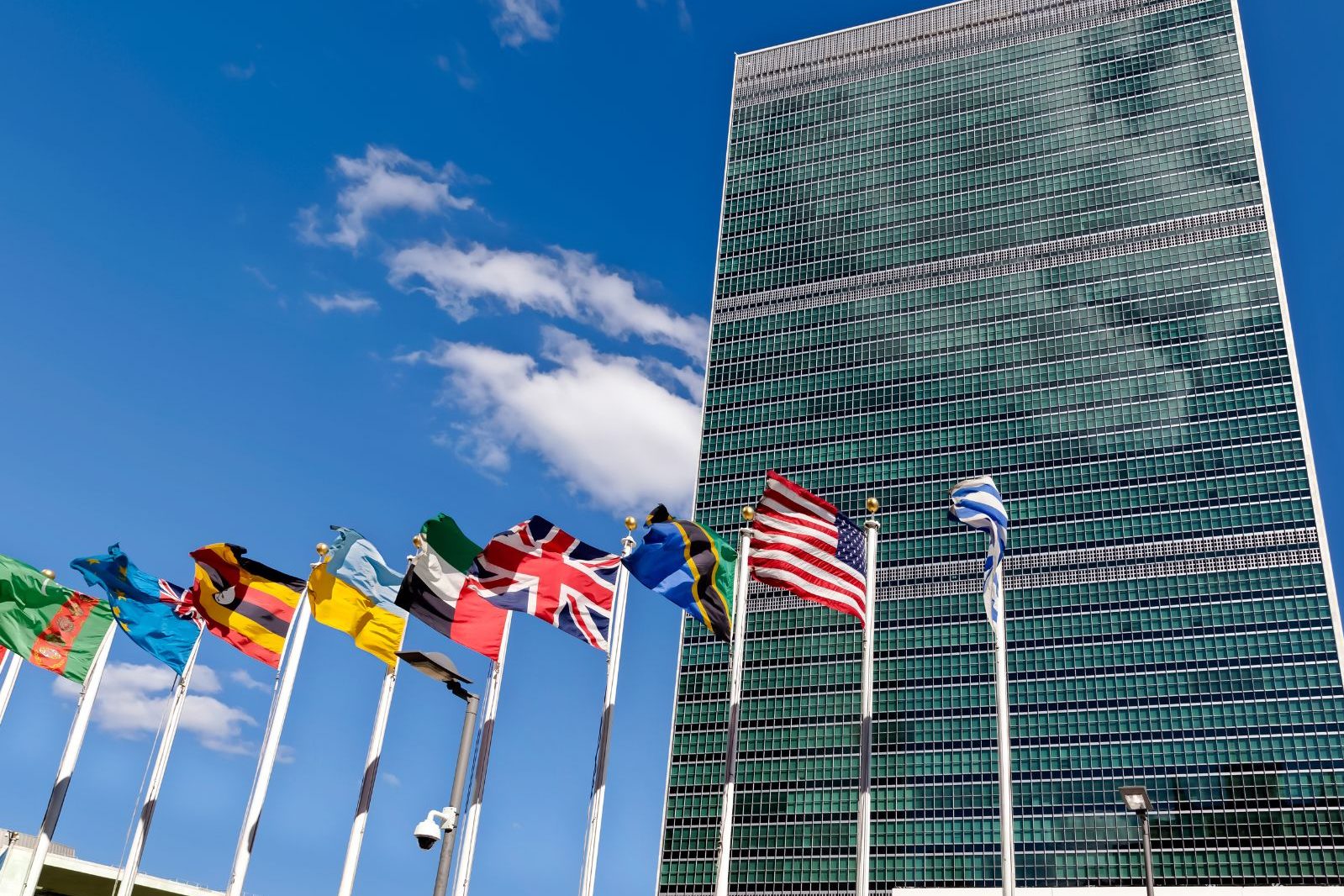
EVENTS: AT UNHQ in New York; On Tuesday, March 24th, 2026 starting at 15:00 PM EST, The IDF 2026 observance will highlight the need to better recognize forests as engines of inclusive growth and well-being, and to scale up policies, partnerships and investments that place forests at the heart of resilient and sustainable economies.Forests are fundamental to sustainable and inclusive economies. They support livelihoods, generate employment, reduce poverty and strengthen food systems for billions of people worldwide. For many rural and forest-dependent communities, forests are a primary source of income, nutrition, energy and resilience in times of crisis. Beyond jobs and livelihoods, forests function as economic infrastructure. They provide essential ecosystem services — including climate regulation, water security, soil protection and disaster risk reduction — that underpin productivity across agriculture, energy, industry and cities. These benefits sustain economic growth while safeguarding natural capital for future generations. Yet, despite their central role, forests remain widely undervalued and under-financed. Investment in forests falls far short of what is needed to unlock their full economic, social and environmental potential. Closing this gap is critical to advancing poverty eradication, food security and sustainable development. The General Assembly requested the United Nations Forum on Forests Secretariat, in collaboration with the Food and Agriculture Organization of the United Nations to facilitate the implementation of the International Day of Forests. Watch the livestream!
AT UNHQ in New York; On March 21st; The DESA's UN Forum on Forests Secretariat will organize a webinar to inform participants on the upcoming special event to celebrate the International Day of forests 2026. The event will bring together policymakers, researchers, civil society, Indigenous leaders, youth, and major international organizations to discuss innovative and traditional ways forests contribute to food security and sustainable agriculture. The programme includes high-level opening remarks, a panel discussion featuring global experts, and statements from member states and stakeholders. Through this observance, we aim to raise awareness, promote sustainable forest management, and encourage actionto protect the crucial relationship between forests and food systems. Learn more about the iFD206 high-level event and Register to participate!

At FAO HQ In Rome, Italy, Both FAO’s events are online in six languages.
AT FAO HQ; on Friday, March 19th, from 11:00–12:40 (UTC+1) will be held the High-level hybrid joint event which will celebrate the International Day of Forests and World Water Day 2026: The high-level event will be opened by FAO Director-General QU Dongyu at 11.00 (UTC+1). Special guest, singer, songwriter and record producer Elisa, will speak about “when forests and water become music”.
Agenda Programme
11:00– 11:10 - Opening video message
QU Dongyu, Director-General, FAO
11:10 – 11:25 “Where forests and water become music”
Elisa, singer, songwriter and record producer
11:25 – 11:40 - Keynote speech, “An optimist’s guide to trees and water”
- Douglas Sheil, Professor, Forest Ecology and Forest Management, Wageningen University;
Senior Research Associate, CIFOR-ICRAF
Video, “Forests and water”
11:40 – 12:10 Country experiences
- Her Excellency Inés Manzano, Minister of Environment and Energy, Ecuador
- Her Excellency, Ambassador Julianne Cowley, Head of Mission for Australia
- His Excellency, Ambassador Junimart Girsang, Indonesian Ambassador Extraordinary and Plenipotentiary to Italy
- Mr Staffan Norin, Director General of the Swedish Forest Agency
12:10 – 12:15 - World Water Council
- Mr Loïc Fauchon, President of the World Water Council
12:15 – 12:25 Perspectives from women farmers
- Ms Nadia Savino, farmer, Chief Executive Officer of BiAzienda Agricola BioLu, and member, Slow Food Italy
12:25 – 12:30 Closing remarks
- Godfrey Magwenzi, Deputy Director-General, FAO
12:30 – 12:40 - Musical performance
- Maestro Antonio Cortesi, cellist

Agenda programme
14:15 – 14:30 - Opening
- Her Excellency, Ambassador Julianne Cowley, Head of Mission for Australia
- His Excellency, Ambassador Junimart Girsang, Indonesian Ambassador Extraordinary and Plenipotentiary to Italy
- Mr Staffan Norin, Director General of the Swedish Forest Agency
12:10 – 12:15 - World Water Council
- Mr Loïc Fauchon, President of the World Water Council
12:15 – 12:25 Perspectives from women farmers
- Ms Nadia Savino, farmer, Chief Executive Officer of BiAzienda Agricola BioLu, and member, Slow Food Italy
12:25 – 12:30 Closing remarks
- Godfrey Magwenzi, Deputy Director-General, FAO
12:30 – 12:40 - Musical performance
- Maestro Antonio Cortesi, cellist
AT FAO HQ; on Friday, March 19th, 14:15–16:00 (UTC+1) will be held the Hybrid technical session on forests and economies - sustainable production and bio-economy pathways Co-organized by FAO and the Group of Friends on Bio-economy for Sustainable Food and Agriculture, the event will bring together representatives of the public and private sectors, including producer associations, to highlight the diversity of sustainable forest production and the potential of the forest-based bioeconomy.
Agenda programme
14:15 – 14:30 - Opening
- Mr Zhimin Wu, Assistant Director-General and Director of the Forestry Division, FAO
- Mr Kaveh Zahedi, Assistant Director-General and Director of the Office of Climate Change, Biodiversity and Environment, FAO
Co-Chairs of Group of Friends of the Bioeconomy:
- H.E. Ms Carla Barroso Carneiro, Ambassador, Permanent Representative of Brazil to FAO, IFAD and WFP
- H.E. Mr Martin Selmayr, Ambassador, Head of the Delegation of the European Union to the Holy See, the Sovereign Order of Malta, the UN Organizations in Rome and the Republic of San Marino
14:30 – 14:45 - Understanding forest economies and bioeconomy opportunities
- Mr Sven Walter, Senior Forestry Officer, FAO Forestry Division
- Ms Silvia Melegari, Secretary General, European Confederation of Woodworking Industries (CEI Bois) and Vice Chair of FAO’s Advisory Committee on Sustainable Forest-based Industries (ACSFI) (online)
14:45 – 15:20 - Country, regional and global experiences (TBC)
- Mr Kaveh Zahedi, Assistant Director-General and Director of the Office of Climate Change, Biodiversity and Environment, FAO
Co-Chairs of Group of Friends of the Bioeconomy:
- H.E. Ms Carla Barroso Carneiro, Ambassador, Permanent Representative of Brazil to FAO, IFAD and WFP
- H.E. Mr Martin Selmayr, Ambassador, Head of the Delegation of the European Union to the Holy See, the Sovereign Order of Malta, the UN Organizations in Rome and the Republic of San Marino
14:30 – 14:45 - Understanding forest economies and bioeconomy opportunities
- Mr Sven Walter, Senior Forestry Officer, FAO Forestry Division
- Ms Silvia Melegari, Secretary General, European Confederation of Woodworking Industries (CEI Bois) and Vice Chair of FAO’s Advisory Committee on Sustainable Forest-based Industries (ACSFI) (online)
14:45 – 15:20 - Country, regional and global experiences (TBC)
- H.E. Ms Jhenifer María Mojica Flórez, Ambassador Permanent Representative of Colombia to the FAO, Permanent Mission of Colombia to the United Nations Organizations in Rome
- Mr. Günter Walkner, Minister Plenipotentiary Permanent Representative of the Republic of Austria to FAO
- Mr Mitsuaki Shindo, Minister-Counsellor, Deputy Permanent Representative of Japan to the UN Agencies for Food and Agriculture in Rome
- Ms. Inez Varoto Correa, General-Coordinator for Environmental Negotiations, Ministry of Agrarian Development and Family Farming, Brazil
- Mr Gregory Smith, Director, Economic Analysis Division, Trade, Economics and Industry Branch, Canadian Forest Service - Natural Resources Canada, Government of Canada (online)
- Mr Damian Sulumo, Mviwaarusha – Network of farmers and pastoralists from Arusha Region, Tanzania
- Ms Elisabeth Hidén, Swedish Farmers’ Youth Chapter and European Council of Young Farmers, Sweden
15:20 – 15:40 - Interactive session: What are the key actions needed or underway to advance the forest bioeconomy in your area? Led by moderator
15:40 – 15:45 - Closing remarks
Mr Pierre Taty, COFO Chair, the Congo (online)

At UNHQ in New York, on May 11-15th, 2026 will be held the 21st Session of the UN Forum on Forests. The United Nations Forum on Forests is a functional commission of the United Nations Economic and Social Council (ECOSOC) with universal membership. Since its establishment in 2000, the Forum has set many milestones including the first United Nations Forest Instrument in 2007, the Global Forest Financing Facilitation Network (GFFFN) in 2015, and adoption of the first United Nations Strategic Plan for Forests 2030 and its six Global Forest Goals in 2017. Learn more about the upcoming 21st Session of the United Nations Forum on Forests (UNFF21).
CAMPAIGN MATERIALS: Today, we highlight the need to recognize forests as engines of inclusive growth and well-being — and to scale up policies, partnerships and investments that place forests at the heart of resilient economies. It’s up to us to safeguard these precious natural resources. Participate to the 2026 Campaign "Forests and economies" by raising awareness about forests.logo and banners are available in multiple languages. Check out the International Day of Forest social media kit for more resources.
- Mr. Günter Walkner, Minister Plenipotentiary Permanent Representative of the Republic of Austria to FAO
- Mr Mitsuaki Shindo, Minister-Counsellor, Deputy Permanent Representative of Japan to the UN Agencies for Food and Agriculture in Rome
- Ms. Inez Varoto Correa, General-Coordinator for Environmental Negotiations, Ministry of Agrarian Development and Family Farming, Brazil
- Mr Gregory Smith, Director, Economic Analysis Division, Trade, Economics and Industry Branch, Canadian Forest Service - Natural Resources Canada, Government of Canada (online)
- Mr Damian Sulumo, Mviwaarusha – Network of farmers and pastoralists from Arusha Region, Tanzania
- Ms Elisabeth Hidén, Swedish Farmers’ Youth Chapter and European Council of Young Farmers, Sweden
15:20 – 15:40 - Interactive session: What are the key actions needed or underway to advance the forest bioeconomy in your area? Led by moderator
15:40 – 15:45 - Closing remarks
Mr Pierre Taty, COFO Chair, the Congo (online)
At UNHQ in New York, on May 11-15th, 2026 will be held the 21st Session of the UN Forum on Forests. The United Nations Forum on Forests is a functional commission of the United Nations Economic and Social Council (ECOSOC) with universal membership. Since its establishment in 2000, the Forum has set many milestones including the first United Nations Forest Instrument in 2007, the Global Forest Financing Facilitation Network (GFFFN) in 2015, and adoption of the first United Nations Strategic Plan for Forests 2030 and its six Global Forest Goals in 2017. Learn more about the upcoming 21st Session of the United Nations Forum on Forests (UNFF21).
CAMPAIGN MATERIALS: Today, we highlight the need to recognize forests as engines of inclusive growth and well-being — and to scale up policies, partnerships and investments that place forests at the heart of resilient economies. It’s up to us to safeguard these precious natural resources. Participate to the 2026 Campaign "Forests and economies" by raising awareness about forests.logo and banners are available in multiple languages. Check out the International Day of Forest social media kit for more resources.