FORUM:”
Amplifying the leadership of persons with disabilities for an inclusive and sustainable future.“
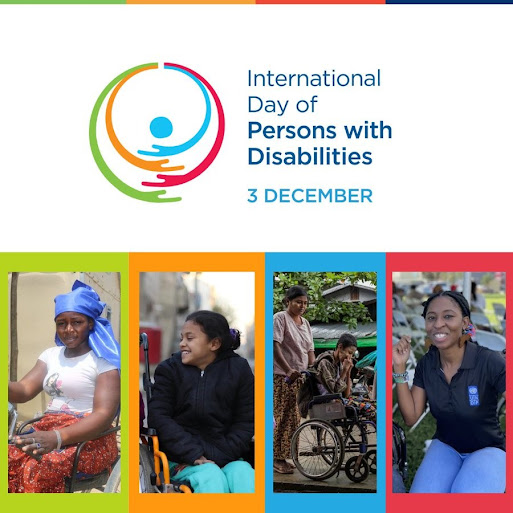
International Day of Persons with Disabilities 2024.
The leadership of persons with disabilities is epitomised by the global disability rights movement’s slogan “nothing about us without us”. It connotes the basic requirements of participation, representation and inclusion and calls for persons with disabilities to actively shape the conditions of their lives. One of the priorities of the global disability agenda is to advance the agency and leadership of persons with disabilities. In the past decades, persons with disabilities and organisations of persons with disabilities (OPDs) have already championed for the changes in their communities, and have been leading many of the community-led initiatives not only to advance their own rights, and wellbeing but also promoting inclusive development for instance enabling universal access to basic services by all; they have done so by taking both targeted and mainstreaming approaches to disability inclusion through, among others, consultation, data collection and analysis, and support with advocacy and accountability efforts.
Global leadership: Breakthroughs achieved.
The global leadership of persons with disabilities in multi-lateral and intergovernmental processes and frameworks to achieve human rights, peace and development, has led to such breakthrough achievements as the Convention on the Rights of Persons with Disabilities (CRPD) and UNSC Resolution 2475. The Convention on the Rights of Persons with Disabilities (CRPD) stands as a landmark treaty incorporating development objectives for persons with disabilities in the international human rights frameworks. The drafting process of the CRPD prominently featured extensive leadership and engagement of the global disability community, along with the mobilization of broad networks of civil society, working side-by-side with the intergovernmental community. This process is widely recognized as one of the most significant in the realm of human rights treaties, with individuals with disabilities worldwide, including from the Global South, assuming pivotal leadership roles. Building upon the United Nations’ longstanding commitment to inclusive society and development and the normative force of the CRPD, the outcomes of the 2015 Sendai Framework on Disaster Risk Reduction and its follow ups have underscored the leadership of persons with disabilities as a central issue in crisis management. Most recently, bringing this prominent leadership of persons with disabilities to the international humanitarian community, United Nations Security Council Resolution 2475 represents a momentous milestone as the first instance in which the Security Council has specifically addressed the situation and protection of individuals with disabilities in peace and security. This year, the UN General Assembly adopted a resolution entitled “Inclusive development for and with persons with disabilities”, calling upon Member States, the UN system and other partners to advance the implementation of the 2030 Agenda and the CRPD, through addressing the disability-inclusive response to the challenges facing the world while mainstreaming the rights, well-being and perspectives of persons with disabilities. The resolution specifically focuses on promoting the participation and perspectives of persons with disabilities and continues to advance disability inclusion across the pillars of the UN’s work, with key components to render the disability inclusion a central issue in the global agenda.
Opening the corridors of power: opportunities for leadership of persons with disabilities.The
observance of the International Day of Persons with Disabilities 2024 (IDPD 2024) takes place against the backdrop of pivotal global developments, most recently the Summit for the Future. The Pact for the Future, alongside the Global Digital Compact and the Declaration for Future Generations, aim to reinvigorate the multilateral system, renew commitments under the 2030 Agenda and transform global governance to better meet the challenges of today to safeguard a resilient future. These frameworks are aligned with inclusive and sustainable development goals and present opportunities to strengthen disability rights. Notably, there are several cross-cutting areas where concrete actions Member States have committed to, promoting the inclusion and empowerment of persons with disabilities, including in the areas of armed conflict; science, technology and innovation; young people and social inclusion and integration; youth participation; and accessibility and disability inclusion within the UN system. Likewise, the upcoming Second World Summit for Social Development in 2025 offers another key moment to address gaps and recommit to the Copenhagen Declaration on Social Development and the Programme of Action and its implementation, as well as give momentum towards the implementation of the 2030 Agenda for Sustainable Development. Looking forward to 2025, the observance of the
IDPD 2024 presents an opportunity to amplify the role of persons with disabilities in reinforcing the social pillar of sustainable development and underscoring that economic growth, while essential, is not sufficient on its own to address the deep-rooted and structural inequalities that persist. These key global Summits will complement one another in providing a continuous roadmap toward disability-inclusive and sustainable peace and development. By emphasising this complementarity, the
IDPD 2024 aims to
underscore the importance of leveraging the leadership of persons with disabilities to ensure disability-inclusive and sustainable peace and development for all. Follow the conversations with the hashtags:
#EveryoneIncluded,
#3December,
#DisabilityInclusionStrategy,
#DisabilityDay,
#IDPD on social medias.
Statement of the United Nations Secretary-General on the International Day of the Persons with disabilities 2024; December 3rd.
This year’s International Day of Persons with Disabilities reminds us that we need the leadership
of persons with disabilities more than ever.
Persons with disabilities already disproportionately bear the brunt of the crises scarring our
world — from conflicts and climate disasters, to poverty and inequalities — because of
persistent discrimination, stigma, and barriers to basic rights and services.
But they are also often denied their right to contribute to solutions to these crises.
Through the recently adopted Pact for the Future, the countries of the world committed to
correcting this injustice for persons with disabilities of all ages, for present and future
generations.
This includes recognising the essential role of persons with disabilities in shaping the future of
digital and assistive technologies — such as those powered by artificial intelligence — driving
change across communities, and advocating for their rightful place in decision-making processes
that affect their lives.
Next year’s World Summit for Social Development will be a key moment to carry these and
other commitments forward.
In every community, persons with disabilities are changemakers and peacemakers.
They are also leaders.
On this important day, and every day, let’s work with persons with disabilities to achieve an
inclusive and sustainable future for all people.
United Nations Secretary-General.
Statement of the UNDP Administrator on the International Day of the Persons with disabilities 2024; December 2nd.
AGENDA PROGRAMME
10:00 – 10:05 – Welcome and IntroductionIntroduction to the International Day and setting out the theme by the Co-Moderators.
Policy overview of the global disability agenda: key achievements and milestones.
10:05 – 10:15 – Remarks by the Co-Facilitators of General Assembly Resolution on “Inclusive development for and with persons with disabilities”H.E. Mr. Antonio M. Lagdameo, Permanent Representative, Permanent Mission of the Republic of the Philippines to the United Nations.
H.E. Mr. Hussein A. Kattanga, Permanent Representative, Permanent Mission of the United Republic of Tanzania to the United Nations (TBC).
10:15 – 10:20 – Remarks by the President of the Conference of the State Parties to the Convention on the Rights of Persons with Disabilities (COSP)H.E. Mr. Sugeeshwara Gunaratna, Charge d’Affaires and Deputy Permanent Representative of the Permanent Mission of Sri Lanka to the United Nations.
10:20 – 10:25 – Remarks by Chairperson of the Committee on the Rights of Persons with
DisabilitiesMs. Gertrude Oforiwa Fefoame, Global Advocacy Manager for Social Inclusion, Sightsavers.
10:25 – 10:30 – Remarks by Special Rapporteur on the rights of persons with disabilities(via video message)
Ms. Heba Hagrass.
10:30 – 10:35 – Remarks by International Disability Alliance (IDA)
Mr. José Viera, Executive Director (interim), IDA.
10:35 – 10:40 – Closing
Mr. Charles Katoanga, Director, Division of Inclusive Social Development, DESA.
Co-Moderators: Ms. Mina Mojtahedi, Disability Inclusion Team Lead, Executive Office of the
Secretary-General and Dr. Mohammed Ali Loutfy, Disabled People’s International (DPI) representative to the United Nations in New York, Director for Capacity Building and Advocacy
at G3ict – Global Initiative for Inclusive ICTs.
COFFEE BREAK: 30 MINUTES (approx.)
11:30 –11:35 – Artistic contribution
Video message by Mr. Takafumi Yuki, a 5 Times International Emmy-nominated producer; Director of the Film “Mother’s Touch”, introduced by Ms. Akiko Ito, Chief, Programme on Disability, Division of Inclusive Social Development, DESA.
Panel Discussion (virtual), 11:35 am – 1:15 pm (EST):
11:35 – 11:40 – Welcome and Introduction
Short round of introductions of the panel by the moderator and setting the scene for the discussion.
11:40 – 11:55 – From the global to the local: Strengthening social development priorities for,
with and by persons with disabilities
Ms. Maryangel García Ramos Guadiana, Executive Director, Women Enabled International.
Ms. Abia Akram, CEO, National Forum of Women with Disabilities and Chair, Global Forum on the Leadership of Women with Disabilities.
Ms. Caroline Casey, Founder, The Valuable 500.
This segment will discuss the upcoming Second World Summit for Social Development, scheduled to take place in Doha, Qatar in 2025, an important forum for persons with disabilities to advocate for and shape inclusive social development, in partnership with other stakeholders.
11:55 – 12:10 – From the global to the local: Leadership of persons with disabilities promoting
international peace and security
Mr. Giles Duley, United Nations Global Advocate for persons with disabilities in conflict and peacebuilding situations (via video message).
Mr. Michael Ashley Stein, Co-founder and Executive Director of the Harvard Law School Project on Disability, Visiting Professor at Harvard Law School.
Persons with disabilities have been a leading authority and contributors to the development of international law and policy furthering the protection and inclusion of persons with disabilities in the context of peace and security. This segment will highlight important new developments in this field.
12:10 – 12:25 – From the global to the local: Advancing disability-inclusive sustainable
development through climate change advocacy and leadership.
Ms. Daphne Frias, North American Regional Focal Point for Sustainable Development Goal 16 at the UN Major Group for Children and Youth.
Mr. Nir Shrestha, UNESCO Global Youth Grant laureate.
Dr. Takashi Izutsu, Empower Youth Inclusion Project, University of Tokyo.
Recent global climate change conferences have demonstrated a growing presence of disability rights activists in the climate change agenda, particularly of youth with disabilities. The discussion will present ideas and initiatives that harness the promise of young persons with disabilities in order to achieve sustainable peace and development by urgently tackling the climate crisis.
12:25 – 12:30 – Global Digital Compact and the leadership of persons with disabilities: the
cross-cutting perspective on the Technologies and the Pact for the Future
Mr. Axel Leblois, Founder and President Emeritus, The Global Initiative for Inclusive ICTs.
12:30 – 12:45 – Q&A session
12:45 – 12:50 – Concluding remarks and wrap-up
Wrap-up of main points raised by the panellists and takeaway messages from the discussion by the moderator.
12:50 – 13:00 – Closing
Moderator shares final remarks, concludes the discussion and thanks the panellists.
Moderator: Ms. Mina Mojtahedi, Disability Inclusion Team Lead, Executive Office of the Secretary-General.
Artistic Contribution: Performance by Heidi Latsky Dance (in-person), UN visitors
information desk, General Assembly building, 1:15pm – 2:30pm (EST):
13:15 -14:30 Performance by Heidi Latsky Dance (HLD).
Heidi Latsky Dance (HLD) is a physically integrated dance company that challenges conventional ideas of beauty and ability. Founded in 2001, HLD includes both disabled and non-disabled dancers in its critically acclaimed works such as “GIMP” and “ON DISPLAY.” HLD is dedicated to promoting inclusivity through performance, outreach, and advocacy.
Guiding Questions (Panel Discussion):
From the global to the local: Strengthening social development priorities for, with and by persons with disabilities
- How can we best ensure the meaningful participation of leaders with disabilities, including from the Global South, in line with “nothing about us without us”, during the upcoming Second World Summit for Social Development?
- How can we leverage the Second World Summit for Social Development to strengthen the inclusiveness of social development, from the global to the local?
From the global to the local: Leadership of persons with disabilities promoting international peace and security.- Why is international humanitarian law and international human rights law relevant to persons
- with disabilities? How have their experiences shaped the development of this body of law over the years?
- What emerging developments in international peace and security particularly relate to persons with disabilities?
- How have communities of persons with disabilities led on these developments?
From the global to the local: Advancing disability-inclusive sustainable development through climate change advocacy and leadership
- What unique experiences, ideas and skills do young leaders with disabilities bring to the climate change movement?
- How can we amplify their leadership for achieving progress on the SDGs?
- How can we ensure that disability inclusion, accessibility and participation are prioritised for generations of persons with disabilities to come?