FORUM: “Unpacking STEM Careers: Her Voice in Science.“ International Day of Women and Girls in Science 2025. Science in the 21st century is dynamic, collaborative and diverse, serving as a powerful tool for engaging with the world and tackling global challenges. Today, a background in science opens doors to a wide range of career opportunities that extend well beyond traditional laboratory professions. Moreover, the profiles of scientists are far more varied than the conventional stereotypes suggest. From a gender perspective, pioneers like Marie Curie have demonstrated that women can shape and lead scientific disciplines, but her legacy as one of the few widely recognized female figures in science highlights the urgent need for greater progress. Therefore, this important anniversary for the IDWGS aims to reflect the expansive reach of science and celebrate the contributions of women in science worldwide. Follow the conversations with the hashtags: #11February, #WomeninScience; #GirlsinScience.

Afternoon session (2.00 pm – 5.30 pm): Building on the UNESCO Call to Action “Closing the Gender Gap in Science”, we will explore together the critical role of women in scientific innovation and discuss the need for inclusive media representation to challenge gender stereotypes in Science, Technology, Engineering and Mathematics (STEM) careers.
Evening session (6.30 pm – 8.30 pm): The celebrations will continue at 6:30 p.m. with the screening of the documentary “Women of Science: These women who change our lives”, directed by Safia Kessas and produced by Iota Production, with the support of the Radio Télévision Belge Francophone (RTBF), the European Broadcasting Union (EBU), and the Wallonia-Brussels Federation to UNESCO. Get the agenda programme and the flyer of the event!
Building on the 2024 UNESCO Call to Action “Closing the Gender Gap in Science” and aligned with the International Decade of Sciences for Sustainable Development (2024 – 2033), speakers will explore two key aspects during this unique event:
Roundtable 1) Unpacking STEM Careers: The Power of Diversity and Inclusion in Shaping the Future.
Speakers from diverse backgrounds will share their inspiring journeys in Science, Technology, Engineering and Mathematics (STEM), reflecting on the paths that led them to their current professional roles and the passion that drives them forward. The discussion will also highlight the critical importance of diverse perspectives, including those of women, in STEM fields, in line with the communication campaign “Imagine a world with more women in science”, launched for this special anniversary with the support of Canada’s International Development Research Centre (IDRC). The roundtable will emphasize the many opportunities a STEM background can provide and show that every unique journey – while embracing one’s identities – holds the keys to contribute to advancing science and building a more equitable world.
Roundtable 2) Her Voice in Science: Inspiring Change in the Media
The event will also delve into how women in science and the diversity of scientific career pathways can be more effectively represented across various forms of mass media, ranging from traditional press and broadcast media to digital and out-of-home media. Speakers will discuss how representation in the media can enhance public trust and understanding of science, while reshaping societal perceptions of gender roles within the field. Engaging with the audience, they will explore actionable next steps for building a more inclusive scientific community in the long term, where every voice is valued.
Documentary screening
Following the roundtables, the celebrations at UNESCO Headquarters will continue with the screening of the documentary “Women of Science: These women who change our lives” (“Électrons Libres : Ces femmes de science qui changent nos vies” in French), directed by Safia Kessas and produced by Iota Production, with the support of the Radio Télévision Belge Francophone (RTBF), the European Broadcasting Union (EBU), and the Wallonia-Brussels Federation to UNESCO. This documentary follows the journeys of six women scientists from across Europe, highlighting their remarkable contributions to the field and the challenges they have overcome along the way.

OTHER EVENTS: The Royal Academy of Science International Trust (RASIT), co-organizing and co-sponsoring Member States, UN Agencies and Intergovernmental Organizations are celebrating the 10th International Day of Women and Girls in Science Assembly.
AT UNHQ - On February 11th 2025, from 10:00 – 18:00, in the Conference Room 1 (CR-1) at the UN Headquarters will be held an High-level event organized by the Royal Academy of Science International Trust (RASIT), the Permanent Mission of Malta and Co-organized by Permanent Missions of Antigua And Barbuda, Azerbaijan, Colombia, Croatia, Cyprus, Denmark, Greece, Ireland, Kazakhstan, Latvia, Peru, Philippines, Qatar, Republic of Korea, Romania, San Marino, Slovenia, as well as the African Union, the League of Arab States, International Telecommunication Union (ITU), World Intellectual Pproperty Organization (WIPO), and United Nations Industrial Development Organization (UNIDO). The 10th edition of the International Day of Women & Girls in Science Assembly will bring together women in science leaders and experts from around the world, high-level government officials, representatives of international organizations and the private sector to discuss women leadership in achieving the three pillars of Sustainable Development, namely economic prosperity, social justice, and environmental integrity. Recognizing the role of women and girls in science as agents of change and the importance of mainstreaming a gender perspective in the achievement of the Sustainable Development Goals, the main theme for the 10th IDWGIS Assembly is: "Charting Progress to Shape the Future: The Best is Yet to Come". Get the concept note
Roundtable 1) Unpacking STEM Careers: The Power of Diversity and Inclusion in Shaping the Future.
Speakers from diverse backgrounds will share their inspiring journeys in Science, Technology, Engineering and Mathematics (STEM), reflecting on the paths that led them to their current professional roles and the passion that drives them forward. The discussion will also highlight the critical importance of diverse perspectives, including those of women, in STEM fields, in line with the communication campaign “Imagine a world with more women in science”, launched for this special anniversary with the support of Canada’s International Development Research Centre (IDRC). The roundtable will emphasize the many opportunities a STEM background can provide and show that every unique journey – while embracing one’s identities – holds the keys to contribute to advancing science and building a more equitable world.
Roundtable 2) Her Voice in Science: Inspiring Change in the Media
The event will also delve into how women in science and the diversity of scientific career pathways can be more effectively represented across various forms of mass media, ranging from traditional press and broadcast media to digital and out-of-home media. Speakers will discuss how representation in the media can enhance public trust and understanding of science, while reshaping societal perceptions of gender roles within the field. Engaging with the audience, they will explore actionable next steps for building a more inclusive scientific community in the long term, where every voice is valued.
Documentary screening
Following the roundtables, the celebrations at UNESCO Headquarters will continue with the screening of the documentary “Women of Science: These women who change our lives” (“Électrons Libres : Ces femmes de science qui changent nos vies” in French), directed by Safia Kessas and produced by Iota Production, with the support of the Radio Télévision Belge Francophone (RTBF), the European Broadcasting Union (EBU), and the Wallonia-Brussels Federation to UNESCO. This documentary follows the journeys of six women scientists from across Europe, highlighting their remarkable contributions to the field and the challenges they have overcome along the way.
Expected Outcomes
Through the insights shared by panelists and their interactive engagement with the audience, the event aims to raise awareness about the critical role of women in scientific innovation and the need for inclusive media representation to challenge gender stereotypes in STEM careers. It will also provide a platform for stakeholders to take and support actionable steps in closing the gender gap in science, building on UNESCO’s 2024 Call to Action.
OTHER EVENTS: The Royal Academy of Science International Trust (RASIT), co-organizing and co-sponsoring Member States, UN Agencies and Intergovernmental Organizations are celebrating the 10th International Day of Women and Girls in Science Assembly.
AT UNHQ - On February 11th 2025, from 10:00 – 18:00, in the Conference Room 1 (CR-1) at the UN Headquarters will be held an High-level event organized by the Royal Academy of Science International Trust (RASIT), the Permanent Mission of Malta and Co-organized by Permanent Missions of Antigua And Barbuda, Azerbaijan, Colombia, Croatia, Cyprus, Denmark, Greece, Ireland, Kazakhstan, Latvia, Peru, Philippines, Qatar, Republic of Korea, Romania, San Marino, Slovenia, as well as the African Union, the League of Arab States, International Telecommunication Union (ITU), World Intellectual Pproperty Organization (WIPO), and United Nations Industrial Development Organization (UNIDO). The 10th edition of the International Day of Women & Girls in Science Assembly will bring together women in science leaders and experts from around the world, high-level government officials, representatives of international organizations and the private sector to discuss women leadership in achieving the three pillars of Sustainable Development, namely economic prosperity, social justice, and environmental integrity. Recognizing the role of women and girls in science as agents of change and the importance of mainstreaming a gender perspective in the achievement of the Sustainable Development Goals, the main theme for the 10th IDWGIS Assembly is: "Charting Progress to Shape the Future: The Best is Yet to Come". Get the concept note

Statement of the United Nations Secretary-General on the International Day of Women and Girls in Science 2025; February 11th.
Ten years ago, the first International Day of Women and Girls in Science recognized a fundamental truth: women’s participation is essential for building a better world through science and technology. I saw that enormous potential firsthand when I was teaching engineering, and I saw the remarkable talent, creativity, and determination of countless women scientists.
Yet today, women still represent just one-third of the global scientific community. Deprived of adequate funding, publishing opportunities and leadership positions in universities, women and girls continue to face an uphill battle in building careers in science, technology, engineering and math (STEM).
Look no further than the development of new digital technologies. Men dominate the field at every level—including in Artificial Intelligence. The result is a surge of biased algorithms and embedded inequality, risking a new era of digital chauvinism.
The more that women are excluded from STEM, the more we limit our collective power to address urgent global challenges, from climate change and food security to public health and technological transformation.
We can and must do more to level the playing field
By expanding scholarships, internships and mentorship opportunities to open doors for women and girls in STEM; creating workplaces that attract, retain and advance women in science; encouraging girls’ engagement in STEM from an early age; championing women leaders in science through the media; and dismantling gender stereotypes.
The Pact for the Future, agreed last September by Member States, gives renewed momentum to these goals by committing to address barriers preventing the full, equal and meaningful access for women and girls in scientific fields.
On the tenth anniversary of this important day, and as we reflect on 30 years since the Beijing Declaration, let’s help pave a path to STEM careers that women and girls deserve – and our world needs.
António Guterres; United Nations Secretary General.
VIRTUAL EVENTS

Focus on the Ten years of delivery, building up and leading fruitful change.
The delegation of the republic of Malta to the UNESCO and the Royal Academy of Science International Trust (RASIT), will hold an event to celebrate the 10th International Day of Women and Girls in Science, taking place on 11 February 2025 at UN Headquarters in New York.
This high-level event aims to assess challenges and progress toward the implementation of the outcome documents of the International Days of Women and Girls in Science endorsed by member states and inter-governmental organizations, and the role of women in science experts. The event is expected to highlight the role of women and girls in science in solving world challenges, the importance of multilingualism to facilitate the global compilation and application of scientific advancement for sustainable development, as well as the value of investment in science-based solutions for sustainable development. It will also be an opportunity to share best practices and experiences, including successes, challenges, and lessons learned, and the mobilization of partnerships, including:
Explore the 2025 IDWGIS Concept Note and Agenda programme.
LIVESTREAM: Celebration of the 10th International Day of Women and Girls in Science at UNESCO and UNHQ.
Watch (Part 1) 10th anniversary of the International Day of Women and Girls in Science.
Focus on the Ten years of delivery, building up and leading fruitful change.
The delegation of the republic of Malta to the UNESCO and the Royal Academy of Science International Trust (RASIT), will hold an event to celebrate the 10th International Day of Women and Girls in Science, taking place on 11 February 2025 at UN Headquarters in New York.
This high-level event aims to assess challenges and progress toward the implementation of the outcome documents of the International Days of Women and Girls in Science endorsed by member states and inter-governmental organizations, and the role of women in science experts. The event is expected to highlight the role of women and girls in science in solving world challenges, the importance of multilingualism to facilitate the global compilation and application of scientific advancement for sustainable development, as well as the value of investment in science-based solutions for sustainable development. It will also be an opportunity to share best practices and experiences, including successes, challenges, and lessons learned, and the mobilization of partnerships, including:
- Reflection on what has been done for early start programs focused on Equity / Encouragement / Advancement of Girls in STEAM & Education;
- Drafting and implementing science policy, declaration, and relevant strategic frameworks and action plans;
- Representation of women in science in diplomacy, government, parliament, and academia;
- Women in science for economic development;
- The inclusion of people with disabilities in science education and employment;
- facilitate the global compilation and application of scientific advancement for sustainable development;
- Science-based resolutions addressing world challenges including, inter alia, water scarcity, climate action, health, and sustainable culture, where women experts have played a role;
- The implementation of national strategies related to the SDGs by women experts and professionals.
Explore the 2025 IDWGIS Concept Note and Agenda programme.
LIVESTREAM: Celebration of the 10th International Day of Women and Girls in Science at UNESCO and UNHQ.
Watch (Part 1) 10th anniversary of the International Day of Women and Girls in Science.
Women in Science for SDG-3: From Research to Practice - Side event.
This side event aims to enhance women's participation in STEM, integrating medical sciences to improve healthcare outcomes
Uplifting Women in STEM
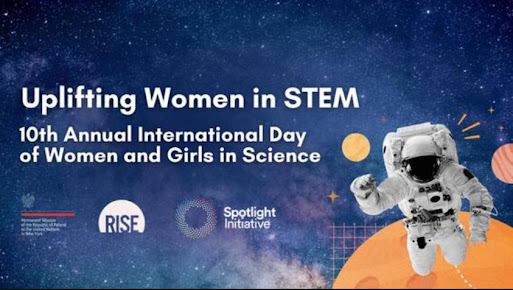
An astronaut-led panel to highlight the contributions of women and girls in science, and the importance of ensuring that they are safe from gender-based violence and gender discrimination. Get the Conncept note!