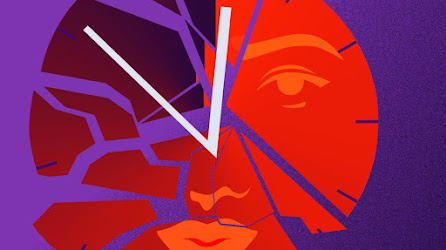
FORUM: “Rights, justice and action for all women and girls.” International Women’s Day 2026. This year’s observance comes at a defining moment: Women and girls have never been closer to equality, and never closer to losing it. Legal protection against domestic violence has expanded in many countries. Despite significant progress for women’s rights since the adoption of the Beijing Platform for Action in 1995, the world is experiencing new and overlapping crises and the erosion of rights. Whether the world chooses to act together and deliver equality before the law for all women and girls or allow injustice to persist with impunity. Yet, the rights of women and girls are being rolled back in plain sight, and across the world, women still do not enjoy the same legal rights as men. Women’s rights mean nothing if we cannot defend them. Conflict, repression, and political tensions are weakening the rule of law. The result – women and girls have just 64 per cent of the legal rights of men. Women are turned away, not believed, revictimized, or priced out of legal support. Equality never arrives. Justice is not blind. It protects power and continues to rule against women and girls. In nearly 70 per cent of surveyed countries, Wmen face more barriers accessing justice than men. Can't afford a lawyer? Justice denied. Legal fees, transportation, childcare, lost wages keep millions of women locked out of justice systems. Want to report an injustice? Be prepared to be ignored, disbelieved, or – worse – blamed and silenced. For the 676 million women and girls living within 50 km of active conflict zones, justice systems are largely absent and perpetrators act with impunity.Justice doesn’t just happen. It is built and must be funded. Join and support UN Women as we continue to stand with women’s movements worldwide and work with governments that choose equality. UN Women calls on governments, partners, institutions and communities everywhere to stand up, show up and speak up for rights, justice and action – so all women and girls can live safely, speak freely and exist equally. Follow the conversation with the hashtags: #Campaign, #8March, #InternationalWomensDay, #IWD2026, #women, #RightsJusticeAction, #forallwomenandgirls, #womensrights.
%20at%20UNHQ.jpg "HIGH-LEVEL EVENT ( INTERNATIONAL WOMEN'S DAY 2026) at UNHQ")
EVENTS: This March 08th, Join us in celebrating International Women’s Day 2026 under the theme “Rights, justice and action for all women and girls.”. The UN Women leads efforts across the UN system to observe the day, mobilizing governments, partners and communities to turn commitments into action and ensure every woman and girl can live free from discrimination and violence, with equal voice and opportunity. Register to participate and watch the livestream!
The Asia-Pacific Regional Commemoration is jointly organized by ESCAP and the United Nations Entity for Gender Equality and the Empowerment of Women (UN-Women), in collaboration with the Office of the United Nations Resident Coordinator in Thailand. The objective of the Asia-Pacific Regional Commemoration of International Women’s Day 2026 is to spotlight critical issues for building inclusive societies through legal empowerment. The commemoration will provide a platform to review progress, identify gaps, and share good practices in advancing gender equality in access to justice. It will explore policy and programmatic interventions to address institutional barriers, discriminatory laws, and weak enforcement that hinder women’s and girls’ access to justice across formal and informal systems. The discussions will be framed within the context of key frameworks, including the Beijing Declaration and Platform for Action, the 2030 Agenda for Sustainable Development and the Convention on the Elimination of All Forms of Discrimination Against Women.

On March 04th, 2026, ahead of the 70th session of the Commission on the Status of Women (CSW70), UN Women will launch a report warning that the systems meant to protect women and girls are failing, leaving millions exposed to discrimination, violence and impunity as backlash against gender equality intensifies and violations of fundamental rights rise worldwide.
From March 09–19 th, 2026, the world will gather at United Nations Headquarters in New York for CSW70 – the United Nations’ largest annual forum dedicated to gender equality and women’s rights. What happens at CSW influences laws, policies, funding and accountability across countries and generations.
Press Briefing: Global Launch of Secretary-General’s Report “Ensuring and Strengthening Access to Justice for ALL Women and Girls”.
At this press briefing, UN Women will present the findings of the Secretary-General’s report, “Ensuring and Strengthening Access to Justice for All Women and Girls.” The report shows how laws are being reshaped to restrict women’s freedoms, silence their voices, and allow abuse without consequence. It warns that women and girls are being failed by the very systems meant to protect them, leaving them exposed to abuse, injustice and impunity as backlash against gender equality intensifies and violations of their fundamental rights are on the rise.
When: Wednesday, 4 March 2026, 12 p.m. EST
Where: Online and in-person at the UN Press Briefing Room (S-0237), UN Headquarters, New York
Attendance: Open to UN-accredited journalists in-person; open to all journalists online
Virtual access: Livestream link. The Zoom link for journalists to ask questions during this press briefing will be available on 2 March.
Voices Without Borders: Youth Demanding Equal Justice for All (Youth Forum).
The CSW70 Youth Forum: Voices Without Borders is a vibrant, youth‑led global gathering that will bring together 200 young feminists and allies to confront systemic injustices and champion bold, transformative solutions. Grounded in the lived realities and leadership of diverse young people, the Forum will blend storytelling, strategic dialogues with UN agencies and Member States, and collaborative justice pods to advance concrete reforms across formal and informal justice systems. Designed as both a strategic space and a celebration of feminist resistance, it will amplify youth‑driven innovation, strengthen global solidarity, and position young feminists at the forefront of shaping a more just and equitable world for all women and girls.
When: Sunday, 8 March 2026, 10 a.m. – 6 p.m. EST
Attendance: By invitation only
Virtual access: None
Rights. Justice. Action. For ALL Women and Girls. United Nations Observance of International Women’s Day.
The United Nations Observance of International Women’s Day 2026, under the theme “Rights. Justice. Action. For ALL Women and Girls,” will be held on 9 March 2026 at the UN General Assembly Hall, immediately preceding the opening of CSW70. Aligned with CSW70, the observance is conceived as a single, continuous political moment that will elevate global attention to justice as the critical bridge between rights on paper and rights in practice, reaffirming collective resolve to confront persistent setbacks, violence and the denial of rights. Bringing together Member State delegations, global leaders, advocates, Goodwill Ambassadors and global voices, the observance will serve as a high-visibility platform to galvanize leadership, media engagement and concrete action towards ensuring equal access to justice for all women and girls.
When: Monday, 9 March 2026, 9–10 a.m. EST.
Where: UN General Assembly Hall, UN Headquarters, New York.
Attendance: Open to accredited CSW70 participants and United Nations grounds pass holders.
Virtual access: Livestream link.
Opening of the Seventieth Session of the Commission on the Status of Women (CSW70).
The CSW70 Opening marks the start of the seventieth session of the Commission on the Status of Women. The Commission will hear opening remarks by the CSW Chair, the Presidents of ECOSOC and the General Assembly and the Secretary-General, as well as a civil society representative and a young person. It will also hear introductory statements by the UN Women Executive Director, the Chairperson of the CEDAW Committee, the Chairperson of the Working Group on Discrimination against women and girls and the Special Rapporteur on violence against women, its causes and consequences. The ceremonial opening will be followed immediately by the adoption of the agreed conclusions, and the start of the general discussion which will focus mainly on the priority theme: ensuring and strengthening access to justice for all women and girls, including promoting inclusive legal systems, eliminating discriminatory laws and practices, and addressing structural barriers to equality.
When: Monday, 9 March 2026, 10 a.m. – 1 p.m. EST.
Where: UN General Assembly Hall, UN Headquarters, New York.
Attendance: Open to accredited CSW70 participants and United Nations grounds pass holders.
Virtual access: Available on UN Web TV.
G77 and Emerging Partners Ministerial Roundtable: Pathways for Accelerating Sustainable Financing for Gender Equality for All Women and Girls.
Ministers, financial leaders, Ambassadors and development partners convene at CSW70 to advance practical pathways for scaling sustainable finance for gender equality. Co-hosted by Brazil, Kazakhstan, Maldives, Timor-Leste, Uruguay and UN Women, the Roundtable will focus on mobilizing public and private capital, strengthening financial systems and investing in priorities such as care infrastructure, digital inclusion and women’s economic empowerment. As the SDG deadline approaches and financing gaps widen, the event highlights concrete national actions and partnerships needed to accelerate investment in gender equality and drive inclusive, resilient economic growth.
When: Monday, 9 March 2026, 3–4.15 p.m. EST.
Where: ECOSOC Chamber, UN Headquarters, New York.
Attendance: Open to all Member States, accredited CSW70 participants and academia.
Virtual access: None.
Rights, Justice, Action for All Women and Girls: Celebrating 45 years of CEDAW.
The Convention on the Elimination of All Forms of Discrimination against Women (CEDAW), often described as the international bill of rights for women, was adopted by the General Assembly in 1979 and entered into force in 1981. The CEDAW Committee held its inaugural session in 1982. As we convene for CSW70 in March 2026, we celebrate 45 years of the Committee’s work in monitoring the implementation of the Convention. As a quasi-judicial body, the CEDAW Committee has been the global vanguard for legal reform, the repeal of discriminatory laws, and the establishment of gender-responsive legal frameworks, and its General Recommendation No. 33 specifically provides guidance and recommendations to States on access to justice. In this regard, the CEDAW Committee, UN Women, OHCHR, the UN Foundation and the Ford Foundation are pleased to cohost a reception in commemoration of this important milestone.
When: Monday, 9 March 2026, 6–8 p.m. EST
Where: The Ford Foundation
Attendance: By invitation only
Virtual access: None
Achieving Gender Equality in Nationality Laws.
UN Women, in partnership with the Global Campaign for Equal Nationality Rights, UNHCR, UNICEF, the Global Alliance to End Statelessness, and champion States will convene a high-level event on Achieving Gender Equality in Nationality Laws on 10 March at United Nations Headquarters in New York. Despite global progress, more than 45 countries still retain gender‑discriminatory nationality laws that deny women equal rights to confer nationality, causing statelessness and lifelong barriers for millions of families. The event will spotlight testimony from people directly affected, share lessons from recent reforms, and underscore why gender‑equal nationality rights are essential to achieving justice and the SDGs. It will also launch a new Legal Atlas on Discriminatory Nationality Laws, providing the first comprehensive global mapping of these legal gaps. Impacted States are expected to announce concrete reform commitments.
When: Tuesday, 10 March 2026, 10–11.15 a.m. EST.
Where: Conference Room 2, UN Headquarters, New York.
Attendance: Open to accredited CSW70 participants and United Nations grounds pass holders.
Virtual access: Livestream link.
Townhall Meeting with the United Nations Secretary-General and Civil Society in the Margins of the 70th Session of the Commission on the Status of Women.
The townhall provides an opportunity for the UN Secretary-General to meet with the largest gathering of civil society at the UN, and to have a frank discussion on issues related to the advancement of gender equality and women and girls' rights around the world. It offers intersectional and intergenerational civil society a space to directly engage with the highest leadership of the United Nations and to ask questions, share recommendations and strengthen collaboration. This will be the last townhall with the current Secretary-General whose term ends this year.
When: Tuesday, 10 March 2026, 10 –11 a.m. EST
Where: Trusteeship Chamber, UN Headquarters, New York
Attendance: Open to representatives of ECOSOC-accredited NGOs
Virtual access: Livestream link
Achieving Gender Equality and the Empowerment of All Older Women.
As part of the CSW70, this Ministerial Round Table will focus on Achieving gender equality and the empowerment of all older women, an emerging focus area identified by the Commission. The discussion, led by high-level ministers and UN leaders will address how rapid population ageing – with women comprising the majority of persons aged 60 and above – reshapes the conditions for gender equality across the life course. Ministers will exchange experiences, lessons learned and good practices to advance income security and economic independence of older women, and to transform social and cultural norms to counter ageism and sexism, prevent elder abuse, and more.
When: Wednesday, 11 March 2026, 10 a.m. – 1 p.m. EST.
Where: Trusteeship Council Chamber, UN Headquarters, New York.
Attendance: Open to accredited CSW70 participants and United Nations grounds pass holders.
Virtual access: Available on UN Web TV.
The Role of Parliaments in Achieving Parity in Decision-Making and Ensuring Gender-Responsive Access to Justice for Women and Girls.
The Meeting will provide an opportunity to bring a parliamentary perspective into the CSW70 discussions on the priority and review themes. Members of Parliament from around the world will share perspectives and practices on legislative, oversight and budgetary actions to achieve parity representation in decision-making, eliminate discriminatory laws, address gaps between legal frameworks and their implementation, combat impunity for violence against women, and strengthen accountability and enforcement across justice systems. The event will also serve as the launch of the latest Women in Politics Map, presenting new data for women in executive positions and national parliaments as of 1 January 2026.
When: Wednesday, 11 March 2026, 10 a.m. EST
Where: ECOSOC Chamber, UN Headquarters, New York
Attendance: By invitation only
Virtual access: Available on UN Web TV
Advancing Women’s Access to Justice: Building Justice Systems that Deliver for All Including in Fragile Contexts.
Amid intersecting crises, uncertainty, and deepening inequality, there is an urgent need to reimagine justice systems that respond to the realities of a rapidly changing world. At CSW70, UNDP and UN Women – in partnership with the Governments of Brazil, Kingdom of the Netherlands, and Ukraine – are hosting a high-level event to spotlight country experiences, civil society innovations and emerging legal reforms. The discussion will identify recommendations that can be taken forward now and explore how governments, civil society and international partners can work together to co-create and sustain reforms for humans everywhere, including in fragile and crisis-affected contexts.
When: Wednesday, 11 March 2026, 10–11.15 a.m. EST.
Where: Conference Room 8 (CR-8), UN Headquarters, New York.
Attendance: Open to accredited CSW70 participants and United Nations grounds pass holders.
Virtual access: Livestream link.
Women Leaders Paving the Way: Access to Justice for All Women and Girls.
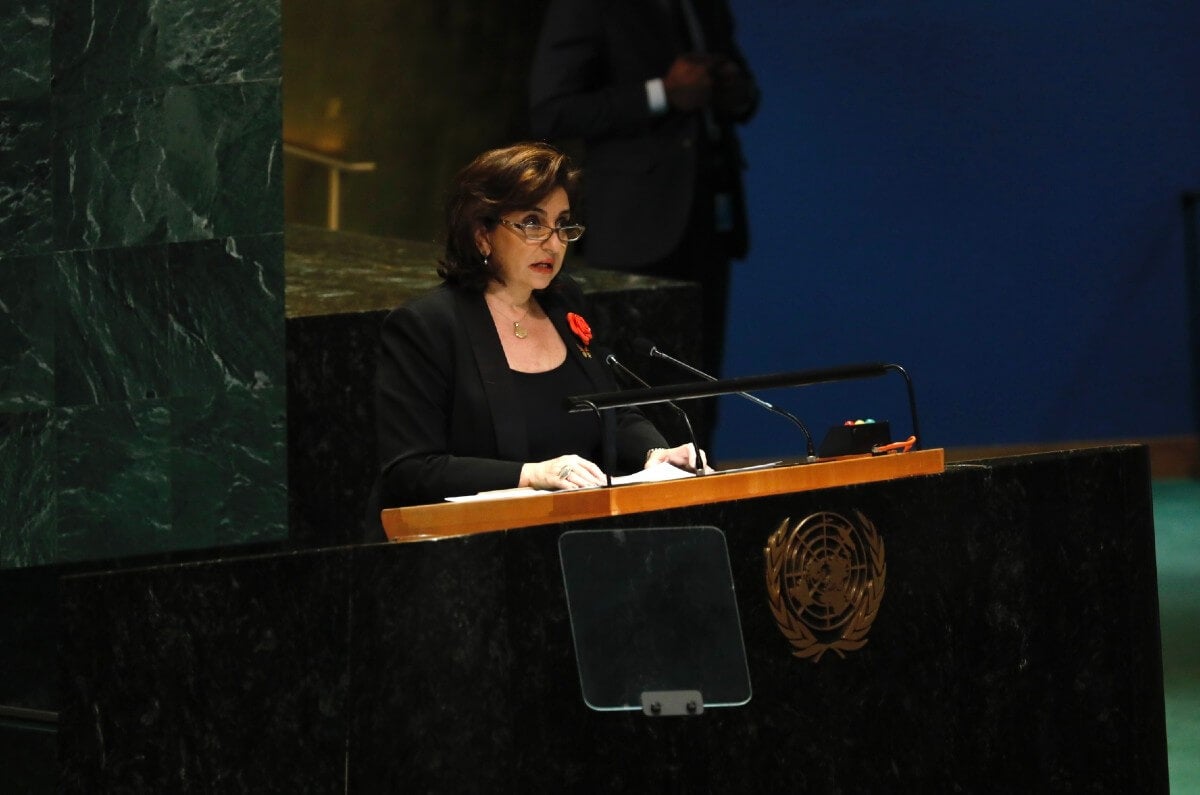
Hosted by the UN Women Leaders Network, in partnership with the Government of Iceland and the UN Foundation, this CSW70 side event will feature a panel discussion with distinguished speakers from the UN Women Leaders Network about ensuring and strengthening access to justice for all women and girls, examined through a women’s leadership lens. The panel will highlight that meaningful access to justice depends on inclusive governance, accountable leadership, innovative policymaking, and cross-sectoral collaboration. The event will end with closing remarks from UN Women Executive Director Sima Bahous.
When: Wednesday, 11 March 2026, 4–5.30 p.m. EST
Where: Scandinavia House, 58 Park Ave, New York, NY 10016
Attendance: Register by Friday, 6 March. Capacity is limited. Registration will be on a first-come, first-served basis.
Virtual access: None.
CSW High-level Meeting on Violence Against Women and Girls.
On 12 March 2026, Member States will convene at UN Headquarters for the CSW High-level Meeting on Violence against Women and Girls – the first annual High-level Meeting held during CSW under a new mandate to elevate critical cross-cutting priorities aimed at accelerating implementation of the Beijing Declaration and Platform for Action. The meeting will highlight what works to prevent violence and strengthen survivor-centred responses – both online and offline – at a moment when progress remains too slow and technology is accelerating new harms. Across two sessions, ministers and leading experts, including from women’s rights organizations and survivors from all five UN regional groups will share evidence, good practices with potential for scale-up, and practical actions to close implementation gaps and accelerate commitments to end violence against women and girls.
When: Thursday, 12 March 2026, 10 a.m. – 6 p.m. EST
Where: UN General Assembly Hall, UN Headquarters, New York
Attendance: Open to accredited CSW70 participants and United Nations grounds pass holders
Virtual access: Available on UN Web TV (Livestream from 10 a.m. – 1 p.m. and 3–6 p.m.)
Ensuring and Strengthening Access to Justice for All Women and Girls.
The Interactive Dialogue with Youth Representatives at CSW70 is a global platform that elevates the leadership, vision, and lived experiences of young people advancing access to justice for women and girls. It highlights the need for inclusive and equitable legal systems, the elimination of discriminatory laws, policies and practices, and action to address the structural barriers that deny women and girls justice.
When: Monday, 16 March 2026, 3–6 p.m. EST.
Where: Conference Room 4, UN Headquarters, New York.
Attendance: Open to those with ECOSOC accreditation.
Virtual access: Available on UN Web TV.
Closing of the Seventieth Session of the Commission on the Status of Women (CSW70).
The CSW70 Closing Session brings the seventieth session of the Commission on the Status of Women to an official end. Delegates will review progress made during discussions on the priority theme of ensuring and strengthening access to justice for all women and girls, consider outstanding agenda items, adopt the session’s report and agreed conclusions, and look ahead to the work of CSW71
When: Thursday, 19 March 2026, in the afternoon
Where: UN Headquarters, New York
Attendance: Open to accredited CSW70 participants and United Nations grounds pass holders
Virtual access: Available on UN Web TV
Parallel events organized by NGOs are coordinated by the NGO Committee on the Status of Women (NGO CSW/NY), which is a group of New York–based women’s NGOs in consultative status with the Economic and Social Council. For more information on the NGO CSW70 Forum and on NGO parallel events. The Commission on the Status of Women (CSW) is the principal global intergovernmental body exclusively dedicated to the promotion of gender equality and the empowerment of women. A functional commission of the Economic and Social Council (ECOSOC), it was established by Council resolution 11(II) of 21 June 1946. The CSW is instrumental in promoting women's rights, documenting the reality of women's lives throughout the world, and shaping global standards on gender equality and the empowerment of women. Explore the side-events and Register to participate to the CSW70 Sessions!
Secretary-General of the United Nations Statement on International Women’s Day 2026; March 8th.
This year’s International Women’s Day focuses on rights, action and justice for all women and girls.
Worldwide, women hold just 64 per cent of the legal rights enjoyed by men.
Legal discrimination can shape every aspect of a woman’s life. She may be prevented from owning property, seeking a divorce, or taking a job without her husband’s permission. In more than 40 countries, marital rape is not recognized as a crime. Other laws restrict women’s access to education, their ability to pass on citizenship to their children, or even their freedom of movement outside the home.
Where legal protections do exist, discrimination and weak enforcement mean women still struggle to access courts and legal support.
Many of these unjust laws have been on the books for centuries. But today, we are also witnessing a dangerous new trend. Amid rising authoritarianism, growing political instability, and a renewed push to entrench patriarchy, hard-won advances are being rolled back — from fairer work protections to sexual and reproductive rights.
We must unite to deliver on the promise of the Sustainable Development Goals and the Beijing+30 Action Agenda. By fighting discriminatory laws and practices — and defending the progress already achieved — we can ensure the dignity, opportunity and freedom all women deserve.
When we are not equal under the law, we are not equal. It is time to make justice a reality for women and girls, everywhere.
Statement from the UNESCO Director-General on the International Women's Day 2026; March 8th.
Today, in many parts of the world, women and girls are continuing to face persistent inequalities and are even seeing the roll-back of their existing rights — in access to education, employment, public responsibilities, economic resources and participation in cultural and scientific life.
These inequalities are not only unjust, but they also weaken our societies as a whole.
This year, the theme of International Women's Day is "Rights. Justice. Action. For ALL Women and Girls" — a call to move beyond statements of principle.
Gender equality is one of UNESCO’s two global priorities. It cuts across all our areas of competence — education, science, culture, communication and information — because it determines the possibility of sustainable development, shared innovation and lasting peace.
We work with our Member States to ensure gender equality in education. UNESCO is thus supporting 20 countries in revising their policies, legislation and strategies, with tangible progress in places such as Mauritania, where we supported the adoption of its first national strategy for gender equality in education.
Where rights are being rolled back, UNESCO stands alongside girls and women who are denied access to education, such as in Afghanistan, where we support them with literacy classes, radio broadcasts and income-generating training. Over the next two years, we will multiply these actions through new funding from the European Union amounting to €4.7 million.
We are also working to address persistent imbalances in scientific careers. Through the L'Oréal-UNESCO “For Women in Science” Programme and the Young Talents programme, we support and promote the work of outstanding women researchers and young women doctoral students. We have also launched the gender-inclusive science institutions and systems (GenSIS) project, which includes the creation of committees for equality in science in 12 low- and middle-income countries.
With Sweden's support, we have launched a programme aimed at making cultural policies more gender sensitive. Based on an extensive study conducted in 15 West African countries, we are now running a pilot project in Senegal to improve women's access to finance and training.
Finally, in the digital age, gender equality is a major democratic issue. To ensure greater inclusion of female artificial intelligence (AI) professionals in a field that remains heavily dominated by male scientists, UNESCO has created the Women for Ethical AI Network to connect these women researchers and support their work.
On this International Women's Day, UNESCO reaffirms its commitment to working alongside all stakeholders to ensure that the rights of women and girls become a reality — everywhere and for everyone.
Statement from UN Women Executive Director on International Women’s Day (IWD) 2026, March 8th.
Happy International Women’s Day 2026.
A day to celebrate every voice raised, every barrier broken, every right claimed by women and girls around the world.
We have never been so close to achieving gender equality, and never closer to losing it.
Today, stronger laws exist on domestic violence. More girls are in school than ever before. Women’s movements are more connected, more visible, and more crucial than ever before.
And yet, this is also a moment of contradiction.
Violence is rising, including online. Backlash is organized and well resourced. Rights are being reversed in real time and at unprecedented speed. Impunity is spreading, in homes, online, and in conflicts.
International Women’s Day 2026, under the theme Rights. Justice. Action for All Women and Girls, must be our collective turning point.
We must stand up, show up, and speak up, for rights, justice, action, so all women and girls can live safely, speak freely, and exist equally.
UN Women was built for this moment. From crisis zones to courtrooms, from the grassroots to global power.
We stand with women and girls when rights are denied, justice is delayed, and violence is ignored. We support women’s movements. We stand with all survivors of violence, everywhere, always. We push laws, systems, and institutions to deliver for women and girls.
Today, I urge you, for ALL women and girls – to act:
Break the silence.
Demand rights and justice.
Defend the rule of law.
Fund women’s rights movements.
End impunity.
Deliver equality, in laws, in life, everywhere.
Friends, nothing can and nothing will stop us until the equal rights of all women and girls are realized.
Happy International Women’s Day!
.jpg "70th session of the Commission on the Status of Women (CSW70)")
LIVESTREAM: This year's United Nations observance of International Women's Day will take place on 9 March and focus on equal justice, purposefully aligning with the 70th session of the Commission on the Status of Women (CSW70) (from 9 to 19 March). The celebration of the International Women's Day 2026 (IWD 2026), under the theme, "Rights. Justice. Action. For ALL Women and Girls", marks a moment to amplify our collective determination. No matter how deeply rooted the sexism or how discouraging the politics, we refuse to step back or abandon our mandate. Instead, we climb together – for the rights and empowerment of all women and girls.
On March 04th, 2026, ahead of the 70th session of the Commission on the Status of Women (CSW70), UN Women will launch a report warning that the systems meant to protect women and girls are failing, leaving millions exposed to discrimination, violence and impunity as backlash against gender equality intensifies and violations of fundamental rights rise worldwide.
From March 09–19 th, 2026, the world will gather at United Nations Headquarters in New York for CSW70 – the United Nations’ largest annual forum dedicated to gender equality and women’s rights. What happens at CSW influences laws, policies, funding and accountability across countries and generations.
Press Briefing: Global Launch of Secretary-General’s Report “Ensuring and Strengthening Access to Justice for ALL Women and Girls”.
At this press briefing, UN Women will present the findings of the Secretary-General’s report, “Ensuring and Strengthening Access to Justice for All Women and Girls.” The report shows how laws are being reshaped to restrict women’s freedoms, silence their voices, and allow abuse without consequence. It warns that women and girls are being failed by the very systems meant to protect them, leaving them exposed to abuse, injustice and impunity as backlash against gender equality intensifies and violations of their fundamental rights are on the rise.
When: Wednesday, 4 March 2026, 12 p.m. EST
Where: Online and in-person at the UN Press Briefing Room (S-0237), UN Headquarters, New York
Attendance: Open to UN-accredited journalists in-person; open to all journalists online
Virtual access: Livestream link. The Zoom link for journalists to ask questions during this press briefing will be available on 2 March.
Voices Without Borders: Youth Demanding Equal Justice for All (Youth Forum).
The CSW70 Youth Forum: Voices Without Borders is a vibrant, youth‑led global gathering that will bring together 200 young feminists and allies to confront systemic injustices and champion bold, transformative solutions. Grounded in the lived realities and leadership of diverse young people, the Forum will blend storytelling, strategic dialogues with UN agencies and Member States, and collaborative justice pods to advance concrete reforms across formal and informal justice systems. Designed as both a strategic space and a celebration of feminist resistance, it will amplify youth‑driven innovation, strengthen global solidarity, and position young feminists at the forefront of shaping a more just and equitable world for all women and girls.
When: Sunday, 8 March 2026, 10 a.m. – 6 p.m. EST
Attendance: By invitation only
Virtual access: None
Rights. Justice. Action. For ALL Women and Girls. United Nations Observance of International Women’s Day.
The United Nations Observance of International Women’s Day 2026, under the theme “Rights. Justice. Action. For ALL Women and Girls,” will be held on 9 March 2026 at the UN General Assembly Hall, immediately preceding the opening of CSW70. Aligned with CSW70, the observance is conceived as a single, continuous political moment that will elevate global attention to justice as the critical bridge between rights on paper and rights in practice, reaffirming collective resolve to confront persistent setbacks, violence and the denial of rights. Bringing together Member State delegations, global leaders, advocates, Goodwill Ambassadors and global voices, the observance will serve as a high-visibility platform to galvanize leadership, media engagement and concrete action towards ensuring equal access to justice for all women and girls.
When: Monday, 9 March 2026, 9–10 a.m. EST.
Where: UN General Assembly Hall, UN Headquarters, New York.
Attendance: Open to accredited CSW70 participants and United Nations grounds pass holders.
Virtual access: Livestream link.
Opening of the Seventieth Session of the Commission on the Status of Women (CSW70).
The CSW70 Opening marks the start of the seventieth session of the Commission on the Status of Women. The Commission will hear opening remarks by the CSW Chair, the Presidents of ECOSOC and the General Assembly and the Secretary-General, as well as a civil society representative and a young person. It will also hear introductory statements by the UN Women Executive Director, the Chairperson of the CEDAW Committee, the Chairperson of the Working Group on Discrimination against women and girls and the Special Rapporteur on violence against women, its causes and consequences. The ceremonial opening will be followed immediately by the adoption of the agreed conclusions, and the start of the general discussion which will focus mainly on the priority theme: ensuring and strengthening access to justice for all women and girls, including promoting inclusive legal systems, eliminating discriminatory laws and practices, and addressing structural barriers to equality.
When: Monday, 9 March 2026, 10 a.m. – 1 p.m. EST.
Where: UN General Assembly Hall, UN Headquarters, New York.
Attendance: Open to accredited CSW70 participants and United Nations grounds pass holders.
Virtual access: Available on UN Web TV.
G77 and Emerging Partners Ministerial Roundtable: Pathways for Accelerating Sustainable Financing for Gender Equality for All Women and Girls.
Ministers, financial leaders, Ambassadors and development partners convene at CSW70 to advance practical pathways for scaling sustainable finance for gender equality. Co-hosted by Brazil, Kazakhstan, Maldives, Timor-Leste, Uruguay and UN Women, the Roundtable will focus on mobilizing public and private capital, strengthening financial systems and investing in priorities such as care infrastructure, digital inclusion and women’s economic empowerment. As the SDG deadline approaches and financing gaps widen, the event highlights concrete national actions and partnerships needed to accelerate investment in gender equality and drive inclusive, resilient economic growth.
When: Monday, 9 March 2026, 3–4.15 p.m. EST.
Where: ECOSOC Chamber, UN Headquarters, New York.
Attendance: Open to all Member States, accredited CSW70 participants and academia.
Virtual access: None.
Rights, Justice, Action for All Women and Girls: Celebrating 45 years of CEDAW.
The Convention on the Elimination of All Forms of Discrimination against Women (CEDAW), often described as the international bill of rights for women, was adopted by the General Assembly in 1979 and entered into force in 1981. The CEDAW Committee held its inaugural session in 1982. As we convene for CSW70 in March 2026, we celebrate 45 years of the Committee’s work in monitoring the implementation of the Convention. As a quasi-judicial body, the CEDAW Committee has been the global vanguard for legal reform, the repeal of discriminatory laws, and the establishment of gender-responsive legal frameworks, and its General Recommendation No. 33 specifically provides guidance and recommendations to States on access to justice. In this regard, the CEDAW Committee, UN Women, OHCHR, the UN Foundation and the Ford Foundation are pleased to cohost a reception in commemoration of this important milestone.
When: Monday, 9 March 2026, 6–8 p.m. EST
Where: The Ford Foundation
Attendance: By invitation only
Virtual access: None
Achieving Gender Equality in Nationality Laws.
UN Women, in partnership with the Global Campaign for Equal Nationality Rights, UNHCR, UNICEF, the Global Alliance to End Statelessness, and champion States will convene a high-level event on Achieving Gender Equality in Nationality Laws on 10 March at United Nations Headquarters in New York. Despite global progress, more than 45 countries still retain gender‑discriminatory nationality laws that deny women equal rights to confer nationality, causing statelessness and lifelong barriers for millions of families. The event will spotlight testimony from people directly affected, share lessons from recent reforms, and underscore why gender‑equal nationality rights are essential to achieving justice and the SDGs. It will also launch a new Legal Atlas on Discriminatory Nationality Laws, providing the first comprehensive global mapping of these legal gaps. Impacted States are expected to announce concrete reform commitments.
When: Tuesday, 10 March 2026, 10–11.15 a.m. EST.
Where: Conference Room 2, UN Headquarters, New York.
Attendance: Open to accredited CSW70 participants and United Nations grounds pass holders.
Virtual access: Livestream link.
Townhall Meeting with the United Nations Secretary-General and Civil Society in the Margins of the 70th Session of the Commission on the Status of Women.
The townhall provides an opportunity for the UN Secretary-General to meet with the largest gathering of civil society at the UN, and to have a frank discussion on issues related to the advancement of gender equality and women and girls' rights around the world. It offers intersectional and intergenerational civil society a space to directly engage with the highest leadership of the United Nations and to ask questions, share recommendations and strengthen collaboration. This will be the last townhall with the current Secretary-General whose term ends this year.
When: Tuesday, 10 March 2026, 10 –11 a.m. EST
Where: Trusteeship Chamber, UN Headquarters, New York
Attendance: Open to representatives of ECOSOC-accredited NGOs
Virtual access: Livestream link
Achieving Gender Equality and the Empowerment of All Older Women.
As part of the CSW70, this Ministerial Round Table will focus on Achieving gender equality and the empowerment of all older women, an emerging focus area identified by the Commission. The discussion, led by high-level ministers and UN leaders will address how rapid population ageing – with women comprising the majority of persons aged 60 and above – reshapes the conditions for gender equality across the life course. Ministers will exchange experiences, lessons learned and good practices to advance income security and economic independence of older women, and to transform social and cultural norms to counter ageism and sexism, prevent elder abuse, and more.
When: Wednesday, 11 March 2026, 10 a.m. – 1 p.m. EST.
Where: Trusteeship Council Chamber, UN Headquarters, New York.
Attendance: Open to accredited CSW70 participants and United Nations grounds pass holders.
Virtual access: Available on UN Web TV.
The Role of Parliaments in Achieving Parity in Decision-Making and Ensuring Gender-Responsive Access to Justice for Women and Girls.
The Meeting will provide an opportunity to bring a parliamentary perspective into the CSW70 discussions on the priority and review themes. Members of Parliament from around the world will share perspectives and practices on legislative, oversight and budgetary actions to achieve parity representation in decision-making, eliminate discriminatory laws, address gaps between legal frameworks and their implementation, combat impunity for violence against women, and strengthen accountability and enforcement across justice systems. The event will also serve as the launch of the latest Women in Politics Map, presenting new data for women in executive positions and national parliaments as of 1 January 2026.
When: Wednesday, 11 March 2026, 10 a.m. EST
Where: ECOSOC Chamber, UN Headquarters, New York
Attendance: By invitation only
Virtual access: Available on UN Web TV
Advancing Women’s Access to Justice: Building Justice Systems that Deliver for All Including in Fragile Contexts.
Amid intersecting crises, uncertainty, and deepening inequality, there is an urgent need to reimagine justice systems that respond to the realities of a rapidly changing world. At CSW70, UNDP and UN Women – in partnership with the Governments of Brazil, Kingdom of the Netherlands, and Ukraine – are hosting a high-level event to spotlight country experiences, civil society innovations and emerging legal reforms. The discussion will identify recommendations that can be taken forward now and explore how governments, civil society and international partners can work together to co-create and sustain reforms for humans everywhere, including in fragile and crisis-affected contexts.
When: Wednesday, 11 March 2026, 10–11.15 a.m. EST.
Where: Conference Room 8 (CR-8), UN Headquarters, New York.
Attendance: Open to accredited CSW70 participants and United Nations grounds pass holders.
Virtual access: Livestream link.
Women Leaders Paving the Way: Access to Justice for All Women and Girls.
Hosted by the UN Women Leaders Network, in partnership with the Government of Iceland and the UN Foundation, this CSW70 side event will feature a panel discussion with distinguished speakers from the UN Women Leaders Network about ensuring and strengthening access to justice for all women and girls, examined through a women’s leadership lens. The panel will highlight that meaningful access to justice depends on inclusive governance, accountable leadership, innovative policymaking, and cross-sectoral collaboration. The event will end with closing remarks from UN Women Executive Director Sima Bahous.
When: Wednesday, 11 March 2026, 4–5.30 p.m. EST
Where: Scandinavia House, 58 Park Ave, New York, NY 10016
Attendance: Register by Friday, 6 March. Capacity is limited. Registration will be on a first-come, first-served basis.
Virtual access: None.
CSW High-level Meeting on Violence Against Women and Girls.
On 12 March 2026, Member States will convene at UN Headquarters for the CSW High-level Meeting on Violence against Women and Girls – the first annual High-level Meeting held during CSW under a new mandate to elevate critical cross-cutting priorities aimed at accelerating implementation of the Beijing Declaration and Platform for Action. The meeting will highlight what works to prevent violence and strengthen survivor-centred responses – both online and offline – at a moment when progress remains too slow and technology is accelerating new harms. Across two sessions, ministers and leading experts, including from women’s rights organizations and survivors from all five UN regional groups will share evidence, good practices with potential for scale-up, and practical actions to close implementation gaps and accelerate commitments to end violence against women and girls.
When: Thursday, 12 March 2026, 10 a.m. – 6 p.m. EST
Where: UN General Assembly Hall, UN Headquarters, New York
Attendance: Open to accredited CSW70 participants and United Nations grounds pass holders
Virtual access: Available on UN Web TV (Livestream from 10 a.m. – 1 p.m. and 3–6 p.m.)
Ensuring and Strengthening Access to Justice for All Women and Girls.
The Interactive Dialogue with Youth Representatives at CSW70 is a global platform that elevates the leadership, vision, and lived experiences of young people advancing access to justice for women and girls. It highlights the need for inclusive and equitable legal systems, the elimination of discriminatory laws, policies and practices, and action to address the structural barriers that deny women and girls justice.
When: Monday, 16 March 2026, 3–6 p.m. EST.
Where: Conference Room 4, UN Headquarters, New York.
Attendance: Open to those with ECOSOC accreditation.
Virtual access: Available on UN Web TV.
Closing of the Seventieth Session of the Commission on the Status of Women (CSW70).
The CSW70 Closing Session brings the seventieth session of the Commission on the Status of Women to an official end. Delegates will review progress made during discussions on the priority theme of ensuring and strengthening access to justice for all women and girls, consider outstanding agenda items, adopt the session’s report and agreed conclusions, and look ahead to the work of CSW71
When: Thursday, 19 March 2026, in the afternoon
Where: UN Headquarters, New York
Attendance: Open to accredited CSW70 participants and United Nations grounds pass holders
Virtual access: Available on UN Web TV
Parallel events organized by NGOs are coordinated by the NGO Committee on the Status of Women (NGO CSW/NY), which is a group of New York–based women’s NGOs in consultative status with the Economic and Social Council. For more information on the NGO CSW70 Forum and on NGO parallel events. The Commission on the Status of Women (CSW) is the principal global intergovernmental body exclusively dedicated to the promotion of gender equality and the empowerment of women. A functional commission of the Economic and Social Council (ECOSOC), it was established by Council resolution 11(II) of 21 June 1946. The CSW is instrumental in promoting women's rights, documenting the reality of women's lives throughout the world, and shaping global standards on gender equality and the empowerment of women. Explore the side-events and Register to participate to the CSW70 Sessions!
Secretary-General of the United Nations Statement on International Women’s Day 2026; March 8th.
This year’s International Women’s Day focuses on rights, action and justice for all women and girls.
Worldwide, women hold just 64 per cent of the legal rights enjoyed by men.
Legal discrimination can shape every aspect of a woman’s life. She may be prevented from owning property, seeking a divorce, or taking a job without her husband’s permission. In more than 40 countries, marital rape is not recognized as a crime. Other laws restrict women’s access to education, their ability to pass on citizenship to their children, or even their freedom of movement outside the home.
Where legal protections do exist, discrimination and weak enforcement mean women still struggle to access courts and legal support.
Many of these unjust laws have been on the books for centuries. But today, we are also witnessing a dangerous new trend. Amid rising authoritarianism, growing political instability, and a renewed push to entrench patriarchy, hard-won advances are being rolled back — from fairer work protections to sexual and reproductive rights.
We must unite to deliver on the promise of the Sustainable Development Goals and the Beijing+30 Action Agenda. By fighting discriminatory laws and practices — and defending the progress already achieved — we can ensure the dignity, opportunity and freedom all women deserve.
When we are not equal under the law, we are not equal. It is time to make justice a reality for women and girls, everywhere.
António Guterres.
Statement from the UNESCO Director-General on the International Women's Day 2026; March 8th.
Today, in many parts of the world, women and girls are continuing to face persistent inequalities and are even seeing the roll-back of their existing rights — in access to education, employment, public responsibilities, economic resources and participation in cultural and scientific life.
These inequalities are not only unjust, but they also weaken our societies as a whole.
This year, the theme of International Women's Day is "Rights. Justice. Action. For ALL Women and Girls" — a call to move beyond statements of principle.
Gender equality is one of UNESCO’s two global priorities. It cuts across all our areas of competence — education, science, culture, communication and information — because it determines the possibility of sustainable development, shared innovation and lasting peace.
We work with our Member States to ensure gender equality in education. UNESCO is thus supporting 20 countries in revising their policies, legislation and strategies, with tangible progress in places such as Mauritania, where we supported the adoption of its first national strategy for gender equality in education.
Where rights are being rolled back, UNESCO stands alongside girls and women who are denied access to education, such as in Afghanistan, where we support them with literacy classes, radio broadcasts and income-generating training. Over the next two years, we will multiply these actions through new funding from the European Union amounting to €4.7 million.
We are also working to address persistent imbalances in scientific careers. Through the L'Oréal-UNESCO “For Women in Science” Programme and the Young Talents programme, we support and promote the work of outstanding women researchers and young women doctoral students. We have also launched the gender-inclusive science institutions and systems (GenSIS) project, which includes the creation of committees for equality in science in 12 low- and middle-income countries.
With Sweden's support, we have launched a programme aimed at making cultural policies more gender sensitive. Based on an extensive study conducted in 15 West African countries, we are now running a pilot project in Senegal to improve women's access to finance and training.
Finally, in the digital age, gender equality is a major democratic issue. To ensure greater inclusion of female artificial intelligence (AI) professionals in a field that remains heavily dominated by male scientists, UNESCO has created the Women for Ethical AI Network to connect these women researchers and support their work.
On this International Women's Day, UNESCO reaffirms its commitment to working alongside all stakeholders to ensure that the rights of women and girls become a reality — everywhere and for everyone.
Khaled El-Enany.
Happy International Women’s Day 2026.
A day to celebrate every voice raised, every barrier broken, every right claimed by women and girls around the world.
We have never been so close to achieving gender equality, and never closer to losing it.
Today, stronger laws exist on domestic violence. More girls are in school than ever before. Women’s movements are more connected, more visible, and more crucial than ever before.
And yet, this is also a moment of contradiction.
Violence is rising, including online. Backlash is organized and well resourced. Rights are being reversed in real time and at unprecedented speed. Impunity is spreading, in homes, online, and in conflicts.
International Women’s Day 2026, under the theme Rights. Justice. Action for All Women and Girls, must be our collective turning point.
We must stand up, show up, and speak up, for rights, justice, action, so all women and girls can live safely, speak freely, and exist equally.
UN Women was built for this moment. From crisis zones to courtrooms, from the grassroots to global power.
We stand with women and girls when rights are denied, justice is delayed, and violence is ignored. We support women’s movements. We stand with all survivors of violence, everywhere, always. We push laws, systems, and institutions to deliver for women and girls.
Today, I urge you, for ALL women and girls – to act:
Break the silence.
Demand rights and justice.
Defend the rule of law.
Fund women’s rights movements.
End impunity.
Deliver equality, in laws, in life, everywhere.
Friends, nothing can and nothing will stop us until the equal rights of all women and girls are realized.
Happy International Women’s Day!
Sima Bahous; UN Women Executive Director.
LIVESTREAM: This year's United Nations observance of International Women's Day will take place on 9 March and focus on equal justice, purposefully aligning with the 70th session of the Commission on the Status of Women (CSW70) (from 9 to 19 March). The celebration of the International Women's Day 2026 (IWD 2026), under the theme, "Rights. Justice. Action. For ALL Women and Girls", marks a moment to amplify our collective determination. No matter how deeply rooted the sexism or how discouraging the politics, we refuse to step back or abandon our mandate. Instead, we climb together – for the rights and empowerment of all women and girls.