Showing posts with label World Migratory Bird Day. Show all posts

Friday, 10 October 2025

World Mental Health Day 2025; October 10th.


WMBD2025


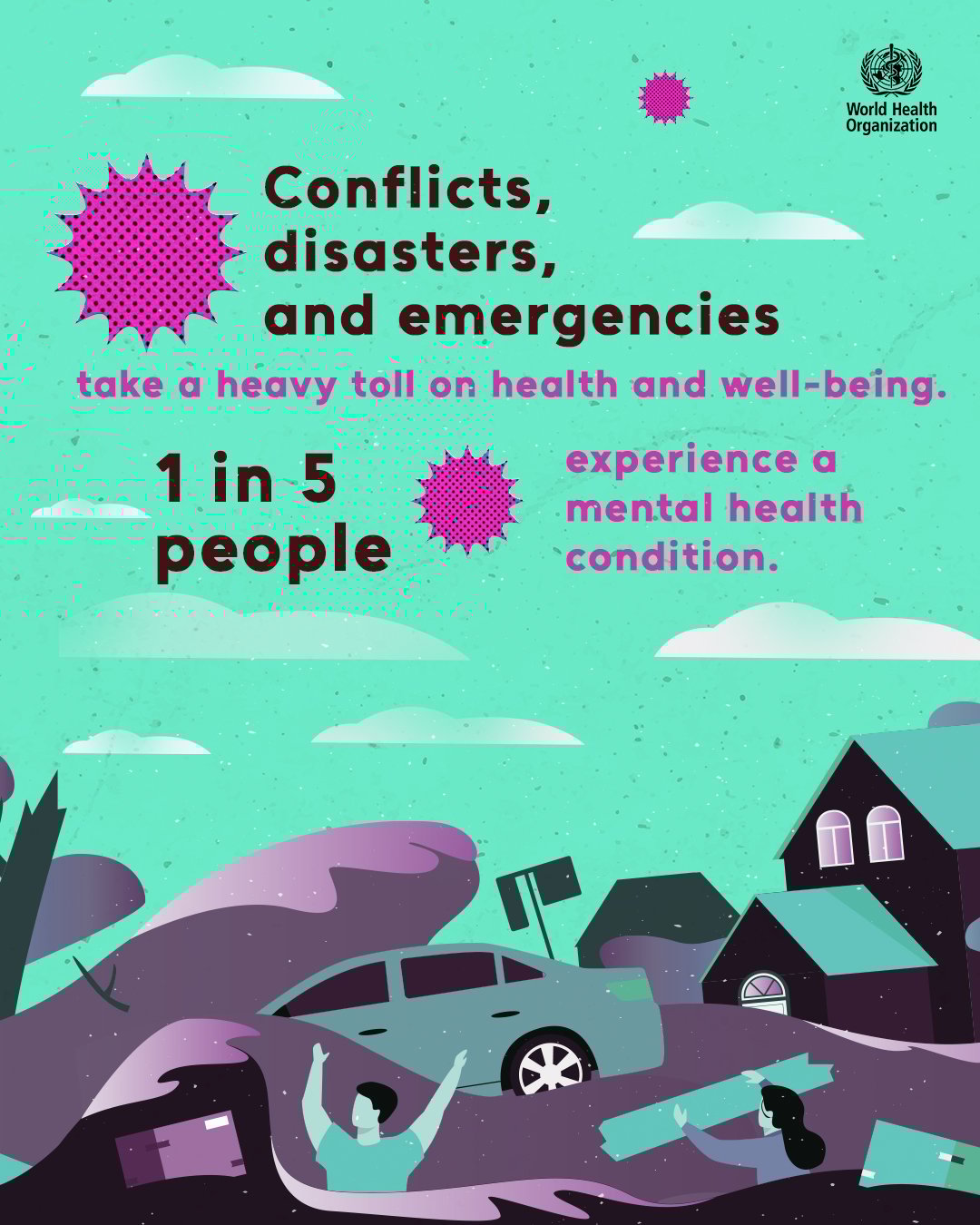
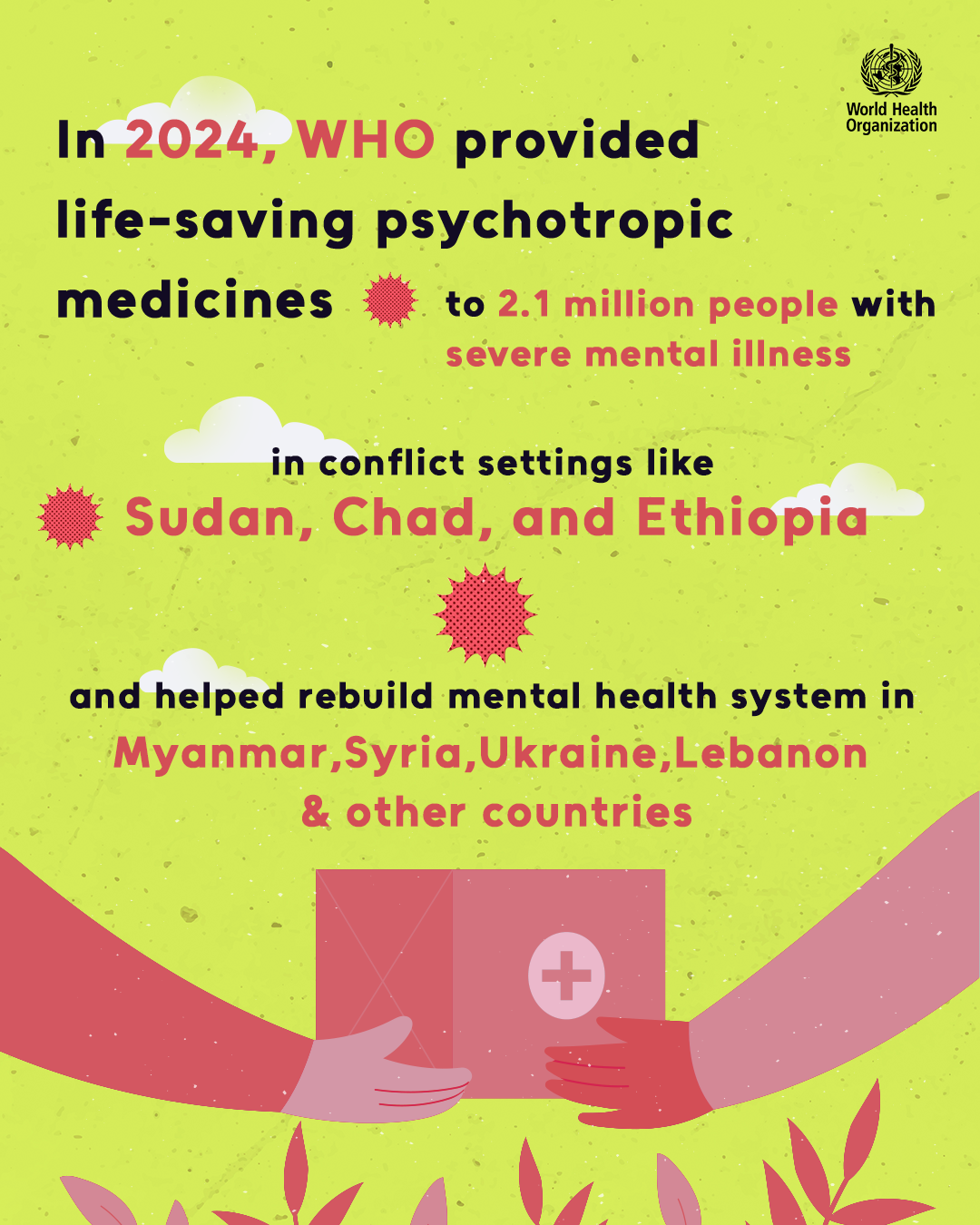
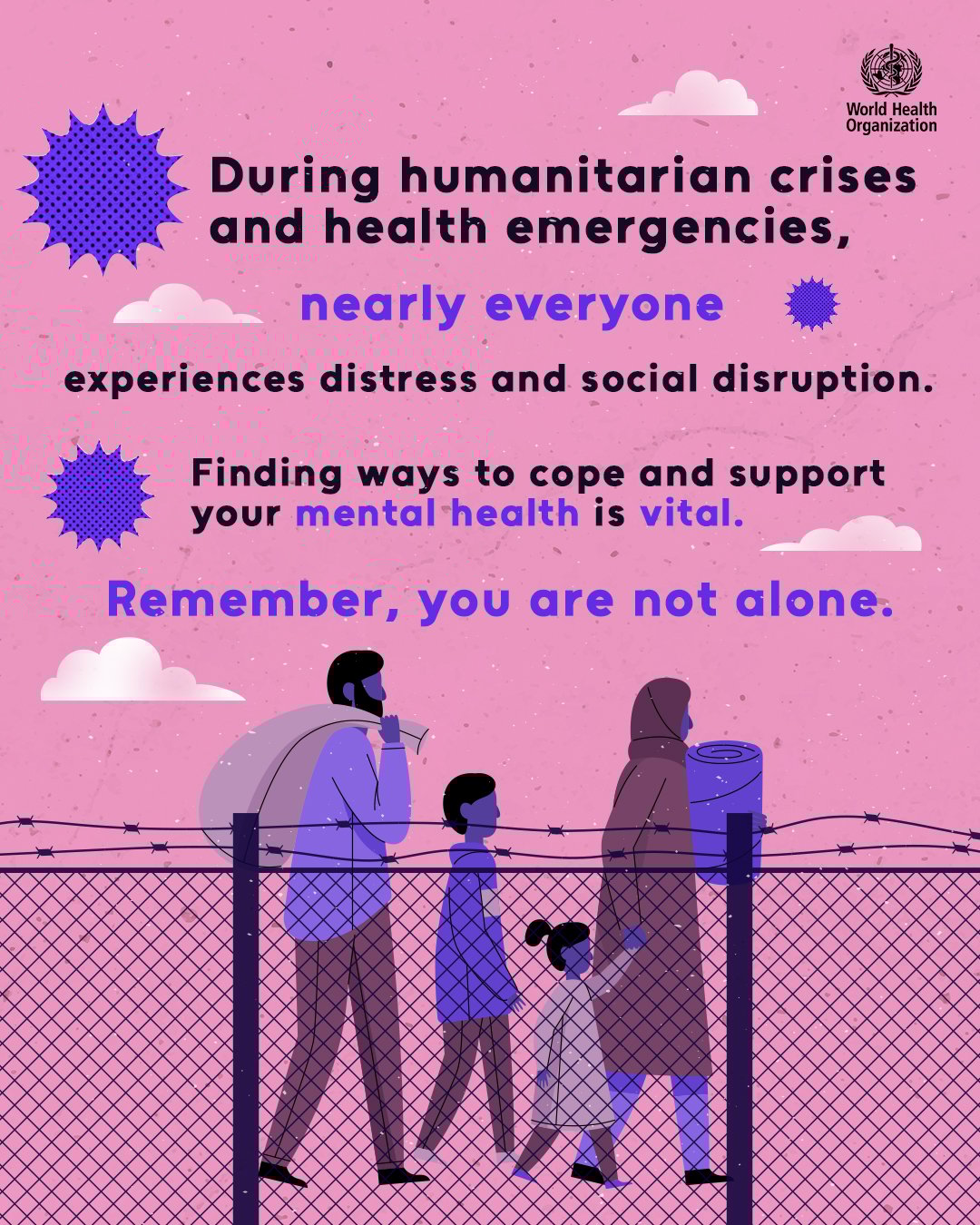
FORUM: "Mental health in humanitarian emergencies.World Mental Health Day 2025. The observance of the Day serves as a powerful reminder that there is no health without mental health. This year’s campaign focuses on the urgent need to support the mental health and psychosocial needs of people affected by humanitarian emergencies. Crises such as natural disasters, conflicts, and public health emergencies cause emotional distress, with one in five individuals experiencing a mental health condition. Supporting the mental well-being of individuals during such crises is not just important – it saves lives, gives people the strength to cope, the space to heal and to recover and rebuild not only as individuals but as communities. That’s why it is essential for everyone, including government officials, health and social care providers, school staff and community groups to come together. By working hand in hand, we can ensure the most vulnerable have access to the support they need while protecting the well-being of everyone. By investing in evidence and community-based interventions, we can address immediate mental health needs, foster long-term recovery, and empower people and communities to rebuild their lives and thrive. On this World Mental Health Day, let us intensify our efforts to create a world where mental health is valued, protected, and accessible for all, especially in the face of adversity. Follow the conversations with the hashtags: #WMHD, #10October, #MentalHealth, #WorldMentalHealthDay.

KEY MESSAGE

Investing in mental health is investing in recovery:

Investing in mental health and psychosocial support helps families, communities, and economies recover from crises, build long-term resilience, and shape stronger health systems.

Protect your mental health:

Prioritize your mental health by staying connected, being physically active, and following routines. Minimize alcohol use, engage in meaningful and enjoyable activities, and seek support from trusted friends, family, or health professionals


Mental health is essential for rebuilding lives:

Beyond food, water, and medicine, survivors also need mental health and psychosocial support to cope, recover, and rebuild


Mental health care saves lives:

The Mental Health and Psychosocial Support Minimum Service Package offers proven solutions in emergencies, ensuring timely, coordinated care that reduces suffering, strengthens well-being, and builds more inclusive responses.

Promoting mental well-being through various approaches:

A layered approach – from self-help tools and Psychological First Aid to specialized mental health services – ensures accessible, efficient, and responsive support for all.

Integrating mental health strengthens emergency response:

Making mental health and psychosocial support a core part of emergency response not only saves lives but also strengthens communities and health systems for the future

Inclusive mental health care leads to stronger communities:

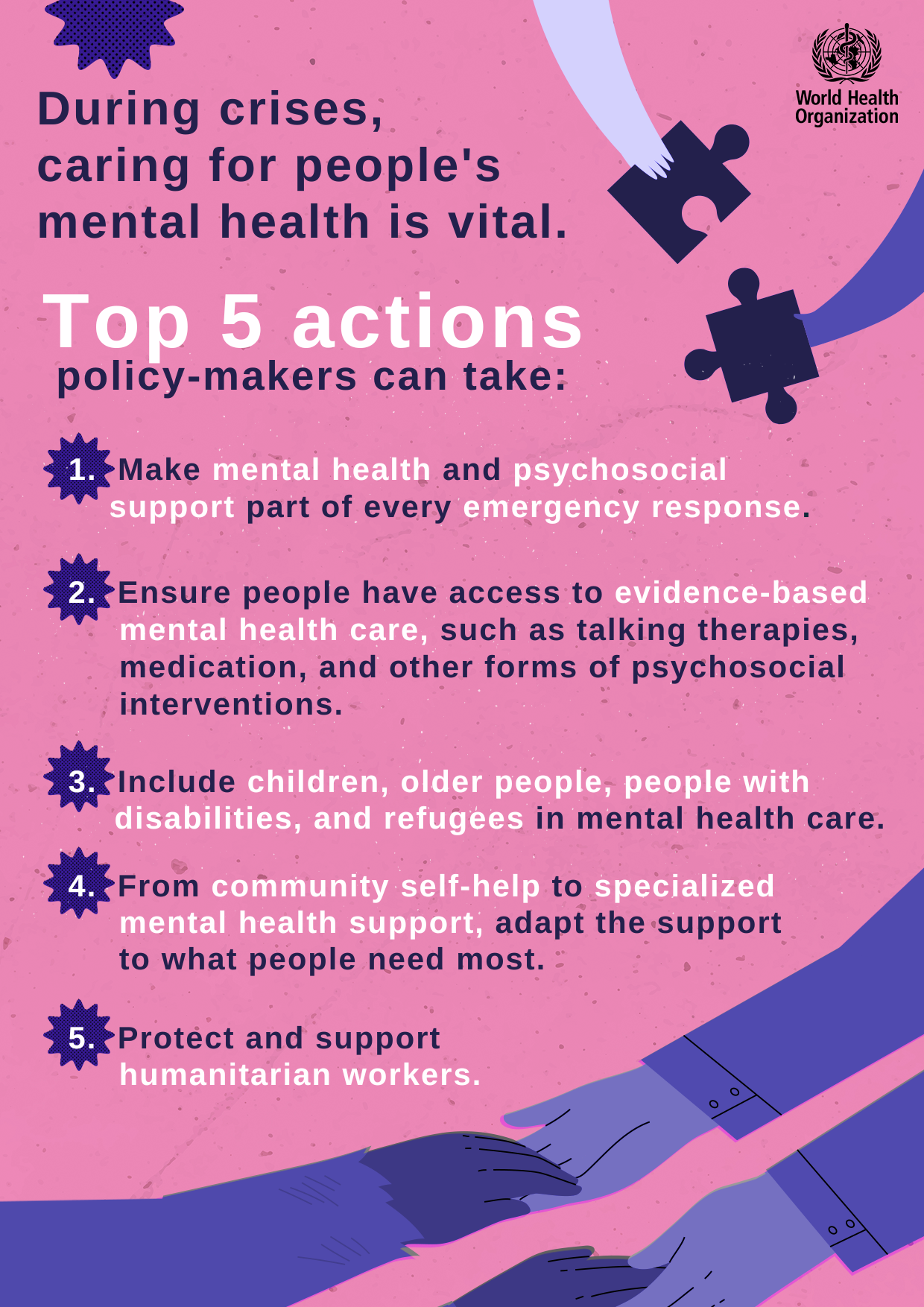
Inclusive support must reach children, older people, persons with disabilities, refugees, and people with pre-existing mental health conditions, including those in institutions. Addressing barriers such as stigma, discrimination, costs, and language is essential.


Protect the well-being of humanitarian workers:

Humanitarian workers face extreme stress and are often directly affected by the crises they respond to. Organizations should provide rest, supervision, peer support, and workplace mental health programmes to sustain an effective humanitarian response.


EVENTS
: On Friday, 10 October 2025 starting at14:00 CET / 12:00 UTC, a webinar with the World Health Organization, World Federation for Mental Health, United Nations High Commissioner for Refugees, international non-governmental organizations, civil society, and donors, with insights on concrete actions and strategies to improve access to mental health and psychosocial support before, during, and after humanitarian emergencies. To join WMHD 2025 webinar, please register!


Conference

At UN Geneva; This event is part of a two-day conference organized by European Academy of Occupational Health Psychology (EAOHP) at the ILO, aimed at sharing knowledge, experiences, and good practices in regulation and policy initiatives

Watch the sychosocial risks and mental health at work in the future: Promoting evidence-based policy making!


CAMPAIGN MATERIALS:  Infographics.


LIVESTREAM:  At UNHQ; A commemoration of World Mental Health Day 2025, focusing on the theme "Access to services – mental health in catastrophes and emergencies." The event highlights the critical importance of supporting the mental well-being of both affected communities and UN personnel responding to crises. When disasters, conflicts, or displacement occur, the psychological toll can be immense—affecting humanitarian workers, their families, and the communities they serve. This event will examine global trends in psychological trauma in emergency contexts and feature a human-centered discussion on mental health care and support for UN personnel.

Saturday, 10 May 2025

World Migratory Bird Day 2025; May 10th.


FORUM: “Creating bird-friendly cities and communities.World Migratory Bird Day 2025. The WMBD 2025 will emphasize that every community - urban to rural - can play a significant role in supporting migratory birds. Through good city planning, and by adopting bird-friendly practices like creating healthy habitats, reducing pollution, and preventing collisions with glass windows and other built objects, communities can significantly contribute to the well-being of migratory birds. If Urban expansion and man-made environments is not managed properly, it can pose significant threats to these birds, leading to habitat loss and increasing the risks like fatal collisions with buildings and glass. Through good upstream planning for sustainable urban development that avoids sprawl and destruction of habitat as well as collaborative efforts with neighbors, schools, and local organizations, everyone can protect birds and raise awareness about their importance to the health of the planet and its ecosystems. By bringing nature back into our cities and working together, citizens and elected officials alike can help our natural environments and lessen the negative effects of urbanization on biodiversity. There are actions everyone can take to protect our shared spaces with wildlife. In 2025, WMBD will raise awareness about the many challenges migratory birds face due to human activities and expanding urban development. The campaign will advocate for strategic urban planning and conservation efforts that incorporate bird-friendly practices, making sure that our communities become havens for these remarkable travelers. The 2025 theme will encourage action from all sectors, including national and local governments, businesses, community groups, and individuals worldwide. Join the conversations, please follow the hashtags: #WorldMigratoryBirdDay; #SharedSpaces; #BirdFriendlyCities #WMBD2025; #10May; #MigratoryBirds; #11October.


EVENTS: In 2025, World Migratory Bird Day will be celebrated on two days, 10 May and 11 October, aligning with the cyclic nature of bird migration in different hemispheres. With bird-watching activities worldwide; The World Migratory Bird Day 2025 will be officially celebrated on the second Saturday of May in Canada and the US (May 10th in 2025), and the second Saturday of October in Mexico, Central and South America, and the Caribbean (October 11th in 2025). The partners behind World Migratory Bird Day are happy to announce that the theme for the 2025 campaign will be dedicated to creating bird-friendly cities and communities. The campaign will highlight the need for a healthy coexistence between humans and birds. It will focus on creating and adapting environments that support migratory bird populations across all communities, from bustling cities to smaller towns and communities. The campaign is a joint effort of the Convention on the Conservation of Migratory Species of Wild Animals (CMS), the African-Eurasian Migratory Waterbird Agreement (AEWA), Environment for the Americas and the EAAFP. The addition of the EAAFP to this Partnership will strengthen engagement and awareness for migratory birds in the East Asian-Australasian Flyway. Watch the list of events related to birds and Explore some activities!

World Migratory Bird Day 2025


Join the global celebration of migratory birds and come enjoy a day of nature-walks and nature-talks as well as a special bird tour for families with children (age 6 and older from 11:00 - 13:00) at the “House of Nature” in Bonn on World Migratory Bird Day.


VIRTUAL EVENTS: Watch the webinars held for this occasion by the EFA!


Saturday, 11 May 2024

World Migratory Bird Day 2024; May 11th.


FORUM: “Protect insects, Protect birdsWorld Migratory Bird Day 2024. During the day, we will focus on the importance of insects for migratory birds, and highlight concerns related to decreasing populations of insects. Insects are essential sources of energy for many migratory bird species, not only during the breeding seasons but also during their extensive journeys and greatly affect the timing, duration, and overall success of bird migrations. Along their migration routes, birds actively seek out insects in fields, forests, wetlands, and various habitats during stopovers. The timing of bird migration often coincides with peak insect abundance at stopover locations, supplying nourishment for birds to replenish their energy reserves before continuing their journeys. Birds play crucial roles in pollination and pest control, and a lack of insects disrupts these ecosystem functions. Overpopulation of certain insects, without natural predators from birds, can also cause outbreaks that damage plant health and agriculture. The campaign in 2024' “Protect Insects,Protect Birds” will highlight the need for proactive conservation measures. This includes reducing the use of pesticides and fertilizers, and where possible, switching to organic farming. Other measures include maintaining and connecting areas of natural vegetation which provide food and shelter for birds and other species, in agricultural landscapes. Stay tuned on how you can get involved and follow the hashtags:#ProtectInsectsProtectBirds; #WorldMigratoryBirdDay; #WMBD2024; #11May; #12October; #Insects.

Protect insects, Protect Birds


EVENTS: In 2024, World Migratory Bird Day will be celebrated on two days, 11 May and 12 October, aligning with the cyclic nature of bird migration in different hemispheres. With birdwatching activities worldwide; The World Migratory Bird Day 2024 will be officially celebrated on the second Saturday of May in Canada and the US (May 11th in 2024), and the second Saturday of October in Mexico, Central and South America, and the Caribbean (October 12th in 2024). The campaign is a joint effort of the Convention on the Conservation of Migratory Species of Wild Animals (CMS), the African-Eurasian Migratory Waterbird Agreement (AEWA), Environment for the Americas and the EAAFP. The addition of the EAAFP to this Partnership will strengthen engagement and awareness for migratory birds in the East Asian-Australasian Flyway. Watch the list of events related to birds and Explore some activities!

World Migratory Bird day 2024


Friday, 12 May 2023

World Migratory Bird Day 2023, May 13th.

FORUM:Water: Sustaining Bird Life.”. World Migratory Bird Day 2023.

Water and its importance to migratory birds – and the increasing threats to both water quality and quantity - is the focus of this year’s observance, the global campaign aims to raise awareness of migratory birds and the need for international cooperation to conserve them. Activities to mark the campaign will be held globally on two peak days in May and October. Follow the conversation with the hashtags: #WaterSustainingbirdLife, #13May, #Migratorybirds, #worldmigratorybirdDay.


EVENTS: The World Migratory Bird Day 2023 will be officially held on 13 May and 14 October. The two days of World Migratory Bird Day reflect the cyclical nature of bird migration as well as the fact that there are varying peak migration periods in the northern and southern hemispheres. The Events to raise awareness of migratory birds and the importance of water will take place all over the world including in local parks, nature centers, museums, libraries, schools, and other locations on these peak days and throughout the year. The annual events are organized by the Convention on the Conservation of Migratory Species of Wild Animals (CMS), the African-Eurasian Migratory Waterbird Agreement (AEWA), Environment for the Americas (EFTA), and the East Asian-Australasian Flyway Partnership (EAAFP)


CAMPAIGN: World Migratory Bird Day serves as an international call to action for the protection of migratory birds, whose ranges often span multiple countries, and are facing many different threats worldwide.

Water is fundamental to sustaining life on our planet. Migratory birds rely on water and its associated habitats—lakes, rivers, streams, ponds, swamps, marshes, and coastal wetlands—for breeding, resting, refueling during migration, and wintering. Yet increasing human demand for water, along with climate change, pollution, and other factors, are threatening these precious aquatic ecosystems.

Headlines around the world are sounding alarm: 35 percent of the world’s wetlands, critical to migratory birds, have been lost in the last 50 years. Utah’s Great Salt Lake, the largest saltwater lake in the Western Hemisphere and used by more than a million shorebirds, is in danger of disappearing within five years. Across the Amur-Heilong Basin in Asia, climate change is amplifying the impact of habitat destruction by depleting natural water systems and depriving migratory birds of vital breeding and stopover site. These sobering examples go hand-in-hand with recent reports that reveal that 48 percent of bird species worldwide are undergoing population declines.

Another poignant example is that of the Aral Sea shared by Kazakhstan and Uzbekistan. Once the fourth-largest lake in the world, it is widely regarded as one of the planet’s worst water-related environmental disasters. Soviet-era irrigation projects almost completely dried up the lake, which led to the loss of livelihoods for fishermen and farmers and the deterioration of public health due to toxic dust and reduced access to clean water. The impact has been severe for the communities around the lake, but also for migratory birds, which lost important food sources and a critically important stopover point on their journey.

Another example is the Sahel, a vast semi-arid region in Africa: Prolonged periods of drought, deforestation, and overgrazing in the Sahel have led to the degradation of the soil and loss of vegetation, threatening the survival of both the local human population and wildlife, including migratory birds. Lake Chad, one of the largest water bodies in Africa in 1960, lost 90 % of its area, depleting water resources for local communities and also for many migratory birds.


Friday, 13 May 2022

World Migratory Bird Day 2022; May 14th.


Light Pollution will be the focus of the World Migratory Bird Day campaign.

Artificial light is increasing globally by at least 2 per cent per year and it is known to adversely affect many bird species. Light pollution is a significant threat to migratory birds, causing disorientation when they fly at night, leading to collisions with buildings, perturbing their internal clocks, or interfering with their ability to undertake long-distance migrations.


Solutions to light pollution are readily available. For instance, more and more cities in the world are taking measures to dim building lights during migration phases in spring and autumn. Best practice guidelines are also being developed under the Convention on Migratory Species to address this growing issue and ensure that action is taken globally to help birds migrate safely.


EVENTS

Every Word Migratory Bird Day event is unique and as diverse and creative as the people and organizations involved. United by a common theme and campaign, #WorldMigratoryBirdDay events
take place in all corners of the world and involve and inspire thousands of people of all ages and backgrounds. While events are usually organized on one of the two peak days of World Migratory Bird Day, events can be linked to World Migratory Bird Day throughout the year.

There are really no limits on creativity! A successful World Migratory Bird Day event often gets people outside, engages them in learning about birds and habitats, and equips them to take conservation action. WMBD events usually promote the conservation theme, contribute to raising awareness or
encourage people to take action. 

This year’s event could highlight the impact of light pollution by including night-time bird walks and other evening programs focusing on nocturnal bird migration as well as citizen science projects and other dark-sky-themed activities.  The 2022 World Migratory Bird Day can also be used as an occasion to highlight any actions already being taken to address the issue of #lightpollution within your government, city or community. These actions could be changes in policy or a concrete future commitment which could be announced.


ACTIVITIES: Past activities and awareness-raising events have included birdwatching tours, educational workshops and exhibitions, webinars, festivals, and painting competitions, which have been organized at schools, parks, town halls, education centers, and nature reserves. 


World Migratory Bird Day is an annual awareness-raising campaign highlighting the need for the conservation of migratory birds and their habitats. It has a global outreach and is an effective tool to help raise global awareness of the threats faced by migratory birds, their ecological importance, and the need for international cooperation to conserve them.


Wednesday, 3 June 2015

World Migratory Bird Day 2015, May 9-10

World Migratory Bird Day - 9/10 May
THEME 2015 : Energy - make it bird-friendly!


 Quote to Mark World Migratory Bird Day from Ban Ki-moon, Secretary-General of the United Nations.
 
"I fully support the global campaign to raise awareness about the threats to migratory birds from habitat destruction, overexploitation, pollution and climate change. I call for greater international efforts to restore and preserve migratory birds and the network of sites they need to survive as an important part of the environment on which we all depend."
                                                             Mr. Ban Ki-moon, Secretary-General of the United Nations


In times of ever-increasing global demand for energy, developing new and expanding existing renewable energy technologies are key when striving towards a low carbon future. Yet energy cannot be truly sustainable and nature-friendly unless it fully takes biodiversity and, more specifically, migratory birds into consideration. With the theme “Energy – make it bird-friendly!”, World Migratory Bird Day (WMBD) 2015 aims to highlight the importance of deploying energy technologies in a way that prevents, minimizes and mitigates impacts on migratory birds and their habitats.


Energy, Make it Friendly WMBD theme 2015


World Migratory Bird Day 2015 also marks the 20th anniversary year of AEWA – the Agreement on the Conservation of African-Eurasian Migratory Waterbirds – whose Secretariat together with the Secretariat of the Convention on the Conservation of Migratory Species of Wild Animals (CMS) are the organizational drivers for this unique campaign. 


 Statement by Dr Bradnee Chambers to mark 2015 World Migratory Bird Day


More information on migratory birds and energy:

Monday, 6 May 2013

World Migratory Bird Day, 11-12 May 2013


World Migratory Bird Day

World Migratory Bird Day (WMBD) raises awareness about the threats to migratory birds and the need for their protection.

Working Together to Conserve Migratory Birds

This year’s theme also highlights the importance of networking and connecting globally amongst governments, conservation organizations and dedicated people to conserve migratory birds. Joint action in the form of international cooperation is needed, since conservation efforts in one country can be completely jeopardized by the loss of a single site in another area or country. World Migratory Bird Day aims to encourage the international community that shares migratory birds – governments, conservation organizations and dedicated people alike – to further work together to conserve migratory birds.


A RANGE OF THREATS

According to BirdLife International’s “State of the World’s Birds” a range of threats drives declines in bird populations. The threats to birds are many and varied: agriculture, logging and invasive species are the most severe, respectively affecting 1,065 (87%), 668 (55%) and 625 (51%) globally threatened species, making change of land use by far the greatest factor leading to species’ falling numbers. These threats create stresses on bird populations in a range of ways, the commonest being habitat destruction and degradation, which affect 1,146 (93%) threatened species.
Source: BirdLife International
Source: BirdLife International “State of the World’s Birds” (Ppages 4 and 8)


Declining bird numbers is not a new phenomenon, as the “State of the World’s Birds” shows that in total 153 bird species are believed to have gone extinct since 1500. Avian extinctions are continuing, with 18 species lost in the last quarter of the twentieth century and three more known or suspected to have gone extinct since 2000. The rate of extinctions on continents appears to be increasing, principally as a result of extensive and expanding habitat destruction.