Showing posts with label International Cooperation. Show all posts

Friday, 24 April 2026

International Day of Multilateralism and Diplomacy for Peace 2026; April 24th.

FORUM: "Multilateralism is part of the United Nations' DNA" International Day of Multilateralism and Diplomacy for Peace 2026. Today, we live in a multilateral world. But what does that mean? Answering this question involves looking at the meaning of multilateralism, understanding its nature and its place in the workings of the international system. Multilateralism has achieved tangible results that have led to major advances. One of the most visible developments in multilateral diplomacy is undoubtedly represented by the increase in the number of Member States: from 51 in 1945, to 193 today. In addition to this horizontal expansion, the multilateral framework has also expanded vertically, including new actors, such as non-governmental organizations (NGOs), private actors and other international organizations. Today, more than 1,000 NGOs and international organizations have observer status at the United Nations.Commitment to multilateralism and international peace and security was reaffirmed by most world leaders. Important international agreements have also been concluded to limit arms control and to promote and strengthen human rights. The international cooperation within the multilateral framework of the United Nations is saving lives every day. Follow the conversation with the hashtags: #InternationalDayforMultilateralismandDiplomacyforPeace; #24April; #MultilateralismDay; #DiplomacyDay.


EVENTS: On April 24th, to mark the International Day of Multilateralism and Diplomacy for Peace 2026, a high-level panel discussion will be held address global challenges, to showcase the advantages of multilateralism and diplomacy for peace and to reflect on the values of multilateralism and diplomacy in today’s interconnected world.In the last 80 years, global cooperation in the United Nations framework has been through ups and downs, being constantly influenced by various global challenges. The United Nations is a reflection of its Member States and is as efficient, or ineffective, as its Member States make it.The world has become progressively more politically fragmented and at the same time interconnected. The process of globalization – in particular the technological advances in communication and transport – shrank the world. It created new opportunities, but also increased inequalities between developed and developing countries as well as within countries. Multilateral cooperation has had to evolve over the years with changing circumstances, but its significance in addressing global challenges has only increased dramatically with the passage of time. Register to participate!

PUBLICATION: The GLOBAL TRENDS: Prospects for Development and Peace - Multilateral Cooperation for People and Planet from the Institute for Development and Peace (INEF) at the University of Duisburg-Essen and the Development and Peace Foundation in Bonn. Read the full publication!


GLOBAL TRENDS: Prospects for Development and Peace


LIVESTREAM: Why 2026 is shaping up to be a pivotal year for multilateralism?


Saturday, 17 May 2025

World Telecommunication and Information Society Day 2025; May 17th.

FORUM: ‘‘Gender Equality in Digital transformation.’’ World Telecommunication and Information Society Day 2025. Achieving gender equality in the digital world requires collective action. To help close the gender digital divide, we invite you to Promote gender-responsive policies that enable women’s active participation in the tech sector; to Ensure equal access to digital skills and training for women and girls; to Foster global partnerships across governments, international organizations, the private sector, and civil society to scale impact. Whether you shape policy, build technology, teach, lead, or advocate, your voice matters.

Why gender equality in digital transformation matters?

Despite progress, inequality remains a barrier to digital inclusion. According to Facts and Figures 2024:

  • 70% of men use the Internet globally, compared to 65% of women, a gap that leaves 189 million more men online than women worldwide.
  • While the digital gender gap has narrowed in many developed countries, it has widened in Least Developed Countries (LDCs), where only 29% of women are using the internet compared to 41% of men.
  • Gaps persist not only in access, but also in affordability, digital skills, participation in STEM, and leadership in the tech sector.

These gaps not only disadvantage women and girls, they also hinder economic growth, innovation in countries around the world, and the achievement of the Sustainable Development Goals (SDGs).

What are the impact of the gender digital divide?
The effects of digital exclusion are interconnected, limiting not just individual potential, but also the resilience of communities and the performance of economies.

  • On individuals; When women and girls gain digital access and skills, they unlock educational, professional, and social opportunities, from becoming entrepreneurs to obtaining essential health, financial and government services.
  • On communities; Inclusive digital participation fosters stronger, more resilient communities by ensuring diverse perspectives and locally relevant solutions. When women and girls benefit from and contribute to digital transformation, communities are strengthened by increased innovation and greater social cohesion.
  • On economies; Equality for all women and girls fuels economic growth by driving diversity, innovation, and productivity. According to the IMF, narrowing gender gaps in labor markets could boost GDP by up to 8% in emerging and developing economies.

Follow the conversations with the hashtags #DigitalInclusion, #EveryoneIncluded, #wtisd, #17May, #InformationSocietyDay, #TelecommunicationDay.

STATEMENTS:

United Nations Secretary-General statement on World Telecommunication and Information Society Day 2025, May 17th.

This World Telecommunication and Information Society Day marks the 160th anniversary of the International Telecommunication Union.

From the telegraph to radio, from the Internet to Artificial Intelligence, technology has transformed how we live, work, and connect. But its benefits remain deeply unequal. This year's focus on gender equality in digital transformation is both timely and urgent.

Around the world, algorithmic bias is reinforcing old prejudices. Online harassment and abuse silences women’s voices and drives them offline. And women and girls remain severely underrepresented in the very fields shaping our future: science, technology, engineering and mathematics.

This injustice harms us all. We cannot accept a digital future that leaves half of humanity behind. We must urgently invest in digital skills for all; harness the potential of technology to improve women’s lives; dismantle barriers blocking their full participation and leadership in the technology sector; and keep working to eradicate gender-based violence in all its forms – online and offline.

The Pact for the Future and the Global Digital Compact offer a path to bridge all digital divides and strengthen collaboration for women’s rights online. Let’s take that path together and help ensure digital transformation is a force for progress, inclusion, and equality.

When technology serves everyone, everyone wins.

United Nations Secretary-General.


ITU 160th anniversary


EVENTS: On May 17th, the ITU’s 160th anniversary and the World Telecommunication and Information Society Day 2025 will be observed at ITU in Geneva. As we commemorate ITU's 160th anniversary, we will highlight ITU's long-standing role in advancing global connectivity and fostering international cooperation. Our hour-long event will bring together digital experts and innovators on a global journey, exploring digital hubs around the world where innovation thrives. Register to participate to the event; Step into the future with us on WTISD on May 17th, broadcasting live from the ITU TV studio in Geneva.


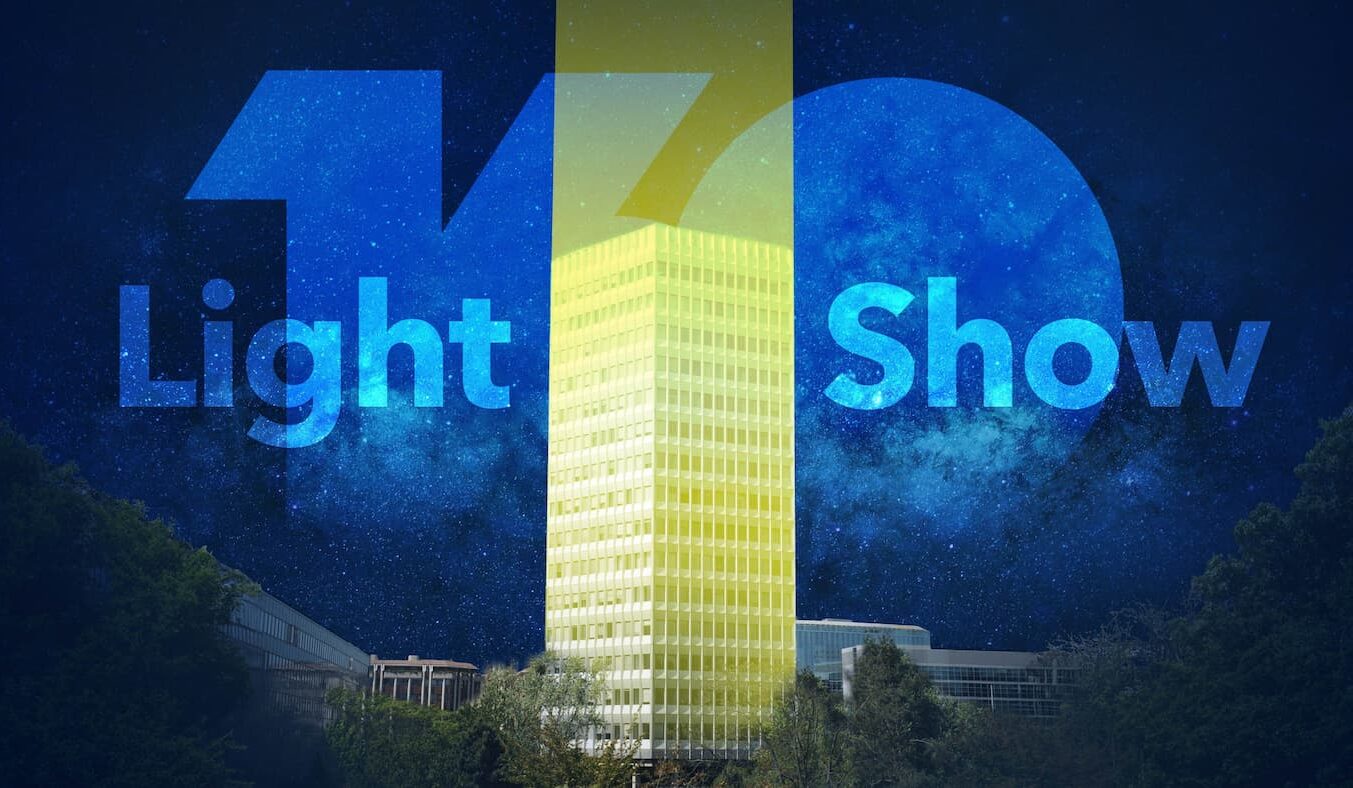
On May 17th, the ITU will mark its 160 years of technology for humanity with a light show at the Place des Nations in Geneva. The first light show starts at starts at 21:30 and will be repeated every 10 minutes until 22:40. Every time you turn on the radio or television, board a plane, call home, go online, use GPS, check the weather, or view satellite images, you use a vital service coordinated by ITU. Join us for a first-ever light show projected onto the iconic ITU Tower, opposite the United Nations Office at Geneva, as part of Geneva Museum Night. Sixteen slides projected on the 15-storey ITU Tower will show highlights of 160 years of technology for humanity, embodying innovation, countries, organizations and people working together, shared achievements and resilience. You will hear from inspiring speakers as to how they are #ConnectedByITU, from the sea to the sky. If you’re in Geneva, come to the Esplanade adjacent to the ITU headquarters buildings, near the Place des Nations. If you’re elsewhere, Learn more and tune in online—you can stream the light show on our social media platforms: Facebook, YouTube, or ITU Webcast live.


This year marks also the 30th anniversary of the Beijing Platform for Action, a global blueprint for advancing women’s rights. The Beijing+30 Action Agenda includes targeted actions to close the digital gender gap — from expanding digital infrastructure to increasing representation in tech leadership. The ITU’s work aligns closely with these efforts through its initiatives, resolutions, and partnerships including:


From 7–11 July 2025; As part of the ITU160 Gender Champions initiative, 10 chosen youngs womens will travel to Geneva to participate in the WSIS+20 High-Level Event, the AI for Good Global Summit, and ITU’s 160th Anniversary commemorations. These 10 young women are emerging leaders, advancing digital transformation and development in meaningful ways across diverse sectors and communities. Their work addresses real-world challenges — from digital literacy and online safety to broadband connectivity and responsible AI — bringing forward solutions that make technology more effective and accessible to all. Launched on the occasion of ITU’s 160th Anniversary, the ITU160 Gender Champions initiative recognizes and supports young women who are contributing to digital development and transformation worldwide. With support from the Government of Canada, the initiative provides a platform for 10 young women leaders (ages 18–25) to share their work, engage with global stakeholders, and help shape the future of digital connectivity. Throughout their week in Geneva, the Gender Champions will:

  1. Engage with key stakeholders in the digital and tech sectors
  2. Amplify their work in digital development and digital transformation, by actively participating in a variety of sessions and activities
  3. Co-design and facilitate with their unique perspective, a workshop on promoting gender equality in digital transformation

Selection process: The Gender Champions were selected from a highly competitive pool of 1,179 applications received from over 150 countries. The final cohort reflects a diversity of regional perspectives and lived experiences, with special consideration given to applicants from developing countries, least developed countries (LDCs), landlocked developing countries (LLDCs), small island developing states (SIDS), Indigenous communities, and young women with disabilities.

Follow along: Updates, stories, and spotlights from the Gender Champions’ week in Geneva will be on ITU’s social media channels, see footer. Stay tuned as we highlight their work and explore how youth leadership is shaping the future of digital development.

CAMPAIGN: Explore how you can get involved this WTISD and help drive inclusive digital transformation. Take action for digital gender equality; Find resources and opportunities to mark WTISD-25 and help close the digital gender gap. Get involved by sharing the visual materials of the campaign which are free to use for non-commercial purposes

Tuesday, 21 August 2012

World Humanitarian Day 2012 - UNHCR Special Envoy Angelina Jolie has written a special message

August 20, 2012 

UNHCR Special Envoy Angelina Jolie has written a special message on the organization’s Facebook page to mark World Humanitarian Day.
“On World Humanitarian Day we remember the aid workers who have lost their lives in the line of duty and we honor the extraordinary courage and dedication of humanitarian workers around the world,” she wrote. “I had the honor and the pleasure of meeting one of these brave individuals before his murder during a visit to Pakistan, where I witnessed first-hand the incredible devotion of a very kind and gentle man. His name was Mr. Zill-e-Usman.”

For this year’s observance of the Day, which fell on 19 August, the UN launched a campaign, entitled ‘I Was Here,’ aimed at engaging one billion people through social media so they can pledge a humanitarian action, and share their individual actions with others through an interactive website, www.whd-iwashere.org. On the morning of Sunday, 19 August, more than one billion messages were shared at the same time.
Organized by OCHA and launched on 2 August, the campaign received the support of US performing artist Beyoncé Knowles, who, along with songwriter Diane Warren, donated the song ‘I Was Here’ to the campaign. Her contribution also included filming a video for the song at the General Assembly Hall at UN Headquarters in New York.

“Thanks to the amazing work of Beyoncé and our partners, we now have a global commitment to humanitarian action. The message of people helping people is universal,” Ms. Amos said. “Making your mark and saying ‘I Was Here’ resonates powerfully with people all over the world.”
According to OCHA, the campaign numbers soared following the release of the ‘I Was Here’ music video on 18 August. The music video’s release included displays on big screens in the cities of Dubai, Geneva, Addis Ababa, as well as in New York City’s Times Square, among other locales.

“I feel like we all want to know that our life meant something and that we did something for someone else. That we spread positivity no matter how big or how small,” Beyoncé had said in the lead up to the Day.
The General Assembly proclaimed 19 August as World Humanitarian Day in 2008 to commemorate the 2003 Canal Hotel bombing in Baghdad, Iraq, which claimed the lives of 22 UN staff members, including the world body’s top envoy to the Middle Eastern country, Sergio Vieira de Mello, and wounded more than 150 people.
The Day aims to honour those who have lost their lives in humanitarian service and those who continue to bring assistance and relief to millions, in addition to drawing attention to humanitarian needs worldwide and the importance of international cooperation in meeting those needs.
Find out more here.

Tuesday, 20 December 2011

International Human Solidarity Day, 20 December 2011

International Human Solidarity Day 2011

International Human Solidarity Day, 20 December 2011: In the Millennium Declaration world leaders identified Solidarity as one of the fundamental values essential to international relations in the twenty-first century and emphasized  that “Global challenges must be managed in a way that distributes the costs and burdens fairly in accordance with basic principles of equity and social justice. Those who suffer or who benefit least deserve help from those who benefit most.” In the context of globalization and the challenge of growing inequality, the strengthening of international solidarity and cooperation is indispensable for the realization of the Millennium Development Goals.
Convinced that the promotion of the culture of solidarity and the spirit of sharing was important for combating poverty, the General Assembly proclaimed 20 December as  International Human Solidarity Day. 
bullet News Release: Durban: An urgent call for ‘preventive’ international solidarity to fight climate change