Showing posts with label End AIDS by 2030. Show all posts

Sunday, 30 November 2025

World AIDS Day 2025; December 1st.


FORUM: "Overcoming disruption, transforming the AIDS response." World AIDS Day 2025. Highlighting the impact of disruptions on the AIDS response, showcasing the resilience of countries and communities, and calling for global solidarity to end AIDS by 2030. On December 1st, speak up for health equity. Help us ensure that everyone, everywhere, has the right to quality healthcare services in the fight against HIV and AIDS. Follow the conversations with the hashtags: #Worldaidsday, #1December on social medias.

WORLD AIDS DAY 2025


EVENT: On December 1st, the WHO joins partners and communities to commemorate the World AIDS Day 2025, under the theme "Overcoming disruption, transforming the AIDS response".


The WHO, UNAIDS and The Global Fund are co-hosting a joint commemoration event at UNAIDS headquarters in Geneva. The event will showcase how the disruptions caused by the funding crisis are threatening to unravel decades of progress and will highlight examples of resilience from countries and communities, and make a strong and urgent call for global solidarity.
 

15:30–17:00 High-level panel discussions on understanding the global context and leadership moment; examining the lived realities of disruptions; and identifying the pathways forward through resilience, community leadership and innovation. Guests are invited to be seated by 15:20. Livestreaming begins at 15:30.

17:00–18:00 Reception

The Geneva event will be livestreamed around the world. It will be followed by a commemorative walk organized by the Group of people living with HIV in Geneva (PVA Genève).


World AIDS Day 2025


Statement by the United Nations Secretary-General of the United Nations, on World AIDS Day 2025.


This World AIDS Day reminds us that we have the power to transform lives and futures, and end the AIDS epidemic once and for all. The progress we have made is undeniable. Since 2010, new infections have fallen by 40 per cent. AIDS-related deaths have declined by more than half. And access to treatment is better than ever before. But for many people around the world, the crisis continues. Millions still lack access to HIV prevention and treatment services because of who they are, where they live or the stigma they endure. Meanwhile, reduced resources and services are putting lives at risk and threatening hard-won gains. Ending AIDS means empowering communities, investing in prevention and expanding access to treatment for all people. It means uniting innovation with action, and ensuring new tools like injectables reach more people in need. At every step, it means grounding our work in human rights to ensure no one is left behind. Ending AIDS as a public health threat by 2030 is within grasp. Let’s get the job done.

António Guterres, 


December 1st.


SPEAKERS ▪ H.E. Mr. Sérgio França Danese, Ambassador, Permanent Representative of Brazil to the UN ▪ H.E. Mrs. Lise Gregoire-van Haaren, Ambassador, Permanent Representative of the Netherlands to the UN ▪ Mr. Jesús Aguais, President, Aid for AIDS ▪ Ms. Keren Dunaway, UNAIDS PCB NGO Delegate / LLAVES and ICW Global (online) ▪ Dr. César Nuñez, UNAIDS NYO Director, moderato

An event to commemorate the 2025 World AIDS Day. Related Document: Event Flyer.

Sunday, 1 December 2024

World Aids Day 2024; December 1st.

FORUM:“Take the rights path: My health, my right!World Aids Day 2024. The world can end AIDS – if everyone’s rights are protected. With human rights at the centre, with communities in the lead, the world can end AIDS as a public health threat by 2030. Follow the conservation with the hashtags:  #Worldaidsday, #1December, #equilize


EVENTS: On December 1st; The WHO joins partners and communities to commemorate the World AIDS Day 2024 under the theme “Take the rights path: My health, my right!”, WHO is calling on global leaders and citizens to champion the right to health by addressing the inequalities that hinder progress in ending AIDS.

Launch of World AIDS Day Report 2024—Take The Rights Path.


Speakers: 

  •  Christine Stegling, Deputy Executive Director, UNAIDS
  • Axel Bautista, Community Engagement Manager, MPact, Mexico City
  • Alexandra Calmy, Head of HIV Services, Geneva University Hospitals, Switzerland
  • Jeanne Gapiya-Niyonzima, Chair of the National Association for Support for HIV+ people living with AIDS, Burundi
  • Berthilde Gahongayire, Regional Director, West and Central Africa region, UNAIDS


Statement by António Guterres, Secretary-General of the United Nations, on World AIDS Day 2024; December 1st.

"Ending AIDS as a public health threat by 2030 is achievable. But reaching this goal requires breaking down the barriers keeping people from vital services. Every 25 seconds, someone in the world is infected with HIV. One-quarter of people living with HIV — more than nine million people — lack access to lifesaving treatment. Discriminatory laws, policies and practices punish and stigmatize vulnerable people — especially women, girls and minorities — preventing their access to proven preventions, testing, treatment and care. This year’s World AIDS Day reminds us the fight against AIDS can be won if leaders take a rights-based approach to ensure that everyone — especially the most vulnerable — can get the services they need without fear. The inspirational advances made in the global HIV response have been powered by global solidarity and human rights. We will overcome AIDS if the rights of everyone, everywhere, are protected. I call on all leaders to heed this year’s theme and take the “rights” path.


Make Your Voice Count!

On 1 December, speak up for health equity. Help us ensure that everyone, everywhere, has the right to quality healthcare services in the fight against HIV and AIDS.


Health is a human right.

Everyone should have access to the health services they need, including HIV prevention, treatment and care services when and where they need them. Protecting rights means ensuring that healthcare is available to everyone, without any discrimination, regardless of their HIV status, background, gender, or where they live.


Prevention empowers and protects.

Empowering individuals with access to HIV prevention tools, education, and services protects not only their health but also their rights. Equal access to prevention is key to stopping new infections.


Address stigma and discrimination.

Stigma and discrimination undermine the fight against AIDS. Protecting human rights is essential to achieving universal HIV care and breaking down barriers to access.


Prioritize and reach vulnerable and key populations.

Ending AIDS requires that we prioritize and engage everyone who is living with, at risk for or affected by HIV, including vulnerable and marginalized populations - children, men who have sex with men, transgender people, people who use drugs, sex workers, and people in prisons and other closed settings. This is essential to ensure an effective and durable response to HIV that honor’s the right to health.


Champion access to life-saving treatment to achieve HIV viral suppression.


With early diagnosis and consistent antiretroviral therapy, people living with HIV can lead long, healthy lives—just like those who are HIV-negative. Achieving and maintaining an undetectable viral load by taking antiretroviral therapy as prescribed means zero risk of transmission, empowering individuals and protecting communities.


CALL TO ACTION

General public
  • Advocate for policies that ensure everyone has access to HIV prevention, treatment, and care - share your support on social media using # #WorldAIDSDay2024;
  • Learn about the inequalities driving the AIDS epidemic and educate others;
  • Support local health initiatives working to end AIDS;
  • Join global and local campaigns demanding health as a fundamental right.

Health workers

  • Advocate for access to essential HIV services;
  • Incorporate HIV into routine health interventions;
  • Deliver care that is kind, respectful of human rights and without stigma.

Ministries of Health, National AIDS Commissions and other public health leaders
  • Allocate sufficient resources improve the quality of HIV services and make them more resilient and sustainable;
  • Focus efforts to reach populations that are vulnerable or that are key to the HIV response, including, children, men who have sex with men, transgender people, people who use drugs, sex workers, and prisoners;
  • Empower communities to combat stigma and discrimination.
  • Support and empower frontline health workers (nurses, midwives and community health workers) to deliver high-quality HIV services, while recognizing their critical contributions in providing HIV services;
  • Ensure appropriate and safe working environment to improve the safety of working conditions in health care settings.
Civil society
  • Help to reach vulnerable, stigmatized and other difficult-to-reach populations;
  • Speak out against stigma and discrimination;
  • Help young people take leadership in the AIDS response.

Community leaders
  • Ensure essential HIV services are maintained in the community;
  • Reach out to key and vulnerable populations and assist them to access HIV services when needed;
  • Ensure that adolescents, youth at risk, pregnant women and infants receive adequate care that incorporates HIV;
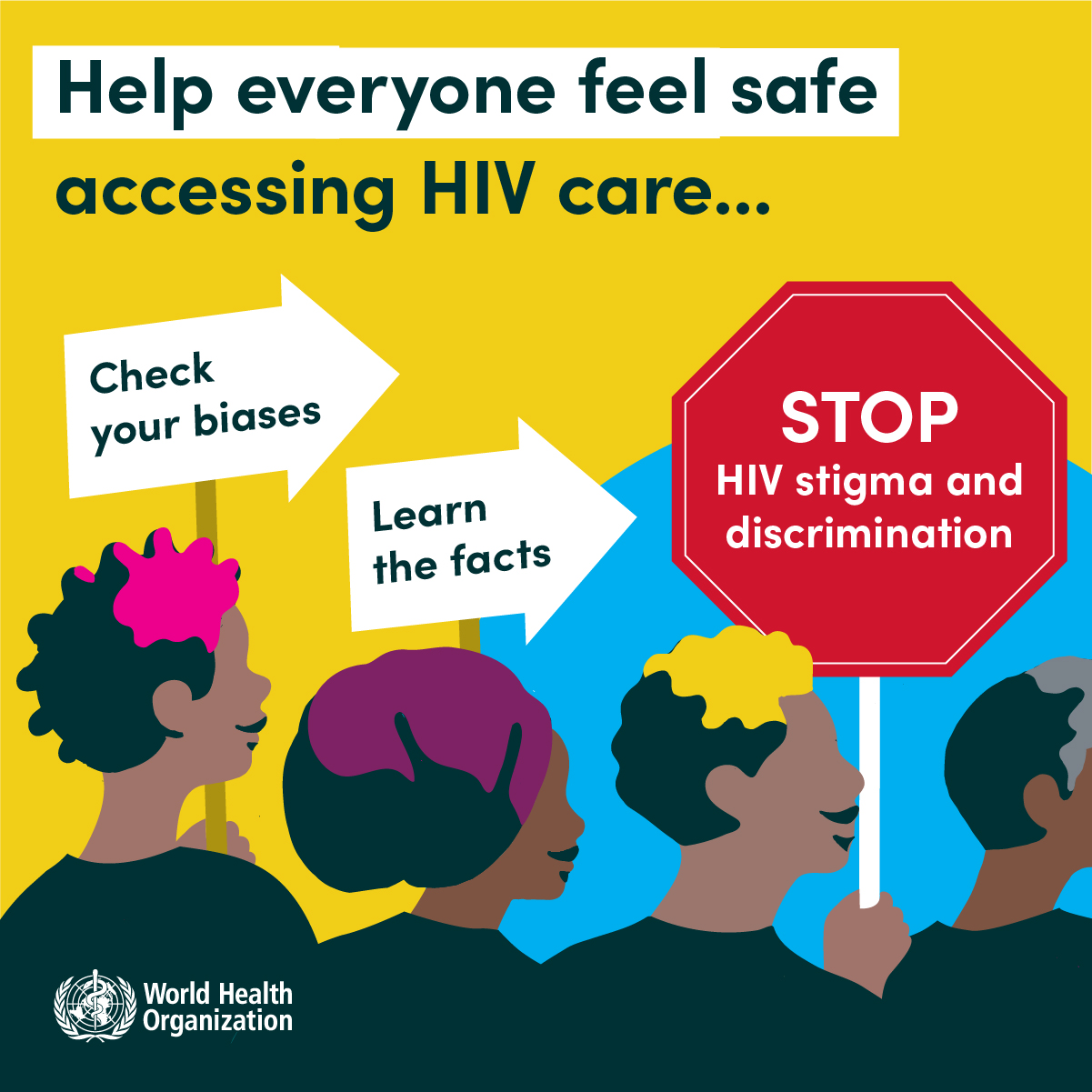
  • Combat stigma and discrimination to ensure that everyone feels safe to access HIV services;
  • Support health workers to provide HIV services to everyone in the community.

HIV program managers
  • Focus on key and vulnerable populations for delivery of HIV services.
  • Support and empower health workers to deliver high quality HIV services to everyone who needs them;
  • Ensure adequate training in HIV services for health workers.