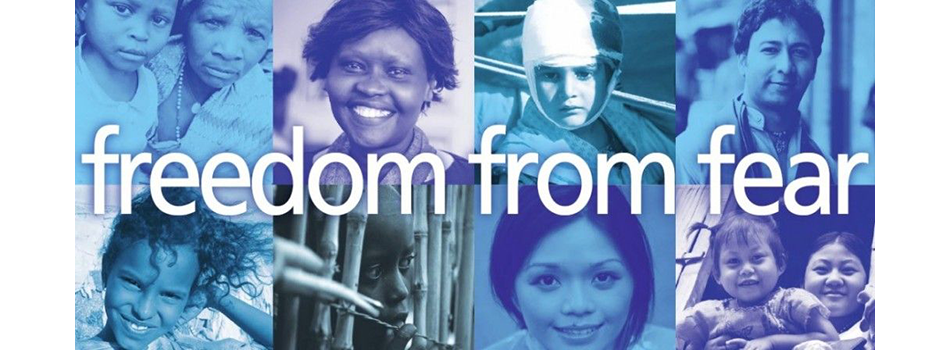
FORUM: "Until Everyone is Safe" World Refugee Day 2026. The United Nations Refugee Agency (UNHCR), informed that the date of June 20 is dedicated to stand with refugees and people forced to flee. There would be events around the world. UNHCR's new initiative "Until Everyone is Safe" asked for the defense of the fundamental right to seek safety, and it was important to remember that protection saved lives. The initiative spoke to younger generations driven by a desire for social justice and solidarity while also facing uncertainty and socio-economic pressures. It invited them to see asylum not as a distant, abstract issue, but as a collective safety net – one that protected the most vulnerable today and could protect any of us tomorrow. "Until Everyone is Safe" challenged stereotypes about refugees and emphasizes that the right to seek safety was a lifeline that went beyond merely escaping war or violence. It complemented the High Commissioner's recently outlined goal of reducing by more than half, over the next decade, the number of refugees in long-term displacement reliant on humanitarian assistance. To achieve this, it would be essential to expand opportunities for voluntary return and resettlement, as well as access to jobs, healthcare and education, and support for local integration – enabling refugees to move beyond survival and rebuild their lives in dignity. This year, solidarity was more important than ever as the right to seek asylum was under growing pressure around the world. UNHCR called on all to defend this lifeline and keep the promise of safety alive. Follow the conversations with the hashtags: #20june, #solidaritywithrefugees, #campaign, #worldrefugeeday.
As divisions deepen across our world, new and protracted conflicts are compelling millions of women, children and men to seek safety far from home.
These turbulent times must be a moment for renewed solidarity and robust action to protect people displaced by conflict or persecution. That includes upholding the Refugee Convention, which has saved millions of lives since its adoption 75 years ago in the aftermath of the Second World War.
On World Refugee Day, we call for stronger support for all those forced to flee, as well as the countries and communities hosting them. By upholding international refugee law. Safeguarding the right to seek asylum. Forging solutions that enable refugees to live in safety and dignity, with real opportunities for self-reliance. And redoubling efforts towards peace.
Let us be inspired by the generosity of communities in developing countries, which host nearly three-quarters of the world’s refugees.
Together, we can protect the rights of all people forced to flee, now and for generations to come.
António Guterres, Secretary-General.
CAMPAIGN MATERIALS
This year, World Refugee Day focuses on the right to seek safety as a common safeguard for all of us.
The right to seek safety was made for you and me. 75 years ago, after the Second World War, the world made a promise: people forced to flee have the right to seek safety and protection. It was never meant for a few. It was meant for all of us.
No one is safe until the most vulnerable among us are. When people are forced to flee their homes, we all have a role to play. Ensuring protection for refugees strengthens communities, promotes stability, and saves lives.
This World Refugee Day, help keep the promise of safety alive. Stand with refugees. Until everyone is safe, we show up. Until everyone is safe, the work is not done. Get the poster!
During my decade as United Nations High Commissioner for Refugees, I witnessed the resilience and contributions of refugees across all walks of life. Their perseverance in the face of adversity inspires me every day. Refugees represent the very best of the human spirit. They need and deserve support and solidarity — not closed borders and pushbacks. As we mark World Refugee Day, we confront a startling statistic. More than 100 million people living in countries rocked by conflict, persecution, hunger and climate chaos have been forced to flee their homes. These are not numbers on a page. These are individual women, children and men making difficult journeys — often facing violence, exploitation, discrimination and abuse. This Day reminds us of our duty to protect and support refugees — and our obligation to open more avenues of support. This includes solutions to resettle refugees and to help them rebuild their lives in dignity. We need greater international support for host countries, as called for by the Global Compact for Refugees, to boost access to quality education, decent work, health care, housing and social protection. And we need much stronger political will to make peace, so refugees can return safely to their homes. This year’s theme is “Hope Away from Home.” I call on the world to harness the hope that refugees carry in their hearts. Let’s match their courage with the opportunities they need, every step of the way.
Antonio Guterres; United Nations Secretary-General.
Why: The refugee problem continues to be a persistent challenge on the African continent due to complex factors. Conflicts and political instability affecting parts of Africa continue to force multitudes of African people into forced displacement in different countries. The widespread use of Small Arms and Light Weapons (SALW), terrorism and religious extremism has further compounded the situation, and also resulted in lives lost, homes and properties destroyed. These challenges are compounded by a sharp increase in food insecurity; notably in the Horn of Africa, Central Africa, Central and Western Sahel due to a combination of back-to-back poor rainy seasons, raging and protracted armed conflict with inter-communal violence in some of the contexts. Over 8 Million refugees currently seek asylum and are in need of International Protection on the continent. While some of the refugee situations are relatively new, many are protracted, dating back to over 30 years. In some instances, refugees have been displaced multiple times and some refugees have their third or even fourth generation living in asylum, with most having no connection to their places of origin. All this continues to create desperation and despair, in addition to eroding community resilience and self-reliance.
Many AU Member States have largely maintained a favorable asylum space allowing forcibly displaced persons access to their territory to seek and enjoy asylum, an approach that is buoyed by the African spirit of Ubuntu. The African Union (AU) and Regional Economic Communities (RECs) on their part have also shown strong momentum in responding to the ongoing crises at a time when humanitarian needs are severely underfunded due to competing needs globally. The African Continent also has one of the most progressive refugee legal framework. The 1969 OAU Refugee Convention (Governing Specific Aspects of Refugees), the bedrock of refugee protection on the continent, is considered the most generous and flexible international agreement on refugee protection. In addition to the 1969 OAU Convention, other regional human rights instruments, such as the African Charter on Human and Peoples Rights, and international conventions provide a full spectrum of refugee protection rights and obligations. The 2009 Kampala Convention, expanded on both the protection and assistance of both displaced persons and refugees, whilst also bringing the beneficial effects of durable solutions to both categories.
The 2023 World Refugee Day highlights the necessity to include refugees in national socio-economic systems. Including refugees in the communities where they have found safety after fleeing conflict and persecution is the most effective way to support them in restarting their lives and enable them to contribute to the countries hosting them. It’s also the best way to prepare them to return home and rebuild their countries, when conditions allow them to do so safely and voluntarily, or to thrive if they are resettled to another country. In line with the theme, the African Union are organising a panel discussion to theme Refugee inclusion: What role can key stakeholders play in moving the agenda forward?
Refugee inclusion is even more timely as the African Union and international community prepare for 2023 Global Refugee Forum (GRF), which will take place between 13 - 15 December in Geneva, with advance events on 12 December. It will provide an opportunity to build on the significant progress made by governments and other stakeholders towards the implementation of pledges and initiatives announced since 2019.
Objective: The objective of the commemoration initiative is to generate attention to the situation of refugees in Africa, the efforts of stakeholders in determining root causes and implementing policies to protect, assist, and find durable solutions for affected populations by:
1. Creating continental awareness of the ongoing pressing refugee needs and take stock of the challenges over the years and echo the growing consensus on the humanitarian emergencies driven by a combination of complex and inter-related circumstances;
2. Highlighting efforts of the African Union, Member States, and partners to prevent forced displacement, protect and assist people during displacement, and realize durable solutions for displaced people. Within this context, reflect on the new African Humanitarian Architecture, principally the operationalization of the African Humanitarian Agency as a vehicle for humanitarian action on the continent while noting the challenges on refugee protection and humanitarian access;
3. Reflecting on the outcomes of the humanitarian and pledging summit held in May 2022 in Malabo and mobilize support for post-Malabo plans of the AU Commission, the PSC, Member States, and Humanitarian Partners;
4. Stressing that respect for relevant legal frameworks including the 1969 OAU Convention, 2009 Kampala Convention and the CAP Humanitarian Effectiveness as it contributes to reducing the scale and impact of protection challenges for refugees, asylum seekers and bolstering of their welfare;
5. Emphasizing the imperatives of political and durable solutions; and
6. Accentuating the fundamental importance of adequate resources in the face of escalating Protection and Assistance needs for refugees.
Participant: Participants will include: Representatives from select AU member states hosting significant numbers of refugees; RECs and RMs; Representatives from the AU Commission and Organs; International Organizations: United Nations Office to the African Union (UNOAU), European Union (EU); Representatives from the AU partners Group (AUPG): Canada, The Netherlands, Switzerland, USA, France; Institute for Peace and Security Studies (IPSS); Institute for Security Studies (ISS); and Media.
Media representatives are invited to cover the Commemoration of the World Refugee Day 2023 on 20th June 2023.
For any additional information kindly contact:
1. Mr. Michel Nshimba | OIC Humanitarian Division, Department of Health, Humanitarian Affairs and Social Development | E-mail: Nshimbam@africa-union.org
Forced displacement has reached unprecedented levels, with more than 65 million people uprooted from their homes globally. New and recurring conflicts, and ever-more disturbing forms of violence and persecution, are driving people to flee in search of safety within their own countries, or to cross international borders as asylum seekers or refugees. Others are living in long-term exile, as solutions to protracted conflicts remain elusive. At the end of 2015, there were 21.3 million refugees, 3.2 million people in the process of seeking asylum, and 40.8 million people internally displaced within their own countries.
World Refugee Day is a moment for taking stock of the devastating impact of war and persecution on the lives of those forced to flee, and honouring their courage and resilience. It is also a moment for paying tribute to the communities and States that receive and host them, often in remote border regions affected by poverty, instability and underdevelopment, and beyond the gaze of international attention. Nine out of ten refugees are today living in poor and middle income countries close to situations of conflict.
Last year, more than 1 million refugees and migrants arrived in Europe across the Mediterranean, in unseaworthy dinghies and flimsy boats. Thousands did not make it -- tragic testimony to our collective failure to properly address their plight. Meanwhile, divisive political rhetoric on asylum and migration issues, rising xenophobia, and restrictions on access to asylum have become increasingly visible in certain regions, and the spirit of shared responsibility has been replaced by a hate-filled narrative of intolerance. We see a worrisome increase in the use of detention and in the construction of fences and other barriers.
With anti-refugee rhetoric so loud, it is sometimes difficult to hear the voices of welcome. But these do exist, all around the world. In the past year, in many countries and regions, we have witnessed an extraordinary outpouring of compassion and solidarity, as ordinary people and communities have opened their homes and their hearts to refugees, and States have welcomed new arrivals even while already hosting large numbers of refugees.
There is an urgent need to build on and amplify these positive examples. Our responses to refugees must be grounded in our shared values of responsibility sharing, non-discrimination, and human rights and in international refugee law, including the principle of non-refoulement. On 19 September, the UN High-Level Plenary of the General Assembly on Addressing Large Movements of Refugees and Migrants will offer a historic opportunity to agree a global compact, with a commitment towards collective action and greater shared responsibility for refugees at its core.
We must stand together with the millions of men, women and children who flee their homes each year, to ensure that their rights and dignity are protected wherever they are, and that solidarity and compassion are at the heart of our collective response.
The report focuses on three interdependent pillars. It calls for a new comprehensive framework and makes recommendations to address issues of common concern, including the causes of such movements, protecting those who are compelled to undertake such journeys and preventing discrimination and xenophobia frequently encountered.
Today, on World Refugee Day, we recognize the challenges and hardships that refugees face, honor their courage and resilience in the face of overwhelming obstacles, and celebrate their many valuable contributions to our Nation.
This year’s commemoration comes as the UN High Commissioner for Refugees reports that more people are displaced by rising violence, insecurity, and persecution than at any time on record. More than 65 million people around the world – more than the population of France, or California and Texas combined – have been driven from their homes. More than half are children. The scale of this human suffering is almost unimaginable; the need for the world to respond is beyond question.
Every day, members of the international community, humanitarian organizations, civil society, and individual citizens work to assist these vulnerable populations. For our part, the United States provides more humanitarian assistance to refugees than any other nation and maintains the world’s largest refugee resettlement program. We support programs that provide food, water, shelter, and medical care to refugees, and fight for their rights to safety, dignity and long-term livelihood opportunities.
But responding to today’s unprecedented challenge requires all of us to do more. In September, when world leaders meet for the UN General Assembly, I will convene a Leaders’ Summit on Refugees. In advance of that Summit, the United States is urging other governments to contribute more funding for humanitarian aid operations, to grant more refugees the chance to work and attend school, and to provide more resettlement opportunities for refugees who cannot safely go home or remain where they are. We are urging our non-governmental partners, including the private sector, to do more as well.
Even as our aid supports refugees thousands of miles from here, each day, countless Americans do their part to welcome and support refugees as they start life anew in the United States. The millions of refugees who have resettled here through the years have brought similar dreams of a better tomorrow. Each has enriched the diverse mosaic that is America. Their lives and their many accomplishments stand as a clear rebuke to the bigotry and brutality they fled, and serve as a powerful example of the human will to endure, hope, and achieve.
Today, we commemorate the spirit and strength of refugees worldwide and the dedication of those who help them on and after their journeys. Protecting and assisting refugees is a part of our history as a Nation, and we will continue to alleviate the suffering of refugees abroad, and to welcome them here at home, because doing so reflects our American values and our noblest traditions as a Nation, enriches our society, and strengthens our collective security.
Today, we honor refugees’ resilience and courage. We also recognize the tremendous contributions made by local and international non-governmental organizations on the front lines of delivering life-saving assistance. This year’s commemoration comes at a time when brutal conflicts are forcing record numbers of innocent people to flee, and challenging the world to find better ways to protect them. The war in Syria alone has displaced more than 11 million people – half of that nation’s pre-war population. Millions more have fled Daesh’s atrocities in Iraq, civil wars in Yemen and South Sudan, political violence in Burundi, and Boko Haram’s rampages through Nigeria, Cameroon, Niger, and Chad.
The number of forcibly displaced people is the largest ever recorded. Sixty-five million people are refugees, internally displaced or seeking asylum, five million more than a year ago.
World War II, another era of mass displacement, taught us indelible lessons about our collective duty to aid victims of conflict and persecution. The global humanitarian system our leaders assembled in the aftermath of that war has saved millions of lives. Throughout that time, the United States government has funded and continues to galvanize support for humanitarian operations. Last year alone, U.S. humanitarian aid exceeded $6 billion.
But this good work and the resources we and other donors provide are not keeping pace with today’s unprecedented needs – because there are so many refugees, because they are staying in exile longer, and because countries hosting them are overwhelmed. More than eight in ten who flee across borders take refuge in poor or middle income countries, often in countries struggling to provide even their own citizens with basic necessities like health care, education, and clean water.
The United States is determined to find solutions. That is why, on September 20, at the UN General Assembly in New York, President Obama will host a Leaders’ Summit on Refugees asking nations to make concrete commitments toward expanding the humanitarian safety net and creating more long-term, durable opportunities for refugees. In the meantime, we will remain committed to providing humanitarian assistance across the globe, while also expanding our own refugee resettlement program – from nearly 70,000 admitted last year to 85,000 from across the world in 2016.
The refugees we welcome to the United States will join previous generations who have come to this country to escape violence and persecution – threats to human life and dignity that remain all too real today. History celebrates such moments when we have overcome bias and fear, and opened our doors. Those who have walked through them have made immeasurable contributions to our community of citizens and enriched our lives. Their achievements are a testament to the potential all humans have to heal, to overcome loss, to start over, and to the obligation we share, to give future generations that chance.
In honor of World Refugee Day on June 20, officials from the U.S. Department of State are participating in a variety of outreach activities in Baltimore, Washington, D.C., New York City, and New Jersey to honor the contributions of refugees making new lives in communities across the U.S.
U.S. Secretary of State John Kerry will be attending an interfaith Iftar reception this evening at the All Dulles Area Muslim Society center in Sterling, Virginia, where he is looking forward to meeting with refugee families and the communities that have so generously welcomed them to the United States. He will be joined in making remarks and meeting with community leaders by United Nations High Commissioner for Refugees Special Envoy Angelina Jolie Pitt, a tireless advocate on behalf of refugees.
This afternoon, the Secretary and Special Envoy Jolie Pitt will meet with a group of State Department employees who are former refugees or the sons and daughters of refugees. Following that roundtable, the Secretary and Special Envoy will hold a bilateral meeting to discuss refugee and other issues. The Secretary will also speak with a group of college students who are visiting the Department to participate in the U.S. Diplomacy Center’s diplomatic simulation on refugees and forced displacement. He will have the opportunity to see young Americans engaged in learning how to resolve a simulated humanitarian crisis through diplomacy.
Ambassador Samantha Power will represent the United States Mission to the United Nations later tonight at a photo exhibit organized jointly with the United Nations High Commissioner for Refugees (UNHCR) at the New York Public Library.
Recognizing refugees’ contributions to American society, U.S. Deputy Secretary of State Antony Blinken will represent the Department at a naturalization ceremony being held today at the Holocaust Museum in Washington, D.C. He will deliver remarks, and welcome some of America’s newest citizens to a nation founded on the perseverance and dedication of immigrants. Deputy Secretary Blinken will also attend a small, informal training session for community leaders from across the United States who came to America as refugees and are dedicated to helping arriving refugees to integrate successfully.
U.S. Deputy Secretary for Management and Resources Heather Higginbottom will participate in a public service announcement sponsored by the Ad Council. Through this campaign, Deputy Secretary Higginbottom will explain the strength and importance of the U.S. Refugee Admissions Program, and will highlight the positive impact that refugees have on their communities.
This past weekend, U.S. Assistant Secretary of State for Population, Refugees, and Migration Anne C. Richard spoke with refugees in Baltimore at a World Refugee Day event sponsored by representatives of the local community. Joined by the Mayor of Baltimore Stephanie Rawlings-Blake, Assistant Secretary Richard conveyed her deep, heartfelt appreciation for the Baltimore community’s outstanding support for refugees, and her admiration for those who are leading successful lives in their new homes. Today, Assistant Secretary Richard, U.S. Assistant Secretary of State Anne Patterson, and U.S. Assistant Secretary of State Linda Thomas-Greenfield will discuss the refugee crisis and other foreign policy issues at a luncheon held today by the Women’s Foreign Policy Group.
Special Representative for Religion and Global Affairs Shaun Casey will travel to New Jersey later this week to attend a World Refugee Day event hosted by a local resettlement agency, highlight the role of religious communities in welcoming refugees, and thank local volunteers for their contributions. Special Representative to Muslim Communities Shaarik Zafar and Assistant Secretary Richard will join the Secretary at the interfaith dinner tonight at the All Dulles Area Muslim Society in Sterling, Virginia.
Special Representative for Business and Commercial Affairs Ziad Haidar is meeting today with business owners and refugees to discuss how refugees can and do fill roles much in demand in today’s economy – from healthcare to education to technology.
These efforts demonstrate the Department’s commitments to leading the global response to refugee crises, through the provision of humanitarian assistance and in marshaling our diplomatic resources to ask every individual and every nation to do more.
Building on this commitment, President Obama will co-host the Leaders’ Summit on Refugees in New York on September 20. The goal of the President’s summit is to expand the humanitarian safety net and create more long-term, durable opportunities for refugees.
The United States remains committed to finding safe, new lives for the world’s most vulnerable people as they flee conflict, terrorism, and persecution.
In a world where violence forces hundreds of families to flee each day, the UN Refugee Agency believes now is the time to show world leaders that the global public stands with refugees, and it will launch its#WithRefugees petition on June 20th to send a message to governments that they must work together and do their fair share for refugees.
The #WithRefugees petition aims to gather public support for the growing number of families forced to flee conflict and persecution worldwide, who currently face heightened anti-refugee rhetoric coupled with greater restrictions to asylum, according to the Office of the UN High Commissioner for Refugees (UNHCR).
“We are in a period of deepening conflict and turmoil in the world, which is causing many more people to flee their homes than before,” said Filippo Grandi, UN High Commissioner for Refugees. “It affects and involves us all, and what it needs is understanding, compassion and political will to come together and find real answers for the refugee plight. This has become a defining challenge of our times,” he said.
In 2015, millions of people were newly displaced, adding again to the global refugee and internal displacement totals. Overwhelmingly, it was countries of the developing world that were most affected, but Europe too witnessed dramatic scenes, as hundreds of thousands of people crossed the Mediterranean in search of safety and refuge. Thousands died along the way, according to the agency chief.
“At the same time, there was an extraordinary outpouring of empathy and solidarity, as ordinary people and communities opened their homes and their hearts to refugees, and some countries have welcomed new arrivals even while already hosting large numbers of refugees,” he explained and added: “The #WithRefugees campaign and petition aims to amplify those voices of welcome and show that the world stands with refugees.”
The petition calls on Governments to ensure that every refugee child gets an education, every refugee family has somewhere safe to live, and every refugee can work or learn new skills to make a positive contribution to their community.
Among those celebrities are UNHCR Goodwill Ambassador Cate Blanchett, best-selling author Khaled Hosseini and supermodel and former refugee Alek Wek.
Others lending support include faith leaders Archbishop Desmond Tutu and Venerable V. Vajiramedhi, as well as actors Benedict Cumberbatch, Chiwetel Ejiofor, Margot Robbie, Ben Stiller and Dame Helen Mirren and singers Juanes, Mika, Maher Zain and Babaa Maal.
“We are in the middle of a catastrophic displacement crisis that has already uprooted millions of innocent families, and seen too many lose their lives trying to reach safety,” said Ms. Blanchett.
“The ultimate solution is political – we need peace and stability. But whilst we wait for that, we – as people with a voice – can and must play our part,” she stressed, urging all countries to take a shared responsibility for ensuring refugees have protection, shelter and the chance to live a productive life. “If enough of us stand together, we will be heard.”
“Refugees are mothers, fathers, sisters, brothers, children, with the same hopes and ambitions as us; except that a twist of fate has bound their lives to a global refugee crisis on an unprecedented scale,” said Mr. Hosseini.
The petition will be delivered to the UN Headquarters in New York, ahead of September’s High-Level Meeting of the General Assembly on addressing large movements of refugees and migrants.
Forum : The terms refugee and migrant are often used interchangeably but do you know the difference?
The #WithRefugees petition will be delivered to UN headquarters in New York ahead of the UN General Assembly meeting on September 19. The petition asks governments to:
Ensure every refugee child gets an education.
Ensure every refugee family has somewhere safe to live.
Ensure every refugee can work or learn new skills to make a positive contribution to their community
Mediterranean sea arrivals
Events :
Ahead of the World Refugee Day on 20 June, more than 60 film, TV and music stars have joined refugees, faith leaders and the United Nations refugee agency staff to back a petition highlighting the plight of forcibly displaced people.
Find out about the UN General Assembly high-level Summit to be held on 19 September,2016 on Refugees and Migrants .
Angelina Jolie Pitt, the UN refugee agency's special envoy, has warned that the international humanitarian system for refugees is breaking down. Ms Jolie Pitt has been speaking as part of the BBC's World on the Move day of coverage of global migration issues. She warned against a "fear of migration" and a "race to the bottom" as countries competed to be the toughest to protect themselves.
Ensuring access to territorial protection and asylum procedures; protection against refoulement; and the adoption of nationality laws that prevent andor reduce statelessness
Securing birth registration, profiling and individual documentation based on registration
Reducing protection risks faced by people of concern, in particular, discrimination, sexual and gender-based violence and specific risks faced by children
Reducing mortality, morbidity and malnutrition through multi-sectoral interventions
Meeting international standards in relation to shelter, domestic energy, water, sanitation and hygiene
Promoting active participation in decision making of people of concern and building coexistence with hosting communities
Promoting Human potential through increased opportunities for quality education and livelihoods support
Expanding opportunities for durable solutions for people of concern...
Briefing to the media by United Nations Deputy Secretary-General, Mr. Jan Eliasson, and the Special Adviser on the Summit on Addressing Large Movements of Refugees and Migrants, Ms. Karen AbuZayd, on the launch of the Secretary-General's report "In Safety and Dignity: Addressing Large Movements of Refugees and Migrants".
The UNHCR WASH Manual is a comprehensive and authoritative reference document for WASH interventions in refugee settings, built upon the experience of UNHCR and WASH organisations.
International migration is a powerful tool for reducing poverty
and enhancing opportunity. That is why there are now some 232 million
international migrants bringing consistent benefits to countries of
destination and origin through their essential labour and remittances.
Yet, this important population remains largely invisible and unheard in
society. Too many live and work in the worst conditions with the least
access to basic services and fundamental rights, making them
disproportionately vulnerable to extortion, violence, discrimination
and marginalization.
Almost half of migrants are women; one in ten is under the age
of 15; forty per cent live in developing countries. Poor and
low-skilled migrants face the highest barriers to social mobility. The
United Nations is acting to safeguard the rights of migrants, lower the
social and economic costs of migration, and promote policies that
maximize the benefits of mobility. Migrants should not be forced to
risk lives and dignity seeking better lives. Earlier this year, the
Convention Concerning Decent Work for Domestic Workers, many of whom
are migrants, came into force. And, in October, United Nations Member
States called for the post-2015 UN development agenda to take full
account of the positive impact of international migration. They also
committed to develop a framework for protecting migrants affected by
humanitarian crises and recognized the need to facilitate international
cooperation to address the challenges of migration in a holistic and
comprehensive manner, with full respect for human rights.
On this International Migrants Day, I urge Governments to ratify
and implement all core international human rights instruments,
including the International Convention on the Protection of the Rights
of All Migrant Workers and Members of their Families. And I call on
people and Governments everywhere to reject xenophobia and embrace
migration as a key enabler for equitable, inclusive and sustainable
social and economic development. Migration is a reality of the 21st
century. It is essential that we conduct an open debate on this
important subject. Let us make migration work for the benefit of
migrants and countries alike. We owe this to the millions of migrants
who, through their courage, vitality and dreams, help make our
societies more prosperous, resilient and diverse.
Ban Ki-moon
This year was costliest on record for lives of migrants who died while crossing international borders IOM says.
For several years I have been saying that migration can be summed up by a series of D words: Demographics, Disasters, Demand, Disparities and Dreams. This year I am adding a new D: Desperation.
The world watched in horror in October when some 360 African migrants lost their lives within sight of land while attempting to reach the Italian island of Lampedusa. Untold hundreds have perished on the journey from Indonesia to Australia, or off the coast of Thailand. Migrants from Central America are raped, robbed, beaten and killed as they try to enter the USA from Mexico. African migrants die of thirst in the vast desert reaches – their bones the only testimony to their failed journey.
Why do people risk their lives and the lives of their families, over and over, every hour of every day when the best that awaits them is a frosty welcome?
The answer is simple: Desperation. They fear staying in a land where they face persecution, or where their family starves. That desperation makes the risk of death a gamble they believe worth taking.
Migrants face death, danger and disappointment in search of their dreams. They may be materially poor, and lack hope, they may take on massive debts from corrupt recruitment agencies or traffickers and smugglers in the hope of getting to a safe place, for a new start. They are often forced by economics and lack of land to the most dangerous places – the shoreline, the mountain slope, the riverside – and migrate because their shacks are washed away by climate extremes.
We believe that 2013 may have been the worst on record for migrant deaths. We will never know the true total, as many migrants died anonymously in deserts, in oceans or other accidents. However, our figures show that at least 2,360 migrants died this year, chasing the dream of a new life. That’s over six a day; one every four hours.
We live in an era of unprecedented human mobility, with more people on the move than any other time in recorded history. Natural disasters and conflict are adding to levels of migration: some 5,000 people a day left the Central Philippines following typhoon Haiyan last month. A further 100,000 fled fighting in the Central African Republic in December alone.
For the poorest, most desperate migrants, borders have been shut over the years as countries respond to political drumbeats of alarm and move to curtail immigration.
The paradox is that at a time when one in seven people around the world are migrants in one form or another (and more than 232 million people live outside their country of birth), we are seeing a harsh response to migration in the developed world.
The few developed countries that are prepared to increase immigration levels generally want only highly-skilled, knowledge workers. The result is tightened border surveillance and reduced opportunities for would-be migrants. This, combined with political and economic upheaval, drives people into the hands of people smugglers whose unscrupulous trade is the fastest-growing sector in the organized crime world, estimated to be worth $35 billion a year.
Migration is as old as humanity but we need to start thinking about it in new, smarter ways.
On this International Day we focus on the well-being and safety of migrants, IOM calls for strengthening of existing policies or develop new ones to protect human rights of those who leave home to seek better opportunities. We are ready to assist our member states and other partners in the development and implementation of those policies.
We need measures that will enable employers in countries with labor shortages to access people desperate to work, and we need to ensure that these people are not exploited or exposed to gender based violence. We must work in a whole-of-government, whole-of-society approach in the best interests of countries, communities and people, in particular migrants themselves.
I am not naïve. Managing migration is complicated and we may need hybrid scenarios. Short-term migration visas, seasonal visas, portable social welfare – all these things are being pioneered in different parts of the world and I believe they are moves in the right direction.
In 2016 there will be a World Humanitarian Summit: IOM will be asking how the global humanitarian community can ensure that political upheaval, economic stress and natural calamities do not always lead to a second round of challenges whereby desperate migrants, abandoned to their fate, are forced to take desperate measures.
On the occasion of International Migrants Day, the UN Human Rights
Office and the International Labour Organization launch a series of
cartoons to challenge myths and encourage a positive public perception
of migration.
“The public debate is dominated by xenophobic attitudes and
discrimination, both in and outside the workplace,” said UN Human Rights
Chief Navi Pillay and ILO Director-General Guy Ryder in a joint statement.