Showing posts with label World meteorological Organization. Show all posts

Monday, 23 March 2026

World Meteorological Day 2026; March 23rd.

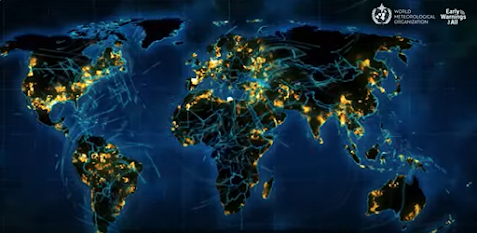
 FORUM: "Observing today; Protecting tomorrow." World Meteorological Day 2026. This year, we are highlighting the vital role that young people and communities play as resilience builders. Around the world, individuals and organizations contribute every day to Earth observations, from monitoring weather and water to supporting climate awareness and early warnings. We also highlight the work of observation stations from different countries. Why do we need observations?How does the observing system work?Closing the gap in observationsProtecting Tomorrow; What’s the weather going to be? It’s most asked questions. We take it for granted that we can find the answer in a matter of seconds at the touch of a mobile phone screen or flick of the television switch. But behind each forecast are millions of observations, crunched through thousands of processors in the extraordinary and unique global network coordinated by the World Meteorological Organization (WMO). Wherever you may be – on land, at sea or in the air – the forecasts you are using are reliant on the free and open exchange of observational data orchestrated by WMO. From satellites orbiting Earth, to weather balloons released into the atmosphere, to ocean buoys and ships riding the waves, to remote stations, meteorological observations underpin everything from our daily routines to multi-billion dollar decisions. The immense and often invisible observing and prediction system coordinated by WMO's the backbone of our economies. It is the central nervous system for early warnings, which have saved many millions of lives. This World Meteorological Day therefore celebrates the work of the WMO community in observing our Earth to protect communities today and build resilience for tomorrow. Follow the conversation with the hashtags: #WorldMetDay, #Meteorology, #climateresilience, #weather, #Meteo, #observingtodayprotectingtomorrow, #23March, #Youth, #Communities, #resiliencebuilders


EVENTS: On March 23rd, the celebration of the World Meteorological Day 2026 will be held under the theme "Observing today; Protecting tomorrow. On this occasion, we’re bringing you the WMO Global State Of Climate 2025, featuring a new indicator; 𝐭𝐑𝐞 π„πšπ«π­π‘’𝐬 𝐞𝐧𝐞𝐫𝐠𝐲 π’π¦π›πšπ₯𝐚𝐧𝐜𝐞. Learn more about the Main ceremonyRegister to participate and Stay tuned!


WORLD METEOROLOGICAL DAY 2026


 Main ceremony at WMO headquarters, Salle Obasi, 15:00 CET.

WMO invites diplomatic representatives, staff, partners, United Nations agencies, students and other guests to join the official ceremony. It will be livestreamed in six UN official languages to allow maximum engagement with WMO Members and the staff of National Meteorological and Hydrological Services.

Moderator: Nandita Surendran, Chief of WMO Global Communications Observing Today
Makoto Suwa, Astronaut, Japanese Aerospace Exploration Agency [video message]

Keynote presentation from Professor Celeste Saulo, Secretary-General, WMO
Abdulla Al Mandous, President, WMO [video message]
Argentine observing station Esperanza, Antarctica, on the importance of observations in remote Polar regions [live video link up]
Alexia Barrier, round-the-world ocean racer and advocate; Martin Kramp, OceanOPS Technical Coordinator, WMO [live video link up]
Launch of WMO State of the Global Climate 2025 report
Video message from UN Secretary-General AntΓ³nio Guterres
Setting the scene by Claire Ransom, Associate Scientific Officer, WMO
Presentation of key findings by Celeste Saulo, Secretary-General, WMO
Protecting Tomorrow
Theo Wellington, Youth Coordinator, WMO
Video from Regional Youth focal points, WMO
Questions and statements from the floor

17:00 - Reception hosted by WMO Staff Association


EXHIBITS: Observing the Future.
An interactive exhibition led by the WMO Youth team.
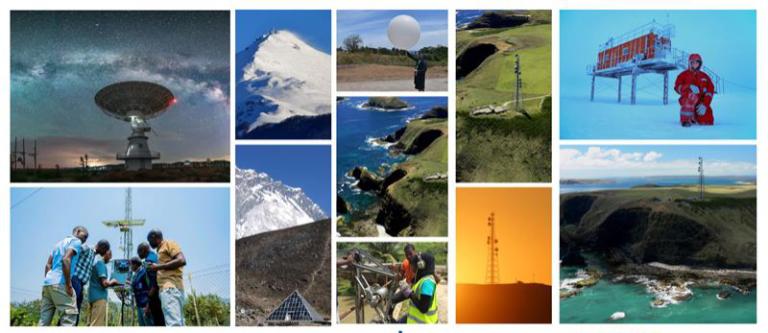
Meteorological stations

Organized in collaboration with Global Atmosphere Watch (GAW), the Systematic Observations Financing Facility (SOFF) and the World Climate Research Programme (WCRP), this exhibition aims to connect participants with observation stations from diverse regions.
Station displays: Visuals highlighting the work of observation stations from different countries.
Station connections: QR codes enable short, pre-recorded video exchanges.
Station ambassadors: On-site ambassadors facilitate engagement and discussion.

ACTIVITIES: Join the WMD 2026 activities!

Ghana: The Ghana Meteorological Awareness Month; Ghana celebrates this year's Meteorological Awareness Month with the theme, “Observing Today, Protecting Tomorrow.” Learn more

Pakistan: Agrometeorology without borders: Dr. Adnan Arshad, from Pakistan, with his PhD student Eltayyab al Hasaan, from Sudan, researching grassland restoration and improving production by using advanced meteorology equipment to train youth to help us observe today and protect tomorrow.
Concerning car traffic and circulation: There is a lot of traffic with smoke from cars in Cantt (Lahore, Pakistan). It's a problem that affects school timings and people's health. 

Our research applies a "Rain to Drain" approach, following rainfall from the moment it lands through each stage of the drainage process. This requires a network of hyperlocal weather stations to capture rainfall data at the street scale, soil moisture probes placed through the depth of the rain gardens to record infiltration and storage behaviour, and flow monitors in the sewer network to detect surcharge events. Access to this data is not limited to researchers. Along Broadway, lecterns and posters give residents and visitors a way to see results for themselves. Co-designed with Western Primary School, they make SuDS visible in the street rather than hidden infrastructure. The posters are also interactive, providing both access to live data and opportunities for residents to contribute observations through PuddleWatch, a tool that records when and where water appearsDr. Adnan Arshad and his team, in collaboration with PODA-Pakistan and the Pakistan Meteorological Department, are building the technical capacity of rural youth engaged in agriculture. The initiative involves installing mobile automatic weather stations at multiple locations to collect site-specific data and provide real-time updates. This enables young farmers to make informed decisions for planning their field operations and management practices - especially critical in the rainfed region of Punjab, Pakistan, where rainfall is the sole source of water for agriculture.

United Kingdom: This image shows How the Water Flows, a collaborative mural created as part of the Water Data for People project and now on display at Wybers Wood School in Grimsby. Designed around the school’s SuDS planter, the mural animates this everyday feature, using it as a focal point to bring together ideas about weather, water, and the local environment. It emerged through a series of workshops and creative sessions involving pupils, researchers, teachers, and artist Emma Garness, who worked together to explore local hydrology, drainage, and environmental change.
Led by the University of Hull, Water Data for People uses creative methods to help communities engage with local hydrological data and consider how it can shape future places and decisions. The project builds on the DIG Surface Water Resilience Project, a partnership between North East Lincolnshire Council, City of Doncaster Council, Anglian Water, and Yorkshire Water. Both projects are funded by Defra through the £200 million Flood and Coastal Innovation Programmes, managed by the Environment Agency. Reflecting the ideas and experiences of the pupils, the mural shows how knowledge of rainfall, flooding, water use, and environmental processes connects directly to everyday life and to the spaces around the school. Guided by Garness’s distinctive approach to environmental themes and community identity, these insights were brought together in a vibrant piece of visual storytelling.

SPAIN: Understanding the weather, the CLIMATE and ACTING on it. - Students from the Antonio Machado Primary School are making a meteorological observation at the weather station developed as part of an educational project that received an award on the European Union's Climate Education Day in October 2025.

KENYA: Analysis of Mesoscale Convective Systems (MCS) and Urban Flash Flood Vulnerability: A Case Study of the March 2026 Nairobi Precipitation Event. A multi-spectral satellite RGB composite image showing significant convective activity over the Kenyan highlands and the central Rift Valley. Convective Intensity: The bright, textured blue and white bubbles scattered across the centre of the map represent cumulonimbus clouds - the primary drivers of heavy localized rainfall. Nairobi Impact: Nairobi is situated in the central region currently obscured by dense cloud cover. The presence of these deep convective cells suggests high potential for intense, short-duration downpours. In an urban environment like Nairobi, this type of concentrated rainfall often leads to rapid flash flooding due to saturated soils and strained drainage infrastructure. Moisture Influx: The brownish-orange background indicates the warmer land surface, while the varying shades of blue/cyan highlight moisture-rich air masses moving across the region, creating the "perfect storm" for the flooding events seen in early March 2026.


World Meteorological Day 2026


On this World Meteorological Day, we are reminded that foresight saves lives. Climate chaos is rewriting the rules of weather, with record heat, longer droughts, rising seas and ever more frequent and extreme disasters. Accurate, trusted science is our first line of defence. The World Meteorological Organization and national services help keep us safe by weaving a global web of data, from land, sea, air and space – turning measurements into forecasts, and forecasts into early warnings. Yet the global observing system is under strain, with critical gaps, especially in least developed countries and small island developing States. This year’s theme, Observing Today, Protecting Tomorrow, is a call to action. Governments, development banks and the private sector must scale up support for our global observing backbone, from surface stations to satellites, and ensure data is shared openly and equitably. And we must accelerate Early Warnings for All so that, by 2027, every person is protected by life-saving alerts. Investing in observation pays many times over – strengthening peace, security, resilience and sustainable development. By observing today, we can protect tomorrow – for people, for planet, for prosperity, and for generations to come.

United Nations Secretary-General.

 Statement of the United Nations Secretary-General of the WMO on the World Meteorological Day 2026; March 23rd.

Dear members, colleagues, friends, happy World Meteorological Day. There are many UN International Days. So why does this one matter?, It's because today we celebrate the WMO community and its role in saving lives and serving society. Let's take a closer look. One of the most frequently asked questions is what's the weather going to be. People take it for granted that we can find the answer on their mobile phones and televisions.Behind each forecast are millions of observations which are processed in a unique international network coordinated by the WMO. WMO global observing system underpins decisions worth billions from aviation routing to flat protection from energy planning to health management from crop planting to infrastructure investments. It generates forecast and early warnings that save many thousands of lives. So I am delighted that the theme of the this year world meteorological day is observing today protecting tomorrow because when we observe today we don't just predict the weather we protect tomorrow's people tomorrow's planet. And that is why the young people of today are so important because they are the guardians of the future. We need your energy, your innovation, your skills. Colleagues and friends, we live in an era of great technological advances, but we must level the playing field and ensure that nobody is left behind. We must close the gaps in data and observations and we must remember that artificial intelligence depends on human intelligence. On this World Meteorological Day, I would therefore like to pay tribute to the many thousands of humans in the WMO community, the observers in remote and lonely locations, the meteorologist who release weather balloons twice a day every day, the hydrologist who monitored rivers at dawn, the forecasters who stay awake through the night. The oceanographers who brave the waves. The engineers who repair stations after a storm. The satellite technicians who maintain our eyes in the sky. The climatologists who help us understand the past and prepare for the future. The computer processors who crunch and share the data. We are more than just weather forecasters. Together we provide a global public service for the global public good. Together we are observing today and protecting tomorrow. I thank you all and once again I wish you a happy world meteorological day.

Celeste Saulo, Secretary-General of the WMO.


World Meteorological Day 2026


PUBLICATION: Launch of the  State of the Global Climate 2025.

The WMO’s State of the Global Climate report 2025 confirms that 2015-2025 are the hottest 11-years on record, and that 2025 was the second or third hottest year on record, at about 1.43 °C above the 1850-1900 average. Extreme events around the world, including intense heat, heavy rainfall and tropical cyclones, caused disruption and devastation and highlighted the vulnerability of our inter-connected economies and societies. The ocean continues to warm and absorb carbon dioxide. It has been absorbing the equivalent of about eighteen times the annual human energy use each year for the past two decades. Annual sea ice extent in the Arctic was at or near a record low, Antarctic sea ice extent was the third lowest on record, and glacier melt continued unabated, according to the report. For the first time, the report includes the Earth’s energy imbalance as one of the key climate indicators. The  report confirms that the years 2015-2025 was the hottest according to 11 years on record; The Earth’s energy imbalance is highest in sixty five-year record; The oceans has been absorbing about eighteen times the annual human energy use each year for the past two decades; The current Extreme weather impacts millions and costs billions; Get the Full Report; Read the Press Release and latest information on Extreme Weather!


CAMPAIGN MATERIALS
: Join the campaign 2026 "Observing today; Protecting tomorrow.". The Campaign Assets, Posters, videos, and other outreach materials for World Meteorological Day can be downloaded in high-resolution format from our Trello Board. Additional resources will be made available. Poster in Arabic, in Chinese, in Russian, In French, in English, In Spanish.

CAMPAIGN

World Meteorological Day 2026


 LIVESTREAM: Presentation of the Report entitled the State of the Global Climate 2025. The WMO uses datasets developed and maintained by the United States National Oceanic and Atmospheric Administration, NASA’s Goddard Institute for Space Studies, and the United Kingdom’s Met Office Hadley Centre and the University of East Anglia’s Climatic Research Unit in the United Kingdom. It also uses reanalysis datasets from the European Centre for Medium Range Weather Forecasts and its Copernicus Climate Change Service, and the Japan Meteorological Agency. This method combines millions of meteorological and marine observations, including from satellites, with models to produce a complete reanalysis of the atmosphere. The combination of observations with models makes it possible to estimate temperatures at any time and in any place across the globe, even in data-sparse areas such as the polar regions. Internationally recognized datasets are used for all other key climate indicators. Full details are available in the State of the Global Climate report .


Videos by NASA, UNEP, WMO
Data Visualization


Saturday, 12 July 2025

International Day of Combating Sand and Dust Storms 2025; July 12th.


FORUM: "Sand and Dust Storms: Working Across Agendas for Resilience and Sustainability." International Day of Combating Sand and Dust Storms 2025. Sand and dust storms (SDS) are an increasingly global issue affecting 151 countries worldwide with numerous impacts on the environment, food security, agriculture, health, transportation, energy, human–societies and economies. Sand and dust storms are an essential element of the Earth’s natural bio-chemical cycles, but are also caused in part by human-induced drivers, including climate change, and unsustainable land management and water use. In turn, sand and dust storms contribute to climate change and air pollution. Sand and dust storms’ impacts are felt in all regions of the world, both in developed and developing countries, and pose severe challenges to achieving 11 of the 17 Sustainable Development Goals, especially: SDG-2 : Zero hunger — SDG-3 : Health for all — SDG-6 : Water and sanitation — SDG-8 : Economic growth — SDG-11 : Sustainable Cities and societies — SDG-13 : Climate action, and — SDG-15 : Biodiversity forests and desertification. This call to action represents a significant step in enhancing awareness of SDS and mobilizing the political will and resources needed to address the SDS related issues which present a serious challenge to the achievement of the Sustainable Development Goals (SDGs) and associated targets. Follow the conversations with the hashtags: #12july, #sandstorms, #duststorms.


12 July


EVENTS: On July 12th, a High level Panel Discussions and several events were organized around the world.

On July 10th at 10: 30 am EST, the World Meteorological Organization (WMO) will released its annual airborne dust bulletin, highlighting the global impact of sand and dust storms. The bulletin discusses the hotspots, hazards, and WMO's efforts to combat these storms. It emphasizes the connection between dust storms, climate change, and various socio-economic sectors, including agriculture, solar energy production, and health. Watch the WMO - Press Conference: Sand and Dust Bulletin 2025.

On July 10th; At the UNHQ; starting at 16:00 pm EST; The 3rd edition will be, co-organized by the Permanent Missions of Iraq, the Islamic Republic of Iran, and Senegal at the United Nations Headquarters in New York, featured various speakers from organizations collaborating in the United Nations SDS Coalition. A high-level meeting with an opening and plenary segment will be held to bring together Member States and Observers at the highest level possible to discuss the challenges faced by affected countries and to promote practical, coordinated actions at both regional and global levels. It will also be an opportunity to discuss action-oriented recommendations and address the challenges faced by countries affected by sand and dust storms. Read the concept note and watch the livestream!


Sunday, 23 March 2025

World Meteorological Day 2025, March 23rd.

FORUM: "Closing the Early Warning Gap Together." World Meteorological Day 2025. Follow the conversations with the hashtags: #closingtheearlywarninggapTogether, #worldmetday, #23march, #metrorologists, #climatologists, #hydrologists, #meteorology.


World Meteorological Day 2025


EVENT:  On March 24th, from 15:00 - 17:00, at WMO Headquarters will be held a ceremony to mark the World Meteorological Day 2025

Celebrations of the World Meteorological Day will take place worldwide, with events organized by NMHSs on the theme “Closing the early warning gap together”. Halfway through the Early Warnings for All Initiative called by UNSG at World Meteorological Day 2022 and launched at COP28, WMO looks into the global collaboration to achieve the initiative by 2027. Three main channels of collaboration are scaling-up collaboration in the delivery of the pillar 2 of the EW4All (Detection, observations, monitoring, analysis and forecasting of hazards):

  • Innovating together - Together to scale-up technologies
  • Standing together -Together to foster collaboration in countries
  • Investing together - Together to mobilize and share resources

The ceremony will be live-illustrated by Carlotta Cataldi, visual harvester. The World Meteorological Day ceremony will unfold as follows:

Panel part 1 - Official addresses: "Together to foster collaboration among countries"

Where are the gaps and how can we foster collaboration among countries? How does it all start to implement early warnings and how can countries learn from each other? How to implement road maps without overlapping with other actors involved?

  • Professor Celeste Saulo, Secretary-General of WMO – Welcome address
  • H.E. Mr Juerg Lauber, Permanent representative of Switzerland to the United Nations Office at Geneva
  • H.E. Mr Mxolisi Nkosi, Permanent representative of South Africa to the United Nations Office at Geneva, on bringing countries together for G20
  • H.E. Mr Tovar da Silva Nunes, Permanent representative of Brazil to the United Nations Office at Geneva, on bringing countries together for COP30

Panel part 2 - Innovating together - Together to scale-up technologies

What are the gaps and how can we close them by scaling-up technologies together? How can we improve observations, satellites and scale-up AI and machine learning for better forecasts? How does it all start to implement early warnings and how can countries learn from each other? How to implement road maps without overlapping with other actors involved?

Speakers: 
Ms Maureen Ahiataku, Principal Meteorologist at Ghana Meteorological Agency. Ghana just validated their EW4All roadmap and implemented CAP Alerts. The story of a new narrative around collaborating to close the early warning gap.
  • Mr Florian Pappenberger, ECMWF Deputy Director-General & Director of Forecasts on how technology and AI improves weather prediction.
  • Ms Soma Sen Roy, Meteorologist at the National Weather Forecasting Centre of India Meteorological Department, to talk about recent innovations for closing the early warning gap in India and the region.
  • Ms Thelma Cinco – Chief of climatology and hydrometeorology at PAGASA (Philippines), and MIBFEWS project leader, on improving the understanding of impact in the last mile.

Panel part 3 - Investing together – Together to mobilize and share resources

Why investing in early warnings and how much does it cost to close the early warning gap? What is the interest of businesses to invest in early warnings? How can we scale-up South-South cooperation?
Speakers:

  • Mr Yi Wang, Director of World Meteorological Center Beijing Operation Office, on South-South financial support.
  • Ms Carolina Fuentes Castellanos, Director of the Santiago Network Secretariat. WMO recently joined the Santiago Network, on the importance of networks to close the early warning gap.
  • Mr Niels Holm-Nielsen, Global Technical Lead for Resilience and Disaster Risk Management, World Bank, on financial contribution to close the early warning gap.

Statement of the United Nations Secretary-General on World Meteorological Day 2025, March 23rd.

The dark predictions of meteorologists are coming to pass. Our climate is going up in flames. Every one of the last ten years has been the hottest in recorded history. Ocean heat is breaking records. And every country is feeling the effects – whether scorched by fires, swept by floods, or pummelled by unprecedented storms.

The theme of this year’s World Meteorological Day – Closing the Early Warning Gap Together – reminds us that, in this new climate reality, early warning systems are not luxuries. They are necessities and sound investments – providing an almost ten-fold return. Yet, almost half the world’s countries still lack access to these life-saving systems. It is disgraceful that, in a digital age, lives and livelihoods are being lost because people have no access to effective early warning systems.

The United Nations Early Warnings for All initiative aims for everyone, everywhere to be protected by an alert system by 2027. The world must come together, and urgently scale-up action and investment, to realize this goal.

We need high-level political support for the Initiative within countries, a boost in technology support, greater collaboration between governments, businesses and communities, and a major effort to scale-up finance. Increasing the lending capacity of the Multilateral Development Banks is key. The Pact for the Future agreed last year made important strides forward, it must be delivered in full. So must the COP29 finance outcome.

At the same time, we must intensify our efforts to tackle the climate crisis at source – through rapid and deep cuts to greenhouse gas emissions – to prevent it getting unimaginably worse. This year all countries must honour the promise to deliver new national climate action plans that align with limiting global temperature rise to 1.5 degrees Celsius.

In an era of climate disaster, every person on Earth must be protected by an early warning system as a matter of justice. Together, let’s deliver.

United Nations Secretary-General.

Statement by Dr. Abdulla Al Mandous, President of WMO, on the occasion of World Meteorological Day 2025, March 23rd.


On World Meteorological Day, March 23, 2022, the United Nations Secretary-General Mr. Antonio Guterres announced a landmark commitment:

“The United Nations will take the lead in new actions to ensure that everyone on the planet is protected by early warning systems within the next five years.”
Early Warnings For All seeks to reach everyone with early warning systems by the end of 2027.

We are now at the halfway point and much progress has been made. As of end of 2024, 108 countries report having some capacity for multi-hazard early warning systems. This is more than double the 52 countries in 2015.
However much remains to be done.

Today, I emphasize three critical gaps that we must continue to must be address through strengthened collective efforts.

1. Bridging the Capacity Gap Among WMO Members

There are still significant capacity gaps among WMO Members. On behalf of the World Meteorological Organization, I call upon global stakeholders—including the UN, international and regional development agencies, and national governments—to work together by providing the necessary resources and support to help these vulnerable nations establish effective early warning systems as soon as possible.

2. Closing the Technical and Collaboration Gap Within WMO

The rapid advancement of technologies such as artificial intelligence is transforming meteorological forecasting and disaster monitoring. Leading global centers, such as ECMWF, and several NMHSs have already integrated AI into their operational systems. However, disparities remain among WMO Members technical capacity to take advantages of these rapid and exciting advancements.

I urge all WMO constituent bodies—particularly the Technical Commissions, Research Board, and Regional Associations—to work together to bridge these collaboration and technical gaps. By embracing emerging technologies like AI, we can develop new standards, guidelines, and best practices that will empower all Members, especially those most vulnerable, to enhance disaster monitoring, early warning, and forecasting, particularly for extreme weather events.

In this regard, I also call for strengthened strategic guidance, progress oversight, and high-level coordination from Congress and the Executive Council to ensure WMO’s strongest contribution to the UN Early Warnings for All initiative.

3. Strengthening Collaboration Across the Four Pillars of Early Warning Systems

The Early Warnings for All initiative is built upon four foundational pillars:Disaster Risk Knowledge and Management – jointly led by the United Nations Office for Disaster Risk Reduction (UNDRR) and WMO.
Detection, Observation, Monitoring, Analysis, and Forecasting – led by WMO.
Warning Dissemination and Communication – led by the International Telecommunication Union (ITU).
Preparedness and Response Capabilities – led by the International Federation of Red Cross and Red Crescent Societies (IFRC).

Numerous other UN and international organizations also play a crucial role in the development of early warning systems. The Early Warnings for All initiative is a groundbreaking effort that not only advances technical early warning capabilities but also fosters stronger cooperation across these four pillars. The goal is to create a fully integrated UN value chain together—saving lives and mitigating economic losses.

At the national level, it is equally important to close collaboration gaps among government agencies. True disaster risk reduction and prevention can only be achieved through well-coordinated, multi-sectoral early warning systems. I urge WMO and its Members to proactively engage with relevant UN organizations, international partners, and national agencies to develop comprehensive and effective early warning systems. Furthermore, NMHSs should actively promote the significant economic and social benefits of early warning systems to their governments and the public.

Conclusion

Early Warnings for All make economic sense. On a global scale, every US$ 1 invested in early warnings is estimated to result in US$ 9 in net economic benefits. In some regions it’s even higher.

I sincerely encourage all WMO Members to intensify their efforts and achieve significant progress in Closing the Early Warning Gap Together. Through enhanced collaboration, innovation, and commitment, we can build a safer and more resilient world for all.

President of the World Meteorological Organization (WMO).


Saturday, 7 September 2024

International Day of Clean Air and Blue Skies 2024; September 7th.


FORUM:“Invest in #CleanAirNow.“ International Day for Clean Air and Blue Skies 2024. This year’s theme underscores the economic, environmental and health benefits of investing in clean air. Collaboration with the United Nations member states, the development organizations, the international and regional organizations, the private sector, and civil society organizations is crucial to reducing pollution and improving air quality. Access to a healthy environment is a human right. By shifting to renewable energy, adopting clean cooking, transforming global transport and food systems, and more, we can work to overcome air pollution and promote clean air for all. Investment is urgently needed for Clean Air Now. Learn about some innovators who are helping the world breathe fresher air. Follow the conversations with the hashtags, #7september; #WorldCleanAirDay, #CleanAirNow.

Invest in #CleanAirNow.


EVENTS: On September 7th; to mark the 5th annual International Day of Clean Air for Blue Skies, Participants will focus on the urgent need for stronger partnerships, increased investment, and share responsibility for overcoming air pollution. Air pollution, indoors and outdoors, directly impacts human and ecosystem health. We all share and breathe the same air; thus, we all have a responsibility to protect our atmosphere and ensure healthy air for everyone.

International Day of Clean Air for blue skies 2024


WEBCASTS: Watch the Climate and Clean Air Coalition webinar to mark the International Day of Clean Air for blue skies 2024 and explore the calendar of upcoming meetings and events.

From 22-23 May 2024 - The Annual meeting of the Joint Task Force on Health Aspects of Air Pollution will be held. As recognized in the Declaration of the Seventh Ministerial Conference on Environment and Health, the Task Force will play an important role in supporting the implementation of Conference commitments on air quality, climate change and health, by providing a platform to exchange knowledge and information. The agenda covers international policies and processes for air quality and health, WHO tools for health risk assessment of air pollution (AirQ+ and CLIMAQ-H), progress in research on air quality and health, and relevant experiences in Member States. Other agenda items will address air pollution, climate change and health, and communicating on air quality and health. Presentations will include updates on the ongoing revision of the European Union Directive on ambient air quality and cleaner air for Europe, information about the Second Global Conference on Air Pollution and Health in 2025 and the contribution of the Task Force to the regional Science and Policy Snapshots, and the use of behavioural and cultural insights for environment and health. Participants will also review current activities of the Task Force workplan for 2024–2025 and discuss the next steps for implementation.


Statement from the U.N. Secretary General on the International Day of Clean Air for blue skies 2024; September 7th.

Ninety-nine per cent of humanity breathes polluted air – leading to an estimated 8 million premature deaths – including more than 700,000 children under five.

Pollution is also choking economies and heating up our planet, adding fuel to the fire of the climate crisis. And it disproportionally affects those most vulnerable in society, including women, children, and older persons.

Yet pollution is a silent killer that can be stopped.

Investing in clean air requires actions by both government and businesses – to phase out fossil fuels, strengthen air quality monitoring, enforce air quality standards, boost renewable energy, transition to clean cooking, build sustainable transport and sustainable waste management systems, clean up supply chains, and reduce harmful emissions, including methane.

It is also critical to put a price on carbon.

At the same time, development organizations, financial institutions and philanthropies can redirect financial capital behind clean air technologies to tackle the triple planetary crisis.

Above all, we must work together at the regional and global levels.

Investing in clean air saves lives, combats climate change, strengthens economies, builds fairer societies, and advances the Sustainable Development Goals.

On International Day of Clean Air for Blue Skies, let’s invest now so we can breathe easy knowing we are securing a healthier planet for all.

AntΓ³nio Guterres.