Friday, 12 February 2021

World Radio Day 2021, February 13


Theme 2021: Evolution, Innovation, Connection.


Proclaimed in 2011 by the Member States of UNESCO, and adopted by the United Nations General Assembly in 2012 as an International Day, February 13 became World Radio Day (WRD).

Radio is a powerful medium for celebrating humanity in all its diversity and constitutes a platform for democratic discourse. At the global level, radio remains the most widely consumed medium. This unique ability to reach out the widest audience means radio can shape a society’s experience of diversity, stand as an arena for all voices to speak out, be represented and heard. Radio stations should serve diverse communities, offering a wide variety of programs, viewpoints and content, and reflect the diversity of audiences in their organizations and operations. 

CELEBRATIONS IN 2021

On the occasion of World Radio Day 2021 (WRD 2021), UNESCO calls on radio stations to celebrate this event’s 10th anniversary and the more than 110 years of radio. 

This edition of WRD is divided into three main sub-themes:

  • EVOLUTION(link is external). The world changes, radio evolves. 
    This sub-theme refers to the resilience of the radio, to its sustainability ;
  • INNOVATION(link is external). The world changes, radio adapts and innovate. 
    Radio has had to adapt to new technologies to remain the go-to medium of mobility, accessible everywhere and to everyone;
  • CONNECTION(link is external). The world changes, radio connects.
    This sub-theme highlights radio’s services to our society—natural disasters, socio-economic crises, epidemics, etc.


Wednesday, 10 February 2021

International Day of Women and Girls in Science 2021, February 11


Statement by the U.N. Secretary-General on the occasion of the International Day of Women and Girls in Science 2021, February 11th.

Advancing gender equality in science and technology is essential for building a better future.

We have seen this yet again in the fight against COVID-19.

Women, who represent 70 per cent of all healthcare workers, have been among those most affected by the pandemic and among those leading the response to it.


Gender inequalities have increased dramatically in the past year, as women bear the brunt of school closures and working from home.

Many women scientists are facing closed labs and increased care responsibilities, leaving less time for critical research.

For women in scientific fields, these challenges have exacerbated an already difficult situation.

According to UNESCO, women account for only one third of the world’s researchers, and occupy fewer senior positions than men at top universities.

This disparity has led to a lower publication rate, less visibility, less recognition and, critically, less funding.

Meanwhile, artificial Intelligence and machine learning replicate existing biases.

Women and girls belong in science.

Yet stereotypes have steered women and girls away from science-related fields.

It is time to recognize that greater diversity fosters greater innovation.

Without more women in STEM, the world will continue to be designed by and for men, and the potential of girls and women will remain untapped.

We must ensure that girls have access to the education they deserve and that they can see a future for themselves in engineering, computer programming, cloud technology, robotics and health sciences.

This is critical for our work to achieve the Sustainable Development Goals.

Increasing women’s participation in STEM can close the gender pay gap and boost women’s earnings by $299 billion over the next ten years.

STEM skills are also crucial in closing the global Internet user gap.

Together, let’s end gender discrimination, and ensure that all women and girls fulfill their potential and are an integral part in building a better world for all.


António Guterres 

World Pulses Day 2021, February 10

 The U.N. General Assembly (UNGA) designated 10 February as World Pulses Day to reaffirm the contribution of pulses for sustainable agriculture and achieving the 2030 Agenda. 

In recognition of World Pulses Day, The United Nations Food and Agriculture Organization will host a virtual discussion on February 11 th, to raise awareness about the crucial role of pulses for sustainable food production, food security and healthy diets. The UNGA has invited FAO, in collaboration with other organizations, to facilitate the observance of World Pulses Day.


Following the success of the International Year of Pulses (IYP) 2016, World Pulses Day is a new opportunity to heighten public awareness of the nutritional benefits of eating pulses. Pulses are more than just nutritious seeds, they contribute to sustainable food systems and a #ZeroHunger world. The IYP highlighted the role of pulses in sustainable food production aimed towards improving food security and nutrition.


Importance in diets  

Pulses are an important source of protein, especially for vegetarians or for people who do not get enough protein by eating meat, fish or dairy. Furthermore, pulses are a healthy choice for meat-eaters, helping cut off excess fat from diets, and contain zero cholesterol. They are also a good source of dietary fibre, vitamins and minerals, especially iron and zinc.  

In terms of gram-for-gram nutritional value, pulses are also far cheaper than meats or other sources of protein, offering an economical alternative.  

Improving agriculture sustainability 

The nitrogen-fixing properties of pulses improve soil fertility, increasing and extending the productivity of the farmland. In many regions, farmers plant legumes along with other crops, a practice known as intercropping, to improve yield and promote soil biodiversity. 

Pulse crops are also known to fight off plant disease-causing pests, thereby reducing dependency on chemical fertilizers and pesticides. Pulses also produce a smaller carbon footprint, indirectly reducing greenhouse gas emissions, and contributing to climate action. 


Friday, 5 February 2021

International Day of Zero Tolerance for Female Genital Mutilation 2021; February 6


UN Women statement for the International Day of Zero Tolerance for FGM 2021, February 6th.

Time to unite, fund and act to end female genital mutilation.


For 35 years, Yatta Fahnbulleh earned a living in north-western Liberia by initiating girls into adulthood through rituals that included female genital mutilation (FGM) – a practice that violates girls’ bodies and their human rights. She is one of many FGM practitioners who wanted to stop but who could not find an alternative way to support herself and her family. Now she is a caterer, trained along with some 300 other traditional FGM practitioners through the EU-UN Spotlight Initiative, who are equipped to earn an income from alternative sources such as climate-smart agriculture, making soap, or tailoring.

The programme is one of the many ways in which UN Women and our partners are working with traditional and cultural leaders to change the norms that sustain harmful practices such as FGM. Continuing this work is more important than ever now that the effects of the COVID-19 pandemic are threatening livelihoods and increasing financial vulnerabilities, contributing to the risk of backsliding on important progress in gender equality.

Compared to three decades ago, girls today are one third less likely to undergo FGM, but the COVID-19 pandemic appears to be increasing the practice. Not only is it limiting our scope for critical prevention work, but many traditional cutters badly in need of an income during the economic downturn have started again, approaching families directly, door to door, in search of work. Without action, by 2030 we could see as many as 2 million FGM cases that could otherwise have been avoided. Data from UN Women and the United Nations Development Programme (UNDP) show that the crisis will push 96 million people into extreme poverty by 2021, something which can lead to FGM and child marriage being used as negative coping mechanisms to ease extreme physical and financial uncertainty. Girls from the most marginalized groups will be at even higher risk of FGM and child marriage. Pandemic-related school closures provide increased opportunities for FGM to be undertaken on girls at home, which only heightens the risk of health complications as well as the transmission of COVID-19. And with the crisis putting 11 million girls at high risk of never returning to school, future generations of uneducated women are more likely to support the continuation of the practice.

This International Day of Zero Tolerance for FGM is a moment to lead change wherever we have a voice and influence; to fund the approaches we know work and support women’s organizations to do so; to demand accountability for community and state actions; to provide essential support for health and social services for survivors of FGM; and to listen to the voices of adolescent girls and young women, and make it possible for them to decide on what happens to their own lives and bodies.

Stories of change such as Yatta’s underline how much is possible when the necessary support and will are in place, and how important it is for the lives of millions of girls in current and future generations to grow up as healthy, educated young women. COVID-19 has shown us that we cannot take the successes on this issue for granted. We have a chance to come together in united action to end FGM and all forms of violence against women and girls, at UN Women’s upcoming Generation Equality Forum – the most important convening for gender equality investment and implementation in a quarter-century. Through its Action Coalitions such as on gender-based violence and sexual reproductive health and rights, respectively, we will be harnessing broad-based will and resources to push forward with this important work focusing on adolescent girls. Let’s use this opportunity to #Act2EndFGM and together realize a world that is truly gender-equal.


Wednesday, 3 February 2021

World cancer Day, 4 Febrary

                          
World Cancer Day, organized by the Union for International Cancer Control (UICC) and celebrated each year on 4 February, is an opportunity to rally the international community to end the injustice of preventable suffering from cancer. We can work together to reduce cancer risk factors. We can overcome barriers to early diagnosis, treatment and palliative care. We can work together to improve cancer control and achieve global targets to reduce premature mortality from cancer and NCDs.

CAMPAIGN: The ‘I Am and I Will’ campaign – shows us that our actions have an impact on everyone around us, within our neighbourhoods, communities and cities. And that more than ever, our actions are also being felt across borders and oceans. This year is a reminder of the enduring power of cooperation and collective action. When we choose to come together, we can achieve what we all wish for: a healthier, brighter world without cancer. Together, all of our actions matter. 

Focusing on the increasing cancer burden in developing and developed nations. It also highlights the disproportionate funding allocated to address these staggering statistics and steps you can take to advocate for change today.


WHY THE GLOBAL CANCER BURDEN MATTERS?

Every year, nearly 9 million people worldwide die from cancer. This World Cancer Day 2021, who are you and what will you do? Join the campaign " I am and I will'' to raise cancer awareness and encourage support, action, and funding for prevention, detection, and treatment.


CANCER TODAY provides a suite of data visualization tools based on current national estimates of the incidence, mortality, and prevalence of 27 cancer types in 184 countries, by sex and age group, collected as part of the GLOBOCAN project.


International Day of Human Fraternity 2021, 4 February


Statement by António Guterres, Secretary-General of the United Nations, on the International Day of Human Fraternity 2021, February 4th.

"I am pleased to welcome the first International Day of Human Fraternity in World Interfaith Harmony Week.
I applaud all Member States that co-sponsored the United Nations General Assembly resolution proclaiming 4 February as the International Day of Human Fraternity, especially the United Arab Emirates and Egypt for co-facilitating the process.
I also acknowledge the significance of the 2019 publication of “Human Fraternity for World Peace and Living Together”.
Co-authored by His Holiness Pope Francis and His Eminence the Grand Imam of Al-Azhar Sheikh Ahmed Al-Tayeb, this declaration is a model for interfaith harmony and human solidarity.
I thank both religious leaders for using their voice to promote interfaith dialogue, mutual respect and understanding across the faith spectrum.
In these trying times, we need this spirit more than ever.
Around the world, deep-seated discrimination, acts of intolerance and hate crimes persist against people simply because of their religion or belief, ethnicity, gender or sexual orientation.
Such vile acts are an affront to internationally agreed human rights and the values of the United Nations.
Cultural diversity and freedom of belief are part of the rich tapestry of our civilizations.
As we commemorate the International Day of Human Fraternity, let us commit to do more to promote cultural and religious tolerance, understanding and dialogue”.


FORUM: As we commemorate the International Day of Human Fraternity, on 4 February,  let us commit to do more to promote cultural and religious tolerance, understanding and dialogue.


What is the Culture of Peace?

A culture of peace is a set of values, attitudes, traditions and modes of behaviour and ways of life based on:

  • Respect for life, ending of violence and promotion and practice of non-violence through education, dialogue and cooperation;
  • Full respect for the principles of sovereignty, territorial integrity and political independence of States and non-intervention in matters which are essentially within the domestic jurisdiction of any State, in accordance with the Charter of the United Nations and international law;
  • Full respect for and promotion of all human rights and fundamental freedoms;
  • Commitment to peaceful settlement of conflicts;
  • Efforts to meet the developmental and environmental needs of present and future generations;
  • Respect for and promotion of the right to development; Respect for and promotion of equal rights and opportunities for women and men;
  • Respect for and promotion of the right of everyone to freedom of expression, opinion and information;
  • Adherence to the principles of freedom, justice, democracy, tolerance, solidarity, cooperation, pluralism, cultural diversity, dialogue and understanding at all levels of society and among nations; and fostered by an enabling national and international environment conducive to peace.

Source: A/RES/53/243


While visiting with Pope Francis at the Vatican on 19 December 2019, UN Secretary-General António Guterres said: “In these turbulent and trying times, we must stand together for peace and harmony.” Mr. Guterres conveyed his “deep appreciation” for the Catholic leader’s “extraordinary service in promoting interfaith relations,” including his landmark declaration with the Grand Imam of Al-Azhar on human fraternity for world peace and living together. “This declaration is extremely important when we see such dramatic attacks on religious freedom and the lives of believers,” said the Secretary-General.


Monday, 1 February 2021

World Wetlands Day 2021; February 2

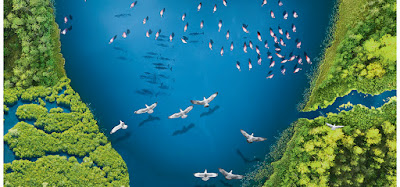
 Water & wetlands are inseparably connected and are vital to human life & the health of our planet. Yet, humans use more freshwater than nature can replenish, with devastating consequences for wetlands.

Tuesday 2 February is #WorldWetlandsDay. Join the Forum

Wetlands and Water

World Wetlands Day 2021