EVENTS: The Republic of Korea will host the World Environment Day 2025 celebrations. This is the Republic of Korea's second time to host global observations.
On thursday, 05 June 2025 from 13:00 to 15:00 hrs ICT (GMT+7); The UN Environment programme with the support of partner will celebrate the World Environment Day (WED) under the theme #BeatPlasticPollution. This year’s observance comes as countries make progress towards securing a global treaty to end plastic pollution, including in the marine environment. Tune up to watch the livestream!
In November 2024, the Republic of Korea hosted the fifth session of negotiations to develop a plastic pollution treaty. The second part of the session will take place from 5 to 14 August in Geneva, Switzerland.
To join the online celebrations; Register to participate!
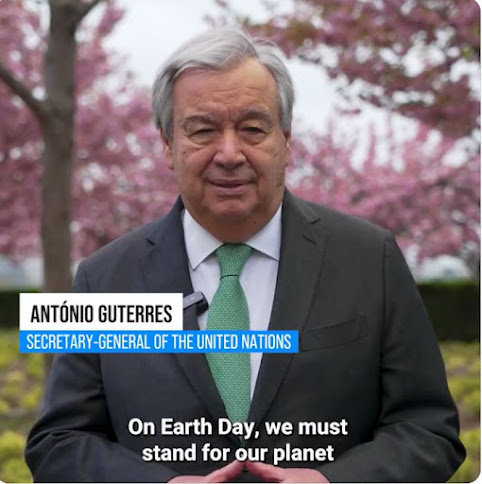
STATEMENTS: Read the Statement of the United Nations Secretary-General on World Environment Day 2025; June 5th,
This World Environment Day focuses on solutions to be;t plastic pollution.
And rightly so.
Plastic pollution is choking our planet – harming ecosystems, well-being, and the climate.
Plastic waste clogs rivers, pollutes the ocean, and endangers wildlife.
And as it breaks-down into smaller and smaller parts, it infiltrates every corner of Earth: from the top of Mount Everest, to the depths of the ocean; from human brains; to human breastmilk.
Yet there is a movement for urgent change.
We are seeing mounting public engagement…
Steps towards reusability and greater accountability…
And policies to reduce single-use plastics and improve waste management.
But we must go further, faster.
In two months, countries will come together to hammer-out a new global treaty to end plastic pollution.
We need an ambitious, credible and just agreement this year.
One that covers the life-cycle of plastic, through the perspective of circular economies…
That responds to the needs of communities…
That aligns with broader environmental goals, the sustainable development goals, and beyond…
And that is implemented fast and in full.
I urge negotiators to return to talks in August determined to build a common path through their differences and deliver the treaty our world needs.
Together, let’s end the scourge of plastic pollution and build a better future for us all.
Thank you.
António Guterres; U.N. Secretary-General.
SPEECH: Read the Speech Delivered by the Assistant Secretary-General of the United Nations and Deputy Executive Director of the United Nations Environment, Ms. Elizabeth Maruma Mrema during the World Environment Day 2025 Commemoration Ceremony in Nairobi.
Distinguished guests, dear colleagues,
It is my pleasure to welcome you all today, in particular His Excellency Mr. Kang Hyung-shik, Ambassador of the Republic of Korea to Kenya and the Permanent Representative to UNEP. We are deeply grateful to the Republic of Korea for hosting World Environment Day in 2025. This marks the second time Korea has taken on this important role since the celebrations began in 1973.
Korea’s environmental journey is commendable. The country has made notable progress in key environmental indicators, including improved air and water quality. Recycling rates are on the rise, the environmental industry is expanding, and the overall quality of life for citizens has benefited as a result. Hosting World Environment Day in 2025 offers a valuable opportunity for Korea to reflect on this progress and renew its commitment to global solidarity and cooperation as we confront the urgent environmental challenges of our time.
I also want to extend my gratitude to our UNEP colleagues who are joining us today.
Sheila Aggarwal-Khan, Director of the Industry and Economy Division, will share insights on the One UNEP Plastics Initiative.
Jyoti Mathur-Filipp, Executive Secretary of the INC, is joining us online from Panama despite the time zone difference - thank you, Jyoti - for leading us through the preparations for the fifth session of the INC on Plastic Pollution, which will be held in Geneva from the 5th to the 14th of August.
Doreen Robinson, Deputy Director of the Ecosystems Division, will present an exciting new platform that compiles data on plastic pollution and marine litter; an important tool to help Member States develop evidence-based policies.
To all Member States and UNEP personnel present here: thank you, thank you. You are the driving force behind implementing and advocating for lasting solutions to end plastic pollution.
Plastic pollution is one of the defining environmental challenges of our time. It is a growing crisis that threatens both planetary and human well-being. In 2025 alone, the world is expected to consume 516 million tonnes of plastics.
Each year, approximately 13 million tonnes of plastics accumulate in our soils. Even more alarming, microplastics have been found in human arteries, lungs, brains and even in breast milk. This issue touches every corner of our world and every part of our lives.
But this is a problem we can fix, and we are beginning to see the solutions emerge. Countries are increasingly putting in place regulations that incentivize better plastic product design, including making packaging reusable.
They are asking critical questions: How do we design plastics to be recycled without exposing people or ecosystems to harmful chemicals at the product’s end of life? Are those who place products on the market being held accountable for their impact, including unlocking financing for solutions?
With all environmental challenges, moments to elevate solutions matter and that’s what World Environment Day has done for more than 50 years. Since 1973, it has served as a truly global platform for awareness, action, and change.
In 2024, Saudi Arabia hosted the event under the theme Generation Restoration, generating more than 50,000 news stories in 178 countries. This will be the third time World Environment Day focuses on the theme of #BeatPlasticPollution. The first time was in 2018, when we succeeded in raising global awareness of the issue. Since then, people around the world have come to understand: it is time for change.
World Environment Day 2025 is about delivering lasting solutions to Beat-Plastic-Pollution. Because real change doesn’t come from awareness alone; it comes through all of us: through markets, consumer choices, policy incentives, and finance flows.
The solutions are available, and the benefits are undeniable. Today, only 9 percent of all plastics produced are actually recycled globally. But the rewards of fixing plastic pollution are clear. A circular economy for plastics offers a sustainable path forward; one that must include all stakeholders across the plastics value chain.
UNEP is doing its part through several key initiatives. The One UNEP Plastics Initiative presents a bold and transformative vision: to end global plastic pollution. It aims to create an enabling and empowering environment that accelerates market transformation. At its core is upstream innovation; designing products to be reused, recycled, and repurposed in a circular system.
Our Global Plastics Hub is another critical tool. It integrates data from multiple sources to support evidence-based decision-making on marine litter, plastic pollution, and related issues. It is a voluntary open-ended partnership that brings together international agencies, governments, businesses, academia, local authorities, and non-governmental organizations to cooperate and innovate on tackling these challenges.
In 2018, UNEP joined forces with the Ellen MacArthur Foundation on the New Plastics Economy Global Commitment, which unites public and private sector leaders in the shift toward a circular economy.
We also continue to support the Global Tourism Plastics Initiative, which unites the tourism sector behind a shared vision to address the root causes of plastic pollution. This effort empowers businesses, governments, and other stakeholders to take bold action. It is led by UNEP and the World Tourism Organization (UNWTO), in collaboration with the Ellen MacArthur Foundation, and developed within the framework of the Sustainable Tourism Programme of the One Planet Network.
Finally, I want to highlight the work of the Intergovernmental Negotiating Committee, or INC. In 2022, Member States agreed at the UN Environment Assembly to begin negotiations on a legally binding international instrument to tackle plastic pollution, including marine litter. Since then, countries have met five times under the INC process. The second part of the fifth session - INC-5.2 - will take place in Geneva this August, following the first part held in Busan, Republic of Korea, last December.
We are at a critical turning point; a once-in-a-generation opportunity to secure a global treaty that redefines our relationship with plastics and safeguards both human and environmental health.
Ending plastic pollution requires action from everyone, everywhere. But the conversations start here. I encourage all of you to dive in, to engage fully, to share your knowledge and your questions. This is your chance to connect, learn, and help shape solutions for a healthier planet.
Thank you.
COMMUNICATION MATERIALS: The 2025 campaign calls for collective, transformative action to end plastic pollution. Learn how everyone can help prevent plastic pollution; Explore the visual tools, View the practical Guide and Get the campaign materials!


THE 2025 WORLD ENVIRONMENT DAY MAP: Explore events near you!