
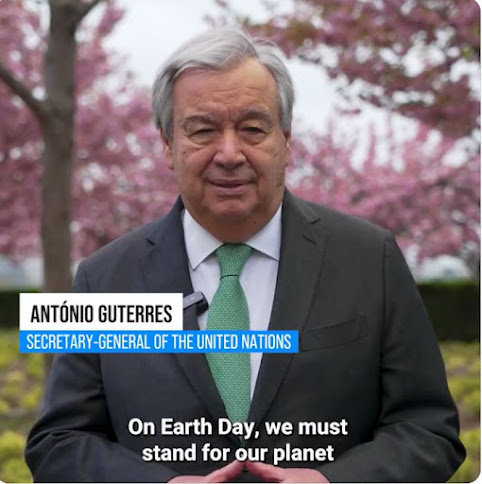

Mother Earth is life-giving, nurturing, complex, and beautiful. We see this in mountain ranges, rainforests,
coral reefs, wetlands, and in the full diversity of life and cultures on this planet.
Biodiversity is the heartbeat of Mother Earth.
The triple planetary crisis of biodiversity loss, climate change and pollution is threatening Mother Earth,
the achievement of the Sustainable Development Goals and the global vision of living in harmony with
nature.
Indigenous peoples and local communities, including youth and children, are at the forefront of protecting
Mother Earth but they are also among the most directly affected by these crises.
In December of 2022, the global community took a huge step towards a positive change. It agreed upon
the most ambitious set of global goals and targets to protect nature that the world has ever seen. The
Kunming-Montreal Global Biodiversity Framework, or The Biodiversity Plan, aims to protect and restore
nature, to prosper with nature, to share benefits fairly, and to invest and collaborate for nature. These goals
are supported by 23 action targets that address both the direct and indirect drivers of biodiversity loss.
The Biodiversity Plan recognizes and considers diverse value systems and concepts, including for those
countries that recognize them, rights of nature and rights of Mother Earth.
The Plan also acknowledges the important roles and contributions of indigenous peoples and local
communities as custodians of biodiversity and as partners in its conservation, restoration and sustainable
use. Their traditional knowledge, innovations and practices are crucial to halting and reversing
biodiversity loss.
To achieve the goals and targets of The Biodiversity Plan it will take a holistic, whole-of-society
approach.
We all have a role to play.
On this International Mother Earth Day, let us pause to cherish and strengthen our relationship with the
land, air, water, plants, and animals. Let us focus on the ways that Mother Earth provides for our health
and wellbeing – physically, mentally, spiritually. In turn, let us take action to protect her.We can all be part of the Plan -- The Biodiversity Plan,
CBD Executive Director.
Public support for a comprehensive, legally-binding treaty to reduce the production of plastics is growing in the run up to the Intergovernmental Negotiating Committee meeting in Ottawa, Canada, later this month. Around 100 organisations from across the world are calling on governments to introduce a Global Plastics Treaty setting out national targets to reduce plastic production. They cite the success of the Montreal Protocol of 1987, where governments agreed to protect the ozone layer by dramatically reducing the production of harmful chemicals such as CFCs and HCFCs.
Tackling plastic pollution has always enjoyed popular support, but recent polling shows extremely high levels of public backing for reducing plastic production. A poll conducted across 19 countries in February this year shows eight in ten people support a reduction in plastic production, with similar levels of support for banning single-use plastics. Meanwhile, country delegates are facing pressure from more than two million people who have signed a petition calling for a global treaty to cut production.
Damaging impacts
Environmental pollution and human health concerns are driving public support for tackling plastic production. Ecosystems across the world have been severely impacted by plastic, which causes habitat degradation, chemical contamination, and death and injuries through entanglement. Plastics break down into micro and nanoplastics, which are comprised of toxic chemicals and enter the food chain, causing health problems for wildlife and humans including weakened immune systems and reproductive issues. Equally important, however, is plastic’s impact on climate change. Ninety-nine per cent of plastic is made from fossil fuels. As a result, the full lifecycle of plastics is responsible for 4% of global greenhouse emissions. Indeed, plastics alone are expected to account for at least 13% of the world’s carbon budget before 2050 if we are to stay within the Paris 1.5C temperature limit. Plastic is, therefore, a key market for fossil fuel companies, which despite the dangers of climate change are keen to expand production at a time when their core businesses are coming under threat from renewable energy and electrification.
Reduction targets: Governments across the world have introduced measures to address these serious environmental, climate and health problems by trying to reduce demand for plastics – for example more than 120 countries have introduced bans or taxes on single-use plastics. Massive efforts have also been made to increase recycling. These have had little impact. The world is now producing twice as much plastic as it did twenty years ago, with forecasts suggesting production will almost triple by 2050. Currently, only 9% of global production is successfully recycled, while 22% evades all waste management systems altogether and is simply dumped into the environment. The rest goes to landfill or is incinerated. Just 6% of total production is accounted for by recycled plastic. There is a massive disparity in the amount of plastic waste produced by different countries, but almost half comes from developed countries, which have the resources to tackle the problem.
Fossil fuel lobbying: Despite the obvious shortcomings of recycling as a solution, the fossil fuel industry is keen to focus attention on it while increasing demand for plastics in the hope of continuing to increase production. Indeed, together with the chemicals industry, the fossil fuel industry sent more than 140 lobbyists to the INC3 session in Nairobi at the end of last year, more than the number of delegates attending from 70 countries. The focus for many others has now moved to cutting production. The Centre for International Environmental Law (CIEL) is calling for at least a 70% reduction by 2050, with legally-binding rules for national targets to make sure that action is taken. Greenpeace is calling for a 75% reduction by 2040 to ensure the best chance of remaining within 1.5C. Academics at both Lund University and UC Berkeley have also called for restrictions on production. All eyes will now be on the negotiations in Ottawa to see if nations act on these recommendations and finally agree rules to tackle the scourge of plastic pollution that is causing untold damage to the climate, environment and health.
OTHER EVENTS: April 22nd marks the world’s 54th Earth Day!
National Park Week usually coincides with Earth Day. For 2024, U.S. National Park Week will be observed from Saturday, April 20th through Sunday, April 28th. Park entry fees will be waived on April 20th to encourage everyone to get out and enjoy their national parks. Honor Earth Day 2024 by organizing or participating in a local clean up, and by exploring the Eearth Day Network to learn about efforts in plastic reduction and sustainability through the Green Parks Plan (GPP) and Plastics Elimination and Reduction Plan.
AT U.S. FOREST SERVICE - The Middle Fork Earth Day cleanup event is open to the public. Volunteers will be collecting and removing non-hazardous litter from the Forest. Participants will meet at the C.T. Beach Picnic Area on Hills Creek Reservoir at 11 a.m. before dispersing to pick up trash in surrounding locations. Families are welcome and encouraged to attend; minors must be accompanied by an adult. Tools, trash bags, and personal protective equipment (PPE) will be provided. Restrooms are available in the day use area. Participants should wear weather-appropriate attire and bring water, lunch, sunscreen, work gloves, hats, and boots with ankle support.
Event details: Middle Fork Earth Day Cleanup
Where: C.T. Beach Picnic Area on Hills Creek Reservoir, Oakridge, OR
When: Saturday, April 20th
Time: 11 a.m. to 2 p.m.
AT THE U.S. NATIONAL PARK SERVICE - The event will be an awareness campaign on the new recommendations adopted on forests like (the plastic use and garbage storage) and the Waste Management in Remote Locations. This year’s Earth Day 2024 "Planet vs. Plastics" campaign encompasses the 4 goals highlighted below:
Widespread Awareness
The first goal is to bring widespread awareness to the importance of ending plastic pollution by helping everyone understand the impacts of plastic pollution. Plastic is everywhere and the impact on human health is not yet fully understood. However, we know through emerging research that plastic has made its way into our bodies. Read more about the health implications of plastics here.Secretary of the Interior, Deb Haaland, has issued a Secretary’s Order (SO) calling for a department-wide approach to reducing plastic pollution and calling for a reduction in the amount of plastic waste produced by the Department. In response to the SO, the NPS has developed a Plastics Elimination and Reduction Plan that includes actions for concessioners, commercial use authorization (CUA) holders, and partners of the NPS.
Phasing out Single-use Plastics
Plastics are the most common type of marine debris. More than 200 species have been documented consuming plastic and it is estimated that at least 14 million tons end up in the ocean annually. The breakdown of larger plastics in our environment leads to microplastics that are found nearly everywhere in our world including in the human body. The impacts of single use plastics on the environment and public heath are widespread. Concessioners can support the efforts to phase out single-use plastics by identifying alternatives and participating in the initiatives outlined in the Plastic Elimination and Reduction plan like sales of reusable water bottles and water in aluminum bottles and paper cartons; installation of water bottle refilling stations; elimination of plastic utensils and Styrofoam products; elimination of single-use toiletry products in plastic containers in lodging; and new and improved electronic/battery recycling. The U.S National Park Service discontinued the use of plastic bags and Styrofoam containers several years ago. Drinking straws should not be made out of plastic and available only on request at food and beverage outlets. Receipts should be electronic unless a paper receipt is requested. Read more about microplastics in drinking water at EarthDay.org
Demanding Policies Ending Fast Fashion
The clothing and apparel industry is one of the most polluting industries. Nearly 70% of clothing is made using crude oil. During the manufacturing process, toxic dyes, microfibers, and heavy metals are released into water streams. Clothing production has doubled since 2000 and shows no signs of slowing down as demand continues to grow and clothing items are not produced to last. Synthetic textiles contribute 60% of the microplastics in the environment. Concessioners can help reduce textiles in landfills by offering clothing made of 100% cotton, hemp, and other natural fibers, and using natural fiber linens in lodging (sheets and towels) and restaurants (napkins and tablecloths). Offer high quality items that can be reused for years to come.
The clothing and apparel industry is one of the most polluting industries. Nearly 70% of clothing is made using crude oil. During the manufacturing process, toxic dyes, microfibers, and heavy metals are released into water streams. Clothing production has doubled since 2000 and shows no signs of slowing down as demand continues to grow and clothing items are not produced to last. Synthetic textiles contribute 60% of the microplastics in the environment. Concessioners can help reduce textiles in landfills by offering clothing made of 100% cotton, hemp, and other natural fibers, and using natural fiber linens in lodging (sheets and towels) and restaurants (napkins and tablecloths). Offer high quality items that can be reused for years to come.
Investing in Innovative Technologies
Implementing innovated technology can drastically reduce our environmental impact and has the power to reduce our plastic use too. Consider purchasing items packaged in bioplastics made from renewable sources like vegetable fats, corn, food waste, when possible. Microplastic filters can be installed on laundry machines. In Golden Gate National Recreation area, the first hybrid ferries are carrying visitors to and from Alcatraz. These are just three examples of innovative technology transforming environmental impact. The NPS is using new technologies to adopt a zero-emission fleet, transitioning all eligible vehicles to zero emission vehicles. Read more about the park’s Green Our Rides objectives in the GPP. Vehicle tire ‘dust’ contributes 40% of microplastics in the environment; consider investing in longer wear tires that are less likely to shed dust. Although digitalization is not at the forefront of innovation, eliminating the production and use of paper products using technology is easy and has a big impact. Eliminating paper receipts alone has the potential save around 12 billion pounds of carbon dioxide (CO2), the equivalent of one million cars on the road. Most paper receipts are not recyclable due to a thin coating of plastic. Consider providing email receipts or only upon request and finding other ways to reduce paper use in your operations.
Implementing innovated technology can drastically reduce our environmental impact and has the power to reduce our plastic use too. Consider purchasing items packaged in bioplastics made from renewable sources like vegetable fats, corn, food waste, when possible. Microplastic filters can be installed on laundry machines. In Golden Gate National Recreation area, the first hybrid ferries are carrying visitors to and from Alcatraz. These are just three examples of innovative technology transforming environmental impact. The NPS is using new technologies to adopt a zero-emission fleet, transitioning all eligible vehicles to zero emission vehicles. Read more about the park’s Green Our Rides objectives in the GPP. Vehicle tire ‘dust’ contributes 40% of microplastics in the environment; consider investing in longer wear tires that are less likely to shed dust. Although digitalization is not at the forefront of innovation, eliminating the production and use of paper products using technology is easy and has a big impact. Eliminating paper receipts alone has the potential save around 12 billion pounds of carbon dioxide (CO2), the equivalent of one million cars on the road. Most paper receipts are not recyclable due to a thin coating of plastic. Consider providing email receipts or only upon request and finding other ways to reduce paper use in your operations.
COMMUNICATIONS MATERIALS

CAMPAIGN MATERIALS: Make a splash with the 2024 Earth Day poster - Water touches everything.


