FORUM: “Navigating the future: Safety first.” World Maritime Day 2024. The theme provides an opportunity to delve into specific topics and issues relevant to enhancing safety at sea. Below is a non-exhaustive list of topics – some interlinked – deserving of greater consideration throughout this year and beyond. Safety has been at the heart of IMO activities since the Organization was established in 1958. It has always been recognized that the best way of improving safety at sea is through effective international regulations that are followed by all shipping nations globally. The IMO provides the mechanism through which the Governments of countries with an interest in shipping can come together to decide on standards that are to be applied on ships engaged in international voyages. Generally regarded as the most important of all international treaties concerning the safety of merchant ships is the International Convention for the Safety of Life at Sea, better known by its acronym SOLAS, in its successive forms, starting with the first version adopted in 1914 following the Titanic disaster of 1912. Improvements in regulations have sometimes been achieved as a result of shipping disasters that have revealed shortcomings in the system. However, this should not obscure the fact that, in the majority of cases, it is a new technical development, a response to changing circumstances within the industry, or the anticipation of something that may happen in the future that provides the catalyst for the Organization's work on maritime safety. Some pertinent recent examples (by no means an exhaustive list) are making electronic charts mandatory; developing safety requirements for ships operating in polar waters and for the use of alternative fuels; addressing large passenger ship safety; and regulating maritime autonomous surface ships (MASS). The combined expertise available within the Organization that is brought to bear on any standard, guideline, code of practice or any other matter results in a balanced, sensible and effective regulatory regime that applies to nearly 100% of shipping engaged in international trade. No other organization, either international or regional, can muster this unique capability. Shipping transports about 80% of global trade and is the least environmentally damaging mode of transport when its productive value is taken into consideration. Nevertheless, IMO is actively engaged in a global approach to make shipping carbon-neutral by further enhancing ships' energy efficiency and reducing greenhouse gas (GHG) emissions, through regulation, while at the same time providing technical cooperation and capacity-building activities to support implementation by Member States. Ultimately, improving the safety of ships and reducing their GHG emissions go hand in hand, and both are critical to achieving a sustainable and efficient maritime industry. The transition that shipping is undergoing to meet the challenge to combat climate change will impact shipping and seafarers in many ways. Safety must come first. Besides decarbonization, safety matters in digitalization, automation and fishing vessel safety will be of paramount importance in the current decade and those to come. The 2024 theme, "Navigating the future: safety first!" is therefore most timely. The theme is closely linked to the United Nations (UN) 2030 Agenda 2030 for Sustainable Development and the 17 Sustainable Development Goals (SDGs). These include affordable and clean energy (SDG 7); industry, innovation and infrastructure (SDG 9); climate action and sustainable use of the oceans, seas and marine resources (SDGs 13 and 14); and the importance of partnerships and implementation to achieve these goals (SDG 17). Follow the conversation with the hashtags #worldMaritimeDay, #ClimateAction, #GreenerShipping.
EVENTS: On September 26th; The World Maritime Day 2024 will be celebrated at IMO HQ. The International Maritime Organization’s Member States, inter-governmental organizations (IGOs), non-governmental organizations (NGOs), the United Nations system and related industry sectors are invited to observe the day. Enhancing maritime safety by ensuring that each link in the chain of responsibility fully meets its obligations is a priority for the global maritime community and critical for future global economic growth and prosperity. Read the concept Note!
WMO-IMO Symposium on Extreme Maritime Weather: The event will focus on `Bridging the Knowledge Gap Towards Safer Shipping’ and will take place on 23-26 September 2024 at IMO Headquarters, London. Read more details here.
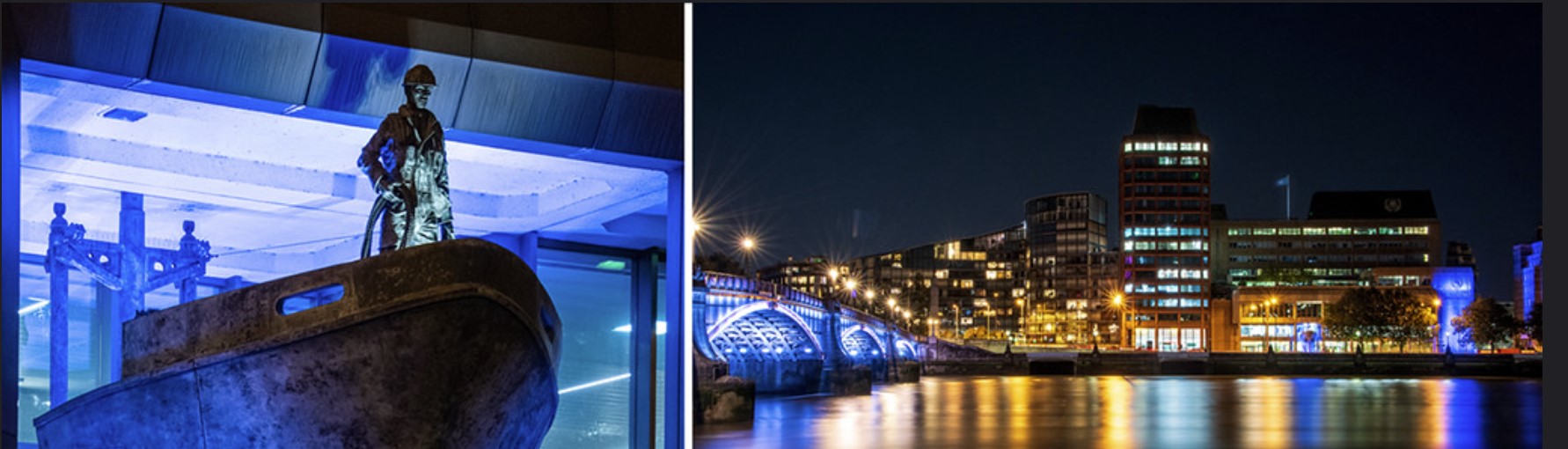
Lighting up landmarks. IMO Headquarters will be bathed in blue light in the evening of the day to promote this year's theme. IMO invites Member States, intergovernmental organizations in cooperation with IMO, and non-governmental organizations in consultative status with IMO to lighting up landmarks. Please find the photo gallery here. Read more details here.
PUBLICATION: This Law defines many essential issues and rules regarding the implementation of the necessary principles in maritime navigation in terms of general safety, such as monitoring, data collection and inspection matters and also related to international traffic and trade (also specific conditions for maritime facilities, crews, floating objects and vessels which sail/transit/stay through the internal sea waters and the territorial sea in Montenegro Law on maritime navigation safety.
When we think about safety in maritime, the International Convention for the Safety of Life at
Sea (SOLAS) is one of the first things that comes to mind. 2024 marks 50 years since the
treaty was adopted. We can be proud of the crucial role this Convention has played in setting
international safety standards for ship construction, equipment and operation, preventing
maritime disasters and protecting lives.
But we cannot be complacent.
This year's World Maritime Day theme: "Navigating the future: safety first!" calls for collective
effort to ensure we keep pace with the ongoing transformation in shipping.
And at IMO, we must ensure the continued development and implementation of the regulatory
regime to prioritize safety as we steer towards tomorrow.
I encourage all stakeholders to mark this year's World Maritime Day on 26 September and
invite you to join the conversation online using the hashtag #WorldMaritimeDay.
Let us all work to navigate the future with safety first!
Mr. Arsenio Dominguez
Secretary-General, International Maritime Organization.
At a time when the world is beset by conflict and crisis, it is easy to forget that, day in and day out, the international shipping industry works quietly and efficiently to keep the wheels of global trade in motion and ensure the timely delivery of the goods and commodities on which we all rely.
For more than 50 years, international conventions developed by the International Maritime Organization have made global shipping progressively safer, more secure and more environment-friendly. There are more than 50 in all. Collectively, they are aimed at strengthening maritime safety and security, protecting the marine environment, mitigating the negative effects of accidents or establishing regulations covering liability and compensation for damage.
The real value of those conventions can be fully realized only if they are properly implemented. This entails early entry into force, broad participation, effective policies and programmes, stringent oversight and vigorous enforcement. Shipping States, coastal States and the shipping industry itself all have a part to play.
On World Maritime Day, let us recall the often unheralded but always vital contribution by international shipping to peoples and communities all over the world. I urge all concerned to strengthen their efforts to achieve the full and effective implementation of all IMO conventions.
Over the years, IMO has built up an enviable track record for developing and adopting new international conventions. There are more than 50 altogether. Collectively, they are aimed at either the prevention of accidents or environmental damage; at mitigating the negative effects of accidents when they do occur, or at ensuring that adequate compensation is available for the victims of such accidents.
While most of these are in force and have done so much to make shipping safer, more efficient and more environment friendly, there are still several conventions for which a slow pace of ratification and a lack of implementation are serious causes for concern.
This is why I believe that the theme selected for World Maritime Day 2014 – namely “IMO conventions: effective implementation” – is so important. Through it, we have taken the opportunity to shine a spotlight on those IMO treaty instruments which have not yet entered into force, as well as those for which ratification by more States would lead to more effective implementation.
For an IMO convention to be properly effective, it needs early entry into force, widespread ratification, effective implementation, stringent oversight of compliance and vigorous enforcement. Even those conventions that command almost universal coverage of the global fleet, such as SOLAS and MARPOL, only have teeth if they are backed up by an effective implementation infrastructure at the national level.
Our efforts with regard to conventions yet to enter into force have been particularly focused on the Ballast Water Management Convention, the Hong Kong Convention on ship recycling, the Cape Town Agreement of 2012 to implement the Torremolinos Protocol on fishing vessel safety, the 2010 Protocol to the HNS Convention and the Nairobi Convention on wreck removal. Although there has been welcome success this year in terms of new ratifications – indeed the Nairobi Convention will enter into force next year – much remains to be done and we will continue our efforts to the end of the year and beyond.
The wider and more complete implementation of measures already in place has also been a major element of this year’s theme. Energy efficiency measures for ships, the availability of fuel oil to meet increasingly stringent sulphur content requirements, and the verification of goal-based ship construction standards, have all featured strongly in the Organization’s work this year and all contribute towards wider and more effective implementation of measures already agreed or in place.
Implementation of IMO measures is, ultimately, the responsibility of the Member States and the industry – and the forthcoming mandatory audit scheme for Member States will be an important tool for assessing Member States’ performance in meeting their obligations and responsibilities as flag, port and coastal States under the relevant IMO treaties.
But the Organization itself, including the Secretariat, also has a role to play. The extensive technical cooperation programme, in which we identify particular needs among Member States that may lack resources, expertise or both, and match them to offers of help and assistance from others, is a key element in this respect, helping states to meet their obligations fully and effectively.
A slow pace of ratification, a prolonged state of non-fulfilment of entry-into-force conditions, a lack of compliance oversight and of enforcement mechanisms all add up to ineffective implementation, which in turn prevents the benefits enshrined in IMO measures from being fully felt.
During the course of this year, our theme has enabled us to make genuine progress towards ratification, entry into force and implementation of all IMO conventions – but especially those which have yet to be widely accepted.
And this is what IMO is really all about. Debates, discussions and resolutions in committees and sub committees are all very well: but it is how we apply what emerges from that process to the ships, ports and seafarers who operate daily at the “sharp end” of shipping that really matters.
The theme for this year's World Maritime Day "IMO conventions:
effective implementation" was chosen in order to provide an opportunity
to shine a spotlight on those IMO treaty instruments, which have not yet
entered into force, as well as those for which ratification by more
States and more effective implementation would yield significant benefits.