WEBINARS:As part of PAHO’s Regional Disease Elimination Initiative, the Plan of Action for Malaria Elimination in the Americas 2026–2030 serves as a framework to guide policy and strategy changes, promote the adoption of new interventions, and strengthen partnerships to set the Region on the path toward malaria elimination.

The Malaria Consortium will held a virtual event entitled ''Beating malaria: Progress, partnerships and what comes next''
The Malaria Consortium Chief Executive, Dr James Tibenderana, speaks with Myriad Australia — a giving community that connects donors with high-impact organisations tackling global challenges — about his personal connection to malaria and his commitment to ending the disease. He reflects on Malaria Consortium’s work using proven tools like insecticide-treated nets, rapid diagnostic tests and seasonal malaria chemoprevention, and shows why strong health systems, collaboration and sustained funding are key to protect hard-won gains against malaria.
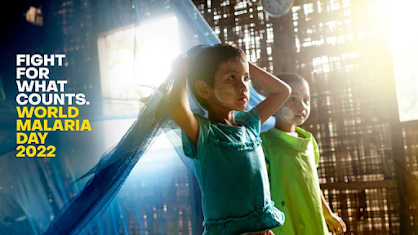
On April 23, 2026, The Geneva Learning Foundation held a webinar entitled "Malaria turning the tide: 10 years of TGLF" to mark the World Malaria Day 2026. This will be the first of a monthly livestream where we hear directly from the community, share what we are learning, and announce what is ahead. For World Malaria Day, join health and humanitarian workers driven to end malaria. Now we can. Now we must. “My family does not go more than two weeks without someone being struck down by malaria.” That is a physician in Kinshasa. She is the person her community relies on to end this disease. Since December 2024, we have been listening to experiences like hers from health workers in over 70 countries – and sharing them back with the community. They sometimes see change before global surveillance does. Malaria appearing in places that were previously malaria-free. Climate change redrawing the map of transmission faster than programmes can adapt. But they also describe what they are doing about it. Community health workers mobilizing 2,000 households across 550 villages with no external funding. A nurse in Zambia noticing that peak season is no longer a peak. It is now year-round. A physician in Côte d’Ivoire cutting cases in his district through bed net distribution and routine integration.
On 23 April, World Malaria Day, the first insights report by and for people who fight malaria in their commmunities will be launched. This report was developed in collaboration with RBM Partnership to End Malaria. And because The Geneva Learning Foundation turns ten this year, we will share what is coming next. New courses, new programmes, and new ways to join.
On 23 April, World Malaria Day, the first insights report by and for people who fight malaria in their commmunities will be launched. This report was developed in collaboration with RBM Partnership to End Malaria. And because The Geneva Learning Foundation turns ten this year, we will share what is coming next. New courses, new programmes, and new ways to join.

- The rollout of malaria vaccines and treatments across African countries and key milestones achieved.
- New tools to track vaccine introduction, including the IVAC malaria vaccine tracker.
- The current global state of malaria and recent increases in cases in specific countries.
- Early indications of how reductions in U.S. funding may influence malaria control, leading to an increase in cases and deaths.
- How funding changes may affect countries’ ability to expand access to malaria vaccines.
- What these developments mean for global malaria control efforts in 2026 and beyond.
Jane M. Carlton, PhD, director of the Johns Hopkins Malaria Research Institute at the Johns Hopkins Bloomberg School of Public Health and a Bloomberg Distinguished Professor in the Department of Molecular Microbiology and Immunology at the School and in the Department of Biomedical Engineering at the Johns Hopkins Whiting School of Engineering. Her research uses comparative and integrative multi-molecular approaches to further understand the biology and evolution of malaria parasites and their mosquito vectors.
William Moss, MD, a professor in the departments of Epidemiology and International Health at the Johns Hopkins Bloomberg School of Public Health; deputy director of the Johns Hopkins Malaria Research Institute; and executive director at the School’s International Vaccine Access Center. His research focuses on the epidemiology and control of malaria in southern Africa.


PUBLICATION:World Malara Report 2025. Since 2000, 2.3 billion cases and 14 million deaths have been averted. To date, 47 countries have been certified malaria-free (of which two in 2024 and three in 2025), while 37 countries reported fewer than 1000 cases in 2024. Success is possible, even in tough areas: The Greater Mekong Subregion proves elimination is achievable, with cases falling by nearly 90% despite long-standing drug resistance. Between 2000 and 2024, the number of malaria-endemic countries fell sharply, dropping from 108 to 80. Over the same period:Countries with fewer than 10 000 cases rose from 27 in 2000 to 46 in 2024. Countries with fewer than 100 indigenous cases increased from 6 to 26. Countries with fewer than 10 indigenous cases increased from 4 to 24. But the global situation is stalling: In 2024, there were an estimated 282 million cases and 610,000 deaths—a slight increase from 2023. According to the World Malaria Report 2025, progress is at risk:Biological challenges:Drug resistance: Artemisinin partial resistance is confirmed in four African countries (Eritrea, Rwanda, Uganda, United Republic of Tanzania,) and spreading. This is a critical danger to the main treatments for malaria.
- Insecticide resistance: Resistance to pyrethroids (the main chemical on bed nets) is widespread, confirmed in 48 out of 53 reporting countries.
- Diagnostic failure: pfhrp2 gene deletions, which can make rapid diagnostic tests fail, are spreading and now reported in 46 endemic countries.
- Invasive mosquitoes: Anopheles stephensi, an urban-dwelling, insecticide-resistant mosquito, is expanding its range in Africa, posing a new threat to cities.
- Systemic challenges: A massive funding gap: 2024 funding (US$ 3.9 billion) was less than half of the US$ 9.3 billion 2025 target. A projected shortfall of US$ 5.4 billion leaves the response dangerously under-resourced.
- Fragility of aid: Recent cuts in global health aid have disrupted health systems, surveillance, and campaigns, demonstrating how quickly progress can be undone.
- Humanitarian & environmental challenges: Climate change, conflict, and humanitarian crises continue to drive malaria resurgence and disrupt essential services. Despite the challenges, several interventions are being successfully scaled up and showing impact: New-Generation nets: In 2024, 84% of nets shipped to Africa were the more effective PBO or dual active ingredient nets, up from just 10% in 2019.
Vaccines: A major breakthrough.
To date, vaccines are rolling out in 25 countries, protecting millions of children.
Nations are leading. Science is delivering. Communities are driving change. We can end malaria in our lifetime. Now We Can. Now We Must.
Science is advancing faster than ever, and ending malaria in our lifetime is now a real possibility. Now We Can. Now We Must.
The next generation could grow up in a world free from malaria. Now We Can. Now We Must.
When funding falls, malaria rebounds fast. Children will die if momentum slips. Now We Can. Now We Must.
National leadership is driving this forward. Momentum is building. Now We Can. Now We Must.
- Chemoprevention: Seasonal malaria chemoprevention (SMC) now reaches 54 million children. Perennial malaria chemoprevention (PMC) is also expanding.
- Improved treatment of children: More febrile children are being diagnosed and treated with effective medicines (ACTs) than in the past.
Nations are leading. Science is delivering. Communities are driving change. We can end malaria in our lifetime. Now We Can. Now We Must.
Science is advancing faster than ever, and ending malaria in our lifetime is now a real possibility. Now We Can. Now We Must.
The next generation could grow up in a world free from malaria. Now We Can. Now We Must.
When funding falls, malaria rebounds fast. Children will die if momentum slips. Now We Can. Now We Must.
National leadership is driving this forward. Momentum is building. Now We Can. Now We Must.
TAKE ACTIONS: We can end malaria. Not someday, but in our lifetime.
To make a malaria-free future a reality, we must:
- Sustain & scale funding, with efficiency: Commit to sustained, diversified financing—both international and domestic. In an era of real financial constraints, every dollar must work harder. We must prioritize high-impact, data-driven interventions and deliver optimized responses that maximize value and minimize waste. Funding is what gets new vaccines, treatments, and tools out of labs and into the communities that need them most.
- Champion country leadership: Support nationally-led programmes that are driving change and tailor interventions to local needs for maximum impact. Strong national ownership is the foundation of an efficient and sustainable response.
- Ensure consistent partner support: Progress depends on predictable, aligned, and consistent support from all partners. Sustainable gains are built not on sporadic commitments, but on reliable collaboration that allows countries to plan and implement for the long term.
- Accelerate innovation: Continue to invest in research and development for new generations of tools, including those to beat insecticide, diagnostic and drug resistance.
- Empower communities: Engage and resource communities as protagonists in their own health, everyone has a role to play.