Showing posts with label PAHO. Show all posts

Thursday, 17 September 2026

World Patient Safety Day 2026; Septembert 17th.

World Patient Safety Day 2026.


FORUM
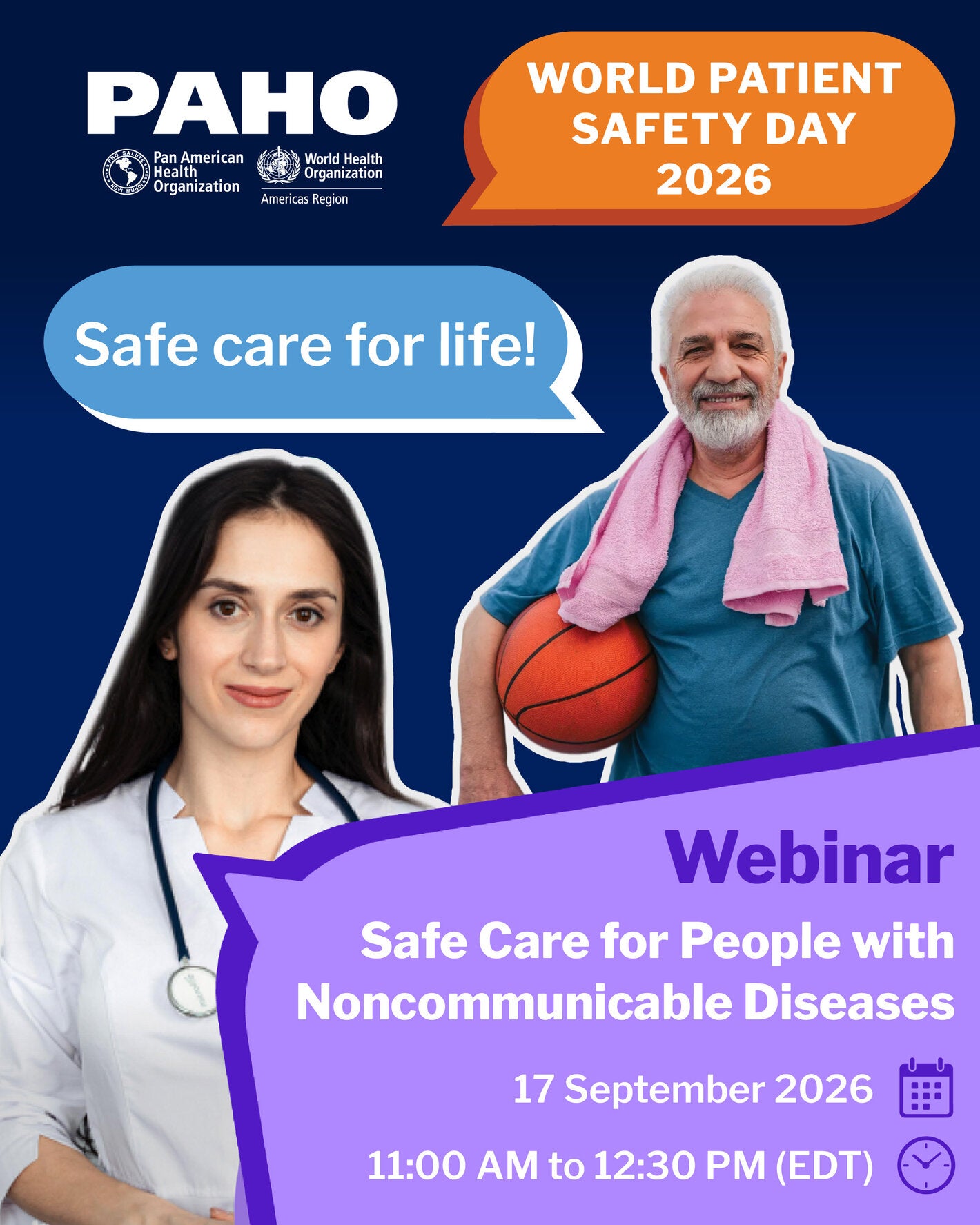
: “Safe Care for people with Noncommunicable Diseases (NCDs)” World Patient Safety Day 2026. This year, we will raise awareness of patient safety and mobilize action to reduce avoidable harm in health care. The theme for 2026 is recognizing that people living with NCDs—including cardiovascular diseases, cancer, diabetes, and chronic respiratory diseases—require continuous, lifelong care across multiple health care settings, creating numerous opportunities for safety risks and avoidable harm. Globally, approximately one in ten patients experience harm during health care, and nearly half of these events are preventable. Individuals with NCDs are particularly vulnerable due to frequent interactions with health services, complex treatment regimens, multiple medications, and transitions between levels of care. Fragmented services, diagnostic errors, medication-related harm, inadequate follow-up, and inequitable access to quality care can adversely affect health outcomes and increase the burden on health systems. In the Americas, NCDs account for approximately 6 million deaths annually and are the leading cause of mortality and disability. More than 240 million people in the Region live with at least one NCD, making delivery of safe, quality, and people-centered care a critical public health priority. Strengthening patient safety within NCD services is therefore essential to achieving universal health coverage, improving health outcomes, and advancing resilient, integrated health systems. Follow the conversations with the hashtags: #17September, #worldpatientSafetyDay, #PatientSafety, #HealthForAll, #Engagingpatients.


EVENTS: On September 17th, led by the World Health Organization (WHO), the World Patient Safety Day 2026 will beobserved. 

About the webinar: In the context of World Patient Safety Day 2026, this regional webinar, jointly organized by the Department of Noncommunicable Diseases and Mental Health (NMH) and the Department of Health Systems and Services (HSS) of the Pan American Health Organization (PAHO/WHO), will bring together key stakeholders from across the Region of the Americas to exchange experiences, good practices, and lessons learned on patient safety in the prevention and management of noncommunicable diseases, promoting safer, higher-quality, and people-centered care.
Target audience 

Ministries of Health; patient safety and quality teams; noncommunicable disease (NCD) program managers; primary health care professionals; academic institutions; patient organizations; development partners; and civil society organizations.

To learn more about the World Patient Safety Day 2026 campaign, its key messages, and communication materials, please visit the official campaign webpage.


Objective
  • Increase awareness of patient safety risks associated with NCD care.
  • Promote strategies to reduce preventable harm related to diagnosis, medication use, care transitions, and long-term management of chronic conditions.
  • Highlight the role of patients, families, communities, and health workers as partners in improving safety and quality of care for people living with NCDs.
  • Encourage policymakers, health system leaders, and health professionals to integrate patient safety principles into NCD-related policies, programs, and service delivery models.
 
Agenda Programme

Moderator: Silvana Luciani, Unit Chief, Noncommunicable Diseases, Violence and Injury Prevention, PAHO11:00 a.m. Opening RemarksDr. James Fitzgerald, Director, Health Systems and Services, PAHO
11:05 a.m. Highlights of global systematic review and WHO campaign for patient safety for people living with NCDsDr. Alarcos Cieza, Unit Head, Management of NCDs, WHO
11:25 a.m. Overview of patient safety in the Americas and PAHO recommendations for safe and quality health systemsDr. Gustavo Rosell, Advisor, Integrated Health Services Delivery, PAHO
11:45 a.m. Panel of country and organizational experiences with improving patient safety and quality, with a focus on people with NCDsMexico: Dr. Laura Cortés Sanabria, Directorate of Education and Quality in Health, Ministry of Health
Brazil: National Patient Safety Program
WONCA: Dr. María Pilar Astier, Working Party on Quality and Safety
International Diabetes Federation: Prof. Pablo Arias, President of the SACA region
12:15 p.m. Interactive session of questions and answers with participants
12:25 p.m. Closing remarksDr. Ernesto Báscolo, Unit Chief, Primary Health Care and Integrated Services Delivery, PAHO

How to participate
DATE: Thursday, 17 September 2026
TIME: 11.00 – 12.30 (Washington, D.C. time)
OTHER TIME ZONES: Buenos Aires, Brasilia (12.00–13.30), Mexico City (9.00–10.30), Bogota, Kingston, Lima, Panama City (10.00–11.30).
PLATFORM: ZOOM (with registration)
LANGUAGES: Simultaneous interpretation will be available in English, Spanish, and Portuguese.
REGISTER


Light It Orange for Patient Safety & Health System Safety!

For the first time Aotearoa Is lighting Up for World Patient Safety Day
17 September 2026 will be a little different in Aotearoa New Zealand

World Patient Safety Day is a Global Day of Recognition and action, established by the World Health Organization to bring patients, families, health workers, health leaders, policymakers and communities together around a shared goal: reducing avoidable harm in healthcare. It is marked internationally every year on 17 September.

This year, Aotearoa is not simply acknowledging the day. We are showing up!

Led by the Health Consumer Advocacy Alliance, Patient Voice Aotearoa and Kaitiaki Hauora, 2026 will see New Zealand's first nationwide coordinated, patient and whānau-led World Patient Safety Day campaign. And there is already real momentum behind it.

Health organisations, health workers, patients, whānau and communities are finding ways to take part. Some will wear orange. Others are making patient safety visible in their workplaces and communities. Organisations across the country are getting involved, and the campaign continues to grow.

Light It Orange!

On 17 September, landmarks across Aotearoa will be illuminated in orange, joining a global movement of landmarks, buildings and public spaces lighting up to demonstrate a shared commitment to safer healthcare. Auckland's Sky Tower and landmarks in Wellington, Tauranga, Whangārei and Dunedin are already confirmed to take part, with more expected to join. These lights will create powerful images, but the real story is the people behind them. People whose lives have been changed by preventable harm. Patients and whānau who have had experiences they never expected to have. Health professionals who know that safer systems are possible. And decision-makers who have the opportunity to listen and act. View PDF version hereµ


Sunday, 31 May 2026

World No-Tobacco Day 2026; May 31st.

FORUM: “Unmasking the appeal – countering tobacco and nicotine addiction”. World No-Tobacco Day 2026. The campaign calls on governments, partners, and civil society to strengthen regulation, close policy gaps, and safeguard future generations from the harms of tobacco and nicotine products. The 2026 campaign aims to: raise awareness of the tobacco and nicotine industry’s evolving strategies, including the use of synthetic nicotine, nicotine salts, and analogues to increase addiction potential while appearing technologically advanced; advocate for stronger policy action to protect youth through bans on flavours, advertising and promotion (including on digital and social media), and regulation of packaging and product design that increase appeal; and prevent addiction and reduce demand by equipping the public – especially youth – with the knowledge and tools to resist industry manipulation and access evidence-based cessation support. Follow the conversation with the hashtags: #WorldNoTobaccoDay; #31May; #TobaccoControl.


EVENTS: On Sunday May 31st, a webinar will be held to mark the World No-Tobacco Day 2026.This year's observance unites governments, health organizations, civil society, and youth voices under a shared mission: to end the tobacco epidemic and secure a tobacco- and nicotine-free future for the next generation. Register to participate!


Webinar: Exposing industry tactics behind nicotine pouch expansion and the regulatory implications.

On May 28th, 2026, from 13:00 – 14:00 CET; Ahead of World No Tobacco Day (WNTD) 2026, the WHO will host an online event exposing the tactics and strategies driving the market growth of nicotine pouches, which continue to lure adolescents and young adults into nicotine addiction. This event aligns closely with the theme of the 2026 WNTD, ‘Unmask the appeal – countering nicotine and tobacco addiction’ but will focus on nicotine pouches, which are becoming increasingly popular, with strong youth appeal and high addiction potential. Children and young people are aggressively targeted with flavours, sleek packaging, digital marketing, social media promotion, influencer marketing and sponsorships of youth-oriented events, which position nicotine pouches as lifestyle products, rather than addictive and harmful. This webinar will include highlights from WHO’s first global report on nicotine pouches and reveal how nicotine pouches are often marketed as cool, discreet and “tobacco-free”, spreading across countries so fast that regulation often lags behind. It will bring together different perspectives to unmask the appeal and marketing of nicotine pouches, share experiences associated with regulating these products and protecting the public – particularly, youth and non-users – from nicotine addiction and draw attention as to why urgent and coordinated action is needed.

This event will equip participants with new knowledge on nicotine pouches, and serves as a call for:

  • governments – where not banned, to otherwise regulate nicotine pouches within comprehensive tobacco control frameworks, close loopholes, and prioritise public health over commercial interests;
  • civil society organisations - to hold the industry accountable, advocate for strong policies, and amplify credible public health messaging;
  • youth and youth organisations – to recognize and resist industry tactics that specifically target them and to protect their right to health; and
  • other stakeholders – to stay informed of the tactics of tobacco and nicotine industries, and press for evidence-based policies to safeguard public health.

Urgent, coordinated and sustained action is necessary to safeguard current and future generations from nicotine addiction. The webinar will be held in English with interpretation provided in Arabic, French and Spanish. Everyone is welcome - questions can be posed online, on the registration page. Register here


World No Tobacco Day 2026


Call for nominations of the WHO World No Tobacco Day 2026 awards.The WHO headquarters will announce the awardees, 5 days before WNTD.


Message from Dr. Jarbas Barbosa, Director of the Pan American Health Organization (PAHO) on World No-Tobacco Day 2026; May 31st.

Today, May 31st, the Pan-american Health Organization Paro joins the global call for world no tobacco day under the slogan and masking the appeal countering tobacco and nicotine following decades of progressively in cutting in tobacco use tobacco and related industry continue to adapt their strategies. They aggressively marketing new products like e cigarettes and nicotine pouches of brand innovation to attract children adolescents and young people and get them hooked. The younger person starts the greater the risk of addition. Young people are particularly vulnerable as their brain are still developing and adapt quickly to nicotine even at low levels of exposure.
That's why this industry marketing strategies target young people. An estimated 2.6 million adolescents aged 13 to 15 smoke cigarettes in the region of the Americas and 2 million use cigarettes this levels of consumption are serious public health concern pares member states to take urgent and decisive action to protect their populations including through comprehensive policies burning all forms of advertising promotion and sponsorship reduction in affordability and features tobacco nicotine products more to adolescent people today. We must work together to protect children and young people
from the interest of the tobacco industry and it is affiliate so that we can build the generation for tobacco is a of the past Americas.
PAHO Director-General.


GET INVOLVED!  Join us in unmasking the appeal!

PUBLICATIONS:  Read the WHO report on the global tobacco epidemic, 2025: warning about the dangers of tobacco and the WHO global report on trends in prevalence of tobacco use 2000–2024 and projections 2025–2030


World No Tobacco Day 2026


Saturday, 25 April 2026

World Malaria Day 2026; April 25th.

FORUM: "Driven to End Malaria: Now We Can. Now We Must." World Malaria Day 2026. Today, we highlight the need for continued investment and sustained political commitment for malaria prevention and control. Science is advancing faster than ever. For the first time, ending malaria in our lifetime is a real possibility. New vaccines, treatments, malaria control tools and pioneering technologies - including genetic modification of mosquitos and long-acting injectables - are in development. Already, 25 countries are rolling out malaria vaccines to protect 10 million children a year. Next-generation mosquito nets now make up 84% of all new nets distributed. Nationally-led programmes are driving change. The possibility has never been greater. Follow the conversations with the hashtags: #WorldMalariaDay, #Malaria, #25April.

World Malaria Day 2026


EVENTS: On Saturday; April 25th to mark the World Malaria Day 2026, the World Health Organization joins partners to launch the campaign: "Driven to End Malaria: Now We Can. Now We Must." This is a rallying cry to grasp the moment—to protect lives now and fund a malaria-free future. With the tools and resources available today, no one should die from malaria. For the first time, that's not ambition. It's real. Science is advancing faster than ever. New vaccines, treatments, malaria control tools and pioneering technologies, including gene drive, and long-acting injectables, are in development. Already, 25 countries are rolling out malaria vaccines to protect 10 million children a year. Next-generation mosquito nets now make up 84% of all new nets distributed. Nationally-led programmes are driving change. But malaria doesn't wait. When funding falls and programmes weaken, it comes back fast, killing hundreds of thousands more children and reversing hard-won gains.The possibility has never been greater. And neither has the cost of letting it slip. Register to Participate!


WEBINARS:As part of PAHO’s Regional Disease Elimination Initiative, the Plan of Action for Malaria Elimination in the Americas 2026–2030 serves as a framework to guide policy and strategy changes, promote the adoption of new interventions, and strengthen partnerships to set the Region on the path toward malaria elimination. 


The Malaria Consortium Chief Executive, Dr James Tibenderana, speaks with Myriad Australia — a giving community that connects donors with high-impact organisations tackling global challenges — about his personal connection to malaria and his commitment to ending the disease. He reflects on Malaria Consortium’s work using proven tools like insecticide-treated nets, rapid diagnostic tests and seasonal malaria chemoprevention, and shows why strong health systems, collaboration and sustained funding are key to protect hard-won gains against malaria.


On April 23, 2026, The Geneva Learning Foundation held a webinar entitled "Malaria turning the tide: 10 years of TGLF" to mark the World Malaria Day 2026. This will be the first of a monthly livestream where we hear directly from the community, share what we are learning, and announce what is ahead. For World Malaria Day, join health and humanitarian workers driven to end malaria. Now we can. Now we must. “My family does not go more than two weeks without someone being struck down by malaria.” That is a physician in Kinshasa. She is the person her community relies on to end this disease. Since December 2024, we have been listening to experiences like hers from health workers in over 70 countries – and sharing them back with the community. They sometimes see change before global surveillance does. Malaria appearing in places that were previously malaria-free. Climate change redrawing the map of transmission faster than programmes can adapt. But they also describe what they are doing about it. Community health workers mobilizing 2,000 households across 550 villages with no external funding. A nurse in Zambia noticing that peak season is no longer a peak. It is now year-round. A physician in Côte d’Ivoire cutting cases in his district through bed net distribution and routine integration.
On 23 April, World Malaria Day, the first insights report by and for people who fight malaria in their commmunities will be launched. This report was developed in collaboration with RBM Partnership to End Malaria. And because The Geneva Learning Foundation turns ten this year, we will share what is coming next. New courses, new programmes, and new ways to join.


On April 8th, 2026 a Media briefing entitled  ''Malaria Vaccines, Trends, and What’s Ahead'' was held by the Johns Hopkins Bloomberg School of Public Health to discuss the rollout of new malaria vaccines, the global state of malaria, including recent trends in cases, and the potential impact of shifting global health funding. Malaria is a mosquito-borne disease that in 2024 took more than 600,000 lives globally. The Topics discussed:
  1. The rollout of malaria vaccines and treatments across African countries and key milestones achieved.
  2. New tools to track vaccine introduction, including the IVAC malaria vaccine tracker.
  3. The current global state of malaria and recent increases in cases in specific countries.
  4. Early indications of how reductions in U.S. funding may influence malaria control, leading to an increase in cases and deaths.
  5. How funding changes may affect countries’ ability to expand access to malaria vaccines.
  6. What these developments mean for global malaria control efforts in 2026 and beyond.
Insights from:

Jane M. Carlton, PhD, director of the Johns Hopkins Malaria Research Institute at the Johns Hopkins Bloomberg School of Public Health and a Bloomberg Distinguished Professor in the Department of Molecular Microbiology and Immunology at the School and in the Department of Biomedical Engineering at the Johns Hopkins Whiting School of Engineering. Her research uses comparative and integrative multi-molecular approaches to further understand the biology and evolution of malaria parasites and their mosquito vectors.

William Moss, MD, a professor in the departments of Epidemiology and International Health at the Johns Hopkins Bloomberg School of Public Health; deputy director of the Johns Hopkins Malaria Research Institute; and executive director at the School’s International Vaccine Access Center. His research focuses on the epidemiology and control of malaria in southern Africa.


Statement from Dr Tedros Adhanom Ghebreyesus, Director-General, WHO on World Malaria Day 2026; April 25th.


World Malaria Day 2026; April 25th.

PUBLICATION:World Malara Report 2025. Since 2000, 2.3 billion cases and 14 million deaths have been averted. To date, 47 countries have been certified malaria-free (of which two in 2024 and three in 2025), while 37 countries reported fewer than 1000 cases in 2024. Success is possible, even in tough areas: The Greater Mekong Subregion proves elimination is achievable, with cases falling by nearly 90% despite long-standing drug resistance. Between 2000 and 2024, the number of malaria-endemic countries fell sharply, dropping from 108 to 80. Over the same period:Countries with fewer than 10 000 cases rose from 27 in 2000 to 46 in 2024. Countries with fewer than 100 indigenous cases increased from 6 to 26. Countries with fewer than 10 indigenous cases increased from 4 to 24. But the global situation is stalling: In 2024, there were an estimated 282 million cases and 610,000 deaths—a slight increase from 2023. According to the World Malaria Report 2025, progress is at risk:Biological challenges:Drug resistance: Artemisinin partial resistance is confirmed in four African countries (Eritrea, Rwanda, Uganda, United Republic of Tanzania,) and spreading. This is a critical danger to the main treatments for malaria.

  1. Insecticide resistance: Resistance to pyrethroids (the main chemical on bed nets) is widespread, confirmed in 48 out of 53 reporting countries.
  2. Diagnostic failure: pfhrp2 gene deletions, which can make rapid diagnostic tests fail, are spreading and now reported in 46 endemic countries.
  3. Invasive mosquitoes: Anopheles stephensi, an urban-dwelling, insecticide-resistant mosquito, is expanding its range in Africa, posing a new threat to cities.
  4. Systemic challenges: A massive funding gap: 2024 funding (US$ 3.9 billion) was less than half of the US$ 9.3 billion 2025 target. A projected shortfall of US$ 5.4 billion leaves the response dangerously under-resourced.
  5. Fragility of aid: Recent cuts in global health aid have disrupted health systems, surveillance, and campaigns, demonstrating how quickly progress can be undone.
  6. Humanitarian & environmental challenges: Climate change, conflict, and humanitarian crises continue to drive malaria resurgence and disrupt essential services. Despite the challenges, several interventions are being successfully scaled up and showing impact: New-Generation nets: In 2024, 84% of nets shipped to Africa were the more effective PBO or dual active ingredient nets, up from just 10% in 2019.
Vaccines: A major breakthrough. 

To date, vaccines are rolling out in 25 countries, protecting millions of children.
  1. Chemoprevention: Seasonal malaria chemoprevention (SMC) now reaches 54 million children. Perennial malaria chemoprevention (PMC) is also expanding.
  2. Improved treatment of children: More febrile children are being diagnosed and treated with effective medicines (ACTs) than in the past.
SUPPORTING COPY LINES

Nations are leading. Science is delivering. Communities are driving change. We can end malaria in our lifetime. Now We Can. Now We Must.

Science is advancing faster than ever, and ending malaria in our lifetime is now a real possibility. Now We Can. Now We Must.

The next generation could grow up in a world free from malaria. Now We Can. Now We Must.


When funding falls, malaria rebounds fast. Children will die if momentum slips. Now We Can. Now We Must.

National leadership is driving this forward. Momentum is building. Now We Can. Now We Must. 

 To make a malaria-free future a reality, we must:

  • Sustain & scale funding, with efficiency: Commit to sustained, diversified financing—both international and domestic. In an era of real financial constraints, every dollar must work harder. We must prioritize high-impact, data-driven interventions and deliver optimized responses that maximize value and minimize waste. Funding is what gets new vaccines, treatments, and tools out of labs and into the communities that need them most.
  • Champion country leadership: Support nationally-led programmes that are driving change and tailor interventions to local needs for maximum impact. Strong national ownership is the foundation of an efficient and sustainable response.
  • Ensure consistent partner support: Progress depends on predictable, aligned, and consistent support from all partners. Sustainable gains are built not on sporadic commitments, but on reliable collaboration that allows countries to plan and implement for the long term.
  • Accelerate innovation: Continue to invest in research and development for new generations of tools, including those to beat insecticide, diagnostic and drug resistance.
  • Empower communities: Engage and resource communities as protagonists in their own health, everyone has a role to play.


COMMUNICATION MATERIALS: Get the Social Media Toolkit!
This World Malaria Day:Grasp the moment. Protect lives now. Fund a malaria-free future


Tuesday, 14 April 2026

World Chagas Disease Day 2026; April 14th.


FORUM: “Women at the heart: protecting the next generation from Chagas disease” World Chagas Disease Day 2026. This year’s observance underscores the key role women play in family and community caregiving, as well as their greater interaction with health services, particularly during pregnancy. Chagas disease, caused by the parasite Trypanosoma cruzi, is primarily transmitted by triatomine insect vectors, although it can also spread through oral transmission, blood transfusion, and mother-to-child. It may be asymptomatic in its early stages and but can lead to severe cardiac and digestive complications years or even decades later. According to the PAHO data, in the 21 endemic countries of the Americas, approximately 7.5 million people are living with the infection, more than 100 million are at risk, and around 30,000 new cases and 10,000 related deaths are reported each year. The disease also represents a significant economic burden, with an estimated annual cost of $500 million and the loss of approximately 770,000 disability-adjusted life years (DALYs). Demographic changes and migration have increased the importance of non-vector transmission, particularly mother-to-child transmission. It is estimated that between 2% and 8% of infected pregnant women transmit the parasite to their babies, resulting in around 9,000 new cases each year through this route. Congenital transmission represents one of today’s main challenges, but also a key opportunity for effective intervention. Strengthening screening in maternal and child health services and ensuring access to diagnosis and treatment are essential to break the cycle of transmission. Follow the conversations with the hashtags: #14April, #Healthequity, #WorldChagasDiseaseDay.


World Chagas disease Day 2026


Highlight the central role of women in eliminating the disease


EVENT: On Tuesday, April 14th to mark the World Chagas Disease Day 2026, the Pan American Health Organization (PAHO) and the Global Chagas Coalition called for strengthening the response to this disease and highlighted the role of women in early detection, prevention, and care. To advance toward elimination, PAHO and the Global Chagas Coalition emphasize the importance of expanding access to early diagnosis and timely treatment—especially for women of reproductive age—integrating screening into maternal and child health programs, strengthening primary health care, and promoting sustained public policies and intersectoral coordination. The PAHO, its Member States, and strategic partners such as the Global Chagas Coalition continue to work together to raise awareness and promote a collective response under the principle of leaving no one behind. Congenital Chagas disease is part of PAHO’s Elimination Initiative, which aims to eliminate more than 30 diseases and related conditions in the Region of the Americas by 2030. Within this framework, countries are working to ensure timely diagnosis and treatment, with the goal of curing 90% or more of newborns infected with Trypanosoma cruzi. Register to participate!


STATEMENTS: “Eliminating Chagas disease as a public health problem requires placing women at the center of diagnosis, treatment, and care strategies,” said Dr. Jarbas Barbosa, PAHO Director. “Ensuring timely access to quality health services, particularly for women of reproductive age, is essential to prevent new infections and advance toward the elimination of congenital Chagas disease in the Region of the Americas,” he added.


“The role of women in the fight against Chagas must not and should not translate into an additional burden or exclusive responsibility for them,” said organizations from the Secretariat of the Global Chagas Coalition. “On the contrary, it represents a strategic opportunity to strengthen more equitable, accessible, and responsive health systems that recognize and respect women’s needs.”


WEBINARIO: Hoy es 14 de abril, Dia Mundial Chagas, y salimos todas y todos a reafirmar nuestros compromisos por un futuro libre de enfermedad de Chagas. Este año las asociaciones destacan el papel fundamental que desempeñan las mujeres en la lucha contra esta Enfermedad Tropical Desatendida (ETD): "Las mujeres en el centro de la atención: protegiendo a la próxima generación de la enfermedad de Chagas" Por eso hemos querido hablar con algunas de las mujeres más destacadas de la comunidad de Chagas, para que nos cuenten su experiencia a este respecto desde las disciplinas en que contribuyen a la mejoría de las personas afectadas y al objeto final de acabar con la enfermedad de Chagas como problema de salud pública. Además, por cortesía de BeatChagas, estrenamos durante la sesión el nuevo spot de la campaña "Yo visto la camiseta del Día Mundial de la Enfermedad de Chagas 2026" (Ponte La Camiseta), una producción de BeatChagas en Colaboración con la OMS para la celebración del Día Mundial 2026.

Día Mundial del Chagas 2026


Tuesday, 24 March 2026

World Tuberculosis Day 2026; March 24th.


FORUM: "Yes! We Can End TB: Led by countries. Powered by people" World Tuberculosis Day 2026. The theme is a bold call to action and a message of hope, affirming that it is possible to get back on track and turn the tide on the TB epidemic, even in a challenging global environment. With decisive country leadership, increased domestic and international investment, rapid uptake of new WHO recommendations and innovations, accelerated action, and strong multi-sectoral collaboration, ending TB is not just aspirational - it is achievable. WHO is calling for urgent action to: accelerate the roll out of diagnostic technologies that can be used near the point-of-care and other innovations as part of a comprehensive testing network; To strengthen people‑centred TB care with meaningful community leadership and continuous engagement; To build resilient health systems to safeguard health security; To tackle the social and economic drivers of TB through multisectoral action; and To protect essential TB services amid global crises and funding constraints. While new diagnostic tools represent a critical step forward, ending TB will require sustained investment in research and innovation. Global funding for TB research remains far below the estimated annual need of around US$ 5 billion, leaving major gaps in the development of new diagnostics, medicines and vaccines needed to end the epidemic. WHO is working with partners to accelerate progress through initiatives such as the TB Vaccine Accelerator Council, launched to fast-track the development and equitable access to new TB vaccines by aligning governments, researchers, funders and industry around shared priorities and coordinated investment. As countries mark World TB Day 2026, The WHO urges governments and partners to prioritize TB as a central pillar of health security and universal health coverage. Follow the conversation with the hashtags: #WorldTBDay, #24March, #YesWecanEndTB, #Tuberculosis.

World TB Day 2026


EVENTS
: On Monday; March 24th; The World Health Organization (WHO) will commemorate the World Tuberculosis Day 2026 to urge countries to ramp up progress; Under the theme ''Yes! We Can End TB! Led by countries. Powered by people'' the campaign highlights a rallying cry for urgency, and accountability and hope. This year is critical, with opportunities to raise visibility and political commitment to end TB. On the occasion on World Tuberculosis (TB) Day, March 24th, the World Health Organization (WHO) is calling for an urgent investment of resources to protect and maintain tuberculosis (TB) care and support services for people in need across regions and countries. TB remains the world’s deadliest infectious disease, responsible for over 1 million deaths annually bringing devastating impacts on families and communities. The Global efforts to combat TB have saved an estimated 79 million lives since 2000. However, the drastic and abrupt cuts in global health funding happening now are threatening to reverse these gains. Rising drug resistance especially across Europe and the ongoing conflicts across the Middle-East, Africa and Eastern Europe, are further exacerbating the situation for the most vulnerable. Register to participate!

ONLINE TALK SHOW: On March 18th, 2026; From 13:30 to 16:00 CET; an Online Talk Show entitled ‘‘Yes we can end TB.’’ was held. Watch the talk show!


WEBINAR: A joint webinar of the WHO Regional Office for Europe and the European Centre for Disease Prevention and Control (ECDC), dedicated to World Tuberculosis Day 2026. Campaign theme: “Yes! We Can End TB!: Led by countries, powered by people!” The event presented key findings, trends, and epidemiological signals based on data from the joint report “Tuberculosis surveillance and monitoring in Europe 2026”. It also highlighted the high burden of MDR/RR‑TB, gaps in treatment, and the scale-up of innovative diagnostic and therapeutic approaches. Get the agenda programme and Watch the livestream!


A

RESEARCH: A New Tuberculosis Strategy Shows Promise from Science | AAAS. Now a group in the Republic of Korea reports what they believe could be a potent new method of fighting TB: a combination of cheap drugs and a DNA vaccine. Learn more.

PUBLICATIONS: Funding: threat to global TB efforts - Early reports to WHO reveal that severe disruptions in the TB response are seen across several of the highest-burden countries following the funding cuts. Countries in the WHO African Region are experiencing the greatest impact, followed by countries in the WHO South-East Asian and Western Pacific Regions. Twenty seven countries are facing crippling breakdowns in their TB response, with devastating consequences, such as: Human resource shortages undermining service delivery; Diagnostic services severely disrupted, delaying detection and treatment; Data and surveillance systems collapsing, compromising disease tracking and management; Community engagement efforts, including active case finding, screening, and contact tracing, deteriorating, leading to delayed diagnoses and increased transmission risks. Nine countries report failing TB drug procurement and supply chains, jeopardizing treatment continuity and patient outcomes. The 2025 funding cuts further exacerbate an already existing underfunding for global TB response. In 2023, only 26% of the US$ 22 billion annually needed for TB prevention and care was available, leaving a massive shortfall. TB research is in crisis, receiving just one-fifth of the US$ 5 billion annual target in 2022 – severely delaying advancements in diagnostics, treatments, and vaccines. WHO is leading efforts to accelerate TB vaccine development through the TB Vaccine Accelerator Council, but progress remains at risk without urgent financial commitments.
New guidance on TB and lung health: As one of the solutions to combating growing resource constraints, WHO is driving the integration of TB and lung health within primary healthcare as a sustainable solution. New technical guidance released by WHO outlines critical actions across the care continuum, focusing on prevention, early detection of TB and comorbidities, optimized management at first contact and improved patient follow-up. The guidance also promotes better use of existing health systems, addressing shared risk factors such as overcrowding, tobacco, undernutrition and environmental pollutants. By tackling TB determinants alongside communicable and non-communicable diseases, lung conditions, and disabilities through a unified strategy, WHO aims to reinforce the global response and drive lasting improvements in health outcomes. On World TB Day, WHO calls on everyone: individuals, communities, societies, donors and governments, to do their part to end TB. Without concerted action from all stakeholders, the TB response will be decimated, reversing decades of progress, putting millions of lives at risk and threatening health security. TB remains the world’s deadliest infectious disease, responsible for over 1 million deaths annually bringing devastating impacts on families and communities.

STATEMENTS:

Statement by Dr. Tedros; Director of the World Health Organization on behalf the World TB Day 2026; March 24th.


Statement delivered by Dr Hans Henri P. Kluge, Regional Director, WHO Regional Office for Europe on World TB Day 2026.


Statement delivered by Dr Tereza Kasaeva, Director of WHO's department for HIV, Tuberculosis, Hepatitis and STIs on World TB Day 2026.


Statement delivered by Hon. Dr Aaron Motsoaledi, Minister of Health, South Africa on World TB Day 2026.

Monday, 2 March 2026

World Hearing Day 2026; March 3rd.

From communities to classrooms: hearing care for all children.


FORUM:“From communities to classrooms: hearing care for all children.” World Hearing Day 2026. This year’s theme campaign focuses on two imperatives: (1) Preventing avoidable childhood hearing loss by Ensuring early identification of and care for children with ear or hearing problems. and (2) Schools and communities are natural entry points to reach children, parents, and teachers. By integrating hearing care into school health and child health programmes, we can help children hear, learn, and succeed. Around 90 million children aged 5-19 years, live with hearing loss. Over 60% of childhood hearing loss is preventable through simple, cost-effective public health measures. Among those living with ear diseases or hearing loss, early identification and care are crucial to prevent long-term impacts on development, education, and future opportunities. Integrating systematic screening and early intervention programmes into school health and child health plans can ensure improved outcomes for children living with ear or hearing problems. Globally, over 80% of ear and hearing care needs remain unmet. Unaddressed hearing loss poses an annual cost of nearly US$1 trillion globally. Deeply ingrained societal mis-perceptions and stigmatizing mindsets are key factors that limit efforts for preventing and addressing hearing loss. The World Health Organization (WHO) estimates that unaddressed hearing loss poses an annual cost of $980 billion each year. This is the cost incurred due to the impact of hearing loss without rehabilitation access, including productivity losses and social exclusion. Empowered individuals can drive change within themselves and in society at large Join Us, Empower yourself and others by taking steps today to ensure good hearing health throughout life. Follow the conservation with the hashtags: #worldhearingday; #hearingcare. #3march.

Virtual event to mark World Hearing Day 2026


EVENTS: On March 3rd, to mark the World Hearing Day 2026; The Member States, partners and stakeholders will organize a webinar to raise awareness in communities, in order to address mis-perceptions around ear and hearing problems and ensure accessible ear and hearing care. The event will mark the launch of the WHO-ITU Global standard for safe listening in video game play and sports and the launch of the School module on smart listening, for inclusion into educational programs. It is an opportunity for all of us to make a difference. As stakeholders, partners, and advocates, we can collectively empower ourselves and others. As part of activities promoting World Hearing Day, the World Hearing Forum (WHF), the World Health Organization (WHO), and the Coalition for Global Hearing Health (CGHH) invite proposals for WHF-CGHH Small Grants for World Hearing Day 2026. Kindly register to participate to events to get global visibility. The event information will be made available to a wider global audience.


EXHIBITS: Changing mindsets is essential to making ear and hearing care accessible.Through this photo exhibition and related stories, the World Health Organization and the World Hearing Forum draws attention to the positive impact of timely identification and management of ear and hearing problems in order to correct existing mis-perceptions and change damaging mindsets.

PUBLICATIONS
: This planning guide provides a basic and practical framework for any person or organization interested in observing World Hearing Day to raise awareness and promote ear and hearing care (EHC) at national and community levels across the world. The guide is a resource for those working in the field of ear and hearing care. It has been prepared to provide you with the World Hearing Day branding and key messages and introduce you to the resources for the development of your campaign. Use it to get involved with World Hearing Day and encourage others to join the global campaign. By uniting our efforts, we can help make ear and hearing care a worldwide priority issue. Read the Primary ear and hearing care training manual.

RESEARCH: This paper provides insights into the requirements and expectations of people with hearing loss in engagement with connected devices at home, derived from a questionnaire and a stakeholder workshop, and supported by relevant literature. Whether they like it or not, people with hearing loss may depend on a hearing person or technologies (e.g. hearing aid and voice recognition to text) to communicate and interact with the hearing world. While technology intervention can reduce needs for help from hearing people, it inevitably increases dependency on technologies. This can lead to people with hearing loss feeling out of control, especially when communication technologies do not function as expected, often without any back-up, failsafe or contingency plans. Without reliable technologies – mainstream and/or specialist – to bridge the gap between visual- and voice-based (oral) communications, people with hearing loss are at risk of isolation and exclusion.

Living with Hearing Loss in a Connected Home: White Paper from the UCL Department of Science, Technology, Engineering and Public Policy (STEaPP)

Induced Hearing Deficit Generates Experimental Paranoia: The development of paranoid reactions was investigated in normal people experiencing a temporary loss of hearing. Research from AAAS Science.

Rescue of autosomal dominant hearing loss by in vivo delivery of mini dCas13X-derived RNA base editor; Research from AAAS Science.

PROJECTS: Overview of Global Projects in Specific regions.

STATEMENTS
: "World Hearing Day 2026 is an opportunity for all of us to make a difference. As stakeholders, partners, and advocates, we should collectively act now so no child is left behind due to ear and hearing problems." Read the full Message from the WHO Director-General on World Hearing Day 2026; March 3rd.

CAMPAIGN


COMMUNICATION MATERIALS: Get the poster in English, in Chinese, in Russian, in French, in Spanish, in Arabic. The action tookit and campaign assets are also available.


Sunday, 1 March 2026

Zero Discrimination Day 2026, March 1st.

Zero Discrimination Day 2026, March 1st.


FORUM
: "People first". Zero Discrimination Day 2026. As the world works toward ending AIDS as a public health threat by 2030, we cannot succeed if discrimination stands in the way. Zero Discrimination Day highlights how we can all become informed and promote inclusion, compassion, peace and, above all, a movement for change.  This year, UNAIDS shines a light on the persistent discrimination faced by people living with and at risk of HIV, discrimination that undermines access to health services, violates rights, and holds back progress toward ending AIDS by 2030. This year's Zero Discrimination Day highlights the need to put people first. The evidence is clear: HIV‑related stigma and discrimination put lives at risk. Based on data from more than 30,000 people living with HIV across 25 countries, stigma and discrimination remain pervasive barriers to health access, dignity, and human rights. According to the People Living with HIV Stigma Index 2.0 Global Report, nearly one in four report being stigmatized by others, including in healthcare settings, where discrimination undermines trust and access to life‑saving services. In addition, 85% of people living with HIV feel internalized stigma, and many change their behaviour— hiding their HIV status, or interrupting HIV treatment—because of fear of rejection and judgment. These findings confirm that HIV‑related stigma is not a side issue; it is a barrier to ending AIDS by 2030.

NUMBERS SPEAK LOUDER THAN WORDS
  • 1 in 4 have faced discrimination when seeking non-HIV health care: Healthcare facilities—places meant to heal—become sources of fear and rejection.
  • 24% have experienced community discrimination in the past year: Verbal harassment, and exclusion from family and community activities remain commonplace.
  • 38% feel ashamed of being HIV-positive: Internal stigma keeps people isolated and prevents them from seeking the support they need.
  • 85% experience some form of internalized stigma: From hiding their status to feeling worthless, the psychological burden is immense.

For women and girls living with and affected by HIV, gender inequalities intersect with HIV-related stigma and discrimination. Reproductive coercion, mistreatment and abuse is a persistent and widespread manifestation of stigma and discrimination that occurs along the continuum of healthcare services. A review of data collected from 26,502 women living with HIV from 23 countries, which recently completed the Stigma Index 2.0, revealed that in every single country, women living with HIV have reported experiencing some form of coercion within the last 12 months. Intersectional stigma and discrimination also impacts their experience of other services, as well as community and domestic life and their access to justice and redress. Additionally, HIV-related stigma and discrimination combine with gender norms and inequalities to place a heavy burden of unrecognized and unpaid care on women and girls.

Discrimination continues to:
  • Prevent people from testing for HIV
  • Stop people from seeking HIV prevention services including medicine to prevent HIV
  • Stop people from accessing treatment
  • Drive people away from health services
  • Deny people their fundamental human rights
  • Fuel the AIDS epidemic


EVENT:  On March 1st; Zero Discrimination Day 2026, we celebrate the right of everyone to live a full and productive life with dignity. The UNAIDS calls on governments, health care providers, employers, communities and individuals to listen to the voices of people living with and affected by HIV and act on the evidence, so no one feels “less than” because of their HIV status; health systems become spaces where people can seek testing, treatment, and care without discrimination.

The  UNAIDS invites everyone to:

​Sustain the gains: Protect and scale what works: by safeguarding funding for HIV, human rights; institutionalizing stigma-free practices in health systems, education, and workplaces; reforming and repealing discriminatory laws and policies; and defending hard-won community leadership, legal protections, and U=U progress.

Stand with communities: Support, fund and partner with community‑led organizations that lead advocacy efforts and provide trusted, stigma‑free services.


ACTIONS: 

WHAT MUST CHANGE?

1. Remove discriminatory laws

  • Countries must examine their policies and laws and eliminate those that discriminate, criminalize and harm people living with and risk of HIV—including laws that criminalize sex work, drug use, same-sex relationships, and HIV non-disclosure—that stand in the way of accessing health services.

2. Protect rights to access health care
  • Ensure confidentiality
  • Ensure training for health workers and implement zero-tolerance policies for discrimination
  • End mandatory HIV testing
  • Provide quality, compassionate care for all

3. Address stigma in communitiesChallenge myths and misinformation about HIV
  • Promote U=U (Undetectable = Untransmittable)
  • Support community education and awareness
  • Build empathy and understanding

4. Support community-led responsesFund organizations led by people living with HIV
  • Ensure meaningful participation in policy decisions
  • Strengthen peer support networks
  • Protect the rights of communities to lead HIV responses

​Share the facts: Use social media, workplaces, and schools to spread messages that HIV is a health condition, not a moral failing, and that people living with HIV can live long, healthy, dignified lives.

Friday, 12 December 2025

International Universal Health Coverage Day 2025; December 12th.

FORUM: “Unaffordable health costs? We’re sick of it!” International Universal Health Coverage Day 2025. The theme focuses on the lived experience behind these statistics, reminding government decision-makers that unaffordable health costs are making our communities poorer and sicker and holding us back on all of the Sustainable Development Goals. On UHC Day, WHO calls for urgent action to implement financial protection measures and eliminate out-of-pocket expenses. Despite numerous high-level political commitments to achieve Universal Health Coverage (UHC) by 2030, more than half of the world’s population still lacks access to essential health services. One in four people face financial hardship when paying for health care out of their own pockets-often at the expense of basic needs such as food, education or housing. Health for all is a prerequisite for achieving the sustainable development goals (SDGs). Healthier populations foster communities that are more resilient, productive, peaceful and prosperous. When people delay or forgo health care due to costs, they risk worsening health outcomes and longer-term health and financial burden. Conversely, when governments prioritize to ensure people have access to affordable health care, they lay the groundwork for sustainable progress across all sectors. This UHC Day, let’s share the stories behind the data to remind leaders that these aren’t just statistics, but human lives we’re talking about, Follow the conversations with the hashtags: #Timeforaction, #Healthexpenditure, #InvestinHealth, #healthForAll, #UHC, #12December, #UHCday, #UniversalHealthCoverage.


International Universal Health Coverage Day 2025

UHC Day 2025


EVENTS: On December 12th, the Universal Health Coverage Day 2025 shines a spotlight on the devastating human impact of unaffordable health costs. More than half the world’s population still lacks access to essential health services. And a quarter of them face financial hardship when paying for health care out of their own pockets, often at the expense of food, education or housing. These numbers can be hard to grasp, but we must not forget that there are real people behind them. Register to participate!

WEBINAR
CAMPAIGN MATERIALS: The campaign toolkit provides a step-by-step guide to help advocates raise their voice and get involved, including messaging and visuals in multiple languages.
Explore the materials in Arabic, in Chinese, in French in Russian in Spanish languages and Get the communication materials!


The UHC Day campaign aims:

  • Recognize and celebrate UHC progress in the regions;
  • Raise awareness to improve understanding on the importance of UHC for societal and economic wellbeing.
  • Empower the public and civil societies to actively engage policy makers to deliver on their UHC commitments.


December 12th