Showing posts with label World Tuberculosis Day. Show all posts

Tuesday, 24 March 2026

World Tuberculosis Day 2026; March 24th.


FORUM: "Yes! We Can End TB: Led by countries. Powered by people" World Tuberculosis Day 2026. The theme is a bold call to action and a message of hope, affirming that it is possible to get back on track and turn the tide on the TB epidemic, even in a challenging global environment. With decisive country leadership, increased domestic and international investment, rapid uptake of new WHO recommendations and innovations, accelerated action, and strong multi-sectoral collaboration, ending TB is not just aspirational - it is achievable. WHO is calling for urgent action to: accelerate the roll out of diagnostic technologies that can be used near the point-of-care and other innovations as part of a comprehensive testing network; To strengthen people‑centred TB care with meaningful community leadership and continuous engagement; To build resilient health systems to safeguard health security; To tackle the social and economic drivers of TB through multisectoral action; and To protect essential TB services amid global crises and funding constraints. While new diagnostic tools represent a critical step forward, ending TB will require sustained investment in research and innovation. Global funding for TB research remains far below the estimated annual need of around US$ 5 billion, leaving major gaps in the development of new diagnostics, medicines and vaccines needed to end the epidemic. WHO is working with partners to accelerate progress through initiatives such as the TB Vaccine Accelerator Council, launched to fast-track the development and equitable access to new TB vaccines by aligning governments, researchers, funders and industry around shared priorities and coordinated investment. As countries mark World TB Day 2026, The WHO urges governments and partners to prioritize TB as a central pillar of health security and universal health coverage. Follow the conversation with the hashtags: #WorldTBDay, #24March, #YesWecanEndTB, #Tuberculosis.

World TB Day 2026


EVENTS
: On Monday; March 24th; The World Health Organization (WHO) will commemorate the World Tuberculosis Day 2026 to urge countries to ramp up progress; Under the theme ''Yes! We Can End TB! Led by countries. Powered by people'' the campaign highlights a rallying cry for urgency, and accountability and hope. This year is critical, with opportunities to raise visibility and political commitment to end TB. On the occasion on World Tuberculosis (TB) Day, March 24th, the World Health Organization (WHO) is calling for an urgent investment of resources to protect and maintain tuberculosis (TB) care and support services for people in need across regions and countries. TB remains the world’s deadliest infectious disease, responsible for over 1 million deaths annually bringing devastating impacts on families and communities. The Global efforts to combat TB have saved an estimated 79 million lives since 2000. However, the drastic and abrupt cuts in global health funding happening now are threatening to reverse these gains. Rising drug resistance especially across Europe and the ongoing conflicts across the Middle-East, Africa and Eastern Europe, are further exacerbating the situation for the most vulnerable. Register to participate!

ONLINE TALK SHOW: On March 18th, 2026; From 13:30 to 16:00 CET; an Online Talk Show entitled ‘‘Yes we can end TB.’’ was held. Watch the talk show!


WEBINAR: A joint webinar of the WHO Regional Office for Europe and the European Centre for Disease Prevention and Control (ECDC), dedicated to World Tuberculosis Day 2026. Campaign theme: “Yes! We Can End TB!: Led by countries, powered by people!” The event presented key findings, trends, and epidemiological signals based on data from the joint report “Tuberculosis surveillance and monitoring in Europe 2026”. It also highlighted the high burden of MDR/RR‑TB, gaps in treatment, and the scale-up of innovative diagnostic and therapeutic approaches. Get the agenda programme and Watch the livestream!


A

RESEARCH: A New Tuberculosis Strategy Shows Promise from Science | AAAS. Now a group in the Republic of Korea reports what they believe could be a potent new method of fighting TB: a combination of cheap drugs and a DNA vaccine. Learn more.

PUBLICATIONS: Funding: threat to global TB efforts - Early reports to WHO reveal that severe disruptions in the TB response are seen across several of the highest-burden countries following the funding cuts. Countries in the WHO African Region are experiencing the greatest impact, followed by countries in the WHO South-East Asian and Western Pacific Regions. Twenty seven countries are facing crippling breakdowns in their TB response, with devastating consequences, such as: Human resource shortages undermining service delivery; Diagnostic services severely disrupted, delaying detection and treatment; Data and surveillance systems collapsing, compromising disease tracking and management; Community engagement efforts, including active case finding, screening, and contact tracing, deteriorating, leading to delayed diagnoses and increased transmission risks. Nine countries report failing TB drug procurement and supply chains, jeopardizing treatment continuity and patient outcomes. The 2025 funding cuts further exacerbate an already existing underfunding for global TB response. In 2023, only 26% of the US$ 22 billion annually needed for TB prevention and care was available, leaving a massive shortfall. TB research is in crisis, receiving just one-fifth of the US$ 5 billion annual target in 2022 – severely delaying advancements in diagnostics, treatments, and vaccines. WHO is leading efforts to accelerate TB vaccine development through the TB Vaccine Accelerator Council, but progress remains at risk without urgent financial commitments.
New guidance on TB and lung health: As one of the solutions to combating growing resource constraints, WHO is driving the integration of TB and lung health within primary healthcare as a sustainable solution. New technical guidance released by WHO outlines critical actions across the care continuum, focusing on prevention, early detection of TB and comorbidities, optimized management at first contact and improved patient follow-up. The guidance also promotes better use of existing health systems, addressing shared risk factors such as overcrowding, tobacco, undernutrition and environmental pollutants. By tackling TB determinants alongside communicable and non-communicable diseases, lung conditions, and disabilities through a unified strategy, WHO aims to reinforce the global response and drive lasting improvements in health outcomes. On World TB Day, WHO calls on everyone: individuals, communities, societies, donors and governments, to do their part to end TB. Without concerted action from all stakeholders, the TB response will be decimated, reversing decades of progress, putting millions of lives at risk and threatening health security. TB remains the world’s deadliest infectious disease, responsible for over 1 million deaths annually bringing devastating impacts on families and communities.

STATEMENTS:

Statement by Dr. Tedros; Director of the World Health Organization on behalf the World TB Day 2026; March 24th.


Statement delivered by Dr Hans Henri P. Kluge, Regional Director, WHO Regional Office for Europe on World TB Day 2026.


Statement delivered by Dr Tereza Kasaeva, Director of WHO's department for HIV, Tuberculosis, Hepatitis and STIs on World TB Day 2026.


Statement delivered by Hon. Dr Aaron Motsoaledi, Minister of Health, South Africa on World TB Day 2026.

Monday, 24 March 2025

World Tuberculosis Day 2025, March 24th.

FORUM: "Yes! We Can End TB: Commit, Invest, Deliver." World Tuberculosis Day 2025. This year’s theme is a bold call for hope, urgency, and accountability.TB continues to devastate millions globally, inflicting severe health, social, and economic consequences.

Commit: World leaders at the 2023 UN High-Level Meeting pledged to accelerate efforts to end TB. Now, we need real action: rapid implementation of WHO guidance and policies, strengthened national strategies, and full funding.

Invest: TB cannot be defeated without proper financing. We need a bold, diversified approach to fund innovation, to close gaps in access to TB prevention, treatment and care, as well as to advance research and innovation.

Deliver: Turning commitments into action means scaling up proven WHO-recommended interventions: early detection, diagnosis, preventive treatment, and high-quality TB care, particularly for drug-resistant TB. Success depends on community leadership, civil society action, and cross-sector collaboration.


EVENT; From 13:30 to 16:00 CET; Online Talk Show: Act now. Invest now. Deliver now. Together, yes we can end TB. Register to Participate!


The WHO calls for urgent action to address worldwide disruptions in tuberculosis services putting millions of lives at risk.

Yes! We Can End TB: Commit, Invest, Deliver


On the occasion on World Tuberculosis (TB) Day, March 24th, the World Health Organization (WHO) is calling for an urgent investment of resources to protect and maintain tuberculosis (TB) care and support services for people in need across regions and countries. TB remains the world’s deadliest infectious disease, responsible for over 1 million deaths annually bringing devastating impacts on families and communities.

Global efforts to combat TB have saved an estimated 79 million lives since 2000. However, the drastic and abrupt cuts in global health funding happening now are threatening to reverse these gains. Rising drug resistance especially across Europe and the ongoing conflicts across the Middle-East, Africa and Eastern Europe, are further exacerbating the situation for the most vulnerable.

Under the theme ''Yes! We Can End TB: Commit, Invest, Deliver'' the World Tuberculosis Day 2025 campaign highlights a rallying cry for urgency, and accountability and hope. “The huge gains the world has made against TB over the past 20 years are now at risk as cuts to funding start to disrupt access to services for prevention, screening, and treatment for people with TB,” said Dr Tedros Adhanom Ghebreyesus, WHO Director-General. “But we cannot give up on the concrete commitments that world leaders made at the UN General Assembly just 18 months ago to accelerate work to end TB. WHO is committed to working with all donors, partners and affected countries to mitigate the impact of funding cuts and find innovative solutions.”

Funding: threat to global TB efforts

Early reports to WHO reveal that severe disruptions in the TB response are seen across several of the highest-burden countries following the funding cuts. Countries in the WHO African Region are experiencing the greatest impact, followed by countries in the WHO South-East Asian and Western Pacific Regions. Twenty seven countries are facing crippling breakdowns in their TB response, with devastating consequences, such as:
  • Human resource shortages undermining service delivery;
  • Diagnostic services severely disrupted, delaying detection and treatment;
  • Data and surveillance systems collapsing, compromising disease tracking and management;
  • Community engagement efforts, including active case finding, screening, and contact tracing, deteriorating, leading to delayed diagnoses and increased transmission risks.

Nine countries report failing TB drug procurement and supply chains, jeopardizing treatment continuity and patient outcomes.

The 2025 funding cuts further exacerbate an already existing underfunding for global TB response. In 2023, only 26% of the US$ 22 billion annually needed for TB prevention and care was available, leaving a massive shortfall. TB research is in crisis, receiving just one-fifth of the US$ 5 billion annual target in 2022 – severely delaying advancements in diagnostics, treatments, and vaccines. WHO is leading efforts to accelerate TB vaccine development through the TB Vaccine Accelerator Council, but progress remains at risk without urgent financial commitments.
Joint statement with civil society

In response to the urgent challenges threatening TB services worldwide, WHO’s Director-General and Civil Society Task Force on Tuberculosis have issued a decisive statement. The joint statement released this week, demands immediate, coordinated efforts from governments, global health leaders, donors, and policymakers to prevent further disruptions. The statement outlines five critical priorities:
  • Addressing TB service disruptions urgently, ensuring responses match the crisis's scale;
  • Securing sustainable domestic funding, guaranteeing uninterrupted and equitable access to TB prevention and care;
  • Safeguarding essential TB services, including access to life-saving drugs, diagnostics, treatment and social protections, alongside cross-sector collaboration;
  • Establishing or revitalizing national collaboration platforms, fostering alliances among civil society, NGOs, donors, and professional societies to tackle challenges;
  • Enhancing monitoring and early warning systems to assess real-time impact and detect disruptions early.

“This urgent call is timely and underscores the necessity of swift, decisive action to sustain global TB progress and prevent setbacks that could cost lives,” said Dr Tereza Kasaeva, Director of WHO’s Global Programme on TB and Lung Health. “Investing in ending TB is not only a moral imperative but also an economic necessity – every dollar spent on prevention and treatment yields an estimated US$ 43 in economic returns.”

New guidance on TB and lung health

As one of the solutions to combating growing resource constraints, WHO is driving the integration of TB and lung health within primary healthcare as a sustainable solution. New technical guidance released by WHO outlines critical actions across the care continuum, focusing on prevention, early detection of TB and comorbidities, optimized management at first contact and improved patient follow-up. The guidance also promotes better use of existing health systems, addressing shared risk factors such as overcrowding, tobacco, undernutrition and environmental pollutants.

By tackling TB determinants alongside communicable and non-communicable diseases, lung conditions, and disabilities through a unified strategy, WHO aims to reinforce the global response and drive lasting improvements in health outcomes. On World TB Day, WHO calls on everyone: individuals, communities, societies, donors and governments, to do their part to end TB. Without concerted action from all stakeholders, the TB response will be decimated, reversing decades of progress, putting millions of lives at risk and threatening health security.

TB remains the world’s deadliest infectious disease, responsible for over 1 million deaths annually bringing devastating impacts on families and communities.


ACTIVITIES: Global #EndTBRun Challenge.

From 24 February to 31 March 2025. Join the Global #EndTBRun Challenge.


PUBLICATIONWorld TB Day 2025: Advocacy and communication toolkit.
This toolkit contains materials and resources which can be used in the lead-up to and during World TB Day 2025 to support your activities and outreach.


Sunday, 24 March 2024

World Tuberculosis Day 2024 March 24th.

FORUM: 'Yes! We can end TB!' World Tuberculosis Day 2024. The theme of World TB Day 2024 - ‘Yes! We can end TB!’ – conveys a message of hope that getting back-on-track to turn the tide against the TB epidemic is possible through high level leadership, increased investments and faster uptake of new WHO recommendations. Following the commitments made by Heads of State at the UN High Level meeting in 2023 to accelerate progress to end TB, this year's focus shifts to turning these commitments into tangible actions. To help countries scale-up access to TB preventive treatment, WHO will release an investment case on scaling up the roll out of TB preventive treatment.The day will inspire hope and encourage high-level leadership, increased investments, faster uptake of new WHO recommendations, adoption of innovations, accelerated action, and multi-sector collaboration to combat the TB epidemic. Follow the conversation with the hashtags: #WorldTBDay, #24March, #YesWecanEndTB, #Tuberculosis.


EVENTS
: The World Health Organization (WHO) will commemorate the World Tuberculosis Day 2024 on Sunday March 24rd to urge countries to ramp up progress in the lead-up to the 2023 UN High-Level Meeting on TB. The WHO will also issue a call to action with partners urging Member States to accelerate the roll-out of the new WHO-recommended shorter all-oral treatment regimens for drug-resistant TB. This year is critical, with opportunities to raise visibility and political commitment at the 2023 UN High-Level Meeting on TB.


ONLINE TALK SHOW: You are invited to participate on March 19th 2024, from 14:30 – 17:00 CET to the World TB Day 2024: Online Talk Show. The World Health Organization will use this occasion to urge investments for the scale up of tuberculosis screening and preventive treatment.


"...Treatment currently looking at pentin on it for 3 months as well as ref and Ison it for 3 months we are not yet planning to move at least at the within the coming two years to the one month with pentin and ioniz it, because we've just started scaling up the three months refer pentin and ionizing and there are lessons that we have learned in terms of health system uh which needs to be strengthened because without doing that we're bound to fail when we go for the one month treatment option and next slide please and what then this means is that um we um we need to revisit the costing that was done for the NSP and one advantage was that since this has been costed within the NS key um and this is a structure this is coordinated by the CCM which is a structure that is a multi-sectoral structure we we leverage on the different sectors that are within to make sure that at least we get all the stakeholders to support this process but um when we look at the costing uh within in the NSP what we we saw was that we probably did under budget for for this intervention and um uh when I looked at what was estimated here at 7 billion uh we only budgeted over the three year period sorry 5e period for the Strategic plan only $44 million us and we probably need to look at him and the shortfall or revisit the costing first and then look at the shortfall and try and mobilize the resources to address the funding Gap and the other thing also related to this is that um the the challenge one of the challenges actually that we've we've encountered with the TPT and reaching household contacts is actually conduct the Outreach to households and Community level and this is part of Health System strengthening component and and this is something we probably need to look at and see how then we make sure that for us to succeed with this implementation we also uh try and strengthen and and and or maybe close the gaps where we have already identified that there are gaps and um the other area what I term marketing of a a TPT specifically because um there's a lot of resistance at Comm in communities around prevention and because people do not understand why they need to take medication to prevent a condition so we we going to look at how we change our communication strategy to to address um this Challenge and also use social mobilization strengthen social mobilization around this engaged Civil Society uh we have a very strong uh PL HIV Civil Society H to assist us particularly to increase demand at Community level for TPT and lastly we'll also look at um how we then monitor closely this intervention and identify barriers as we scale up we also during this will use the opportunity that we're also looking at Community Le monitoring to use that H to also get the sense of how the communities feel about this intervention as well as how best we can increase the the uptake and also look at the supply side in terms of what are the issues and concerns from from the communities otherwise um the other point was that as we scale up these interventions we also as we plan to uh also monitor for treatment outcomes we so that we understand uh what how many the proportion that actually completes treatment we also need to strengthen the pharmacovigilance as we are introducing a new drugs at a scale to understand as well in terms of what you are the common Adverse Events that are reported and that is next slide I think this is my last slide thank you and thanks to you uh Lind for this great presentation it's it's very good, you raise this important challenge right about the reluctance at times from both healthcare workers and people who are at risk to to use TPT and the work that you're doing to try and reverse this, I think the return on investment in South Africa with 1 is to 39 is I think a very strong argument that um that can be used right in in advocacy efforts in the country um just a small observation because a lot of our data go to 2050 right that we are presenting but um you can look at the estimates that go on to 2035 into in in in a short sort of the shorter time frame right in the article that is linked to the brochure um and I think this is a also will see that there are important gains to be made in the short term from from these Investments so with that I will come to the last presentation in this uh session and I invite David to make his presentation five minutes to you David thanks thanks very much hi everyone my name is David branagan I'm the TV project officer at treatment Action Group and I'll be providing an update from the 146 x24 campaign on delivering on the promise of new TB preventive treatments ending TB requires scaling up all the best available interventions including TB screening and TB preventive treatment as well as access to Rapid diagnostic testing Universal drug susceptibility testing and the best available shorter safer regimens for treatment of drug susceptible and drug resistant TB models show that all the of these interventions combined dramatically reduce TB incidents over time as well as related suffering and death from TB this new new investment case for scaling up TB screening and TB preventive treatment is a call to action for governments and donors to increase funding for Accelerated implementation of TB screening plus TB preventive treatment uh among people at risk of TB these interventions are essential to make progress in closing the 30% TB diagnostic Gap and preventing TB among the highest risk populations including people living with HIV child household contacts of people with TB as well as household contacts of all ages scaling up these interventions requires significantly increased investment not only in drugs and Diagnostics but in Health Systems this is what the late Dr Paul Farmer called the five staff stuff space systems and support necessary to deliver person- centered care and access to the best available tools to prevent diagnose and treat TB as a human right the campaign launched in 2022 calls on governments and Global Health actors to take concrete action to put in place the 5s's and scale up access to the best available who recommended regimens by the end of 2024 as a human right after more than 20 years of research and development we can finally treat TB infection in as little as one month and most forms of drug sensitive and drug resistant TB in just four and six months but relatively few people have access to these shorter safer regimens the campaign aims to change that this Friday March 22nd. the campaign is launching a mid- campaign report that details progress and gaps in scaling up access to the 146 regimens with specific recommendations for closing these gaps by the end of 2030. please as a result of scientific progress we can now treat TB infection in as little as one month with one HP or once weekly for three months with 3 HP between 2021 and 2022 there was a three-fold increase in the number of people receiving refy based short course TPT and the number of countries offering these regimens increased from 52 to 74 but universal access to TPT is a long way away 15.5 million people received TPT between 2018 in 2022 which is just over 50% of the targets set by governments at the first United Nations high level meeting on TB and just 16% of those who received TPT in 2022 were provided with a shorter safer one regimen data from the 2023 Global fund concept notes also indicate that while nearly all high burden countries intend to scale Up 3 HP during the grant cycle implementation of 1 HP remains much more limited due to a recent price reduction now costs just $9.99 per treatment course and the Pediatric formulation of 3hp remains the cheapest TPT option for kids next mid campaign report that will be launched later this week spotlights the leadership of countries in scaling up access to the best available shorter safer regimens in Malawi TB and HIV programs worked together to Pilot 3hp with support from Impact for TB and Civil Society proved instrumental in promoting the successful rollout of 3hp by raising awareness among communities to encourage uptake and adherence in Zambia stakeholder consultations and collaboration between HIV and TB programs was key to scaling up 1 HP among household contacts prisoners and other key populations the national TB program actively solicited feedback from end users which was overwhelmingly positive and within three months they had begun rolling out 1 HP in additional regions investments in expanding access to TB screening and short course TB preventive treatment is essential for making progress in the fight against TB as we see from examples in Malawi and Zambia it's also essential to Center the experience of people affected by TB to inform and guide the development and rollout of TB interventions we look forward to launching the mid campaign report on Friday March 22nd and tosharing more examples of country impact scaling up shorter safer TB regimens and recommendations for Country governments and Global Health actors to take concrete action to close gaps in access to these regimens before the end of 2024, thank you thanks very much David for this and we look forward to the report and the um on the midterm campaign so with that we finish this session and I hand over to Dr Kasa so thank you very much and Dennis it was a very rich session as well as the whole talk show uh we are moving towards the end of TB, thank you very much for staying with us for working with us and for believing that "yes we can end tb now'', I'm pleased to invite Dr Jerome Salomon assistant-director general for the Universal Health Coverage communicable and non-communicable diseases, he himself is Professor in infectious diseases Champions and To efforts with unwavering support Dr Jeron would appreciate your closing of this important event thank you thank you so much dear Teresa honorable ministers distinguished participants dear colleagues friends and partners today's discussions and dialogue at this important high level event on tuberculosis I've been inspiring and productive as we look towards accelerating the TB response over the next 5 years building on the commitments by world leaders at the 2023 United Nations high level meeting on TB as you heard TB continues to claim millions of lives and causes suffering to those affected and their families the experiences and work being doing by countries partners and Civil Society has been well showcased by with the Spotlight on Innovations and multi-sectoral engagement the need to ensure no one is Left Behind has been strongly highlighted especially in the case of migrants and refugees as the world grapples with unprecedented conflict and humanitarian crisis we need to redouble efforts to ensure all people with TB access quality prevention and Care in line with wh's drive towards achieving Universal Health coverage. I would like to remind you of our top calls for Action this year as I close wh is calling for high level leadership and action to end TB it's crucial to translate commitments made in the political Declaration of the UN highle meeting on TB into concrete actions actively working towards achieving key targets by 2027 we are calling for increased investments in wh recommend TB treatments Diagnostics prevention care and social protection that are crucial to save lives and reach TB targets faster financing for TB research must more than double to drive discovery of new tools including vaccines and to scale up life-saving Innovations the TB vaccine exelator Council that will launch last year is an important platform for this linked to the previous points we have placing a special focus on scaling up access to TB preventive treatment and screening services the investment case launched today is a vital advocacy tool to help facilitate this we are advocating for Global action to address Health inequalities and stigma for people with TB and over diseases we need all sectors all stakeholders from Ministries; Partners; health workers communities and those affected engaged and accountable and show we commit to invest in leading the NTB response and keeping the promises made to the millions affected by TB each year despite any hardships challenges or crisis that come our way we cannot falter in our commitment till we reach and save every person family and Community impacted by this deadly disease we call on you to join us in making Investments of your time energy support care or financing towards ending TB you can be a be on of hope everyone has a role to play in ending TB; individuals communities Civil Society organizations, businesses and governments I would like to thank our eminent speakers and panelist and you our wonderful audience for joining us in keeping the spotlight on ending TB we need to keep our promises there is not a moment to lose let us join forces in prioritizing and investing to end one of the world's top infectious Killers together yes we can end tb thank you very much so thank you colleagues and as as we close uh just to many thanks to Dr Jerome for inspiring closing remarks um as as we come to an end of this talk show just to note that we had hoped to have an interactive session within we've posted a link to the to a survey on the chat asking for your ideas and proposals on what action should be prioritized to accelerate the TB response many thanks to those of you who provided inputs already we'll keep this link alive please do share your suggestions we would appreciate it very much so thank you very much.


SYMPOSIUMThe African Union Commission commemorates the 2024 World Tuberculosis Day under the theme: “ Yes!,We Can End TB”· Get the INVITATION from the African Union!


#auTBday


Let's Provide African Union Member states with a platform to strengthen awareness of AU policy documents on Tuberculosis treatment & Tuberculosis epidemic.

The World Tuberculosis Day 2024 event will bring together Ambassadors and/or Permanent Representatives to the African Union, Special Missions to the AU, Specialized Organs, Regional Economic Communities (RECs), UN Agencies, Development Partners, Civil Society Organizations, and other stakeholders involved in the TB response and strengthening of health systems across the continent.

Objectives of the meeting are to:

  • The main objective of the event is to commemorate the 2024 World Tuberculosis Day under the theme: “Yes!,We can end TB”. 

The specific objectives are to:

  • Provide AU Member States with a platform to strengthen awareness of AU policy documents on TB while fostering greater coordinated collaborative advocacy efforts towards ending TB;
  • Raise awareness on targets and commitments in the UN HLM Political Declaration to foster accountability and country ownership;
  • Accelerate response to childhood TB with a focus on the 2022 Call to Action on Childhood TB and Nutrition; Communiqué on Improved Political Commitment and Financing for TB for High Burden Countries and the Childhood and Adolescent TB Roadmap

Expected outcomes of the meeting: Fostered a greater understanding of AU policy documents and respective TB commitments by AU Member States.

A set of experiences and perspectives for strengthening TB response in Africa will be disseminated to all AU Member States after the Plenary sessions. The organizers are the Stop TB Partnership, Africa CDC and the Elisabeth Glaiser Pediatric AIDS Foundation.

ILLUMINATIONS: Cities turns their monument with beautiful lights to mark the world tb day on March 24th..

Cities turns their monument with beautiful lights to mark the world tb day on March 24th.

Thursday, 23 March 2023

World Tuberculosis Day 2023: March 24rd.

 FORUM: 'Yes! We can end TB!'  World Tuberculosis Day 2023.

The day will inspire hope and encourage high-level leadership, increased investments, faster uptake of new WHO recommendations, adoption of innovations, accelerated action, and multisectoral collaboration to combat the TB epidemic. The WHO will also issue a call to action with partners urging Member States to accelerate the rollout of the new WHO-recommended shorter all-oral treatment regimens for drug-resistant TB.This year is critical, with opportunities to raise visibility and political commitment at the 2023 UN High-Level Meeting on TB. Follow the conversation with the hashtags: #WorldTBDay, #24Marh,‘#YesWecanEndTB, #Tuberculosis.


Message from Dr Tereza Kasaeva, Director of WHO's Global Tuberculosis Programme on World TB Day 2023.

Millions of people around the world suffer and die from tuberculosis - a preventable, treatable and curable disease. We need to urgently fast-track the response against this ancient disease and reach those affected with the care they need.


EVENTS: Online talk show on March 22nd at 14:00 CET.


EVENTS: The World Health Organization (WHO) is organizing a conference to commemorate World Tuberculosis Day 2023 on March 24rd. The spotlight of the conference will be to urge countries to ramp up progress in the lead-up to the 2023 UN High-Level Meeting on TB. The United Nations General Assembly will hold the second high-level meeting on the fight against tuberculosis on 22 September 2023. The theme of the meeting is: “Advancing science, finance and innovation, and their benefits, to urgently end the global tuberculosis epidemic, in particular, by ensuring equitable access to prevention, testing, treatment and care.


The United Nations General Assembly will hold the Second high-level meeting onthe fight against tuberculosis on 22 September 2023. The theme of the meeting is: “Advancing science, finance and innovation, and their benefits, to urgently end the global tuberculosis epidemic, in particular, by ensuring equitable access to prevention, testing, treatment and care.”

ORGANIZATION OF THE MEETING 

CO-FACILITATORS: POLANDAND UZBEKISTAN

 The UN High-Level Meeting on TB will be organized under the direction of the UN General Assembly. WHO is working closely with the office of the President of the General Assembly, the Co-facilitators, Member States and partners including civil society in making preparations for the UN high-level meeting. The main objective of the meeting is to implement a comprehensive review of progress in the context of the achievement of targets set in the 2018 political declaration, and in the Sustainable Development Goals. 

In preparation for the high-level meeting, Member States have requested forthe Secretary- General, with support of the World Health Organization, to develop a "comprehensive and analytical report on progress achieved and challenges remaining in realizing tuberculosis goals within the context of achieving the 2030 Agenda for Sustainable Development, including on the progress and implementation of the 2018 political declaration” The Multi-stakeholder Hearings on Tuberculosis / Universal Health Care (UHC) / Pandemic Prevention, Preparedness and Response will be held on 8-9 May at the United Nations in New York. 

The Hearings will provide an opportunity for all relevant stakeholders to contribute to the ongoing preparatory process for the High-Level Meetings, with a focus on the current state of efforts and top needs to accelerate response. The theme of the meeting is: “Advancing science,finance and innovation, and their benefits, tourgently end the global tuberculosis epidemic, inparticular, by ensuring equitable access toprevention, testing, treatment and care.” 

COORDINATION ACROSS THREE UN HIGH-LEVEL MEETINGS:  Based on a request from Member States to WHO's Director General at the Executive Board, WHO is working with the office of the President of the General Assembly to coordinate across the high-level meetings of the United Nations General Assembly on universal health coverage, tuberculosis and pandemic prevention, preparedness and response. This includes creating procedural synergy in the intergovernmental processes of the three meetings.


Wednesday, 23 March 2022

World Tuberculosis Day 2022: March 24th.

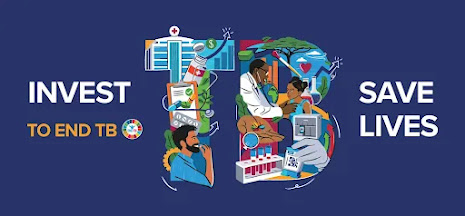
FORUMInvest to End TB. Save Lives.World TB Day 2022

The theme of World Tuberculosis Day 2022 - ‘Invest to End TB. Save Lives.’ –conveys the urgent need to invest resources to ramp up the fight against TB and achieve the commitments to end TB made by global leaders.


KEY MESSAGES


Urgent investment of resources, support, care and information are vital to win the fight against TB.

Essential TB services should be sustained during the COVID-19 pandemic to ensure that gains made in the fight against TB are not reversed.


Tackling health inequities to ensure health for all.

Ending TB requires concerted action by all sectors


In 2020, approximately 1.1 million children and adolescents under 15 years fell ill with TB globally. 

• 226 000 children and adolescents lost their lives from this preventable and curable disease in 2020. 
• 21 000 (or 9%) of the children and young adolescents under 15 years who died of TB were living with HIV. 
• In 2020, an estimated 63 % of children and young adolescents below 15 years with TB were not reported or didn’t get access to lifesaving TB diagnosis and treatment services; the proportion was even higher - 72% - for children under 5.
 • Progress towards reaching the targets set at the UN High Level Meeting is lagging behind: 
-  Approximately 1.4 million children were diagnosed and notified between 2018 and 2020, which is only 41% of the 2022 target of 3.5 million. 
- Only 12 200 children started treatment for MDR/RR TB in that period, which translates to less than 11% of the 2022 target. 
- Only 29% of eligible children under 5 years accessed TB preventive treatment between 2018 and 2020. Almost two thirds of eligible children under 5 years therefore remain at risk of getting sick with TB.

IMPORTANCE OF ADDRESSING TB IN CHILDREN AND ADOLESCENTS 

Diagnosing TB in children can be challenging due to many factors, including the nonspecific nature of TB symptoms that are similar to other childhood illnesses and difficulties in collecting specimens for diagnostic testing. Infants and young children (especially those under two years) are at higher risk of developing TB meningitis and disseminated disease, which are associated with high morbidity and mortality. Adolescents usually present with infectious TBdisease, as typically seen in adults. However, adolescents also form a particularly vulnerable group who face psycho-social challenges, requiring careful consideration of their growing autonomy, treatment support and assistance with transitioning from paediatric to adult health service provision. We need to manage TB in children and adolescents recognising the unique characteristics and needs of these groups, as well as those of their parents, caregivers and families. 

IMPACT OF THE COVID-19 PANDEMIC 

• COVID-19 has had an additional negative and disproportionate impact on children and adolescents with TB and at risk of TB. 
• There has been a steady increase in notifications of children with TB from just over 340,000 in 2011/2012 to over 520,000 in 2019, with a substantial drop in 2020, as a result of the impact of the COVID-19 pandemic. 
• A detailed analysis shows that TB notifications in children aged below 5 years dropped by 28% between 2019 and 2020 due to COVID-19 disruptions, these figures for children aged 5-14 years and for those aged 15 years and above were 21% and 18%. 
• Overall deaths increased for the first time in a decade to 1.5 million up from 1.4 million in 2019, as a result of the impact of the COVID-19 pandemic.
 • The 2022 WHO Consolidated Guidelines and Operational Handbook on the management of tuberculosis in children and adolescents include recommendations that span the TB cascade of care, from screening, prevention and diagnostic approaches to treatment of both drug susceptible and drug resistant TB, to models of care to optimize TB prevention and case detection efforts. 


The new recommendations recognize the impact of COVID-19 on TB services and the need to find more children and adolescents with TB.


WHO, UNICEF, Stop TB Partnership and other partners released an action plan in 2018 outlining measures to prevent and treat TB in children and adolescents. The roadmap highlights key actions to end TB in children and adolescents, such as high level leadership & accountability, functional partnerships, increased funding, advocacy, integrated family- and community-centred strategies, improved monitoring, and more child and adolescent TB research.

EVENTS : 
The event will take place in a talk-show format with speakers connected by video on  WHO’s interactive web-platform- End TB Forum. The main speakers will include Ministers, leaders and other high-level government representatives, Heads of Agencies,  TB survivors, civil society and partners. The Show will be broadcast live, with interactive Q&A from the audience online.