Showing posts with label Zero discrimination day. Show all posts

Sunday, 1 March 2026

Zero Discrimination Day 2026, March 1st.

Zero Discrimination Day 2026, March 1st.


FORUM
: "People first". Zero Discrimination Day 2026. As the world works toward ending AIDS as a public health threat by 2030, we cannot succeed if discrimination stands in the way. Zero Discrimination Day highlights how we can all become informed and promote inclusion, compassion, peace and, above all, a movement for change.  This year, UNAIDS shines a light on the persistent discrimination faced by people living with and at risk of HIV, discrimination that undermines access to health services, violates rights, and holds back progress toward ending AIDS by 2030. This year's Zero Discrimination Day highlights the need to put people first. The evidence is clear: HIV‑related stigma and discrimination put lives at risk. Based on data from more than 30,000 people living with HIV across 25 countries, stigma and discrimination remain pervasive barriers to health access, dignity, and human rights. According to the People Living with HIV Stigma Index 2.0 Global Report, nearly one in four report being stigmatized by others, including in healthcare settings, where discrimination undermines trust and access to life‑saving services. In addition, 85% of people living with HIV feel internalized stigma, and many change their behaviour— hiding their HIV status, or interrupting HIV treatment—because of fear of rejection and judgment. These findings confirm that HIV‑related stigma is not a side issue; it is a barrier to ending AIDS by 2030.

NUMBERS SPEAK LOUDER THAN WORDS
  • 1 in 4 have faced discrimination when seeking non-HIV health care: Healthcare facilities—places meant to heal—become sources of fear and rejection.
  • 24% have experienced community discrimination in the past year: Verbal harassment, and exclusion from family and community activities remain commonplace.
  • 38% feel ashamed of being HIV-positive: Internal stigma keeps people isolated and prevents them from seeking the support they need.
  • 85% experience some form of internalized stigma: From hiding their status to feeling worthless, the psychological burden is immense.

For women and girls living with and affected by HIV, gender inequalities intersect with HIV-related stigma and discrimination. Reproductive coercion, mistreatment and abuse is a persistent and widespread manifestation of stigma and discrimination that occurs along the continuum of healthcare services. A review of data collected from 26,502 women living with HIV from 23 countries, which recently completed the Stigma Index 2.0, revealed that in every single country, women living with HIV have reported experiencing some form of coercion within the last 12 months. Intersectional stigma and discrimination also impacts their experience of other services, as well as community and domestic life and their access to justice and redress. Additionally, HIV-related stigma and discrimination combine with gender norms and inequalities to place a heavy burden of unrecognized and unpaid care on women and girls.

Discrimination continues to:
  • Prevent people from testing for HIV
  • Stop people from seeking HIV prevention services including medicine to prevent HIV
  • Stop people from accessing treatment
  • Drive people away from health services
  • Deny people their fundamental human rights
  • Fuel the AIDS epidemic


EVENT:  On March 1st; Zero Discrimination Day 2026, we celebrate the right of everyone to live a full and productive life with dignity. The UNAIDS calls on governments, health care providers, employers, communities and individuals to listen to the voices of people living with and affected by HIV and act on the evidence, so no one feels “less than” because of their HIV status; health systems become spaces where people can seek testing, treatment, and care without discrimination.

The  UNAIDS invites everyone to:

​Sustain the gains: Protect and scale what works: by safeguarding funding for HIV, human rights; institutionalizing stigma-free practices in health systems, education, and workplaces; reforming and repealing discriminatory laws and policies; and defending hard-won community leadership, legal protections, and U=U progress.

Stand with communities: Support, fund and partner with community‑led organizations that lead advocacy efforts and provide trusted, stigma‑free services.


ACTIONS

WHAT MUST CHANGE?

1. Remove discriminatory laws

  • Countries must examine their policies and laws and eliminate those that discriminate, criminalize and harm people living with and risk of HIV—including laws that criminalize sex work, drug use, same-sex relationships, and HIV non-disclosure—that stand in the way of accessing health services.

2. Protect rights to access health care
  • Ensure confidentiality
  • Ensure training for health workers and implement zero-tolerance policies for discrimination
  • End mandatory HIV testing
  • Provide quality, compassionate care for all

3. Address stigma in communitiesChallenge myths and misinformation about HIV
  • Promote U=U (Undetectable = Untransmittable)
  • Support community education and awareness
  • Build empathy and understanding

4. Support community-led responsesFund organizations led by people living with HIV
  • Ensure meaningful participation in policy decisions
  • Strengthen peer support networks
  • Protect the rights of communities to lead HIV responses

​Share the facts: Use social media, workplaces, and schools to spread messages that HIV is a health condition, not a moral failing, and that people living with HIV can live long, healthy, dignified lives.

Saturday, 1 March 2025

Zero Discrimination Dy 2025; March 1st.


FORUM: “We stand together.” Zero Discrimination Day 2025. Community healthcare and support providers are too often faced with challenges—stigma, discrimination, criminalization, funding cuts, and political backlash—despite their primary role in ensuring that health services reach everyone in need, including the most vulnerable. Compounding this, the current crisis caused by the shift in U.S. government funding has resulted in deep anxiety and pain for many community organizations as the future of life-saving community-led HIV prevention, treatment, care, and support programmes are at risk, despite the clear evidence of the positive impact of community-led services. Community led services are essential to the sustainability of the AIDS response up to and beyond 2030, yet community-led responses are too often unrecognized, under-resourced and in some places even under attack. Crackdowns on civil society and on the human rights of marginalized communities are obstructing communities from providing HIV prevention and treatment services. The underfunding of community-led initiatives is leaving them struggling to continue operating as well as holding them back from expanding. If these obstacles are removed, community-led organizations can add even greater impetus to end AIDS as a public health threat by 2030. The sustainability of the AIDS response now and into the future is critical with communities at the centre. It’s time Now to reaffirm global commitment to their leadership. Follow the conversation with the hashtags: #March1, #zerodiscriminationday, #Zerodiscrimination.


EVENTS: March 1st; To observe the Zero Discrimination Day 2025 and its Eleventh edition, the UNAIDS is reflecting on Standing Together with communities. Communities are essential to the sustainability of the HIV response and to broader global health efforts. They must be financed and supported in their steadfast commitment to ensuring that all people living with and affected by HIV have access to the services they need and are treated with dignity and respect. On this year’s Zero Discrimination Day, UNAIDS calls on countries, donors and partners to fulfill their commitments and Stand Together to support communities as they work to build sustainable HIV responses by ensuring that:

  • Community-led organizations are able to deliver life-saving services and advocate without discrimination or harassment.
  • Community-led organizations can legally be registered in the country they are working in and receive sustainable funding.
  • Communities are supported in providing health services to vulnerable and marginalized groups.
  • Communities are supported and funded in work to monitor respect for human rights including ending the criminalization of key populations, stigma and discrimination and gender inequalities.
  • Government health services include community representatives within their structures as partners in the development, implementation and monitoring of health programmes to ensure they are accessible and acceptable to people living with HIV and marginalized populations.

On March 1st, and across the whole month of March, events, activities and messages will remind the world of this vital lesson and call to action: to protect everyone’s health, protect everyone’s rights. The EU region and partner countries have addressed HIV-related rights violations, societal barriers, including laws and policies, stigma and discrimination that fuels the AIDS pandemic. To date, 29 countries, none of which are EU member states, have joined the Global Partnership on assisting countries in achieving the 10–10–10 targets by removing laws that harm and creating laws that empower. Register to participate!

STATEMENTS: “Through upholding rights for all, we will be able to achieve the Sustainable Development Goals, and to secure a safer, fairer, kinder, and happier world – for everyone.” Message from Winnie Byanyima, Executive Director of UNAIDS, on Zero Discrimination Day 2025, March 1st.

“The only way to end AIDS is by working together with communities. They build trust and reach people which many traditional health facilities find hard to reach—the most marginalized, and people who face stigma and discrimination,” said Mme Christine Stegling, UNAIDS Deputy Executive Director. “To end AIDS by 2030, sustained investment and support for community-led responses is crucial.”

“No society can thrive where discrimination exists,” said Mr. Marc Angel, Vice President of the European Parliament and a long-time HIV activist. “Every right denied, every barrier imposed weakens us all. On Zero Discrimination Day, let’s make it clear: equality is not an option—it’s a necessity. We stand together.”


Thursday, 29 February 2024

Zero Discrimination Day 2024; March 1st.

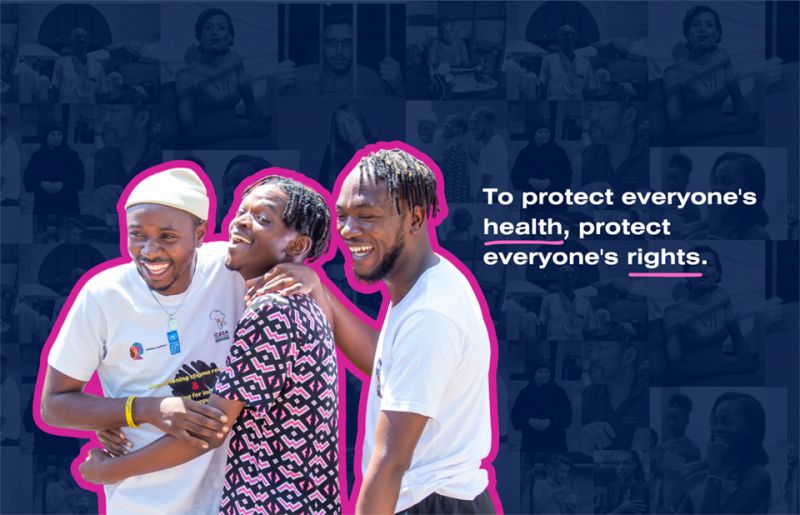
FORUM: “To protect everyone’s health, protect everyone’s rights.Zero Discrimination Day 2024. We can end AIDS – if everyone’s rights are protected. The world has made great progress towards the goal of ending AIDS as a public health threat by 2030. That progress has been powered by progress in protecting human rights. But laws, policies and practices that punish, discriminate against and stigmatize women and girls, key populations, and other marginalized communities violate human rights and obstruct access to HIV prevention, testing, treatment and care. Read press statement: On the 10th anniversary of Zero Discrimination Day UNAIDS calls for the protection of human rights as a path to protecting health for all; There is an urgent need to remove laws which harm people’s rights and to bring in laws which uphold the rights of every person. The path that ends AIDS is a rights path. The recent, well-coordinated and well-funded global push back against women’s rights, against the human rights of LGBTQ people, against sexual and reproductive health and rights, against democracy and against civic space is not only a threat to everyone’s freedom, it is a threat to everyone’s health. In response to this threat, the AIDS movement and allies are “pushing back against the push back, reminding world leaders of their commitments to uphold all human rights for all people. As communities across the world stand up for rights, the United Nations is not only on their side but by their side. We know the way that will allow all individuals to enjoy their human rights and reach their full potential in health, dignity and well-being. So, let’s make it happen! Let’s join forces for an unstoppable partnership. Join the Global Partnership today.Follow the conversation with the hashtags: #March1, #zerodiscriminationday, #Zerodiscrimination.


Everyone has the right to health.


EVENTS: March 1st marks Zero Discrimination Day 2024 and the tenth anniversary of Zero Discrimination Day. Upholding everyone’s rights is the responsibility of us all. Everyone can play a part in ending discrimination. On 1 March, and across the whole month of March, events, activities and messages will remind the world of this vital lesson and call to action: to protect everyone’s health, protect everyone’s rights. The EU region and partner countries have addressed HIV-related rights violations, societal barriers, including laws and policies, stigma and discrimination that fuels the AIDS pandemic. To date, 29 countries, none of which are EU member states, have joined the Global Partnership on assisting countries in achieving the 10–10–10 targets by removing laws that harm and creating laws that empower.

STATEMENTS: “Through upholding rights for all, we will be able to achieve the Sustainable Development Goals, and to secure a safer, fairer, kinder, and happier world – for everyone.” Message from Winnie Byanyima, Executive Director of UNAIDS, on Zero Discrimination Day 2024, March 1st.

COMMUNICATIONS MATERIALS: Get the Zero Discrimination Day 2024 Campaign materials!


Tuesday, 28 February 2023

Zero Discrimination Day 2023, March 1st.

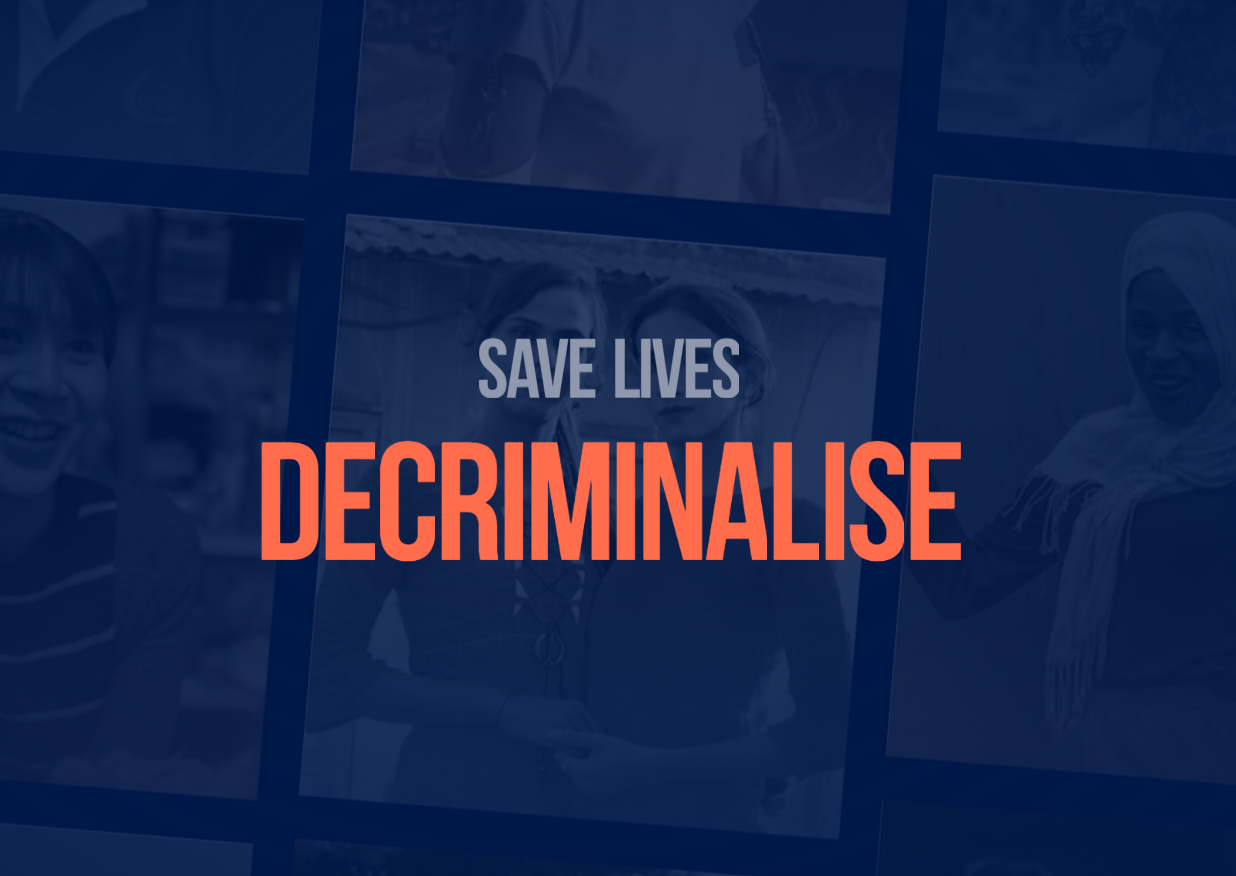
FORUM: “Save lives: DecriminaliseZero Discrimination Day 2023.

On Zero Discrimination Day this year, under the theme “Save lives: Decriminalise”, UNAIDS is highlighting how the decriminalisation of key populations and people living with HIV saves lives and helps advance the end of the AIDS pandemic.


Criminal laws targeting key populations and people living with HIV violate people’s human rights, exacerbate the stigma people face and put people in danger by creating barriers to the support and services they need to protect their health.

In 2021, the world set ambitious law reform targets to remove criminal laws that are undermining the HIV response and leaving key populations behind. Recognising decriminalization as a critical element in the response, countries made a commitment that by 2025 less than 10% of countries would have punitive legal and policy environments that affect the HIV response.


Criminalisation drives discrimination and structural inequalities. It robs people of the prospect of healthy and fulfilling lives. And it holds back the end of AIDS.


CAMPAIGN: We must End Discrimination to save lives.

However, despite some encouraging reforms, the world is far from achieving the target. 

In fact, today there are 

  • 134 countries explicitly criminalising or otherwise prosecuting HIV exposure, non-disclosure or transmission; 
  • 20 countries criminalise and/or prosecute transgender persons; 
  • 153 countries criminalise at least one aspect of sex work; and 67 countries now criminalize consensual same-sex sexual activity, according to UNAIDS. 
  • 48 countries still place restrictions on entry into their territory for people living with HIV,
  • 53 countries report that they require mandatory HIV testing, for example for marriage certificates or for performing certain professions. 
  • 106 countries report requiring parental consent for adolescents to access HIV testing.

LAWS BY COUNTRY - Criminal offence for all drugs, 
TAKE THE QUIZ - FACTS ABOUT HIV CRIMINALIZATION?
Change starts with awareness. Take the interactive quiz to test your knowledge about the criminalization of HIV.
ABOUT DECRIMINALIZATION - With criminalization, it’s not because marginalized groups are at a higher risk of HIV that they are criminalized, rather it’s because they are criminalized that they are at a higher risk of HIV. It’s criminalization that increases vulnerability.

Monday, 1 March 2021

Zero Discrimination Day 2021, March 1st

Statement by the President of the General Assembly on Zero Discrimination Day 2021


75 years ago, at a time of great distrust, world leaders chose the path to unity over division. Coming together in recognition that there is strength in diversity, they created a multilateral system underpinned by the fundamental principles of equality and non-discrimination. Yet today, discrimination continues to exist. Women continue to suffer from disproportionate burden of unpaid care, labour market segregation and gender pay gap. Girls are facing the grave risk of never returning to school in the middle of a gender digital divide. We are living in an era of deepening inequalities, with 235 million people expected to require humanitarian assistance this year. For those furthest behind, life has become even harder due to climate change, conflict and the COVID-19 pandemic. I call on all Member States to meaningfully engage with those most vulnerable people. We must ensure that pandemic response and recovery plans are grounded in rights-based approaches that meet the needs of those who are lagging behind. In a world where millions of people lack access to essential healthcare services and vulnerable groups continue to experience much poorer health outcomes, we must prioritize the equal and fair distribution of vaccines for all. On Zero Discrimination Day, I hope you will join me in re-committing to the Universal Declaration of Human Rights which states, “All human beings are born free and equal in dignity and rights. They are endowed with reason and conscience and should act towards one another in a spirit of brotherhood.” We each have a responsibility to call out discrimination when we see it. To amplify the voices of those who have experienced discrimination, uphold the dignity of each individual, and to advocate and legislate for a more equal, just, and safer world for all. Thank you.


On #ZeroDiscrimination Day and every day we celebrate the right of everyone to live a full and productive life with dignity. Each of us can promote inclusion, compassion and peace—in a movement for change. Amina J Mohammed


Join the conversation
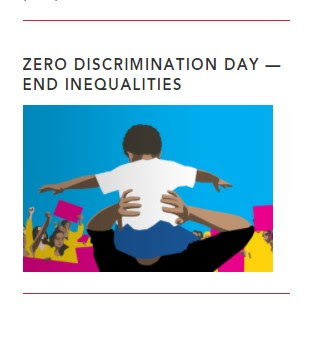
#EndInequalities


Gender inequalities in Senegal highlighted on Zero Discrimination Day 2021, March 1st

Saturday, 28 February 2015

Zero Discrimination Day 2015, March 1

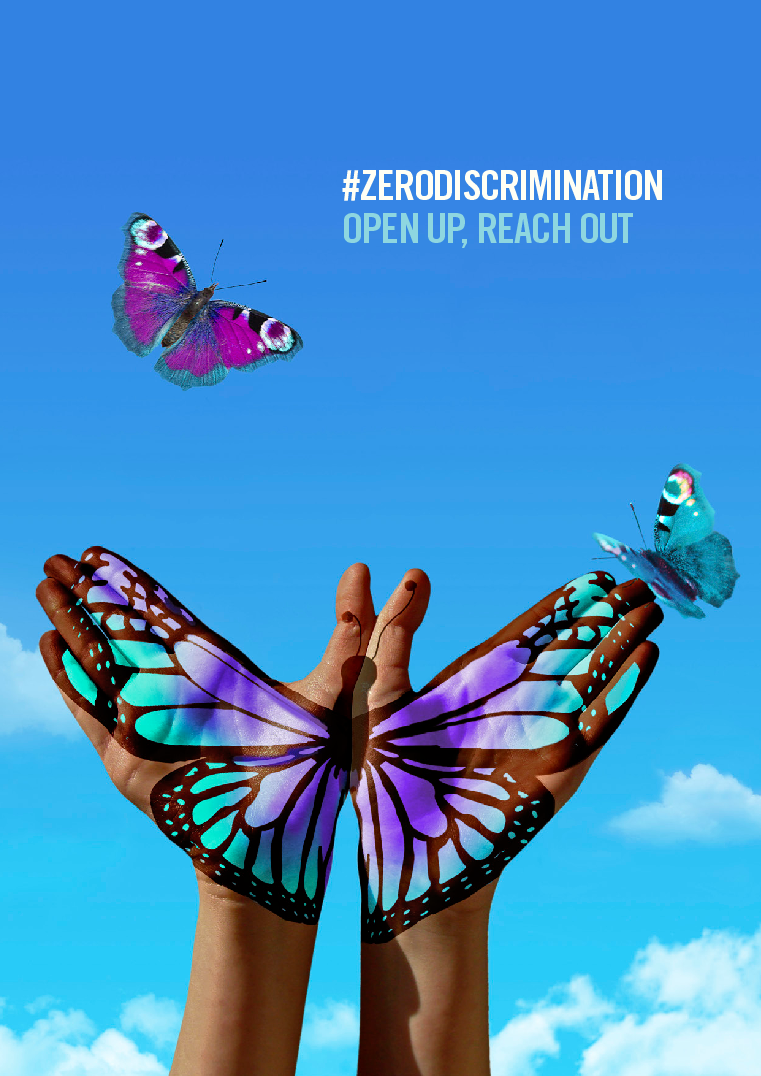
Theme 2015 : "Open Up, Reach up "


 Zero Discrimination Day is a chance to celebrate diversity and to reject discrimination. By joining our voices together, we can be part of a resounding call for compassion, tolerance and peace.

 Press release : Zero Discrimination Day to be celebrated around the world

GENEVA, 26 February 2015—Discrimination continues to affect the lives of millions of people around the world. On 1 March, Zero Discrimination Day, people from all corners of the world will unite under the theme of Open Up, Reach Out in order to celebrate diversity and reject discrimination in all its forms.
The support garnered for Zero Discrimination Day has created a global movement of solidarity to end discrimination, which remains widespread. Millions of women and girls in every region of the world experience violence and abuse and are unable to exercise their rights or gain access to health-care services, education or employment. Discrimination at work, school and health-care and other settings reduces people’s ability to participate fully and meaningfully in societies and provide and care for themselves and their families. Globally, there are almost 80 countries that still have laws criminalizing same-sex sexual relations. Some 38 countries, territories and areas impose some form of restriction on the entry, stay and residence of people living with HIV. Furthermore, legal and social environments are still failing to address stigma and discrimination against people living with HIV and those most vulnerable to HIV infection.   
“Discrimination is a violation of human rights and must not go unchallenged,” said United Nations Secretary-General Ban Ki-moon. “Everyone has the right to live with respect and dignity.”
For this year’s Zero Discrimination Day people have been invited to Open Up, Reach Out, using social media channels to tell the world what zero discrimination means to them. People have shared songs, poems, thoughts and activities inspired by the butterfly, the transformative symbol of the campaign. People are also calling on their governments to make greater efforts to realize and protect human rights and eliminate discrimination.
“Some of the world’s most challenging problems can be solved simply by eliminating stigma and discrimination,” said Michel Sidibé, Executive Director of UNAIDS. “As we collectively strive for a fairer world we can be encouraged by the enthusiasm for achieving zero discrimination.”
Among celebrities supporting the campaign are UNAIDS International Goodwill Ambassador David Luiz, who posted a special message on standing up to racism, UNAIDS Goodwill Ambassador Toumani Diabaté and his son, Sidiki Diabaté, as well as the ICC Cricket World Cup 2015 Ambassador and Sri Lankan cricketing star, Kumar Sangakkara, whose message is being played on screens at venues hosting the ICC Cricket World Cup 2015 in Australia and New Zealand. Governments, lawmakers and business leaders have also pledged their support to the campaign.
Events to mark Zero Discrimination Day include photo exhibitions in China, dancing in Gabon, concerts in Madagascar, a storytelling event for children in Mongolia and special film screenings in Nepal. Seminars and workshops to discuss issues relating to stigma and discrimination will take place in more than 20 countries worldwide, from Colombia to Uzbekistan.
Zero Discrimination Day was first celebrated on 1 March 2014.