Agenda:
11:00AM - 12:00PM: 2021 Report Highlights by Chapter
World Happiness, trust and deaths under COVID-19
John Helliwell
COVID-19 Prevalence and Well-being: Lessons from East Asia
Shun Wang
Reasons for Asia-Pacific Success in suppressing COVID-19
Jeffrey Sachs
Mental health and the COVID-19 pandemic (video)
James Banks
Social Connection and Well-Being during COVID-19
Karynna Okabe-Miyamoto
Work and Well-being during COVID-19: Impact, Inequalities, Resilience, and the Future of Work
Jan-Emmanuel De Neve
Living long and living well: The WELLBY approach
Richard Layard
Question & Answers12:00 - 2:00PM: Deeper Dive Sessions
*Audience members can join at different sessions and specific times
12:15 PM - chapter 8: Living long and living well: The WELLBY approach.
Q&A
12:40 PM - Chapter 7: Work and Well-being during COVID-19: Impact, Inequalities, Resilience, and the Future of Work.
Q&A
1:05 PM - Chapter 3: COVID-19 Prevalence and Well-being: Lessons from East Asia.
- Chapter 4: Reasons for Asia-Pacific Success in suppressing COVID-19.
Q&A 20 minutes
1:40 PM - Chapter 2: World Happiness, trust and deaths under COVID-19
Q&A (10 minutes)
2:00 PM - END.
From high job losses to exploding burdens of unpaid care, from disrupted schooling to an escalating crisis of domestic violence and exploitation, women’s lives have been upended and their rights eroded.
Mothers – especially single mothers – have faced acute anxiety and adversity.
The consequences will far outlast the pandemic.
But women have also been on the frontlines of pandemic response.
They are the essential workers keeping people alive and holding economies, communities and families together.
They are among the leaders who have kept prevalence rates lower, and countries on track for recovery.
This year’s International Women’s Day highlights the transformative power of women’s equal participation.
We are seeing it ourselves at the United Nations, where I am proud that we have achieved gender parity in UN leadership posts for the first time in history.
The evidence is clear.
When women lead in government, we see bigger investments in social protection and greater inroads against poverty.
When women are in parliament, countries adopt more stringent climate change policies.
When women are at the peace table, agreements are more enduring.
And with women now serving in equal numbers at the top leadership posts at the United Nations, we are seeing even more concerted action to secure peace, sustainable development and human rights.
In a male-dominated world with a male-dominated culture, gender equality is essentially a question of power.
Males are an essential part of the solution.
I call on countries, companies and institutions to adopt special measures and quotas to advance women’s equal participation and achieve rapid change.
As we recover from the pandemic, support and stimulus packages must target women and girls specifically, including through investments in women-owned businesses and the care economy.
Pandemic recovery is our chance to leave behind generations of exclusion and inequalities.
Whether running a country, a business or a popular movement, women are making contributions that are delivering for all and driving progress towards the Sustainable Development Goals.
It is time to build an equal future. This is a job for everyone – and for the benefit of everyone.
On 3 March 2021, the UN Chamber Music Society of the United Nations Staff Recreation Council will perform during the celebration of World Wildlife Day2021, hosted by the United Nations Development Programme. The focus of this year's World Wildlife Day is "Forests and livelihoods: sustaining people and planet", which sheds light on the links between the state of our planet’s forests and woodlands and the preservation of the millions of livelihoods that depend directly on them, with a particular attention to the traditional knowledge of the communities who have managed forest ecosystems and its wildlife for centuries.
In celebration of World Wildlife Day, the UN Chamber Music Society will perform a programme inspired by wildlife - 'Flocks a Mile Wide' – composed by 2x Grammy award winning composer, Christopher Tin. Founded in 2016, the UN Chamber Music Society carries out the United Nations’ mission of peace, understanding and cooperation, through the universal language of music. All musicians will perform chamber ensemble music from the safety of their homes, to help stem the spread of the coronavirus.
MESSAGES
H. E. Mr. António Guterres, UN Secretary-General
Ms. Ivonne Higuero, CITES Secretary-General
H.E. Mr. Federico Tenorio Calderón, Minister for Agriculture and Irrigation of Peru
Ms. Fawn Sharp, President, Quinault Indian Nation and President, National Congress of American Indians
Ms. Elizabeth Mrema, Executive Secretary, Convention on Biological Diversity
UN Chamber Music Society
of the United Nations Staff Recreation Council Brenda Vongova, Artistic Director
MUSIC PROGRAMME
CHRISTOPHER TIN (1976 - ) 'Flocks a Mile Wide' Hana Mundiya (Violin I),Rohan Mundiya (Violin II),Abigail Elder (Viola), Derek Louie (Cello), Kohei Yamaguchi (Bass), Sarah Favinger(Bass), Brenda Vongova (Piano), Tom Betsalel (Percussion)
SPECIAL THANKS
Video Editing
Daniel Drake, Video Editor
Audio Production VIRTUA CREATIVE Edward Bilous, Artistic Director and Producer Anran Qian, Production Coordinator Greg Kalember, Mix Engineer
WHO: 1 in 4 people projected to have hearing problems by 2050
The report, launched ahead of World Hearing Day, 3 March, underlines the need to rapidly step up efforts, Note to Editors World HearingDay 2021 Launch of the World Report on Hearing
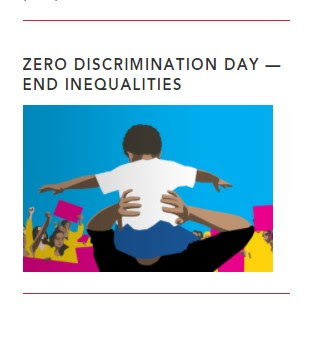
75 years ago, at a time of great distrust, world leaders chose the path to unity over division. Coming together in recognition that there is strength in diversity, they created a multilateral system underpinned by the fundamental principles of equality and non-discrimination. Yet today, discrimination continues to exist. Women continue to suffer from disproportionate burden of unpaid care, labour market segregation and gender pay gap. Girls are facing the grave risk of never returning to school in the middle of a gender digital divide. We are living in an era of deepening inequalities, with 235 million people expected to require humanitarian assistance this year. For those furthest behind, life has become even harder due to climate change, conflict and the COVID-19 pandemic. I call on all Member States to meaningfully engage with those most vulnerable people. We must ensure that pandemic response and recovery plans are grounded in rights-based approaches that meet the needs of those who are lagging behind. In a world where millions of people lack access to essential healthcare services and vulnerable groups continue to experience much poorer health outcomes, we must prioritize the equal and fair distribution of vaccines for all. On Zero Discrimination Day, I hope you will join me in re-committing to the Universal Declaration of Human Rights which states, “All human beings are born free and equal in dignity and rights. They are endowed with reason and conscience and should act towards one another in a spirit of brotherhood.” We each have a responsibility to call out discrimination when we see it. To amplify the voices of those who have experienced discrimination, uphold the dignity of each individual, and to advocate and legislate for a more equal, just, and safer world for all. Thank you.
On #ZeroDiscrimination Day and every day we celebrate the right of everyone to live a full and productive life with dignity. Each of us can promote inclusion, compassion and peace—in a movement for change. Amina J Mohammed
“Language is the blood of the soul into which thoughts run and out of which they grow” – Oliver Wendell Holmes.
Each year, on 21 February, International Mother Language Day (IMLD) comes as a reminder of the power of language in preserving the uniqueness of human societies and promoting their distinct values.
This year, UNESCO has decided on ‘Fostering multilingualism for inclusion in education and society’ as the theme for the IMLD.
To observe IMLD 2021, the Permanent Missions of Bangladesh, Brazil, Egypt, Jordan, New Zealand, Lithuania, UN, and UNESCO would be organizing a virtual event on the 22 February 2021.
The event is aimed at upholding the inalienable right of people globally to their mother languages and the importance of linguistic and cultural diversities.
Representatives of the co-hosting member states and the UN will speak about their visions and commitments for promoting multilingualism within and beyond UN as a means for promoting inclusion in education and society.
The discussion will be followed by a multilingual cultural programme.
Hosted by the Permanent Mission of Bangladesh to the United Nations
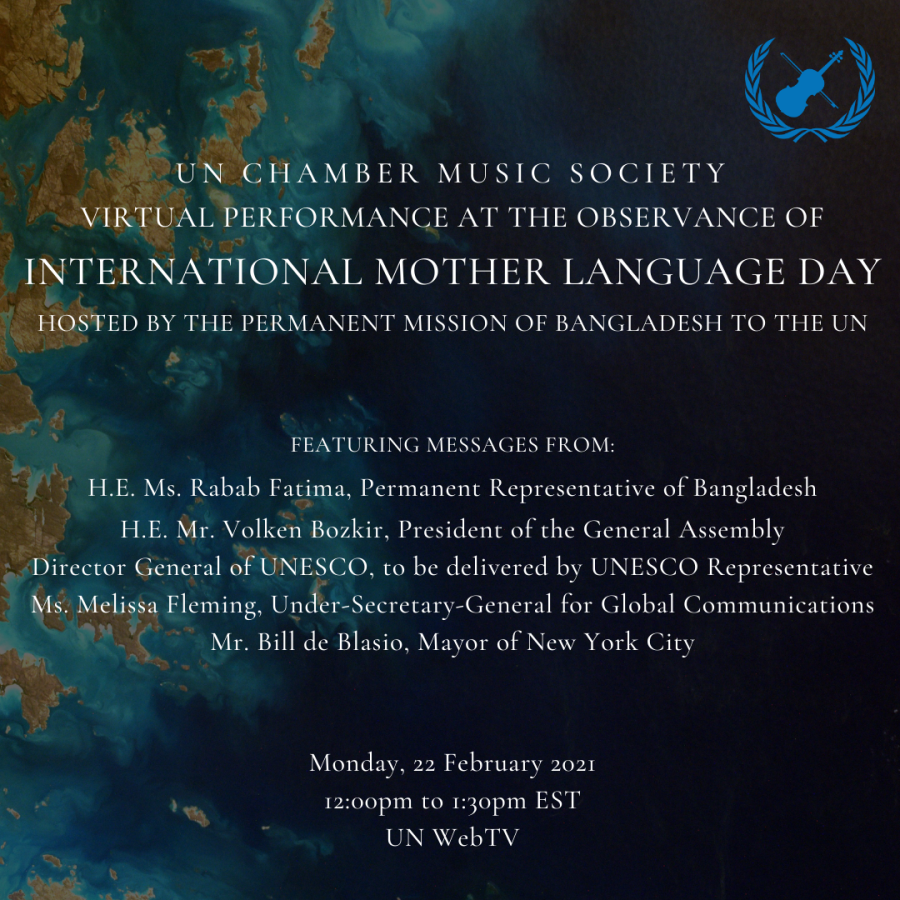
UN CHAMBER MUSIC SOCIETY VIRTUAL PERFORMANCE AT THE OBSERVANCE OF INTERNATIONAL MOTHER LANGUAGE DAY
Monday, 22 February 2021 12:00pm to 1:30pm EST
WATCH THE EVENT ON: UNITED NATIONS UN WEB TV
On 21 February 2021, the UN Chamber Music Society of the United Nations Staff Recreation Council will perform during the Observance of International Mother Language Day (IMLD). The event will be hosted by the Permanent Mission of Bangladesh to the United Nations, in collaboration with Members States from across the regions and UNESCO.
The event is aimed at upholding the inalienable right of people globally to their mother languages and the importance of linguistic and cultural diversities. Multilingualism, one of the core values of the UN, contributes to promoting, protecting and preserving diversity of languages and cultures globally and in the process, achieving the goals of the United Nations. While the COVID-19 pandemic has significantly changed our lives, it has reminded us how interconnected we are today. And how we all must all work together to tackle our current global crises. Multilingualism and diverse culture cultures are important elements in building a peaceful and inclusive world.
The music programme by the UN Chamber Music Society that you will hear today, will reflect on our diverse elements – through the universal language of music. It will honour multilingualism, by featuring composers from South Africa, Bangladesh, France and Guadeloupe. Founded in 2016, the UN Chamber Music Society is dedicated to promoting the UN goals at large - through the universal language of music. All musicians will perform chamber ensemble music from the safety of their homes, to help stem the spread of the coronavirus.
MESSAGES
Welcome remarks by H.E. Ms. Rabab Fatima, Permanent Representative of Bangladesh
Statement by H.E. Mr. Volken Bozkir, President of the General Assembly
Message of Director General of UNESCO, to be delivered by UNESCO Representative to the UN in New York
Statement by Ms. Melissa Fleming, Under-Secretary-General for Global Communications
Delivery of Message by Mr. Bill de Blasio, Mayor of New York City
MUSIC PROGRAMME
UN Chamber Music Society of the United Nations Staff Recreation Council Brenda Vongova, Artistic Director
SOUTH AFRICA / IsiXhosa SIBUSISO NJEZA (1982 - ) “Nyana Wam” (“My Son”) aria fromMadiba the African Opera Nosango Mtirara (Soprano), Hana Mundiya (Violin), Rohan Mundiya (Violin), Florrie Marshall (Viola), Thapelo Masita (Cello), Amir Farsi (Flute), Alec Manasse (Clarinet), Brenda Vongova (Piano)
FRENCH / GUADELOUPE JOSEPH BOLOGNE CHEVALIER DE SAINT-GEORGES (1745-1799) Quartet in g minor, I. Allegro Hana Mundiya (Violin), Florrie Marshall (Viola), Thapelo Masita (Cello), Brenda Vongova (Piano)
BANGLADESH / Bangla GARRY SCHYMAN (1954 - ) "Praan" [Lyrics adapted from the poem "Stream of Life" from Gitanjali by RABINDRANATH TAGORE (1861 - 1941)]
SPECIAL THANKS
Dylan Louie, Video Editor UN Chamber Music Society Messages
Forum:This year's commemoration supports efforts by the international community to search for solutions to achieve sustainable development, poverty eradication, the promotion of full employment and decent work, universal social protection, gender equality and access to social well-being and justice for all. Consequently, it aims at fostering dialogue with United Nations member States and relevant UN institutions and other stakeholders on actions needed to overcome the digital divide, provide decent work opportunities,, and protect labour and human rights in the modern era of digital technologies.
A new UN DESA policy brief calls for a common framework to close the digital divide. Closing the digital divide will be vital to recover better from the COVID19.
What policies, practices and partnerships are needed to embed equity and inclusion into our economic systems?
This session is associated with the following projects and initiatives of the World Economic Forum: Partnering for Racial Justice in Business, Partnership for Global LGBTI Equality, The Valuable 500 - Closing the Disability Inclusion Gap, Lighthouse Projects on Social Justice and Sustainability, the UpLink COVID Social Justice Challenge, and the Technology and Social Justice Initiative.
Speakers: Caroline Casey, Peter T. Grauer, Carmine Di Sibio, Ashleigh Shelby Rosette, Tatiana Clouthier, Saadia Zahidi.
The World Economic Forum is the International Organization for Public-Private Cooperation. The Forum engages the foremost political, business, cultural and other leaders of society to shape global, regional and industry agendas.
UN CHAMBER MUSIC SOCIETY CONCERT IN CELEBRATION OF WORLD DAY FOR SOCIAL JUSTICE
IN SUPPORT OF (IN)VISIBLE WOMEN ORGANIZATION AT THE UNITED NATIONS INTERNATIONAL SCHOOL (UNIS)
VIRTUAL GLOBAL LAUNCH:UNITED NATIONS Saturday, 20 February 2021 12pm Eastern Standard Time (New York)
WATCH THE PERFORMANCE: UNITED NATIONS
Sending support to homeless women in the New York community, on World Day for Social Justice, Saturday 20 February 2021 at 12:00pm EST, the UN Chamber Music Society of the United Nations Staff Recreation Council (UNCMS) will launch a virtual concert dedicated to helping thousands of women suffering from homelessness – through(In)visible Women, a non-profit organization based at the United Nations International School (UNIS).
From job discrimination, to lack of affordable housing, for them and their children, homeless women in unstable living conditions face many challenges. These issues make the daily lives of homeless women in need, immensely difficult. (In)visible women is committed to help in making our community a safer, happier and healthier place for women on the streets and transitional shelters in New York City.
Founded in 2016, the UN Chamber Music Society is dedicated to promoting the United Nations’ goals and values at large - through the universal language of music.
Opening Messages
Bill de Blasio, Mayor of New York City
to be delivered by
Penny Abeywardena, New York City's Commissioner for International Affairs
Remarks
Dr. Dan Brenner Executive Director of the United Nations International School
UN Chamber Music Society of the United Nations Staff Recreation Council Brenda Vongova, Artistic Director
Special Guest Artist Patrick Jee, NY Philharmonic Cellist
Music Programme
VADIM PETROV (1932 - 2020) Mám Tě Rád ("I Love You"), Op.76 Brenda Vongova (Piano), Amy Baskurt (Violin I),Marien Chatard (Violin II), Abigail Elder (Viola), Derek Louie (Cello), Sarah Favinger (Bass), Sooah Jeon (Flute), Saerom Kim (Clarinet), Ben Goldscheider(Horn)
OSVALDO GOLIJOV (1960 - )“Omaramoor” Patrick Jee (NY Philharmonic Cellist)
JAMES RA (1974 - ) Evocation Patrick Jee (NY Philharmonic Cellist), Tamami Awaji (Piano)
GEORGE FRIDERIC HANDEL (1685 - 1759) "Prayer": Dettingen Te Deum
David Strongin (Violin), Brenda Vongova (Piano)
JOHANN SEBASTIAN BACH (1685 - 1750) Brandenburg Concerto No.5 in D major, BWV 1050: I. Allegro (excerpt) Jonathan Salamon (Harpsichord), Amy Baskurt (UNIS Violin Solo), Ye-won Chang (Flute Solo), Amane Miura (UNIS Violin & Co-Founder of (In)visible Women), Kristen Meola (UNIS Violin & Co-Founder of (In)visible Women), Abby Elder (Viola), Thapelo Masita (Cello), Sarah Favinger (Bass)
********************
Support the(In)visible Women NYC https://invisiblewomennyc.org/
SPECIAL THANKS
UN Department of Global Communications
Recording of Handel: High Line Nine Christina Maxwell, Manager Artist Kyle Meyer, represented by Yossi Milo Gallery