FORUM: “UNCAC at 20: Uniting the World Against Corruption.“ International Anti-Corruption Day 2023. We intend to celebrate not only this significant milestone in global anti-corruption endeavours but also the improvements brought about by the collective efforts supported by the Convention. The observance seeks to highlight the crucial link between anti-corruption and peace, security, and development. At its core is the notion that tackling this crime is the right and responsibility of everyone, and that only through cooperation and the involvement of each and every person and institution can we overcome the negative impact of this crime. Follow the conversation with the hashtags: #9December, #UnitedAgainstCorruption, #IACD2023 .The hashtag #UNCAC20 is used to mark the UNCAC 20th anniversary.
EVENTS: The IACD 2023 campaign will take place 4-9 December and will also serve as countdown to the 10th session of the 11-15 December 2023.
The International Civil Aviation Organization (ICAO) is a specialized agency of the United Nations and was created with the signing in Chicago, on 7 December 1944, of the Convention on International Civil Aviation. ICAO is the permanent body charged with the administration of the principles laid out in the Convention. It sets the standards for aviation safety, security, efficiency and regularity, as well as for aviation environmental protection. ICAO’s membership comprises 193 Member States. Its headquarters are in Montréal and it has regional offices in Bangkok, Cairo, Dakar, Lima, Mexico City, Nairobi and Paris. The aims and objectives of ICAO, as contained in Article 44 of the Chicago Convention, are to develop the principles and techniques of international air navigation and to foster the planning and development of international air transport so as to: Ensure the safe and orderly growth of international civil aviation throughout the world;Encourage the arts of aircraft design and operation for peaceful purposes; Encourage the development of airways, airports and air navigation facilities for international civil aviation; Meet the needs of the peoples of the world for safe, regular, efficient and economical air transport; Prevent economic waste caused by unreasonable competition; Ensure that the rights of Member States are fully respected and that every Member State has a fair opportunity to operate international airlines; Avoid discrimination between Member States; Promote safety of flight in international air navigation; andPromote generally the development of all aspects of international civil aeronautics. The constitution of ICAO is the Convention on International Civil Aviation to which each ICAO Member State is a party. The Organization has a sovereign body, the Assembly, and a governing body, the Council. The chief officers are the President of the Council and the Secretary General. The Assembly, composed of representatives from all Member States, meets every three years, reviewing in detail the complete work of the Organization and setting policy for the coming years. It also decides on a triennial budget. The Council, composed of representatives from 36 States, is elected by the Assembly for a three-year term and provides continuing direction to the work of ICAO. One of the major duties of the Council is to adopt International Standards and Recommended Practices (SARPs) and to incorporate these into the Annexes to the Convention on International Civil Aviation. The ICAO Council is assisted by its subsidiary bodies (the Air Transport Committee, the Committee on Joint Support of Air Navigation Services, the Finance Committee, the Committee on Unlawful Interference, the Human Resources Committee and the Technical Cooperation Committee) and by the Air Navigation Commission. The Secretariat, headed by the Secretary General, has five main divisions: the Air Navigation Bureau, the Air Transport Bureau, the Technical Cooperation Bureau, the Legal Affairs and External Relations Bureau, and the Bureau of Administration and Services. The ICAO works in close collaboration with other specialized agencies of the United Nations such as the International Maritime Organization (IMO), the International Telecommunication Union (ITU), and the World Meteorological Organization (WMO). The International Air Transport Association, the Airports Council International (ACI), the International Federation of Air Line Pilots’ Associations, and other international organizations participate in many ICAO meeting and to celebrate the International Civil Aviation Day on December 7th.
Sustainable agricultural management is of crucial importance for terrestrial ecosystem functioning in the face of changing climate. Small or big, we encourage you mark your agenda, alert your audience, contact your local, regional and global advocates and make use of the free campaign toolkit.
FORUM: "If everyone did..." International Volunteer Day 2023. The theme of this year's IVD will center on the power of everyone - collective action - if everyone did. If everyone volunteered the world would be a better place.Imagine more than eight billion of us volunteering. Limitless possibilities for sustainable development - food and education for everyone, clean environment and good health, inclusive and peaceful societies, and more. As the world garners support to deal with mounting challenges, it's the volunteers who are the first ones to help. Volunteers are at the fore in crises and emergencies, often in very testing and dire situations. Follow the conversations with the hashtags: #5December, #InternationalVolunteerDay, #IVD2023, #Ifeveryonedid.
This year’s theme — “If everyone did…” — underscores the importance of collective action,
cooperation, and people-led solutions to global challenges like poverty, inequalities, conflict, the
climate crisis, food insecurity and more.
In every community on the planet, volunteers are taking action to support the most vulnerable
people, including in the midst of conflict and other humanitarian emergencies.
Young volunteers are joining the fight for climate action, pressing governments, businesses and
policymakers to take the decisions needed to end this planetary emergency.
Our own UN Volunteers hail from more than 160 countries, and are helping to spur peace and
sustainable development, and the realization of human rights, for people around the world.
On this important day, let’s re-commit to ensuring that all people can lend their energies to
shaping a better future for all people and the planet we share.
Let’s stand with volunteers, everywhere.
EVENTS: More than a billion volunteer around the world act for solidarity and humanity for people and planet. IVD is a day to pay tribute to volunteers worldwide and to recognize the value of volunteerism in peace and development.The International Volunteer Day 2023 activities are taking place around the world including seven high-level events co-hosted by Governments in Azerbaijan, Bolivia, Iraq, Ireland, Tanzania, Thailand, and Togo. From the national caravan of volunteering in Togo to the climate-conscious activities of tree planting in Azerbaijan to the wheelchair journey of volunteers with disabilities in Thailand - each event will amplify the diversity of volunteering around the globe. Countries and volunteer groups willmark the spirit of volunteerism together with communities, academia, volunteer-involving organizations, and UN agencies. United Nations Volunteer Staff at Headquarters in Bonn will also participate in a volunteering activity to mark IVD and demonstrate the spirit of volunteerism among local residents.
Central Bank Digital Currency Development enters the next phase. Many of the world’s monetary authorities are seeking more guidance on how best to pursue digital forms of central bank money. Central bank digital currencies can improve payment systems as well as financial inclusion—if they are appropriately designed. If not, they could pose risks. While not all countries may see an immediate case to deploy a CBDC, many countries are exploring Central Bank Digital Currencies so they will have the option to introduce one in the future if it becomes pertinent for them. Benefits are more likely to come in time, following the policies pursued by countries and the private sector’s response, as well as the evolution of technology. In most cases, it would be useful for countries to continue exploring CBDC, carefully and systematically, as IMF Managing Director Kristalina Georgieva noted in her recent speech at the Singapore Fintech Festival. The Bahamas, Jamaica, and Nigeria have already introduced CBDCs. And more than 100 countries are in the exploration stage. Central bankers in Brazil, China, the euro area, India, and the United Kingdom are at the forefront. Follow the conversations with the hashtags: #multilateralBanks, #Developmentbanks#4December, #InternationalDayofBanks, #bankingsystems, #digitalbanking on social medias.
Join our live-streamed conversations and announcements from COP28, covering climate action, climate and development priorities, water, infrastructure, and more.Watch All live Events
The IMF recently launched a virtual CBDC Virtual Handbook to collect and share knowledge with policymakers around the world, and to serve as a basis for the IMF’s engagement with country authorities. We intend this to be a living document that will be updated and expanded as our body of knowledge and analysis grows, and as new lessons and insights emerge from countries.
The chapters published so far cover process and policy topics:How Should Central Banks Explore Central Bank Digital Currency? Countries that decide to pursue CBDCs will take different paths, depending on the degree of digitalization of the economy, the legal and regulatory frameworks, and the central bank’s capacity. We propose a dynamic decision-making process in which central banks can proceed despite uncertainty, and adjust the pace, scale, and scope of their initiatives in response to changes in domestic and international conditions.
A Guide to Central Bank Digital Currency Product Development. To help guide central banks in exploring and developing CBDC, we’ve established a step-by-step guide to address the complex requirements and risks associated with CBDCs. We call it the 5P methodology: preparation, proof-of-concept, prototypes, pilots, and production.
Implications of Central Bank Digital Currencies for Monetary Policy Transmission. We analyze how CBDCs would likely affect monetary policy. In general, policy transmission is not expected to be affected much under normal circumstances, but the effects can be more significant in an environment with low interest rates or financial market stress.
Implementing capital flow management measures with CBDC. We explain how CBDCs could be designed to facilitate cross-border payments while still managing capital flows. With new digital technologies that can make payment infrastructure programmable, some of the capital-flow management measures could be implemented more efficiently and effectively with a CBDC compared to the traditional approach.
Central Bank Digital Currency’s Role in Promoting Financial Inclusion. As a risk-free and widely acceptable form of digital money, with potentially lower costs and greater accessibility, CBDCs can increase financial inclusion. If properly designed to replicate some of the properties of cash, CBDCs could gain acceptance as a payment mechanism for financially excluded populations—and be an entry point to the broader formal financial system.
Looking ahead, our engagement with central banks will continue as they pursue new technologies. We will keep assessing the potential effects of CBDCs on areas from financial stability to cybersecurity and cross-border payments and build on these first five chapters with new publications planned for next year. And we’ll continue our collaboration with other global bodies, including the Group of Twenty. The IMF will continue assisting countries exploring CBDCs, along with efforts by other global bodies like the Bank for International Settlements.
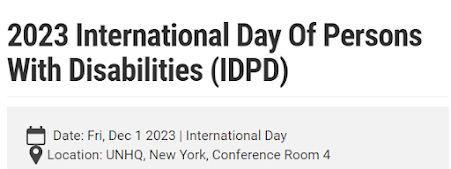
FORUM: “United in action to rescue and achieve the SDGs for, with and by persons with disabilities.” International Day of Persons with Disabilities 2023. Given the multiple crises of today’s world, achievement of the SDGs is in peril. At the mid-point of the implementation period for the 2030 Agenda, the world is not on track to reach numerous SDGs targets by 2030. For many, progress has either stalled or regressed below the 2015 baseline. Unfortunately, the world’s poorest and most vulnerable are often the hardest hit in times of crisis. Preliminary findings from the forthcoming United Nations Disability and Development Report 2023 indicate that the world is even more off track in meeting several SDGs for persons with disabilities. Our efforts to rescue the SDGs for, with and by persons with disabilities need to be intensified and accelerated, given that persons with disabilities have historically been marginalized and have often been among those left furthest behind. A fundamental shift in commitment, solidarity, financing and action is critical. Integral to this is the inclusion of the voices, needs and priorities of the global community of persons with disabilities in all their diversity. Encouragingly, with the adoption of the Political Declaration of the SDG Summit 2023, world leaders have recommitted themselves to achieving sustainable development and shared prosperity for all, by focusing on policies and actions that target the poorest and most vulnerable, including persons with disabilities. This calls for re-energized efforts by Member States, the United Nations system, civil society and the global community of persons with disabilities, through enhanced actions and international cooperation, to make the SDGs a reality for, with and by persons with disabilities. Follow the conversations with the hashtags: #EveryoneIncluded, #3December, #DisabilityInclusionStrategy, #DisabilityDay, #IDPD on social medias.
People: Women and girls with disabilities are acutely vulnerable to being left behind due to the intersection of gender and disability, which compounds the challenges and barriers they encounter. An intersectional lens is crucial for fulfilling the pledge that no one will be left behind.
Planet: Persons with disabilities are disproportionately affected by the impacts of climate change, owing to their greater likelihood of living in poverty, which was exacerbated by the COVID-19 pandemic . Moreover, stigma and discrimination are additional factors that increase the vulnerability of persons with disabilities to the effects of climate change . Prosperity: Ensuring that adequate financial resources are allocated towards disability-inclusive development must be a priority going forward, as well as the effective mainstreaming of disability in all aspects of development, including its financing. It is imperative that persons with disabilities, in all their diversity and throughout the world, actively participate in and shape these policies and processes.
Peace: Persons with disabilities are disproportionately affected by conflict in several ways, yet their needs and priorities are rarely addressed in situations of conflict. Furthermore, their role as peacemakers and peacekeepers is often ignored . Recent attempts to remedy this situation include the adoption of Security Council resolution 2475, which stipulates that respect for the human rights of persons with disabilities must be enshrined in international humanitarian law. Nevertheless, more needs to be done in this regard.
Partnerships: Despite recent setbacks, the 2030 Agenda and the SDGs remain the essential roadmap out of the multiple crises that the world is facing. A renewal of the pledge that no one will be left behind is fundamental. Success will require that all Member States, the United Nations system, civil society and the global community of persons with disabilities work together to strengthen international solidarity, and that they join in coordinated, targeted actions designed to reach the furthest behind first.
Opening (10 - 10.30 a.m. EST): featuring messages from high-level representatives from the United Nations, Member States and civil society, to be held in person; Online panel discussion (10.40 a.m. - 1 p.m. EST): a moderated panel discussion to address major gaps in the realization of inclusive and sustainable development for, with and by persons with disabilities and to call for enhanced actions and greater international cooperation. The Event organised by UN DESA with the support of the UN Youth Office, the Department of Global Communications, the Permanent Missions of Tunisia and New Zealand, the Civil Society Coordination Mechanism and the World Institute on Disability. The commemorative event will take place in a hybrid mode. In-person attendance will be open only to those who have a valid ground pass. The deadline to register for joining us online is on November 28, 2023, by midnight (New York time). Read the 2023 IDPD concept note and Register to participate!
“Slavery is both a historic horror and a contemporary outrage,” said United Nations Secretary-General António Guterres on Saturday's Abolition of Slavery Day, urging to fight against modern slavery in all its forms.
Risks of forced labour are of grave concern and a stark reality in global and complex Supply Chains, including in public procurement. At the #UNForumBHR, we presented our efforts focused on combating Human Trafficking in our own supplychains and explained how, at the OSCE, we walk the talk.
Brief description of the session:This session draws the 2023 annual Forum on Business and Human Rights to a close. The aim of the session is to reflect on the Forum's theme 'Towards Effective Change in Implementing Obligations, Responsibilities and Remedies'. It will do so by considering the roles which each stakeholder plays in ensuring the effective implementation of the UNGPs and promoting respect for human rights in business activities. In particular, there will be a focus on effective remedies and what is needed to implement them. It will also be an opportunity to review what has been heard during the Forum and offer ideas for the ways forward.
Key objectives of the session:
Reflect on the Forum's theme of 'Towards Effective Change in Implementing Obligations, Responsibilities and Remedies';
Analyse how different stakeholders can act to ensure the effective implementation of the UNGPs and promote respect for human rights in business activities;
Discuss how judicial and non-judicial grievance mechanisms, State-based and non-State based, can ensure access to effective remedy;
Identify opportunities and obstacles for moving forward to make effective change; and
Share positive practical examples of actions taken, including those that have been featured during the UN Forum.
EXHIBIT: The "Ark of Return" at UNHQ honours the victims of slavery and highlights the legacy of the slave trade.