Saturday, 18 November 2023

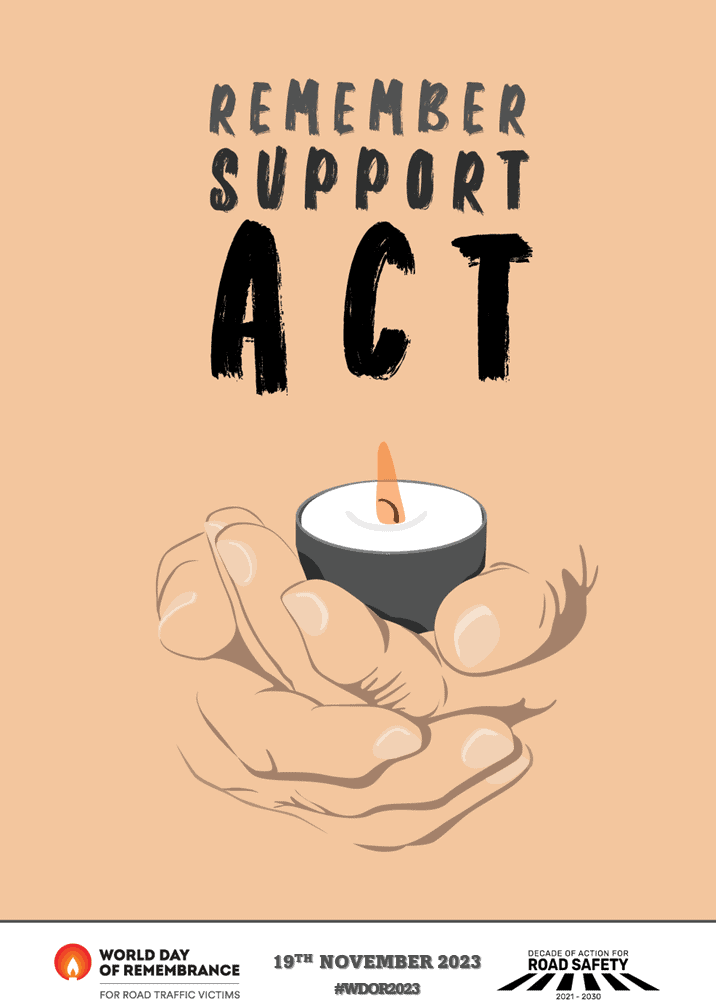
World Day of Remembrance for Road Traffic Victims 2023; November 19th.

FORUM: ”JUSTICE.“ World Day of Remembrance for Road Traffic Victims 2023. Traffic law enforcement, thorough investigation after a crash to find out if a crime was committed and to prevent recurrence, criminal prosecution where appropriate and civil compensation are all part of the justice system. When carried out seriously, fairly and consistently, such a system is what road crash victims who have been injured or had a family member killed as the result of someone’s law–breaking or negligence deserve and wish for, since it also represents a main factor of prevention and this would mean that lessons are learnt from their tragedies so that they may not be repeated. Follow the conversation with the hashtags: #Roadsafetydecade, #RoadVictims, #WDoR2023, #19November, #RoadTrafficVictimsDay.


EVENTS: on November 19th; A webinar to observe the World Day of Remembrance for Road Traffic Victims 2023 under the theme “JUSTICE” and the slogan REMEMBER. SUPPORT. ACT will be held online. Join the upcoming worldwide events!


The World Day of Remembrance of Road Traffic Victims shines a light on a dark reality: every year, 1.35 million lives are cut short and 50 million more suffer life-changing injuries because of road accidents.

We must do more to avoid these entirely preventable tragedies.

The Global Plan for the Decade of Action for Road Safety – now in its third year – aims to halve road deaths by building capacities, accelerating the implementation of UN road safety conventions, raising awareness, and mobilizing resources for greater traffic safety.

This year, we also launched the Global Campaign on Road Safety which will reach 1000 cities across 80 countries. And our UN Road Safety Fund is financing action in low- and middle-income countries, where around 90 per cent of traffic casualties occur.

Urgent action remains imperative. I call on all donors to scale up much-needed financial and technical contributions. On this World Day, let us join forces to make roads safer for everyone, everywhere.

United Nations Secretary-General.

Statement by the Head of the United Nations Road Safety Collobaration on World Day of Remembrance for Road Traffic Victims 2023.


PUBLICATIONS: Road traffic crashes injure or disable between. 20 million and 50 million people a year. — Road traffic crashes rank as the 11th leading cause of death. Read the WHO/PAHO World report on road traffic injury prevention.

CAMPAIGN: Join the “REMEMBER.ACT.SUPPORT” Campaign. During the new Decade of Action for Road Safety (2021-2030) the World Day will have the important role of helping to achieve the 50% road casualty reduction target. If you would like to receive customizable versions of any of the advocacy materials linked to the Global Plan, please contact unrsc@who.int. Get the communication materials!


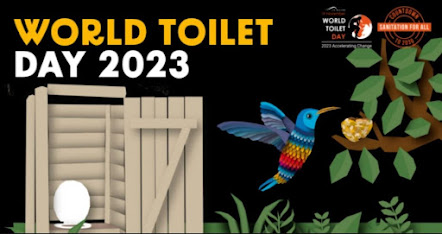
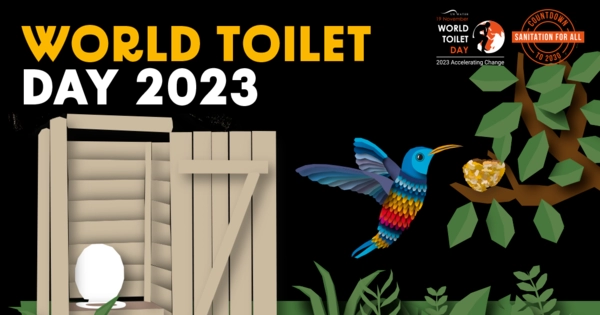
World Toilet Day 2023; November 19th.

FORUM: “Accelerating Change.World Toilet Day 2023. There is a global sanitation crisis and the world is working too slowly to solve it. Right now, we are seriously off track to meet SDG 6: safe toilets and water for all by 2030. This year celebration is about getting the world on track by taking much faster action. Governments and big institutions must be accountable for delivering on their promises. And every one of us must do what we can – however small – to help speed up progress. Follow the conversations with the hashtags #19November, #WorldToiletDay, #sanitation. #Opendefecation.


Toilets transform lives.

They deliver dignity, boost school attendance – particularly for girls, and enhance health and nutrition by preventing the spread of disease.

Gradually, the world is making progress towards bringing sanitation to all – and fulfilling one of the ambitions of the Sustainable Development Goals, or SDGs. Over nine hundred million more people have access to safely managed sanitation services than in 2015. And almost three hundred million more people have been spared the indignity of open defecation over the same period.

But a massive sanitation shortfall still exists, with billions of people cut off from safe services. We’re racing the clock. To meet the 2030 deadline for the SDGs, we need to move five times faster.

This World Toilet Day focuses on accelerating action on sanitation to drive progress across the SDGs. The world must respond urgently to this call. We need a massive cash injection across the board to get the SDGs on track. My proposal for an SDG Stimulus of $500 billion a year is gaining traction, and I urge leaders to act now to make it a reality.

On this World Toilet Day, let’s recommit to realising every person’s human right to safe sanitation, to help to flush away poverty and indignity for good.

United Nations Secretary-General.
 
 Read the joint message by the head of UN-Water during UN 2023 Water Conference.

The hummingbird flies again.


CAMPAIGN MATERIALS: “Accelerating Change” - We are seriously off track to ensure safe toilets for all by 2030. Download and add the ‘Countdown to 2030: Sanitation for all’ stamp to your content. Participate to the WTD2023 Campaign and Help remind the world that it’s Time to acceletate change. Get the communication materials!

Wednesday, 15 November 2023

International Day of Tolerance 2023; November 16th.

FORUM: "Fostering the development of peaceful and tolerant societies." International Day for Tolerance 2023. Tolerance recognizes the universal human rights and fundamental freedoms of others. Follow the conversations with the hastags: #Tolerance, #InternationalDayforTolerance, #16November.

EVENTS: On November 16th; The UNESCO, the UNAOC, the UN ACADEMIC IMPACT and the OHCHR will organize a webinar to mark the International Tolerance Day 2023 to generate public awareness of the dangers of intolerance. 

International Day of Tolerance

"Tolerance brings obligations to act, and must be taught, nurtured and defended. Tolerance requires investment by States in people, and in the fulfilment of their full potential through education, inclusion and opportunities. " - Ban Ki-moon


On the initiative of UNESCO, the United Nations General Assembly proclaimed 1995 the United Nations Year for Tolerance and designated UNESCO as lead agency for this Year. In conformity with its mandate and in order to call public attention worldwide to the urgent matter of tolerance, the General Conference of UNESCO solemnly adopted on 16 November 1995, the 50th anniversary of the signature of UNESCO's Constitution, the Declaration of the Principles of Tolerance. The Member States of the United Nations Educational, Scientific and Cultural Organization, meeting in Paris at the twenty-eighth session of the General Conference, from 25 October to 16 November 1995.

Preamble

Bearing in mind that the United Nations Charter states "We, the peoples of the United Nations determined to save succeeding generations from the scourge of war, ... to reaffirm faith in fundamental human rights, in the dignity and worth of the human person... and for these ends to practise tolerance and live together in peace with one another as good neighbours."

Recalling that the Preamble to the Constitution of UNESCO adopted on 16 November 1945, states that "peace, it it is not to fail, must be founded on the intellectual and moral solidarity of mankind."

Recalling also that the Universal Declaration of Human Rights affirms that "Everyone has the right to freedom of though, conscience and religion" (Article 18), "of opinion and expression" (Article 19), and that education "should promote understanding, tolerance and friendship among all nations, racial or religious groups" (Article 26),

Noting relevant international instruments including:
the International Covenant on Civil and Political Rights,
the International Covenant on Economic, Social and Cultural Rights,
the Convention on the Elimination of All Forms of Racial Discrimination,
the Convention on the Prevention and Punishment of the Crime of Genocide,
the Convention on the Rights of the Child,
the 1951 Convention relating to the Status of Refugees and its 1967 Protocol and regional instrumnents,
the Convention on the Elimination of Any Form of Discrimination against Women,
the Convention against Torture and other Cruel, Inhuman or Degrading Treatment or Punishment,
the Declaration on the Elimination of Any Form of Intolerance Based on Religion or Belief
the Declaration on the Rights of Persons Belonging to National or Ethnic, Religious and Linguistic Minorities,
the Declaration on measures to Eliminate International Terrorism, the Vienna Declaration and Programme of Action of the World Conference on Human Rights
the Copenhagen Declaration and Programme of Action adopted by the World Summit for Social Development
the UNESCO Declaration on Race and Racial Prejudice,
the UNESCO Convention and Recommnendation against Discrimination in Education,

Bearing in mind the objectives of the Third Decade to Combat Racism and Racial Discrimination, the World Decade Human Rights Education, and the International Decade of the World's Indigenous People,

Taking into consideration the recomendations of regional conferences organized in the framework of the United Nations Year for Tolerance in accordance with UNESCO General Conference 27C/Resolution 5.14, as well as the conclusions and recommendations of other conferences and meetings organized by Member States within the programme of the United Nations Year for Tolerance,

Alarmed by the current rise in acts of intolerance, violence, terrorism, xenophobia, aggressive nationalism, racism, anti-Semitism, exclusion, marginalization and discrimination directed against national, ethnic, religious and linguistic minorities, refugees, migrant workers, immigrants and vulnerable groups within societies, as well as acts of violence and intimidation committed against individuals exercising their freedom of opinion and expression - all of which threaten the consolidation of peace and democracy both nationally and internationally and which are all obstacles to development,

Emphasising the responsibilities of Member States to develop and encourage respect for human rights and fundamental freedoms for all, without distinction as to race, gender, language, national origin, religion or disability, and to combat intolerance,

Adopt and solemnly proclaim this Declaration of Principles on Tolerance.

Resolving to take all positive measures necessary to promote tolerance in our societies, because tolerance is not only a cherished principle, but also a necessity for peace and for the economic and social advancement of all peoples.

We declare the following:

Article 1 - Meaning of tolerance

1.1 Tolerance is respect, acceptance and appreciation of the rich diversity of our world's cultures, our forms of expression and ways of being human. It is fostered by knowledge, openness, communication and freedom of thought, conscience and belief. Tolerance is harmony in difference. It is not only a moral duty, it is also a political and legal requirement. Tolerance, the virtue that makes peace possible, contributes to the replacement of the culture of war by a culture of peace.

1.2 Tolerance is not concession, condescension or indulgence. Tolerance is, above all, an active attitude prompted by recognition of the universal human rights and fundamental freedoms of others. In no circumstance can it be used to justify infringements of these fundamental values. Tolerance is to be exercised by individuals, groups and States.

1.3 Tolerance is the responsibility that upholds human rights, pluralism (including cultural pluralism), democracy and the rule of law. It involves the rejection of dogmatism and absolutism and affirms the standards set out in international human rights instruments.

1.4 Consistent with respect for human rights, the practice of tolerance does not mean toleration of social injustice or the abandonment or weakening of one's convictions. It means that one is free to adhere to one's own convictions and accepts that others adhere to theirs. It means accepting the fact that human beings, naturally diverse in their appearance, situation, speech, behaviour and values, have the right to live in peace and to be as they are. It also means that one's views are not to be imposed on others.

Article 2 - State level

2.1 Tolerance at the State level requires just and impartial legislation, law enforcement and judicial and administrative process. It also requires that economic and social opportunities be made available to each person without any discrimination. Exclusion and marginalization can lead to frustration, hostility and fanaticism .

2.2. In order to achieve a more tolerant society, States should ratify existing international human rights conventions, and draft new legislation where necessary to ensure equality of treatment and of opportunity for all groups and individuals in society.

2.3 It is essential for international harmony that individuals, communities and nations accept and respect the multicultural character of the human family. Without tolerance there can be no peace, and without peace there can be no development or democracy.

2.4 Intolerance may take the form of marginalization of vulnerable groups and their exclusion from social and political participation, as well as violence and discrimination against them. As confirmed in the Declaration on Race and Racial Prejudice "All individuals and groups have the right to be different" (Article 1.2).

Article 3 - Social dimensions

3.1 In the modern world, tolerance is more essential than ever before. It is an age marked by the globalization of the economy and by rapidly increasing mobility, communication, integration and interdependence, large-scale migrations and displacement of populations, urbanization and changing social patterns. Since every part of the world is characterized by diversity, escalating intolerance and strife potentially menaces every region. It is not confined to any country, but is a global threat.

3.2 Tolerance is necessary between individuals and at the family and community levels. Tolerance promotion and the shaping of attitudes of openness, mutual listening and solidarity should take place in schools and universities, and through non-formal education, at home and in the workplace. The communication media are in a position to play a constructive role in facilitating free and open dialogue and discussion, disseminating the values of tolerance, and highlighting the dangers of indifference towards the rise in intolerant groups and ideologies.

3.3 As affirmed by the UNESCO Declaration on Race and Racial Prejudice, measures must be taken to ensure equality in dignity and rights for individuals and groups wherever necessary. In this respect, particular attention should be paid to vulnerable groups which are socially or economically disadvantaged so as to afford them the protection of the laws and social measures in force, in particular with regard to housing, employment and health, to respect the authenticity of their culture and values, and to facilitate their social and occupational advancement and integration, especially through education.

3.4 Appropriate scientific studies and networking should be undertaken to co-ordinate the international community's response to this global challenge, including analysis by the social sciences of root causes and effective countermeasures, as well as research and monitoring in support of policy-making and standard-setting action by Member States.

Article 4 - Education

4.1 Education is the most effective means of preventing intolerance. The first step in tolerance education is to teach people what their shared rights and freedoms are, so that they may be respected, and to promote the will to protect those of others.

4.2 Education for tolerance should be considered an urgent imperative; that is why it is necessary to promote systematic and rational tolerance teaching methods that will address the cultural, social, economic, political and religious sources of intolerance - major roots of violence and exclusion. Education policies and programmes should contribute to development of understanding, solidarity and tolerance among individuals as well as among ethnic, social, cultural, religious and linguistic groups and nations.

4.3 Education for tolerance should aim at countering influences that lead to fear and exclusion of others, and should help young people to develop capacities for independent judgement, critical thinking and ethical reasoning.

4.4 We pledge to support and implement programmes of social science research and education for tolerance, human rights and non-violence. This means devoting special attention to improving teacher training, curricula, the content of textbooks and lessons, and other educational materials including new educational technologies, with a view to educating caring and responsible citizens open to other cultures, able to appreciate the value of freedom, respectful of human dignity and differences, and able to prevent conflicts or resolve them by nonviolent means.

Article 5 - Commitment to action

We commit ourselves to promoting tolerance and non-violence through programmes and institutions in the fields of education science, culture and communication.

Article 6 - International Day for Tolerance

In order to generate public awareness, emphasize the dangers of intolerance and react with renewed commitment and action in support of tolerance promotion and education, we solemnly proclaim 16 November the annual International Day for Tolerance.


Notes
1Solemnly adopted by acclamation on 16 November 1985 at the twenty-eighth session of the UNESCO General Conference

World Philosophy Day 2023; November 16th.


FORUM: “Artificial intelligence, a tool for mental health care?.” World Philosophy Day 2023. If AI has great potential for a better understanding and treatment of mental illnesses and is likely to improve access to care, what potential pitfalls and ethical implications does it hold? In other words, can AI be a dynamic factor for the improvement of mental healthcare?; In the context of the Management of Social Transformations (MOST) programme, UNESCO’s work on philosophy aims to promote humanist thinking as a response to social transformations and encourage its use for impact on political dialogue. Philosophy allows to think collectively about the future of humanity - and to design a better world. Follow the conversation with the hashtags: #WorldPhilosophyDay, #philosophy, #16November, #Philosophicaldebates, #PhilosophyDay.


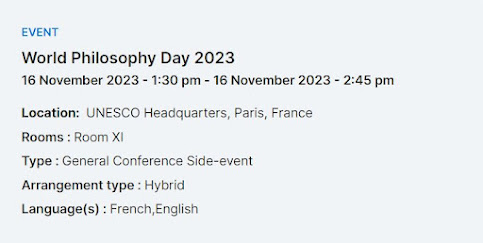
EVENTS: On November 16th; The UNESCO will organize a panel discussion on “Artificial intelligence, a tool for mental health care?" with the French National Commission for UNESCO and Paris Saclay University, to mark World Philosophy Day 2023 during the 42nd General Conference from 1.30 to 2.45pm at UNESCO Paris, Room XI). The round-table will reflect on potential contributions of AI to a human-centered approach of mental health and examine ethical repercussions and moral concerns.


16 November, World Philosophy Day 2023


Tuesday, 14 November 2023

World Diabetes Day 2023; November 14th.

FORUM: ”Access to Diabetes Care.” World Diabetes Day 2023. WHO will highlight the need for equitable access to essential care, including raising awareness of ways people with diabetes can minimize their risk of complications. Activities will also celebrate the experiences of people with all forms of diabetes to help those impacted to take action, including seeking and obtaining essential care. Follow the conversations with the hashtags: #14November, #WorldDiabetesDay, #AccesstoDiabetesCare.


EVENTS: Regional Offices celebrations World Diabetes Day 2023.

On November 13th, 2023. from 14:00 – 15:00 (Central European Time); The WHO and International Diabetes Federation organized a World Diabetes Day joint webinar: Marking the diabetes community and progress towards 2030.


On November 4th, 2023 from 12:00 – 15:00 in commemoration of World Diabetes Day 2023, the WHO Regional Office for the Eastern Mediterranean is organizing a thought-provoking and informative 3-hour webinar under the theme "Access to diabetes medicines and care: using WHO packages as enablers".


On November 14th, 2023 from 16:00 – 17:00 (Central European Time), in collaboration with the WHO, is hosting a hybrid event in Mexico City to commemorate World Diabetes Day 2023, which will be broadcast via Zoom. The event will highlight regional successes, challenges and opportunities in diabetes prevention and control.


INITIATIVES: Join the Global Diabetes Walk, an initiative created by the World Diabetes Foundation in support of World Diabetes Day. Take to the streets to raise awareness of the impact of diabetes and the importance of physical activity.

Thursday, 9 November 2023

World Science Day for Peace and Development 2023; November 10th.

FORUM: “Building trust in science.World Science Day for Peace and Development 2023. The theme of the November 10th observance is “Building trust in science.“ The role of science in shaping our collective future can only be fulfilled when there is trust in science. It is trust in science that fuels the development and application of evidence-based solutions to our world’s multifaceted challenges. Trust in science is a complex issue. It affects the way in which scientists operate and the way science is perceived by society. Also, enhancing trust in science strengthens science-based policy decisions and society’s support for their application. Follow the conversations with the hashtags: #Science4Policy, #TrustInScience, #ScienceDay, #10November, #sustainableDevelopment, #WorldScienceDayforPeaceandDevelopment.

World Science Day for Peace and Development 2023


EVENTS: On November 13th, you are invited participate to the High-level roundtable on the occasion of the World Science Day for Peace and Development 2023; The Panel discussions entitled “Building Trust in Science at the Nexus of Science; Policy and Society.” starts at 6:30pm at UNESCO Conference Room II. The High-level roundtable aims to explore the parameters contributing to building and preserving trust in science. The roundtable will offer an opportunity to discuss the links between science, policy, society, and science-based policy making, and to gain a better understanding of the status of scientific research. It will also highlight the importance of freedom and safety of scientists, as a key ingredient for science ecosystems driven by universal values, and the vital role of science popularization in enhancing scientific literacy, raising public awareness and trust in science. These principles are laid down in two UNESCO standard-setting instruments: the Recommendation on Science and Scientific Researchers (2017) and the Recommendation on Open Science (2021). These instruments articulate a vision where science ecosystems are driven by universal values and aim at making science and its benefits accessible to all.


Agenda Programme of the World Science Day for Peace and Development 2023 celebration.

Building Trust in Science at the Nexus of Science, Policy and Society (high-level roundtable)- Registrate to participate to the ” 2023 Journée mondiale de la science + Prix UNESCO-Kalinga”.

Ceremony of the 2023 UNESCO Kalinga Prize for the Popularization of Science - Watch the “2023 World Science Day + UNESCO-Kalinga Prize” live webcast!


The event will close with the ceremony of the UNESCO Kalinga Prize for the Popularization of Science

WORLDWIDE EVENTS: Explore the International Council of Science (ICS) upcoming meetings and the AAAS upcoming events.


STATEMENTS: Statement from the Director-General of UNESCO on the occasion of the World Science Day for Peace and Development, 10 November 2023.

Science holds the undeniable potential to change our world for the better. Vaccines, for instance, have played a critical role in curbing the spread of diseases such as COVID-19, measles, and polio. Innovations in energy and agriculture have led to increased crop yields while reducing the use of pesticides, fertilizers, and water. Central to these breakthroughs is scientific research, which drives all major leaps in understanding. To underline its immense potential, UNESCO celebrates World Science Day for Peace and Development every year. This year, we also celebrate the International Year of Basic Sciences for Sustainable Development, which will transition into the International Decade of Sciences for Sustainable Development (2024-2033).At the heart of UNESCO’s endeavours to support science and scientific research is our Recommendation on Open Science, adopted in 2021. This text underscores that, to unlock the potential of science, scientists need access to data, funding and equipment. They need to collaborate with their peers if they are to accelerate progress and bridge technological and knowledge gaps in and between countries.The Recommendation also underlines the importance of making science more open to marginalized groups, particularly women and indigenous people. Indeed, according to the UNESCO Science Report, only one in three researchers is female. UNESCO is therefore working to foster gender equality in science – for example, through initiatives in Africa and the Caribbean with the L’Oréal Foundation. Over the past 25 years, this partnership has bolstered the careers of over 4,100 female scientists from more than 110 countries.Importantly, the Recommendation underscores the importance of public trust in science: a wider understanding that science is a continuous quest for truth entailing a process of trial and error. This issue is also the theme of this World Science Day – and the focus of a ministerial roundtable at UNESCO Headquarters on 13 November 2023. This event aims to build trust in science by addressing questions such as scientific literacy and the alignment of science with societal needs, as well as the freedom and safety of scientists.In our rapidly changing world, supporting scientific development and fostering an understanding of science are imperatives, not mere options. UNESCO therefore advocates for increased funding for scientific research, a higher representation of women in science, wider access to quality science education for all, and public engagement in scientific processes. Science that is more open, better funded and more equitable is the science the world urgently needs.

Ms Audrey Azoulay, Director-General of UNESCO.


Monday, 6 November 2023

International Day for preventing the protection of the environment in war and conflicts 2023; November 6th.

FORUM: “Protecting the environment is essential to preserving peace.’’ International Day for preventing the protection of the environment in war and conflicts 2023. The international community need to act urgently and actively to address the isues of environmental degradation during armed conflicts, if these issues are ignored, we all have to face severe consequences not for ourselves but also for upcoming generations. For the implementation of agenda 2030 Sustainable Development, we need to integrate natural resources and environmental issues into planning and conflict assessment. There is dire need to place a mechanism for collecting, monitoring and sharing information of the potential environmental impacts and protect natural resources in armed conflicts. it is needed to show commitment towards protection of our planet from devastating effects of war and in the times when the planet is warming up. Protecting the Natural environment is integral to Conflicts prevention, peacebuilding and sustainable development. Follow the conversations with the hashtags: #EnvironmentalProtection, #EnvironmentconflictDay, #6november.


International Day for preventing the protection of the environment in war and conflicts 2023


EVENTS: The UNEP, the UNDP, the UN-HABITAT, the PBSO, the DPA and the UNDESA willl organize a webinar to observe International Day for preventing the protection of the environment in war and conflicts 2023 on November 6th at United Nations Heaquarters in New york. the topics of the discussions will showcase how to use all of the tools at our disposal, from dialogue and mediation to preventive diplomacy, to keep the unsustainable exploitation of natural resources from fueling and financing armed conflict and destabilizing the fragile foundations of peace.


STATEMENTS: Read the Secretary-General of the United Nations message on International Day for Preventing the Exploitation of the Environment in War and Armed Conflict 2023; November 6th.


Protecting the environment is essential to preserving peace.