Showing posts with label United Nations. Show all posts

Wednesday, 31 December 2025

2026 New Year Message from the United Nations Secretary-General.

2026 NEW YEAR MESSAGE


As we enter the new year, the world stands at a crossroads.
Chaos and uncertainty surround us.
Division. Violence. Climate breakdown. And systemic violations of international law.
A retreat from the very principles that bind us together as a human family.
People everywhere are asking: Are leaders even listening? Are they ready to act.
As we turn the page on a turbulent year, one fact speaks louder than words:
Global military spending has soared to 2.7 trillion dollars, growing by almost 10%.
That is thirteen times more than all development aid, equivalent to the entire Gross Domestic Product of Africa.
All, while conflict rages at levels unseen since World War II.
On this new year, let’s resolve to get our priorities straight.
A safer world begins by investing more in fighting poverty and less in fighting wars. Peace must prevail.
It’s clear the world has the resources to lift lives, heal the planet, and secure a future of peace and justice.
In 2026, I call on leaders everywhere: Get serious. Choose people and planet over pain.
And I urge everyone who hears this message: Play your part.
Our future depends on our collective courage to act.
This new year, let’s rise together:
For justice. For humanity. For peace.

United Nations Secretary-General, António Guterres.


Thursday, 18 December 2025

International Migrants Day 2025; December 18th.

“My Great Story: Cultures and Development.”


FORUM
:“My Great Story: Cultures and Development.” International Migrants Day 2025. 
This year’s theme highlights how human mobility drives growth, enriches societies, and helps communities connect, adapt, and support one another. This year observance gives us a special opportunity to shine a spotlight on the invaluable contributions of millions of migrants around the world. It's also a day for us to highlight the increasingly complex environment in which migration occurs. Migration is a defining force of our century. Remittances to low- and middle-income countries are projected to reach a record USD 685 billion, and migrants are central to addressing labour shortages, driving innovation, and supporting demographic stability. Yet these contributions can only be maximized when migration is safe, orderly, and responsibly governed. Well-managed migration is a strategic asset: it strengthens resilience, fuels prosperity, and supports social cohesion. From documentation and skills recognition to integration and dignified return, effective systems ensure migrants can find stability, support their families, and build new futures, while helping communities adapt and thrive. Conflicts, climate-related disasters and economic pressures continue to drive millions of people from their homes in search of safety or simply opportunity. This past year, we saw record levels of internal displacement, rising humanitarian needs across ongoing and new crises, and, tragically, the highest-ever death toll of migrants in transit. Yet, alongside these challenges, are stories of resilience, progress and hope. Where safe and well-managed migration holds extraordinary potential. Migrants play critical roles in labour markets, filling skills gaps, driving innovation and entrepreneurship, and addressing demographic challenges in aging societies. Migrants boost economic growth and provide a lifeline to families and communities back home, driving development. The evidence is overwhelming that when migration is managed safely and strategically, it can be a powerful force for good. By supporting regular pathways for migration, we can enable opportunities for migrants, better protect their rights, and contribute to greater prosperity in the countries migrants come from and those that host them. Together, one step at a time, we can continue building a world where migration is safe, orderly, and beneficial – for everyone. Follow the conversation with the hashtags: #InternationalMigrantsDay, #18December, #MigrantsDay, #safeMigration, #RegularMigration, #OrderlyMigration.

International Migrants Day 2025

EVENTS: On December 18th, the UN Migration, the UN Special Rapporteur on the Human Rights of Migrants and the specialized agencies will host a webinar to mark the day from the IOM Headquarter in Switzerland. Migration continues to shape economies, communities, and global development. On this International Migrants Day 2025, the International Organization for Migration calls for smarter policies, stronger cooperation, and a renewed commitment to making migration work for all. Because every migrant’s journey is a story of resilience and possibility, and because when migration is managed well, each personal story becomes part of a larger one that enriches cultures, strengthens development, and benefits us all. “My Great Story” is not only a migrant’s story—it is our shared story of building a fairer, more sustainable future through mobility. Register to participate!
UN WOMEN


Statement of the United Nations Secretary-General on the International Migrants Day 2025; December 18th.

Migration is a powerful driver of progress — lifting economies, connecting cultures, and benefiting countries of origin and destination alike.

Yet when migration is poorly governed or misrepresented, it can fuel hate and division, endangering the lives of people seeking safety and opportunity.

Since 2014, nearly 70,000 migrants have died or gone missing along land and sea routes, with the true number likely far higher. Borders are tightening, smugglers and traffickers are thriving, and women and children are among the most at risk.

Seven years ago, the international community adopted the Global Compact for Safe, Orderly and Regular Migration — an effort to maximize migration’s benefits while managing its challenges.

We can and must harness the power of migration to advance sustainable development and build more resilient societies. This starts with challenging the narratives that dehumanize migrants, and replacing them with stories of solidarity.

On this International Migrants Day, let us stand together for the rights of every migrant, and make migration dignified and safe for all.


Statement of the UN Women on International Migrants Day 2025, December 18th.


Today, on International Migrants Day, we celebrate migration as a powerful story of resilience, connection, and shared progress. The theme — “My Great Story: Cultures and Development” — recognizes the profound ways in which human mobility shapes our world: enriching societies, sparking innovation, and advancing sustainable development when grounded in dignity and rights.

Migration has always been a force that binds the world together. Across borders and generations, the movement of people has driven cultural exchange, strengthened communities, and energized economies.


At the heart of this story are women.

Whether migrating themselves, supporting loved ones from afar, or adapting to the changes migration brings to their households, women play a vital and often invisible role. Their earnings sustain families. Their care work supports entire communities. Their leadership helps societies adapt and flourish.

Yet for too many migrant women and girls, the journey is marked by risk — not opportunity. Unsafe working conditions, discrimination, violence, and lack of legal protection continue to threaten their rights and safety. Even as they send life-changing remittances home, these contributions often come at great personal cost.

UN Women is working in partnership with governments, civil society, and migrant-led organizations around the world to uphold the rights and dignity of migrant women and girls — and to ensure their voices lead the conversation.

In Ethiopia, for example, a young woman from Tigray who survived exploitation as a domestic worker abroad returned home and began to rebuild her life. With support from UN Women’s partner, Agar Ethiopia, she accessed shelter, health care, legal aid, psychosocial support, and vocational training. Her journey toward justice and recovery shows what’s possible when services are survivor-centred and gender-responsive.

This is what it means to protect rights and unlock potential.

As we mark this day, UN Women honours the strength, leadership, and courage of migrant women and girls everywhere. Their stories are stories of hope, transformation, and global connection. Their contributions are essential — to families, communities, and the shared future we are building together.


Statement of the IOM Senior Leadership Message on International Migrants Day 2025.


Today we're celebrating something that touches all of us every single day, often without us even realizing it. Migration. It's in the food we share, the music that moves us. The ideas powering our businesses, our sports, our technology.
People on the move shape our world quietly, beautifully, and far too often without recognition. So this year's theme, my great story, reminds us that behind every journey is a story of strength, of someone who is seeking opportunity, building a better life, supporting loved ones, or using their talent to create something new. Migration is not simply about moving from one place to another. It is fundamentally about contribution. When migration is safe and well-governed, everyone benefits.
Workers fill essential roles. Students learn and innovate. Families find stability. Communities grow stronger. And achieving this means investing in systems that help people access documents, education, services, decent work for decent pay, and when they choose a dignified return home. But no country can do this alone. We need partnerships across governments, communities, the private sector, and migrants themselves. Today we celebrate migrants as builders of progress and bridges between cultures. Their stories are not stories of crisis. They are stories of possibility. So let's honor these stories. Let's work together to make sure that every person on the move can live, contribute, and thrive with dignity. 

Happy International Migrants Day.


I'm America Ferrer and this is my great story. I like to think of my story as a migration story, but it's not just mine.
It's a story shared by millions of people who have left home. Sometimes because they had no choice and sometimes because they saw a chance. People who took risks in the hope of a better, safer, more hopeful future. For my family, that meant leaving Honduras and starting over in a place that promised opportunity, but demanded courage and hard work in return. My mother worked tirelessly so my siblings and I could grow up believing that anything was possible. I carry their journey and their sacrifices with me today. Every challenge, every audition, every achievement felt like part of a larger path, one built on courage, determination, and hope. And today when I look back from my humble beginnings to realizing my wildest dreams, I am reminded just how beautiful our stories are. Stories of overcoming hardship, beginning again, building homes and communities, and contributing even when the odds are against us. These are the stories that connect us, inspire us, and remind us that migration is at its core a human story and one that will always live close to my heart. This is my great story. What's yours?


Message of the IOM Global Goodwill Ambassador Dimash Qudaibergen Message on IMD 2025.

Through his encounters with migrants across the globe, IOM Global Goodwill Ambassador Dimash Qudaibergen shares how their strength, hope and resilience shaped his passion to stand with them and uplift their voices. 

“Every story is a great story.”


Monday, 3 March 2025

World Widlife Day 2025; March 3rd.

FORUM: ”Wildlife Conservation Finance: Investing in People and Planet.” World Wildlife Day 2025. The year also coincide with the 50th anniversary of the entry into force of Convention on International Trade in Endangered Species of Wild Fauna and Flora (CITES) in 1975. With more than 1 million species now estimated to be threatened with extinction amid the intensifying triple planetary crisis, innovative finance for wildlife conservation has never been more urgent. Over half of the world’s gross domestic product (GDP) is dependent on nature, making biodiversity loss an increasing threat to financial stability and livelihoods. Building on a collaborative spirit, the events will serve as a platform for exchanging ideas, showcasing solutions and advancing wildlife conversation on how innovative finance can contribute to halting biodiversity loss, raising the interest of private sector stakeholders to invest in wildlife conservation, and creating a sustainable future. Follow the conversations with the hashtags: #TechForWildlife, #3March, #WorldWildlifeDay, #DigitalInnovation, #WWD2025, #wildlifeconservationfinance.


EVENTS: At UNHQ in New York, NY, United States of America. On March 3rd, the 50th anniversary of CITES and the World Wildlife Day 2025 will be celebrated under the critical theme of “Wildlife Conservation Finance: Investing in People and Planet”. The event will showcase key global initiatives in wildlife finance. For example, the Biodiversity Finance Initiative (BIOFIN) of the United Nations Development Programme (UNDP) works to demonstrate how nature-positive economies can work for people and the planet; the Global Biodiversity Framework Fund (GBFF) established by the Global Environment Facility (GEF) to help countries achieve the Targets of the Kunming-Montreal Global Biodiversity Framework; the Green Climate Fund (GCF) which works to increase access to climate finance for biodiversity rich (and other) developing countries; the Biodiversity Credit Alliance which works to facilitate the transition to a nature positive economy; as well as other initiatives.


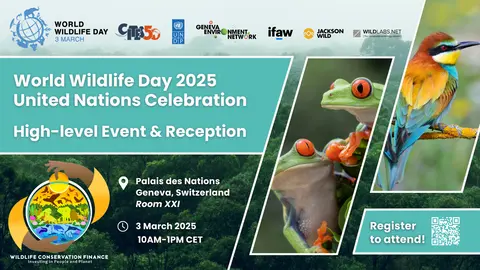
At the Palais des Nations on Monday, March 3rd; From 10:00AM-12:00PM Central European Time. The WWD2025 main celebration event in Geneva will highlight innovative financial mechanisms for wildlife conservation and share actionable pathways to mobilize the financial resources for investing in the future of our planet. The event will showcase the efforts on innovative financing of financial institutions, such as Building Bridges, the World Business Council for Sustainable Development, and the World Economic Forum. Participants will explore Wildlife Conservation Finance and how to better invest in people and planet To mark the World Wildlife Day 2025, the CITES Secretariat will leverage the expertise, knowledge, and creativity of key stakeholders through collaborative partnerships with the United Nations Development Programme (UNDP), Jackson Wild, the International Fund for Animal Welfare (ifaw), WILDLABS, the Geneva Environment Network, and other organizations. This event will feature a musical performance with medicinal plants, an expert panel discussion on the 2025 theme, statements from Member States, the announcement of the winner of the International Youth Art Contest, and a trailer premiere of the 2025 Jackson Wild Film Showcase. The World Wildlife Day International Youth Art Contest and the winners will be presented during the high-level event. Congratulations in advance to the winner of the annual WWD Poster Contest!. On and around March 3rd, many side-events, seminars, workshops and excursions will be held worldwide; Explore the map of WWD2025 celebrations around the world. Get the Agenda Programme; register to participate and watch the livestream!

At UN Geneva, from 3–8 February 2025; the 78th Meeting of the CITES Standing Committee was held. The CITES SC78 reviewed the reports of the Plants and Animals Committees July 2024 meetings, where members discussed emerging operational issues; cooperation with other multilateral environmental agreements and international organizations; the transport of live specimens; specimens produced through biotechnology; and the role of CITES in reducing the risk of potential zoonotic disease emergence associated with international wildlife trade.. It preceded the 20th meeting of the Conference of the Parties to CITES (CoP20) from 24 November – 5 December 2025 in Samarkand, Uzbekistan, which will commemorate the 50th anniversary of the Convention’s entry into force. In addition to these issues, the Standing Committee considered:
  1. arrangements for the 20th meeting of the CoP, including a draft provisional agenda and draft work programme;
  2. the engagement of Indigenous Peoples and local communities;
  3. non-detriment findings for specimens of Appendix-II species taken from areas beyond national jurisdiction;
  4. trade in medicinal and aromatic plants;
  5. demand reduction to combat illegal trade;
  6. an assessment of the practicalities of the CoP12 decision that the Convention should apply to fungi; and
  7. an information system for trade in specimens of CITES-listed tree species.


Delegates have celebrated achievements, like the dramatic recovery of the saiga antelope. But their agenda with over 127 working documents across 87 agenda items containing more than 200 draft decisions could not be completed, illustrating a growing gap between the Convention’s workload and resources. Read the summary report of the meeting!


STATEMENTS
: Statement of the United Nations Secretary-General on World wildlife Day 2025; march 3rd.


Watch the celebration of World Wildlife Day 2025 at the United Nations in Geneva, Switzerland. The theme of World Wildlife Day is "Wildlife Conservation Finance: Investing in People and Planet."


Sunday, 26 January 2025

International Day of Commemoration in memory of the victims of the Holocaust 2025; January 27th.

FORUM: "Holocaust Remembrance for Dignity and Human Rights." International Day of Commemoration in memory of the victims of the Holocaust 2025. This year marks 80 years since the end of the Second World War and the Holocaust. Eighty years ago, in response to the atrocities of the war and the Holocaust, governments of the world established the United Nations, pledging to work together to build a just world where human rights were enshrined, and all could live with dignity, in peace. Acknowledging the milestone year, the Holocaust and the United Nations Outreach Programme has chosen as its guiding theme for 2025, “Holocaust remembrance and education for dignity and human rights”. The theme reflects the critical relevance of Holocaust remembrance for the present, where the dignity and human rights of our fellow global citizens are under daily attack. The Holocaust shows what happens when hatred, dehumanization and apathy win. Its remembrance is a bulwark against the denigration of humanity, and a clarion call for collective action to ensure respect for dignity and human rights, and the international law that protects both. Holocaust remembrance safeguards the memories of survivors and their testament of life before the Holocaust – of vibrant communities, of traditions, of hopes and dreams, of loved ones who did not survive. Safeguarding the history brings dignity to those the Nazis and their collaborators sought to destroy. Remembrance of the Holocaust is a victory against the Nazis and their collaborators, and against all who would try to continue their legacy through spreading hatred, Holocaust distortion and denial into the 21st century. Share your reflections with the hashtags: #27January, #HolocaustRemembranceDay.

Holocaust Remembrance for Dignity and Human Rights.


On 27 January 1945, 80 years ago today, horrified and exhausted Soviet troops entered the Auschwitz-Birkenau German Nazi concentration and extermination camp and liberated the approximately 7,000 prisoners who had survived.Every year, this symbolic date urges the international community to remember the 6 million Jews who were murdered alongside countless other victims of Nazi brutality.At a time when there are fewer and fewer direct witnesses of the Holocaust, marking the twilight of what historian Annette Wieviorka calls "the era of the witness", we must commit ourselves with ever greater gravity to the perpetuation of its memory. Firstly, we must do so by preserving the very places where the horror occurred, so that we never stop believing in what was an utterly unbelievable event. In 1979, UNESCO proclaimed Auschwitz-Birkenau a world heritage site, thus contributing to the memorial nature of the structure which had housed a death camp. This inscription affirmed the mobilization of universal awareness with regard to a phenomenon which had consisted in the desire to sever off part of humanity. UNESCO's ongoing contribution to this memorial structure is reflected in a historic agreement signed just one year ago. After 14 years of diplomatic negotiations conducted under the aegis of our Organization, this agreement between the six States of the former Yugoslavia provides for the reopening of a permanent exhibition designed by the architect Daniel Libeskind, in a renovated shared pavilion. UNESCO also supports the Counter Extremism Project's creation of a new centre for research on hate, extremism and radicalization in the former house of the commandant of Auschwitz, Rudolf Höss, directly adjacent to the camp. This centre, called ARCHER at House 88, will offer fellowship programmes for young researchers, in conjunction with UNESCO university chairs dedicated to research on the Holocaust, violent pasts, and the prevention of antisemitism and extremism.Honouring the memory of the victims of the Holocaust also means valuing the Jewish cultural heritage which the Nazis set out to destroy. To this end, UNESCO inscribed, in 2021, the sites of Speyer, Worms and Mainz on the World Heritage List, and, in 2023, the sites of Erfurt and the El Ghriba synagogue in Djerba. Yet we cannot cultivate the memory of a place without conveying its meaning to the younger generations. In this respect, education plays an essential role, as it enables us to pass on an understanding of the history of the Holocaust in its universal dimension. For the Holocaust reveals something about the human species which cannot be reduced to a single era or a single people. The worst can happen again wherever the necessary conditions are present.
In order to prevent antisemitic, racist and xenophobic violence from being unleashed amid ignorance of the past, UNESCO and the United States Holocaust Memorial Museum jointly developed the International Program on Holocaust and Genocide Education. For 10 years now, UNESCO has thus worked with 24 countries to ensure that school curricula and textbooks reflect violent pasts based on the facts. We must face reality: teaching people about the memory of the Holocaust has become an increasingly difficult task in the light of the resurgence of antisemitism on a massive scale. That is why UNESCO, in conjunction with the European Commission and the Organization for Security and Cooperation in Europe (OSCE), has set up a training programme for teachers - who are on the front line when it comes to dealing with hate speech in schools. Already available in 12 countries, these training courses are being extended to all European Union Member States this year.In the age of social networks, where hate speech proliferates anonymously, it is also vital to adapt our actions. Algorithms amplify Holocaust denial, as shown by UNESCO in a report published in partnership with the World Jewish Congress: AI and the Holocaust: Rewriting History? The fight against Holocaust denial and the distortion of the history of the Holocaust must be waged on all fronts. Also in conjunction with the World Jewish Congress, UNESCO has persuaded Meta and TikTok to redirect people seeking information about the Holocaust to a reliable site: About Holocaust.org. Available in 19 languages, the site received over 4.4 million visitors in 2024 alone. On this International Day of Commemoration in Memory of the Victims of the Holocaust, UNESCO calls on the international community to remain fully mobilized on all fronts to ensure that we never let happen again what the American lawyer Samuel Pisar called "the greatest catastrophe ever perpetrated by man against man". 

Ms Audrey Azoulay, UNESCO Director-General.

On January 27th, the UNOV will hold a Commemorative Ceremony to mark the International Day of Commemoration in Memory of the Victims of the Holocaust. Watch the ceremony!


 The official ceremony of the United Nations Office at Geneva will pay tribute to those who perished in Nazi death camps. Mr. Ivan Lefkovits, Holocaust survivor of the Bergen-Belsen concentration camp, will speak about his family experience of loss and survival. After watching a video message from the United Nations Secretary-General, Mr. António Guterres, the following speakers will deliver remarks: • Ms. Tatiana Valovaya, Director-General of the UN Office at Geneva • His Excellency Mr. Daniel Martin Meron, Ambassador and Permanent Representative of Israel to the United Nations Office at Geneva • Her Excellency Lotte Knudsen, Ambassador and Head of the Permanent Delegation of the European Union to the United Nations Office at Geneva Musical performance by children's choir from the La Châtaigneraie Choir (Ecolint). Watch the observance!


The annual Holocaust Memorial Ceremony is the central event organized in observance of the International Day of Commemoration in memory of the victims of the Holocaust. The ceremony will be held on 27 January 2025 in the United Nations General Assembly Hall, under the theme "Holocaust Remembrance for Dignity and Human Rights". The Holocaust Memorial Ceremony takes place on the 80th anniversary of the liberation of Auschwitz on 27 January 1945. The observance will be hosted by Ms. Melissa Fleming, United Nations Under-Secretary-General for Global Communications. Survivors of the Holocaust will share their testimonies along with invited speakers who include the United Nations Secretary-General; the President of the 79th session of the General Assembly and representatives of Member States. Watch the commemoration!


Friday, 20 December 2024

World Meditation Day 2024; December 21st.


FORUM: “Meditation for Global Peace & Harmony.” World Meditation Day 2024. Let’s focus on the essential role of silence and introspection in achieving global harmony. In an era characterized by unprecedented technological development and information flows, humanity finds itself increasingly distant from inner peace and mental well-being. Practice of meditation is a holistic approach to mental, emotional, spiritual and physical wellness. At its core, it represents a deliberate technique to enable practitioners to achieve a mentally harmonious and emotionally calm state of being. In today's high-stress environment, where anxiety, and mental health challenges have become pervasive, meditation offers a crucial sanctuary of inner calm and introspection. Scientifically validated research demonstrates its profound impact on neuroplasticity, stress reduction, emotional regulation, and overall cognitive functioning. By fostering inner peace through meditation, individuals contribute to building a more resilient and sustainable world for current and future generations. Follow the conversations with the hashtags: #Meditation, #WorldMeditationDay, #21December.


EVENTS: On Saturday, December 21st; At the United Nations, meditation holds a special place, exemplified by the Meditation Room at UN Headquarters in New York. At UNESCO HQ at the Meditation Space in Paris. On Friday 20 December 2024, from 16:00 - 17:30 pm. EST at the United Nations Trusteeship Council, The Permanent Mission of India to the United Nations will held an event to celebrate the first World Meditation Day. It is in this context that the representative of the Permanent Mission proposes to host an afternoon with members of the core group, the wider UN and diplomatic corps, and Gurudev Sri Sri Ravi Shankar, the globally recognized Indian spiritual leader, humanitarian champion, and founder of the Art of Living Foundation, to mark the 1st Day observance. Read the concept note and watch the livestream!


LIVESTREAM: Meditation for World Peace and Harmony.


PUBLICATIONS: You are invited to read: (1) Wellbeing tips: Guided meditation and yoga; (2) Unlocking your Emotions to Achieve the SDGs: Mindfulness & Meditation in Government; (3) Global action plan on physical activity 2018–2030: more active people for a healthier world.

Thursday, 19 December 2024

International Human Solidarity Day 2024; December 20th.

FORUM: “Develop a culture of solidarity and a spirit of sharing.” International Human Solidarity Day 2024. Solidarity is the principle that recognizes our common humanity and the interconnectedness of our destinies. It highlights the need for collective effort, cooperation, and mutual understanding to solve complex challenges such as poverty, hunger, climate change, and conflict. This day serves as an opportunity to celebrate achievements made through solidarity and to recommit to building a more just and equitable world. To promote human solidarity, it is important to actively engage in your community, and get involved in different activities and events. This means helping out and supporting causes that help people who are in need. By doing this, we can bring people from different backgrounds together and help them understand each other better. It’s also important to support local projects that help address homelessness, education, and health. In this way, we show compassion for our community members, making sure every individual is cared for. Follow the conversations with the hashtags: #SolidarityDay, #20December, #HumanSolidarityDay, #TheWorldWeWant, #PromotingSolidarity, #LeaveNoOneBehind.


EVENTS: On December 20th, the United Nations system organizations will hold a virtual event to discuss the values of unity, kindness, and diversity to mark the International Human Solidarity Day 2024 at the UNHQ. The Observance of the International Human Solidarity Day is a special day that reminds us that we are all part of the same human family. It teaches us the importance of working together and helping each other. When we work together in solidarity, we can overcome any problem or difficulty. This day encourages us to think about how we can make the world a better place for everyone.


Thursday, 12 December 2024

International Day of Neutrality 2024; December 12th.


FORUM: “Promoting neutrality as an instrument of preventive diplomacy.” International Day of Neutrality 2024. Neutralism or a "neutralist policy" is a foreign policy position wherein a state intends to remain neutral in future wars. A sovereign state that reserves the right to become a belligerent if attacked by a party to the war is in a condition of armed neutrality. Neutrality has for decades dovetailed with “international activism” and the articulation of international law and collective action. The policy of neutrality contributes to strengthening global peace and security and plays an important role in forging peaceful, friendly and mutually beneficial relations between the countries of the world. Follow the conversation with the hashtags: #PreventiveDiplomacy, #NeutralityDay, #12December, #NeutralistPolicy, #Neutralism.


EVENTS: On December 12th, the United Nations General Assembly, the United Nations Security Council, and the United Nations Department of Political and Peacebuilding Affairs the UNRWA and other specialized agencies will observe the International Day of Neutrality 2024 at UNHQ to discuss the principles of Neutrality. Neutrality is understood to mean that “humanitarian actors must not take sides in hostilities or engage in controversies of a political, racial, religious, or ideological nature”. Neutrality is much more than an abstract principle, however. International humanitarian organizations often operate in volatile contexts – 60 per cent of students at UNRWA schools have lived through conflict – and neutrality helps to create what is termed “humanitarian space”. By upholding neutrality and working with the sole goal of alleviating suffering wherever it is found, humanitarian organizations can continue their crucial work. For example, neutrality is essential for the Agency to access its beneficiaries and provide them with crucial aid and to communicate with all parties to ensure that its buildings are not affected during times of hostilities or armed violence. Neutrality also enables Humanitarian agencies to work with host governments to import medicines for its clinics and to secure visas for staff to enable them to carry out their professional duties. These illustrations 6 Staff conduct and neutrality), (Infrastructure Installations and neutrality), (Vetting), (Peace Education and Neutrality) are just a snapshot explaining the crucial importance of neutrality for UNRWA operations as a humanitarian actor.


Saturday, 16 November 2024

International Day of Tolerance 2024; November 16th.

FORUM: "Towards a peaceful and tolerant societies." International Day for Tolerance 2024. Tolerance recognizes the universal human rights and fundamental freedoms of others. Tolerance is much more than passively accepting the other. It brings obligations to act, and must be taught, nurtured and defended. Tolerance requires investment by States in people, and in the fulfilment of their full potential through education, inclusion and opportunities. This means building societies founded on respect for human rights, where fear, distrust and marginalization are supplanted by pluralism, participation and respect for differences. Follow the conversations with the hashtags: #tolerance, #16November, #InternationalDayforTolerance, #ToleranceDay.

EVENTS: On November 16th; The UNESCO, the UNAOC, the UN ACADEMIC IMPACT and the OHCHR will organize a webinar to mark the International Tolerance Day 2023 to generate public awareness of the dangers of intolerance and to teach the values of peace, responsible citizenship, equality, and tolerance in all circumstances.

PRIZE: UNESCO-Madanjeet Singh Prize for the Promotion of Tolerance and Non-Violence. In 1995, to mark the United Nations Year for Tolerance and the 125th anniversary of the birth of Mahatma Gandhi, UNESCO created a prize for the promotion of tolerance and non-violence: the UNESCO-Madanjeet Singh Prize. This Prize rewards significant activities in the scientific, artistic, cultural or communication fields aimed at the promotion of a spirit of tolerance and non-violence. The creation of the Prize has been inspired by the ideals of UNESCO’s Constitution that proclaims that "peace, if it is not to fail, must be founded on the intellectual and moral solidarity of mankind".


CAMPAIGN: Diversity is a strength, not a threat.
On Saturday's Tolerance Day & every day, let’s embrace tolerance, respect for diversity, and understanding —values that unite us and make us stronger.

Tuesday, 30 July 2024

International Day of Friendship 2024; July 30th.


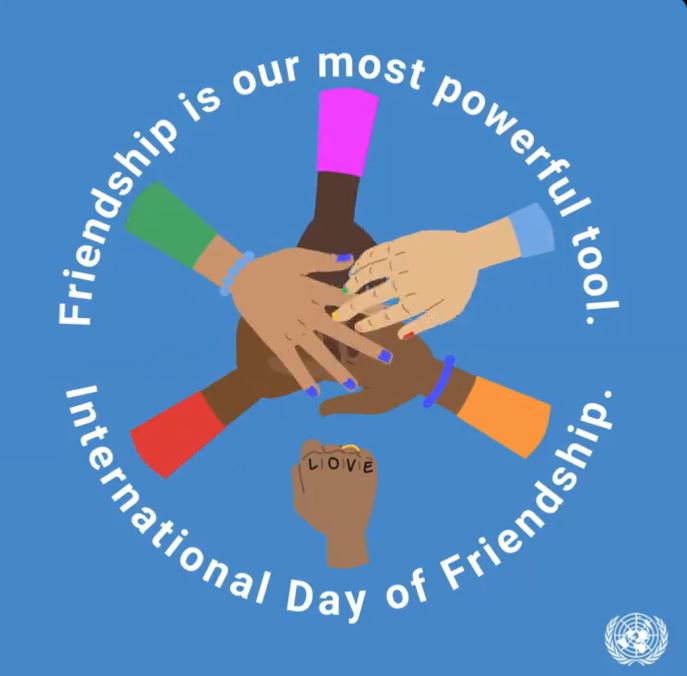
FORUM: “Sharing the human spirit through friendship.” International Day of Friendship 2024. In a world full of challenges, friendship is often our most powerful tool. The International Day highlights the importance of friendship in promoting peace and unity across cultures and continents. Through friendship — by accumulating bonds of camaraderie and developing strong ties of trust— we can contribute to the fundamental shifts that are urgently needed to achieve lasting stability, weave a safety net that will protect us all, and generate passion for a better world where all are united for the greater good. Follow the conversation with the hashtags: #FriendshipDay, #30july, #Friendship, #Diplomaticrelationship .

Sharing the human spirit through friendship.


EVENTS: On July 30th, to mark the International Day of Friendship 2024, the United Nations encourages governments, international organizations and civil society groups to hold events, activities and initiatives that contribute to the efforts of the international community towards promoting a dialogue among civilizations, solidarity, mutual understanding and reconciliation.

Friendship is our most powerful tool.

Friendship is our most Powerful Tool.


Thursday, 6 June 2024

Russian Language Day 2024; June 6th.


Russian Language Day 2024


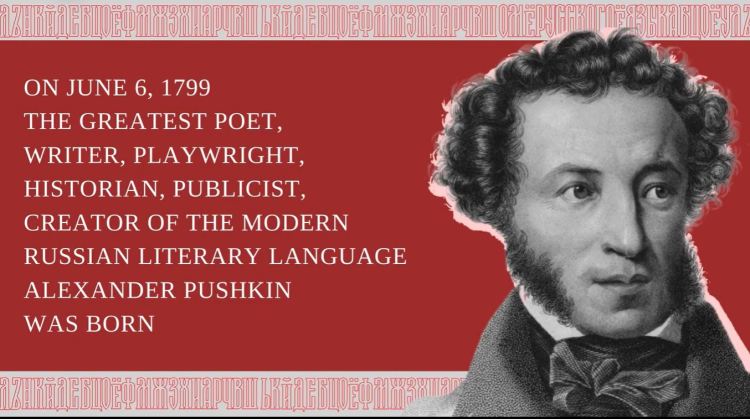
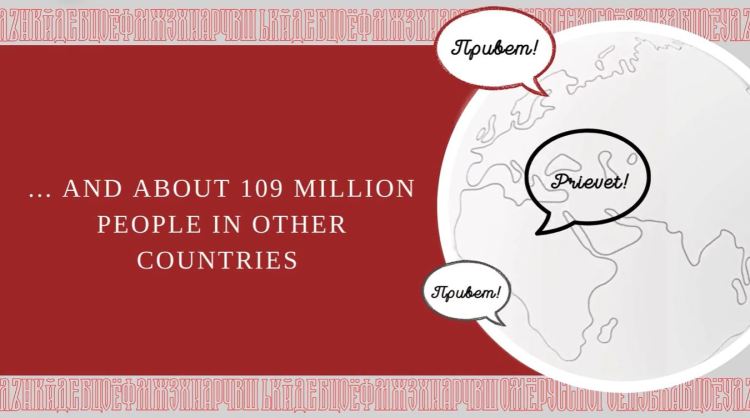
On this day in 1799; The greatest poet, writer, playwright, historian, publicist, creator of the modern Russian literary language Alexander Pushkin was born. On June 6, 2011, the President of the Russian Federation signed a decree on the annual celebration of Russian Language Day in order to “preserve, support and develop the Russian language as a national treasure of the peoples of the Russian Federation, a tool of international communication and an integral part of the cultural and spiritual heritage of world civilization”. Russian is one of the most popular languages in the world. It is spoken by about 146 million citizens of the Russian Federation and 109 million abroad. Do you like languages, are you interested to include Russian langye in your linguistic skills. Follow the conversation with the hastags: #RussianlanguageDay, #RussianLanguage, #6june, #interpretation, #Деньрусскогоязыка, #Русскийязык, #6июня, #Многоязычие.


Statement of the Russian Foreign Minister, Mr Sergey Lavrov on Russian Language Day 2024; June 6th.

This June 6, we celebrate the 225th birthday of Alexander Pushkin, the great Russian poet. The UN Russian Language Day is observed on the same day.

Russian culture and science created their universally acclaimed masterpieces in the language which served as the mother tongue for Alexander Pushkin and Leo Tolstoy, Fyodor Dostoevsky and Ivan Turgenev. The role the Russian language plays in terms of enabling people of various ethnic backgrounds to communicate internationally can hardly be underestimated. Today, over 250 million people speak this language around the world.


The fact that various multilateral structures have designated Russian as their official or working language demonstrates just how relevant it is in today’s world. Russian Language Day has been listed in the UN’s International Days and Weeks calendar as part of the programme to promote multilingualism and cultural diversity.

The Russian language’s broad dissemination around the world, as well as our common past and far-reaching economic and people-to-people ties have come together to create a solid foundation for reinforcing integration processes across the Eurasian space. <…>

I am convinced that marking Russian Language Day, which is timed to coincide with the jubilee of our great poet, helps promote international cultural and educational cooperation and maintain an atmosphere of friendship and trust among nations.


Sergey Lavrov, Russian Foreign Affairs Minister.


COMMUNICATION MATERIALS


I love Russian Language


Wednesday, 3 January 2024

World Braille Day 2024; January 4th.

FORUM: "Honoring the Louis Braille Legacy." World Braille Day 2024. Braille is a tactile representation of alphabetic and numerical symbols using six dots to represent each letter and number, and even musical, mathematical and scientific symbols. Braille (named after its inventor in 19th century France, Louis Braille) is used by blind and partially sighted people to read the same books and periodicals as those printed in a visual font. Follow the conversations with the hashtags: #Worldbrailleday, #LouisBraille, #braille, #4January, #Braillecode.

Brailla alphabet


EVENTS: On Thrusday, January 4th, for World Braille Day 2024; The United Nations Department of Global Communications, the UNESCO, the DGACM and United Nations Regional Information Centres will host a webinar to mark the birth anniversary of Louis Braille.


Celebrate world braille day


PUBLICATION: World Braille usage: a survey of efforts towards uniformity of Braille notation.

CAMPAIGN: Everyone deserves, and is legally entitled to, information in a format they can understand and this day raises awareness of braille as an additional accessible format.

Tuesday, 25 December 2012

Learn how the United Nations makes a difference with the UN Calendar of Observances.


This free iOS app features official United Nations observances and links to related videos and further information. It also illustrates how the UN makes a difference in tackling global challenges.


Connect with us ! - United Nations Social Media

Tuesday, 23 October 2012

United Nations Day, October 24

United Nations Secretary-General Ban Ki-moon's message on United Nations Day (24th October)


Secretary-General's Message for 2012 -

We are living through a period of profound turmoil, transition and transformation. Insecurity, inequality and intolerance are spreading. Global and national institutions are being put to the test. With so much at stake, the United Nations must keep pace across the spectrum of its activities — peace, development, human rights, the rule of law, the empowerment of the world's women and youth.

There has been important progress on many fronts. Extreme poverty has been cut in half since the year 2000. Democratic transitions are under way in many countries. There are encouraging signs of economic growth across the developing world.

 Now is the time to raise our collective ambitions. With the 2015 deadline for the Millennium Development Goals fast approaching, we must intensify our efforts to reach all of these lifesaving targets. We must prepare a bold and practical post-2015 development agenda. And we must continue to combat intolerance, save people caught in conflicts and establish lasting peace.

The United Nations is not just a meeting place for diplomats. The United Nations is a peacekeeper disarming fighters, a health worker distributing medicine, a relief team aiding refugees, a human rights expert helping deliver justice.

 In carrying out this global mission we rely on countless friends and supporters. Non-governmental organizations, scientists, scholars, philanthropists, religious leaders, business executives and concerned citizens are critical to our success. No single leader, country or institution can do everything. But each of us, in our own way, can do something.

 On this UN Day, let us reaffirm our individual commitment and our collective resolve to live up to the ideals of the United Nations Charter and build a better world for all. Ban Ki-moon

 JOIN THE DEBATE ON FACEBOOK - United Nations Day 2012