FORUM: ''Ensuring a healthy psychosocial working environment.'' World Safety and Health at Work 2026. More than 840,000 people die each year from health conditions linked to psychosocial risks. These work-related psychosocial risks are mainly associated with cardiovascular diseases & mental disorders, including suicide. The psychosocial working environment is defined by how work is designed, organized and managed, and the organizational practices that shape everyday working conditions. Psychosocial factors – such as workload and working time, role clarity, autonomy, support, and fair and transparent processes – strongly influence how work is experienced and affect workers’ safety, health and performance. When psychosocial factors harm workers, they become hazards which, alongside physical, chemical and biological types, must be addressed and managed to ensure safe and healthy working environments. How's work? For many workers, the answer lies not only in what they do, but in how their work is designed, organized and managed, and in the broader policies, practices and procedures that govern work. Work can offer meaning, support and a sense of purpose. But when demands are excessive, roles are unclear, support is lacking, or systems fail to protect people, psychosocial risks can harm workers' safety and health, affect organizational performance and carry wider social and economic costs. As work continues to evolve, the challenge is not only to respond to harm, but to foster healthier psychosocial working environments through preventive action.
Let's ensure a healthy psychosocial working environment. Follow the conversation with the hashtags: #safeday26, #WorldDayofSafetyandHealthatwork, #28April, #SafeWorkingEnvironment, #automation, #HealthyWorkingEnvironment, #Rightatwork, #Safeday, #psychosocialrisks, #PsychosocialHazards.
28 de Abril; Jornada Técnica: DÍA MUNDIAL SEGURIDAD Y SALUD EN EL TRABAJO 2026 DÍA MUNDIAL SEGURIDAD Y SALUD EN EL TRABAJO 2026. El trabajo que cambia. Nuevos desafíos psicosociales El Instituto Nacional de Seguridad y Salud en el Trabajo (INSST), O.A., M.P. y la Oficina de la Organización Internacional del Trabajo (OIT) para España organizan conjuntamente la jornada técnica de conmemoración del Día Mundial de la Seguridad y Salud en el Trabajo. Este año el día mundial se centra en los riesgos psicosociales que afectan a las personas trabajadoras bajo el lema “Garanticemos un entorno psicosocial saludable en el trabajo”. La jornada pretende abordar desde un enfoque técnico, jurídico y social la situación actual de los riesgos psicosociales en el ámbito laboral y los nuevos desafíos que se plantean. El evento se presenta como un foro de información y debate sobre la incidencia de las condiciones laborales en la salud mental y el bienestar de las personas trabajadoras, proponiendo espacios de reflexión sobre temas como el trabajo en plataformas, la desconexión digital o la precariedad laboral. Durante la jornada se presentarán las conclusiones del informe que realiza la OIT con motivo de la celebración del Día Mundial de la Seguridad y Salud en el Trabajo y se celebrará una mesa redonda en la que participarán los agentes sociales, quienes debatirán sobre las necesidades y respuestas que plantea hoy la prevención de los riesgos psicosociales en el mundo del trabajo.
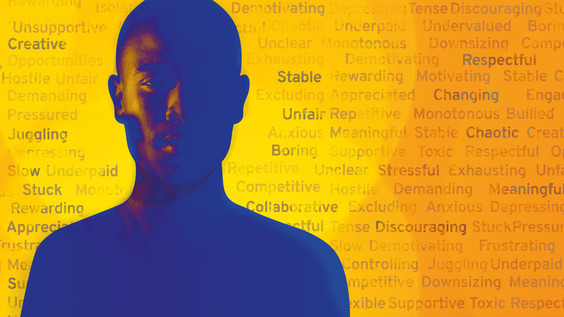
Statement from the ILO Director-General World Safety and Health at Work 2026; April 28th.
As the world of work evolves, factors like job design, management practices, and workplace culture have a direct impact on workers’ health, dignity, and well-being. With over 840,000 deaths linked annually to psychosocial risks, the call is clear: governments, employers, and workers must act together to create safer, healthier, and more just workplaces for all.
Across the world, work shapes people’s lives in profound ways.
It can provide purpose, security and opportunity.
But the way work is designed, organized and managed also affects something fundamental: workers’ safety, health and dignity.
Today, the world of work is changing rapidly. Digital technologies, new forms of employment, demographic change and climate pressures are transforming the way we work.
In this context, the psychosocial working environment has never been more important.
For workers in every sector, psychosocial factors at work can make the difference between a job that supports well-being and one that undermines it.
The consequences are significant.
Psychosocial risk factors at work are linked to more than 840,000 deaths each year worldwide, associated with cardiovascular diseases and mental disorders.
They place heavy costs on societies and economies.
Safe and healthy working environments are a fundamental principle and right at work.
But they do not happen by chance.
When work is designed with reasonable demands, adequate support, opportunities for participation and respect for dignity, it benefits everyone.
Workers are healthier and more motivated.
Enterprises become stronger and more sustainable.
Preventing psychosocial risks requires commitment and cooperation.
Governments must put in place effective policies, legal frameworks and occupational safety and health systems that support prevention.
Employers shape the daily reality of work through leadership and responsible management practices.
And workers and their representatives bring essential knowledge about how work is experienced.
On this World Day for Safety and Health at Work, the ILO calls on governments, employers and workers everywhere to strengthen their efforts to prevent psychosocial risks through social dialogue, to ensure that the design, organization and management of work creates the conditions for healthier workers, successful enterprises and societies that are closer to social justice.
This is at the heart of the ILO’s vision of decent work.

The report also finds that these risks account for nearly 45 million disability-adjusted life years (DALYs) lost annually, reflecting years of healthy life lost due to illness, disability, or premature death, and are estimated to result in economic losses equivalent to 1.37 per cent of global GDP each year. The report, The psychosocial working environment: Global developments and pathways for action, highlights the growing impact of how work is designed, organized, and managed on workers’ safety and health. It warns that psychosocial risk factors—including long working hours, job insecurity, high demands with low control, and workplace bullying and harassment—can create harmful working environments if not properly addressed.
What is the psychosocial working environment?
The report introduces the psychosocial working environment as the elements of work and workplace interactions related to how jobs are designed, how work is organized and managed, and the broader policies, practices and procedures that govern work. These elements, both individually and in combination, affect workers’ health and well-being, as well as organizational performance.
To better understand psychosocial risks, the report proposes three interrelated levels of the working environment:
First, the nature of the job itself, including demands, responsibilities, alignment with workers’ skills, access to resources, and the design of tasks in terms of meaning, variety, and skill use. Second, how work is organized and managed, covering role clarity, expectations, autonomy, workload, work pace, and supervision and support. Third, the broader workplace policies, practices and procedures that govern work. These include employment and working time arrangements, the management of organizational change, digital monitoring, performance and reward processes, OSH policy and management systems, procedures to prevent violence and harassment at work, and mechanisms for worker consultation and participation.
The report emphasizes that psychosocial risks arise from these elements and can be prevented through organizational approaches that address their root causes. It also highlights the importance of integrating psychosocial risk management into occupational safety and health systems, supported by social dialogue between governments, employers, and workers.
How the ILO estimated 840,000 deaths
The figure of over 840,000 deaths per year was estimated using two key sources of evidence. The first is data on the global prevalence of five major psychosocial risk factors at work: job strain (high demands combined with low control), effort–reward imbalance, job insecurity, long working hours, and workplace bullying and harassment. The second is scientific research showing how these risks increase the likelihood of serious health conditions such as heart disease, stroke, and mental disorders, including suicide. These risk levels were then applied to the latest global mortality and health data from the World Health Organization (WHO) and the Global Burden of Disease (GBD) study to estimate the number of deaths and DALYs attributable to these risks each year. This approach allowed the ILO to quantify both the human and economic burden, including estimating productivity losses reflected in GDP costs associated with healthy life years lost. In addition, the report synthesizes a broad body of evidence showing that psychosocial risks are linked to a wide range of mental and physical health conditions among workers, including depression and anxiety, as well as metabolic diseases, musculoskeletal disorders, and sleep disturbances.
Widespread exposure
While many psychosocial risks are not new, major transformations in the world of work, including digitalization, artificial intelligence, remote work, and new employment arrangements, are reshaping the psychosocial working environment. These changes may intensify existing risks or create new ones if not properly addressed. At the same time, they can offer opportunities for improved work organization and greater flexibility, highlighting the need for proactive action. “Psychosocial risks are becoming one of the most significant challenges for occupational safety and health in the modern world of work,” said Manal Azzi, Team Lead on OSH Policy and Systems at the ILO. “Improving the psychosocial working environment is essential not only for protecting workers’ mental and physical health, but also for strengthening productivity, organizational performance and sustainable economic development.” By addressing these risks proactively, the report concludes, countries and enterprises can create healthier workplaces that benefit both workers and organizations while strengthening productivity and economic resilience.


The analysis are available in :العربية, in español, en français, in italiano, in日本語, in Português in русский in tiếng Việt in 中文 and in Nederlands.
EVENTS:
At UN GENEVA; On 27 April 27th, 2026, from 11:00-13:00 GMT / 13:00-15:00 Geneva, a panel discussion entitled ''Ensuring a healthy psychosocial working environment.'' will be held. This event brings together ILO constituents, ministers and international experts to discuss global developments and practical pathways for ensuring a healthy psychosocial working environment. Watch the event live from Geneva!
AT UN Headquarters; On Tuesday; April 28th; the global event to mark the World Safety and Health at Work 2026 will be held. Register to participate!
Statement from the ILO Director-General World Safety and Health at Work 2026; April 28th.
As the world of work evolves, factors like job design, management practices, and workplace culture have a direct impact on workers’ health, dignity, and well-being. With over 840,000 deaths linked annually to psychosocial risks, the call is clear: governments, employers, and workers must act together to create safer, healthier, and more just workplaces for all.
Across the world, work shapes people’s lives in profound ways.
It can provide purpose, security and opportunity.
But the way work is designed, organized and managed also affects something fundamental: workers’ safety, health and dignity.
Today, the world of work is changing rapidly. Digital technologies, new forms of employment, demographic change and climate pressures are transforming the way we work.
In this context, the psychosocial working environment has never been more important.
For workers in every sector, psychosocial factors at work can make the difference between a job that supports well-being and one that undermines it.
The consequences are significant.
Psychosocial risk factors at work are linked to more than 840,000 deaths each year worldwide, associated with cardiovascular diseases and mental disorders.
They place heavy costs on societies and economies.
Safe and healthy working environments are a fundamental principle and right at work.
But they do not happen by chance.
When work is designed with reasonable demands, adequate support, opportunities for participation and respect for dignity, it benefits everyone.
Workers are healthier and more motivated.
Enterprises become stronger and more sustainable.
Preventing psychosocial risks requires commitment and cooperation.
Governments must put in place effective policies, legal frameworks and occupational safety and health systems that support prevention.
Employers shape the daily reality of work through leadership and responsible management practices.
And workers and their representatives bring essential knowledge about how work is experienced.
On this World Day for Safety and Health at Work, the ILO calls on governments, employers and workers everywhere to strengthen their efforts to prevent psychosocial risks through social dialogue, to ensure that the design, organization and management of work creates the conditions for healthier workers, successful enterprises and societies that are closer to social justice.
This is at the heart of the ILO’s vision of decent work.
ILO Director-General Gilbert F. Houngbo.
PUBLICATIONS: As part of the World Day for Safety and Health at Work 2026, the ILO has developed campaign materials, including a global report and a PowerPoint presentation. The report adopts an organizational, prevention-focused approach and examines psychosocial factors across three levels: the job; how the work is managed and organized; and the broader policies, practices and procedures that govern work.
The report also finds that these risks account for nearly 45 million disability-adjusted life years (DALYs) lost annually, reflecting years of healthy life lost due to illness, disability, or premature death, and are estimated to result in economic losses equivalent to 1.37 per cent of global GDP each year. The report, The psychosocial working environment: Global developments and pathways for action, highlights the growing impact of how work is designed, organized, and managed on workers’ safety and health. It warns that psychosocial risk factors—including long working hours, job insecurity, high demands with low control, and workplace bullying and harassment—can create harmful working environments if not properly addressed.
What is the psychosocial working environment?
The report introduces the psychosocial working environment as the elements of work and workplace interactions related to how jobs are designed, how work is organized and managed, and the broader policies, practices and procedures that govern work. These elements, both individually and in combination, affect workers’ health and well-being, as well as organizational performance.
To better understand psychosocial risks, the report proposes three interrelated levels of the working environment:
First, the nature of the job itself, including demands, responsibilities, alignment with workers’ skills, access to resources, and the design of tasks in terms of meaning, variety, and skill use. Second, how work is organized and managed, covering role clarity, expectations, autonomy, workload, work pace, and supervision and support. Third, the broader workplace policies, practices and procedures that govern work. These include employment and working time arrangements, the management of organizational change, digital monitoring, performance and reward processes, OSH policy and management systems, procedures to prevent violence and harassment at work, and mechanisms for worker consultation and participation.
The report emphasizes that psychosocial risks arise from these elements and can be prevented through organizational approaches that address their root causes. It also highlights the importance of integrating psychosocial risk management into occupational safety and health systems, supported by social dialogue between governments, employers, and workers.
How the ILO estimated 840,000 deaths
The figure of over 840,000 deaths per year was estimated using two key sources of evidence. The first is data on the global prevalence of five major psychosocial risk factors at work: job strain (high demands combined with low control), effort–reward imbalance, job insecurity, long working hours, and workplace bullying and harassment. The second is scientific research showing how these risks increase the likelihood of serious health conditions such as heart disease, stroke, and mental disorders, including suicide. These risk levels were then applied to the latest global mortality and health data from the World Health Organization (WHO) and the Global Burden of Disease (GBD) study to estimate the number of deaths and DALYs attributable to these risks each year. This approach allowed the ILO to quantify both the human and economic burden, including estimating productivity losses reflected in GDP costs associated with healthy life years lost. In addition, the report synthesizes a broad body of evidence showing that psychosocial risks are linked to a wide range of mental and physical health conditions among workers, including depression and anxiety, as well as metabolic diseases, musculoskeletal disorders, and sleep disturbances.
Widespread exposure
While many psychosocial risks are not new, major transformations in the world of work, including digitalization, artificial intelligence, remote work, and new employment arrangements, are reshaping the psychosocial working environment. These changes may intensify existing risks or create new ones if not properly addressed. At the same time, they can offer opportunities for improved work organization and greater flexibility, highlighting the need for proactive action. “Psychosocial risks are becoming one of the most significant challenges for occupational safety and health in the modern world of work,” said Manal Azzi, Team Lead on OSH Policy and Systems at the ILO. “Improving the psychosocial working environment is essential not only for protecting workers’ mental and physical health, but also for strengthening productivity, organizational performance and sustainable economic development.” By addressing these risks proactively, the report concludes, countries and enterprises can create healthier workplaces that benefit both workers and organizations while strengthening productivity and economic resilience.
ADVOCACY MATERIALS: Get the promotional materials!


