Monday, 26 December 2022

International Day of Epidemic Preparedness 2022; December 27th.


FORUM: 
Stand with our efforts to ensure the world is equipped and ready to take on the health challenges to come. International Day of Epidemic Preparedness 2022.

It is important to strengthen epidemic prevention by applying lessons learned on epidemic management and how to prevent the stoppage of basic services, and to raise the level of preparedness in order to have the earliest and most adequate response to any epidemic that may arise, and recognizing also the value of an integrated One Health approach that fosters integration of human health, animal health and plant health, as well as environmental and other relevant sectors. Follow the conversation with the hashtags: 
#EpidemicPreparedness, #27December, #InternationalDayofEpidemicPreparedness.


Statement by the United Nations Secretary General on the International Day of Epidemic Preparedness 2022.

Three years ago this month, the virus that causes COVID-19 was first detected.

The costs have been catastrophic. Millions of lives have been lost, and hundreds of millions of people have fallen ill. Economies were shattered, health systems were stretched, and trillions of dollars were lost. Progress towards the Sustainable Development Goals has been thrown off track. And developing countries were often left to fend for themselves, shamefully denied the vaccines, tests or treatments they needed to protect their people.

COVID-19 will not be the last epidemic or pandemic humanity faces. As a global community, we must heed the harsh lessons of COVID-19 and make bold investments in pandemic preparedness, prevention and response.

We need better surveillance to detect and monitor viruses with epidemic potential. We need more resilient health systems supported by universal health coverage. And we need a health workforce that is well-trained, well-equipped and well-paid.

We also need equitable access to vaccines, treatments, diagnostics and life-saving technology for all countries.

And we must fight the scourge of misinformation and pseudoscience with science and fact-based information.

A pandemic cannot be fought country by country. The world must come together. COVID-19 was a wake-up call.

On this International Day of Epidemic Preparedness, I urge all countries to stand with our efforts to ensure the world is equipped and ready to take on the health challenges to come.

António Guterres.

HOW TO GET INVOLVED!

International cooperation and multilateralism
play an important role in the response to epidemics. We need to stress the significance of partnership and solidarity among every individual, community and State, and regional and international organizations, in all stages of epidemic management, as well as the importance of considering a gender perspective in this regard.


EVENTS: Join the Webinar to mark the International Day of Epidemic Preparedness 2022 on December 27th

Tuesday, 20 December 2022

International Human Solidarity Day 2022; December 20th.


FORUM: Pursue efforts to build solidarity within the international community.’’ International Human Solidarity Day 2022. Human solidarity on a global scale would be needed to combat poverty and starvation, conflict, and environmental degradation causing climate change, as these ills have consequences for the entire world. Disease and epidemics were destroying the most productive groups in society. Follow the conversations with the hashtags: #SolidarityDay, #20December, #HumanSolidarityDay, #TheWorldWeWant, #PromotingSolidarity , #LeaveNoOneBehind.


EVENTS: On December 20th, the United Nations system organizations will hold an event and workhops to celebrate unity, kindness, and diversity during the International Human Solidarity Day 2022 at the UNHQ.


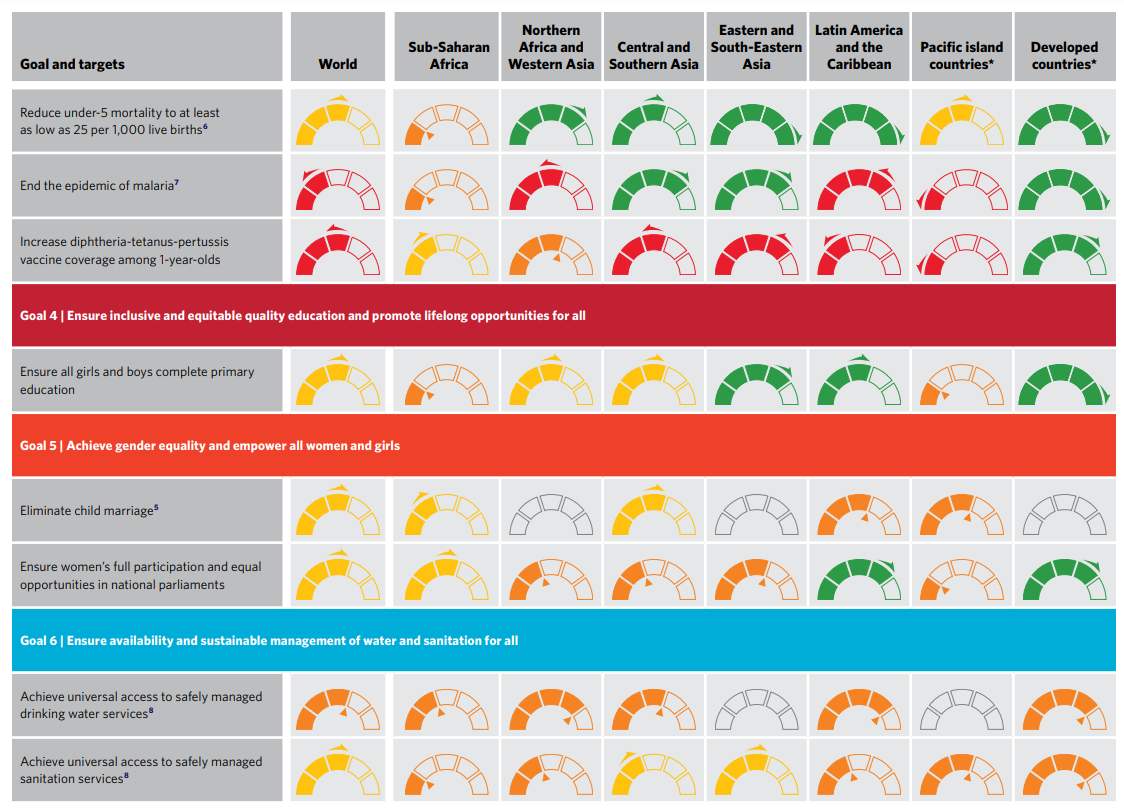
PUBLICATION: The Sustainable Development Goals Progress Chart 2022 presents a snapshot of global and regional progress of selected targets under the 17 Goals of the 2030 Agenda for Sustainable Development. The progress assessment is based on the most up-to-date data and for some of the Sustainable Development Goals (SDGs) also reflect the impacts of the COVID-19 pandemic. Due to data collection challenges related to pandemic-related measures, measuring the full impact of COVID-19 is limited for the other Goals. The Progress Chart 2022 clearly demonstrates the deterioration of progress towards many targets, such as poverty, food security, ending the epidemic of malaria, immunization coverage, and employment, caused by the impacts of the COVID-19 pandemic, climate change and conflict. Recent cascading crises have magnified the challenges of achieving the SDGs. Urgent, scaled-up and coordinated actions by all countries are needed to accelerate SDG implementation and avert the devastating impacts in order to get on track and chart a course for better recovery. The progress chart presents two types of information: 
1) a trend assessment using stoplight colours to measure progress towards the target (from a baseline year to the most recent data point), and
2) a level assessment using a gauge meter to measure the current level of development with respect to the distance from a target, using the latest data. The chart is based on a limited number of indicators and information available as of June 2022. For most of the indicators, the latest available data are from 2019 to 2021. A baseline year of around 2015 or 2010 is used for the trend assessment.


2022 Progress towards SDG1, SDG2, SDG3.
2022 Progress towards SDG4, SDG5, SDG6.

2022 Progress towards SDG7 SDG8, SDG9, SDG10.

2022 Progress towards SDG11 SDG12, SDG13, SDG14 and SDG15.

2022 Progress towards SDG16 and SDG17.


Notes * The category “Pacific island countries” refers to Oceania excluding Australia and New Zealand. The category “developed countries” includes Europe, Northern America, Australia and New Zealand.
 1 The latest data used for both trend and level assessments are 2021 nowcasts with high uncertainty. 
2 Due to improvement in data quality and availability, 2020 estimates for Northern Africa and Western Asia, Latin America and the Caribbean, and Pacific Island Countries are not comparable with baseline values. Only level assessments are available for these regions. 
3 Trend assessment uses a baseline year of 2012. 
4 Level assessment is based on 2020 data, with five levels of stunting prevalence: very high (1 bar), high (2 bars), moderate (3 bars), low (4 bars), and very low (5 bars). 
5 Trend assessment uses a baseline year of 2011. 
6 Trend assessment uses a baseline year of 2010. 
7 Trend assessment is based on the WHO Global Technical Strategy for Malaria 2016–2030, which is reducing malaria case incidence by at least 90 per cent by 2030. Level assessment is classified into five levels of malaria case incidence: very high (1 bar), high (2 bars), moderate (3 bars), low (4 bars), and target achieved (5 bars). 
8 Assessment for “developed countries” refers to Europe and Northern America only. 
9 Level assessment is based on the level of energy intensity, with five levels: high (1 bar), medium-high (2 bars), medium (3 bars), medium-low (4 bars), and low (5 bars). 
10 Baseline value is the average annual growth rate of real GDP per capita from 2000 to 2015. The level assessment is based on the average annual real GDP per capita growth from 2015 to 2020. The trend assessment is the comparison of the expected average annual growth rate of real GDP per capita from 2015 to 2030 with the baseline value or target value of 2 per cent. 
11 Assessment is based on the Gini Index. The latest data is from 2019. Level assessment is classified into five levels of inequality: very high (1 bar), high (2 bars), moderately high (3 bars), moderately low (4 bars), and low (5 bars). 
12 Assessment is only at the global level. 
13 Assessment for “developed countries” refers to Europe only. 
14 Level and trend assessment are based on the Red List Index and regional disaggregations of the index. 
15 Level assessment is classified into five levels of unsentenced detainees rate: very high (1 bar), high (2 bars), moderate (3 bars), low (4 bars), and very low (5 bars).. 
16 Trend assessment is based on progress from 2017 to 2020. 

For regional groupings, country data and technical note for the progress chart, please refer to: https://unstats.un.org/sdgs. Country experiences in each region may differ significantly from the regional average. Due to updated data and revised methodologies, this Progress Chart is not comparable with previous versions.

Sources. United Nations, based on the latest available data and estimates as of June 2022: provided by: Department of Economic and Social Affairs (DESA), Food and Agriculture Organization (FAO), International Energy Agency (IEA), International Labour Organization (ILO), Inter-Parliamentary Union (IPU), International Renewable Energy Agency (IRENA), International Telecommunication Union (ITU), International Union for Conservation of Nature (IUCN), Office of the United Nations High Commissioner for Human Rights (OHCHR), Organization for Economic and Cooperation and Development (OECD), Partnership in Statistics for Development in the 21st Century (PARIS21), Secretariat of the United Nations Framework Convention on Climate Change (UNFCCC), United Nations Children’s Fund (UNICEF), United Nations Educational, Scientific and Cultural Organization (UNESCO), United Nations Entity for Gender Equality and the Empowerment of Women (UN-Women), United Nations Environment Programme (UNEP), United Nations Human Settlements Programme( UN-Habitat), United Nations Industrial Development Organization (UNIDO), United Nations Office on Drugs and Crime (UNODC), World Bank Group, World Health Organization (WHO).

Sunday, 18 December 2022

International Migrants Day 2022; December 12th.


FORUM:Migration and inclusive societies.International Migrants Day 2022. Understanding changes in scale, emerging trends and shifting demographics related to global social and economic transformations, such as migration, help us make sense of the changing world we live in and plan for the future. The World Migration Report 2022, the eleventh in the world migration report series, has been produced to contribute to an increased understanding of migration throughout the world. Follow the conversation with the hashtags: #InternationalMigrantsDay, #18December, #MigrantsDay, #safeMigration, #RegularMigration, #OrderlyMigration.


On this International Migrants Day, we reflect on the lives of the over 280 million people who left their country in the universal pursuit of opportunity, dignity, freedom, and a better life.

Today, over 80 per cent of the world’s migrants cross borders in a safe and orderly fashion.

This migration is a powerful driver of economic growth, dynamism, and understanding.

But unregulated migration along increasingly perilous routes – the cruel realm of traffickers – continues to extract a terrible cost.

Over the past eight years, at least 51,000 migrants have died – and thousands more have disappeared.

Behind each number is a human being – a sister, brother, daughter, son, mother, or father.

Migrant rights are human rights. They must be respected without discrimination – and irrespective of whether their movement is forced, voluntary, or formally authorized.

We must do everything possible to prevent the loss of life – as a humanitarian imperative and a moral and legal obligation.

We must provide for search and rescue efforts and medical care.

We must expand and diversify rights-based pathways for migration – to advance the Sustainable Development Goals and address labour market shortages.

And we need greater international support for investments in countries of origin to ensure migration is a choice, not a necessity.

There is no migration crisis; there is a crisis of solidarity.

Today and every day, let us safeguard our common humanity and secure the rights and dignity of all.

United Nations Secretary-General.


CAMPAIGN:
Reflect on the lives of the over 280 million people who left their country in the universal pursuit of opportunity, dignity, freedom, and a better life. 


EVENTS: On December 18th, the UN Migration, the UN Special Rapporteur on the Human Rights of Migrants will host a webinar to mark the International Migrants Day 2022 from the IOM Headquater in Switzerland.


PUBLICATION: The World Migration Report 2022 presents data, statistics and research on migration, global economic and social shifts and policy about human mobility. Interactive World Migration Report 2022.


Let us mark the International Migrants Day on December 18th by acknowledging the contributions of migrant workers and committing to provide a remedy for all those who faced abuses and fell through the cracks.

Saturday, 17 December 2022

Arabic Language Day 2022; December 18th.


FORUM: The Contribution of the Arabic Language to Human Civilization and Culture. “ Arabic Language Day 2022. Through this year’s theme UNESCO will shed a light on the numerous contributions of Arabic to humanity’s cultural and linguistic diversity, as well as to knowledge production. Follow the conversations with the hashtags: #ArabicLanguageDay, #18December, #Arabiclanguage, #Multilingualism.


EVENTS: To celebrate World Arabic Language Day 2022, UNESCO organizes round table discussions and cultural performances at UNESCO Headquarters in Paris on 16 December 2022. Applicants to the Prize for Arab culture must have contributed significantly towards the development, dissemination and the promotion of Arab culture in the world.The winners of the UNESCO-Sharjah Prize for Arab Culture will be announced.

WEBINARS:

GEOTSIRAR: Towards Strong Alliances in the Arab and African Countries on 17 November 2022 - 3:45 pm - 4:45 pm.


Knowledge for Youth-Led Climate Action in the Arab Region and youth-driven policy recommendations for Community-led Action on 17 November 2022 from 2:30 pm - 3:30 pm in Egypt.


Dialogue for Conservation Finance - A new paradigm to landscape restoration in the Arab Region on 16 November 2022 from 11:45 am - 1:15 pm. in Egypt.


Launch of CRIDA in French and Arabic; 14 November 2022 - 3:45 pm - 14 November 2022 - 4:45 pm in Egypt.


Monday, 12 December 2022

International Day of Neutrality 2022; December 12th.

FORUM:Encouraging respect for neutrality as an instrument of preventive diplomacy.International Day of Neutrality 2022. Neutralism or a "neutralist policy" is a foreign policy position wherein a state intends to remain neutral in future wars. A sovereign state that reserves the right to become a belligerent if attacked by a party to the war is in a condition of armed neutrality. Neutrality has for decades dovetailed with “international activism” and the articulation of international law and collective action. The policy of neutrality contributes to strengthening global peace and security and plays an important role in forging peaceful, friendly and mutually beneficial relations between the countries of the world. Follow the conversation with the hashtags: #PreventiveDiplomacy, #NeutralityDay, #12December, #NeutralistPolicy, #Neutralism.


EVENTS: On December 12th, the United Nations General Assembly, the United Nations Security Council, and the United Nations Department of Political and Peacebuilding Affairs will observe the International Day of Neutrality 2022 at UNHQ.


International Universal Health Coverage Day 2022; December 12th.

FORUM:Build the world we want: A healthy future for all.International Universal Health Coverage Day 2022. To build a safer and healthier future for all, we must strengthen our health systems to ensure they are equitable, resilient, and capable of meeting everyone’s needs. Governments, international organisations, civil society organisations, the private sector, academia, and media are encouraged to use this year’s theme to keep holding leaders, our health systems and ourselves accountable to the promise of health for all. Everyone, everywhere deserves access to quality health services, in times of crisis and calm. Follow the conversations with the hashtags: #Healthexpenditure, #InvestinHealth, #healthForAll, #UHC, #12December, #UHCday, #UniversalHealthCoverage.


EVENTS:
The 3rd Annual Ministerial Meeting of the Group of Friends of Universal Health Coverage and Global Health. was held in September 2022 under the theme “Investing in Health Systems Strengthening for Universal Health Coverage through a Primary Health Care-Oriented Approach.” 


Saturday, 10 December 2022

International Mountains Day 2022; December 11th.


FORUM: "Women move mountains" International Mountain Day 2022. Women play a key role in environmental protection and social and economic development in mountain areas. They are often the primary managers of mountain resources, guardians of biodiversity, keepers of traditional knowledge, custodians of local culture and experts in traditional medicine. The observance of the Day will give us the opportunity raise awareness about the need to empower mountain women so they can participate more effectively in decision-making processes and have more control over productive resources. By sharing excellence, opportunities and capacity development in mountains, the Day can promote gender equality and therefore contribute to improve social justice, livelihoods and resilience. Follow the conversations with the hashtags: #MountainMatter, #InternationalMountainDay, #11December, #IYM2022.


EVENTS: Every year, a large number of events – from group hikes and outdoor activities, to exhibitions, cultural performances, contests and concerts – are organized across the world to celebrate Mountains. While “Women move mountains” is the suggested theme for IMD 2022, countries, communities and organizations are welcome to celebrate International Mountain Day through a theme that is more relevant to them. The Roadmap to observe 2025 as International year of Glaciers Will approved by UNGA soon.


STATEMENTS: United Nations Secretary-General's message on the Launch of the International Year of Sustainable Mountain Development 2022.