Showing posts with label Minute of silence. Show all posts

Thursday, 9 July 2026

2026 International Day of Reflection and Commemoration of the 1995 Genocide in Srebrenica.

Commemorative event


EVENT: On Thursday, 9 July 2026 starting at 17:00 pm. EST at the United Nations Headquarters, the observance of the International Day of Reflection and Commemoration of the 1995 Genocide in Srebrenica  will take place. Mr. Chaloka Beyani, United Nations Under-Secretary-General and Special Advisor on the Prevention of Genocide will host the proceedings. The observance includes survivor testimony, remarks delivered by the Chef de Cabinet on behalf of the Secretary-General, remarks delivered by the President of the 80th session of the United Nations General Assembly (via video) and the Chairman of the Presidency of Bosnia and Herzegovina.


Sunday, 26 April 2026

International Chernobyl Disaster Remembrance Day 2026; April 26th.

FORUM: "Reflecting on the tragedy'' International Chernobyl Disaster Remembrance Day 2026. Today mark the 40 years since the tragedy occurredThe chernobyl-disaster nuclear power incident remains a key to secure our clean energy future; There is still a great deal of work that needs to be done in the affected region. Follow the conservations with the hashtags:#Chernobyl, #minuteofsilence, #chernobyldisasterday, #26April.

April 26th

EVENTS:  40 years since the tragedy occurred.

At UNHQ; On Sunday April 26th; 2026; The General Assembly invites all Member States, relevant agencies of the United Nations system and other international organizations, as well as civil society, to pay a minute of silence. A Candle lighting ceremony will be held to mark the International Chernobyl Disaster Remembrance Day 2026. The Chernobyl disaster tragedy is not only a painful memory, but also an important lesson for future generations.


At UN Geneva, an commemorative event will mark the 40th anniversary of the Chornobyl disaster,which remains one of the most severe nuclear accidents in history. The explosion at the Chоrnobyl Nuclear Power Plant resulted in the release of significant amounts of radioactive material across large parts of Europe, resulting in profound human, environmental and socio-economic consequences. It caused immediate casualties and long-term health effects, including increased incidence of thyroid cancer. Large populations were displaced, and extensive areas were contaminated, with lasting impacts on ecosystems and livelihoods. Four decades after the disaster, there remains persistent serious long-term consequences and that the affected communities and territories are experiencing continuing related needs.

Statements and reactions from stakeholders from International Geneva include:
Statement by Special Rapporteurs on the 40th anniversary of the Chornobyl disaster in Ukraine | UN Special Rapporteur on toxics and human rights & UN Special Rapporteur on the right to a clean, healthy and sustainable environment | 23 April 2026
Chernobyl: 40 Years On | Green Cross Switzerland


40 years on, today reminds us of the lasting human and environmental impacts of nuclear disasters and our shared responsibility to protect people and the planet. Learn how to addresses nuclear risks & impacts.
 
On 26 April 2026 | starting at18:00 CEST, Join the commemorative event entitled Tchernobyl an 40 - Rassemlement Nucléaire? Non merci, Sortir du nucléaire Suisse Romande in Monument National, Promenade du Lac 2,


40 Years since the Chernobyl Accident


The Radioactive Decay of the Iron Curtain: Re-Examination of the Chernobyl Catastrophe in Comparative Perspective

CONFERENCE


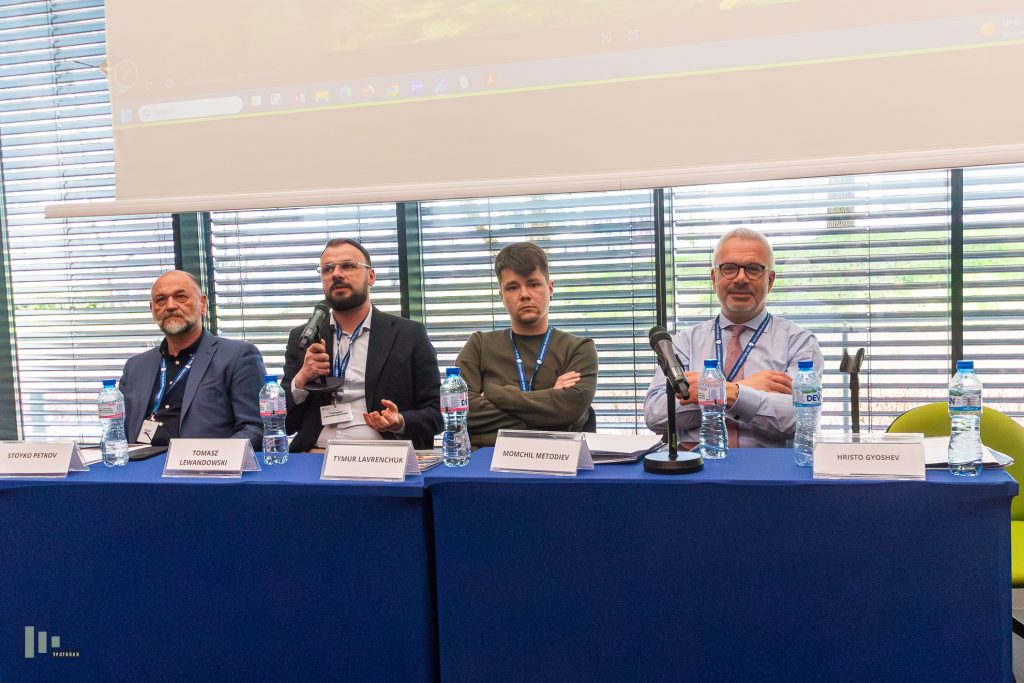
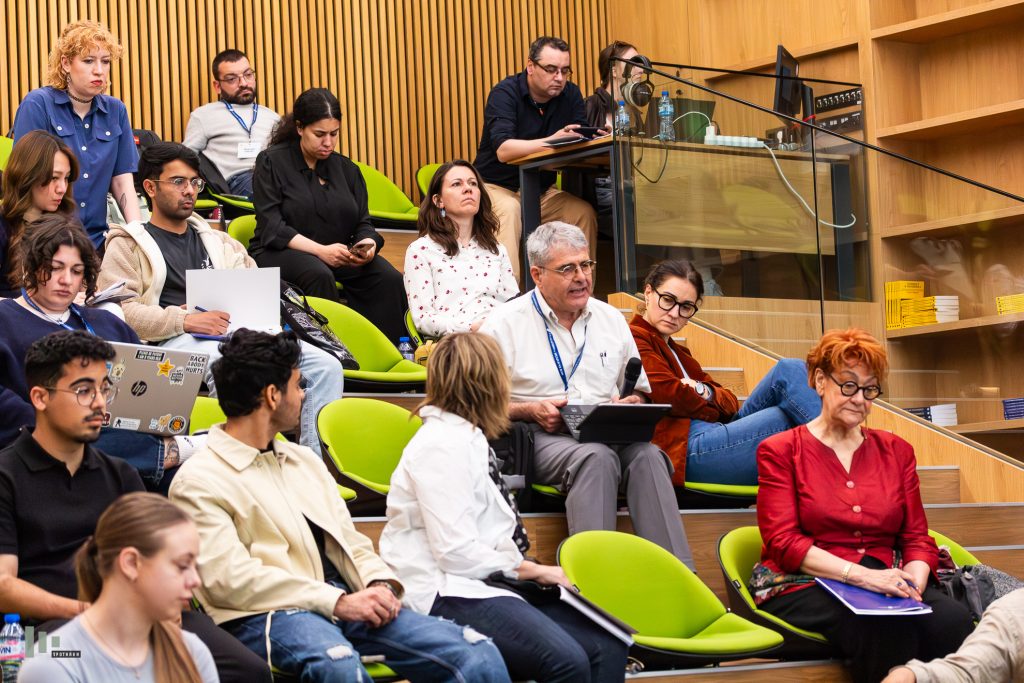
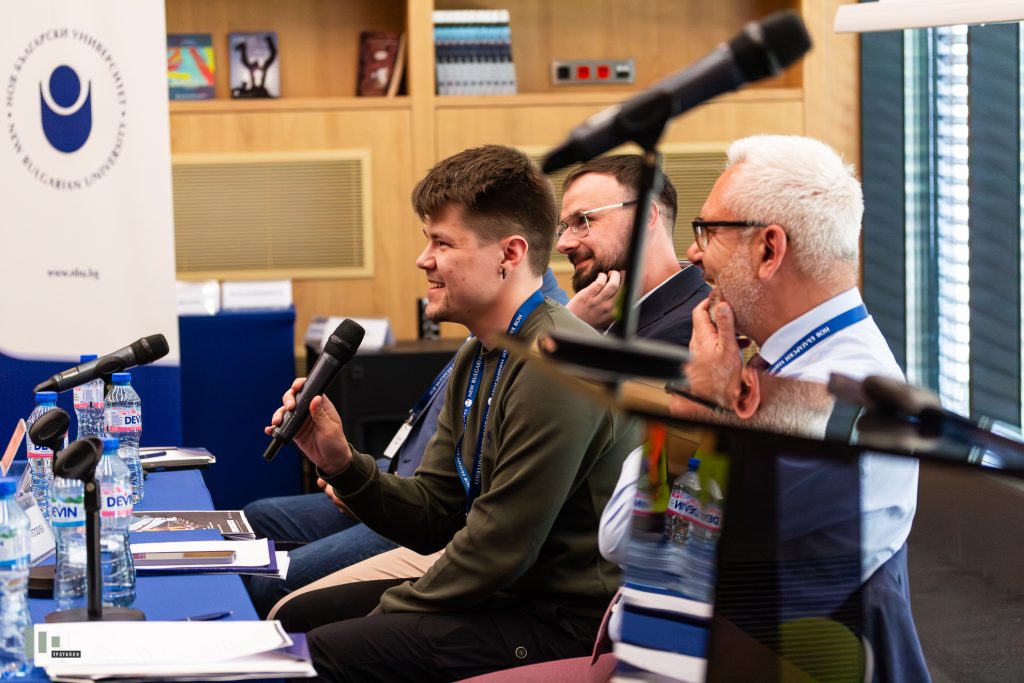
An international conference took place on April 17–18, 2026, at New Bulgarian University, dedicated to examining the long-term consequences of the Chernobyl disaster. Researchers from Bulgaria, the United States, Ukraine, Poland, Italy, Ireland, Scotland, Hungary, and Switzerland attended the event.


The first day of the conference focused on the political, social, and health consequences of the Chernobyl disaster, as well as on the role of communist regimes and institutional responses. Particular attention was given to the demographic effects across Eastern Europe, disinformation and media coverage, and comparative analyses of state security services. Special emphasis was also placed on the Ukrainian perspective through historical and contemporary parallels (1986–2022), personal testimonies, and the theme of cultural memory, including books and documentary film.


The second day highlighted the environmental consequences of the disaster and the growing public sensitivity to these issues. Discussions addressed nuclear safety in times of peace and war, as well as the role of international regulation in managing nuclear risks. Additional themes included media responses in Central and Eastern Europe, youth perceptions and educational approaches, and the representation of Chernobyl in cinema and literature.


The conference reports are to be published in the new academic publication of NBU Acta Nova Humanistica by the end of 2026. You can check the participants and their topics here.


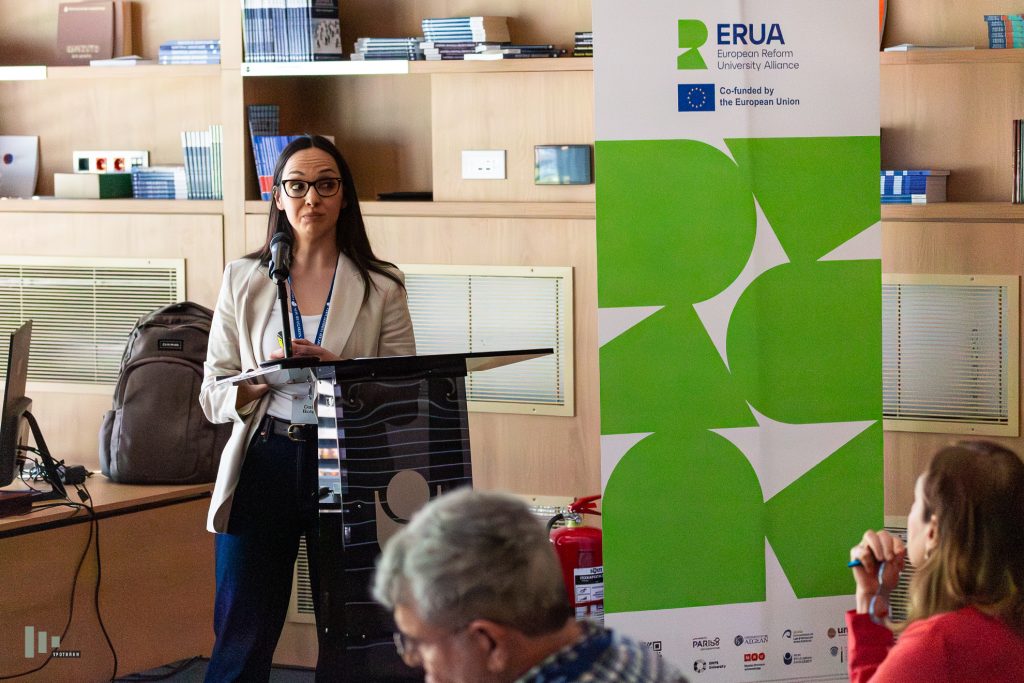
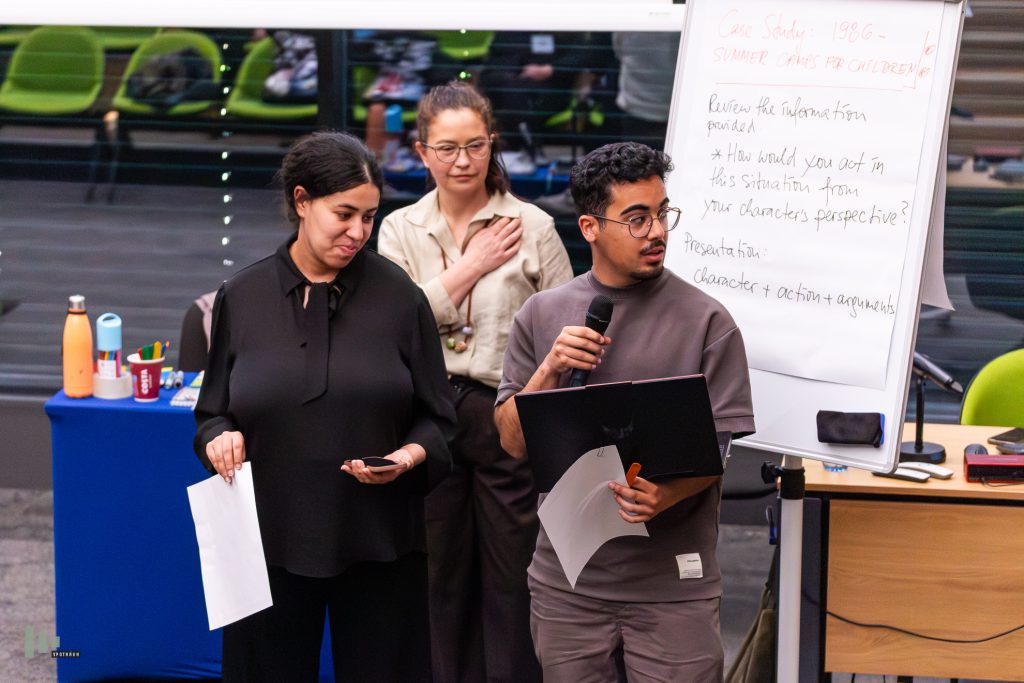
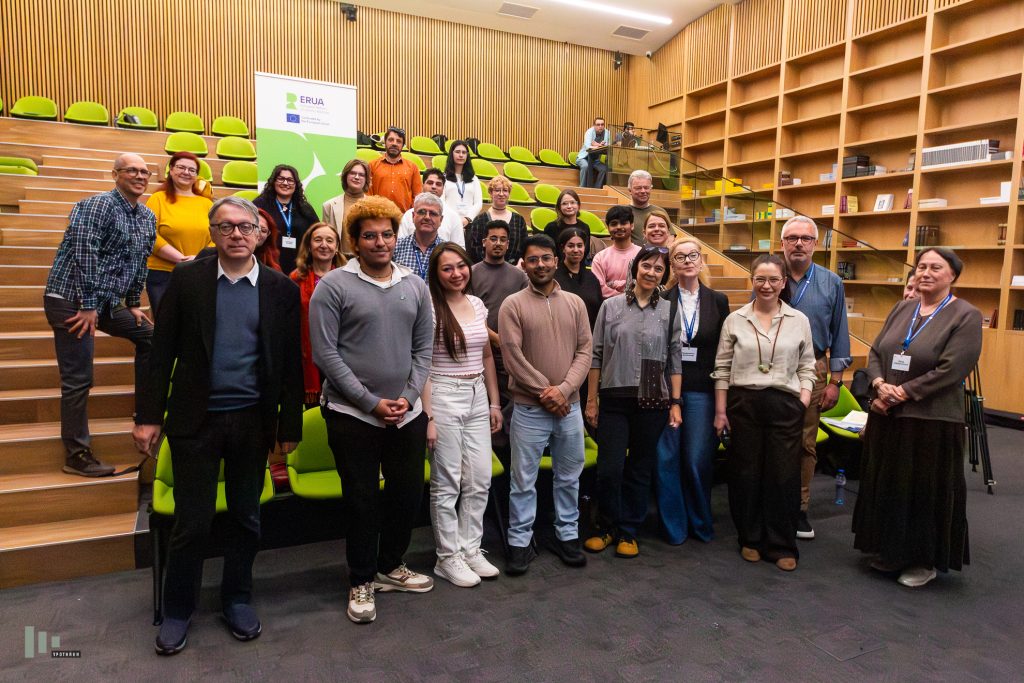
The conference concluded with a discussion and workshop featuring students from the ERUA university alliance. Participants explored various approaches to communicating the Chernobyl story to younger audiences, drawing on insights gained throughout the conference.


The workshop began with role-playing exercises, where students enacted crisis response scenarios based on assigned roles – including a parent, school principal, military officer, and education minister. This was followed by a discussion on the potential of documentary filmmaking to convey the tragedy and aftermath of the Chernobyl disaster.


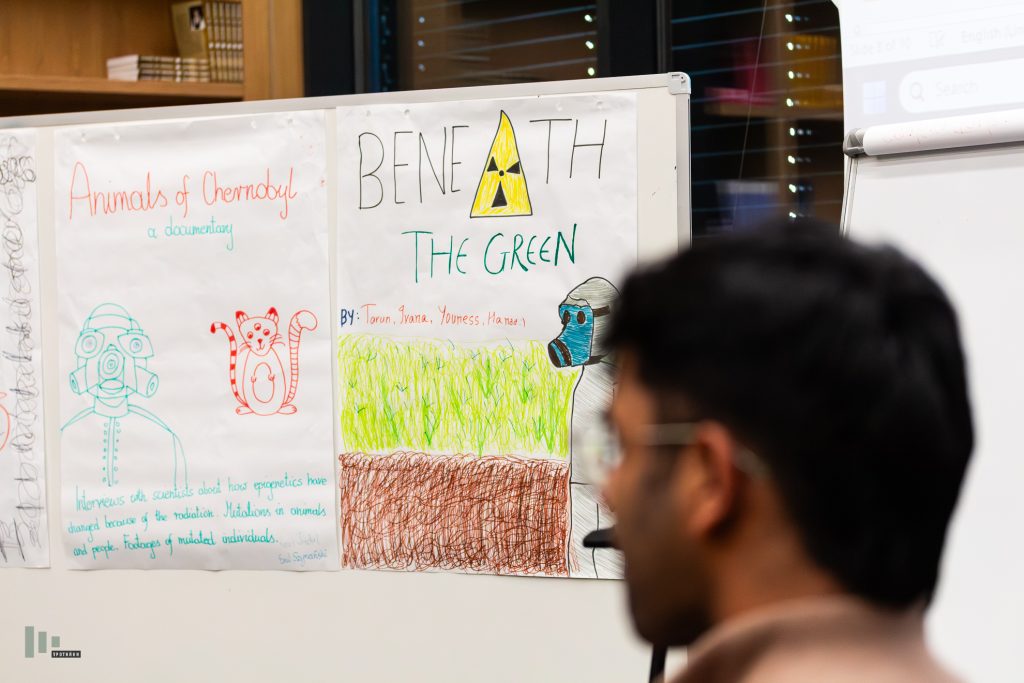
In the final segment, students were divided into three groups and tasked with developing concepts for a documentary film, including designing promotional posters. Each group determined their own thematic emphasis for the film concept and sketched out their ideas for film posters.


Here is what one of the participants wrote after the conference: I would like to express my sincere gratitude for the opportunity to participate in the conference at NBU. It was an exceptionally enriching experience. I was particularly impressed by the interdisciplinary nature of the discussions and the openness of all participants. The exchange of perspectives across different fields created a truly stimulating intellectual environment. I must admit that I had not expected an event so distant in time for some to still evoke such strong emotions and remain the subject of such extensive research – especially beyond Ukraine. This made the conference even more thought provoking and impactful.


Tuesday, 27 January 2026

International Day of Commemoration in memory of the victims of the Holocaust 2026; January 27th.


FORUM: “Holocaust Remembrance for Dignity and Human Rights.” International Day of Commemoration in memory of the victims of the Holocaust 2026. Eighty one years ago, in response to the atrocities of the war and the Holocaust, governments of the world established the United Nations, pledging to work together to build a just world where human rights were enshrined, and all could live with dignity, in peace. Acknowledging the milestone year, the Holocaust and the United Nations Outreach Programme has chosen as its guiding theme for 2026, “Holocaust remembrance and education for dignity and human rights”. The theme will reflect on the critical relevance of Holocaust remembrance for the present, where the dignity and human rights of our fellow global citizens are under daily attack. The Holocaust shows what happens when hatred, dehumanization and apathy win. Its remembrance is a bulwark against the denigration of humanity, and a clarion call for collective action to ensure respect for dignity and human rights, and the international law that protects both. Holocaust remembrance safeguards the memories of survivors and their testament of life before the Holocaust – of vibrant communities, of traditions, of hopes and dreams, of loved ones who did not survive. Safeguarding the history brings dignity to those the Nazis and their collaborators sought to destroy. Remembrance of the Holocaust is a victory against the Nazis and their collaborators, and against all who would try to continue their legacy through spreading hatred, Holocaust distortion and denial into the 21st century. Share your reflections with the hashtags: #27January, #HolocaustRemembranceDay, #austwitz, #WeRemember, #HolocaustRemembrance.


COMMEMORATIONS: Join the observance of the International Day of Commemoration in memory of the victims of the Holocaust 2026 on January 27th. Register to participate!

On Thursday, January 29th 2026, starting at 6:00 p.m. the Reception, and 7:00 p.m. the exhibit entitled “Between Life and Death” followed by the Panel discussion entitled “Stories of Rescue During the Holocaust” will be held at the YIVO Institute for Jewish Research. The Holocaust survivor Elżbieta Ficowska and historians Jay Winter, Daniel Blatman and Mordecai Paldiel will explore how Holocaust remembrance has evolved, how stories of rescuers and survivors can be shared with younger generations, and how challenges such as disinformation, artificial intelligence, and fading living memory can be addressed. Jayashri Wyatt, Chief, Education Outreach Section at United Nations Department of Global Communications, moderates the discussion. The discussion is jointly organized by the European Network Remembrance and Solidarity (ENRS), YIVO Institute for Jewish Research, the Center for Jewish History, together with the Holocaust and the United Nations Outreach Programme. It is supported by the Sousa Mendes Foundation. Read more and register!

On Tuesday, January 27th, 2026, from 11:00 a.m. 12:30 EST will be held the annual Holocaust Memorial Ceremony, an commemorative event organized in observance of the International Day of Commemoration in memory of the victims of the Holocaust 2026 at the United Nations General Assembly Hall. Four Holocaust survivors will share their experiences of the Holocaust. Guided by the theme, “Holocaust Remembrance for Dignity and Human Rights”, the United Nations Secretary-General, the President of the 80th session of the United Nations General Assembly and the Permanent Representatives of Israel and the United States to the United Nations, will deliver remarks. Ms. Melissa Fleming, United Nations Under-Secretary-General for Global Communications, will host the proceedings. Watch the livestream!

On Monday, January 26th 2026; from 3:00-4:30 p.m. A high-level panel will explore how emerging technologies, including AI, gaming, and VR, can preserve Holocaust memory, counter denial and distortion, and combat the spread of hate.The panel discussion is organized by the Holocaust and the United Nations together with the World Jewish Congress as part of the programme of activities connected to the 27 January International Day of Commemoration in memory of the victims of the Holocaust under the theme "Holocaust Remembrance for Dignity and Human Rights". Invited speakers include Professor Victoria Grace Richardson-Walden, Director, The Landecker Digital Memory Lab, University of Sussex and Mr. Luc Bernard, Game designer, The Light in the Darkness. Ms. Yfat Barak-Cheney, Executive Director, Institute for Technology and Human Rights, World Jewish Congress will moderate the discussion. Watch online


STATEMENTS: Statement of the United Nations Secretary-General on the International Holocaust Remembrance Service 2026; January 27th.

Excellencies, dear friends,

I am deeply honoured to join you and humbled by the presence of Holocaust survivors and their families.

We gather in solemn remembrance of the victims of the Holocaust.

They were mothers and fathers.

Sons and daughters.

Grandparents and grandchildren.

Six million Jews murdered just because they were Jewish.

We also grieve the Roma and Sinti, the people with disabilities, LGBTQI+ people, and so many more who were enslaved, persecuted, tortured, and killed.

And we also remember the stories and struggles of those who confronted the worst of humanity to show us the best.

Diplomats who defied orders and issued life saving visas.

Journalists who fought to expose the truth.

And farmers and villagers who hid families at great peril.

Remembrance is more than honouring the past.
It is a duty and a promise: to defend dignity, to protect the vulnerable, and to keep faith with those whose names and stories we refuse to forget.

The Holocaust, after all, is not only history.

It is a warning.

A warning that hatred, once unleashed, can consume everything.

Excellencies, dear friends,

Today that warning feels more urgent than ever.

Antisemitism around the world is raging.

Jewish communities live in fear.

Synagogues attacked.

Families shattered.

Vile antisemitic hatred racing across cyberspace.

We are haunted by the horrific terror attack of October 7 — which I once again categorically condemn — along with the taking of hostages, and the acts of hatred targeting Jews around the world in recent years, and, indeed, in recent weeks.

But coming together as we have come today, to commemorate the victims of the Holocaust fills me with hope.

I see the power of humanity in all of you.

I see the courage of survivors who turned pain into purpose.

I see the commitment of young people — of every faith and nation — standing together against hate.

I see the strength of solidarity when communities unite.

You are here because you choose hope over hate.

You choose remembrance as a living force — a shield against prejudice, a spark for justice, a pledge to protect every human being.

Excellencies, dear friends,

This show of unity is more important than ever.

Because we know the Holocaust is a stark demonstration of the dangers of unchecked hatred.

The Holocaust did not begin with killing.

It began with words.

Its architects telegraphed their evil intentions.

They deliberately spread a hateful, supremacist ideology that preyed on fear and economic despair.

This powerful engine of hate was given fuel through the systematic dismantling of democratic institutions, the stifling of the press, the persecution of civil society, the corruption of courts, and the erosion of the rule of law.

It included a mastery of the technology of the time.

Controlling information.

Deploying propaganda and manipulating public discourse.

Spreading antisemitic and racist hatred with devastating efficiency.

And we must never forget the painful truth that Jewish families who sought refuge were met with the cold shoulder of indifference, closed borders and bureaucratic barriers.

This dark chapter of our common history reveals sobering truths.

When those with power fail to act, evil goes unpunished.

When the past is distorted, denied and weaponized, hatred and prejudice fester.

When words become weapons, lies, conspiracies, the casual joke and the coded slur can grow until the unthinkable becomes policy and violence.

So let us together pledge to stand against antisemitism and all forms of hatred — and against bigotry, racism and discrimination anywhere and everywhere.

Excellencies, dear friends,

This is the tenth time I have had the privilege as Secretary-General to address you on this day of remembrance.

For me, Holocaust remembrance — and the fight against the ancient poison of antisemitism — is not abstract.

It is personal.

One of my personal achievements as Prime Minister of Portugal was working with Parliament to adopt a decree that revoked the 16th century expulsion of Jews from my country.

I am happy to see tens of thousands of descendants of those expelled families regaining Portuguese nationality.

This was a symbolic step — but one that demonstrated the importance of acknowledging the depth of our remorse, even the remorse for the crimes of our country, remorse for the past, and our commitment to build a better, more inclusive future.

A commitment that goes to the core of what brings us here today in memory of the victims of the Holocaust.

As Secretary-General, I remember standing in Yad Vashem, confronted by the immense weight of memory and the countless lives extinguished in the darkness of hatred.

I have prayed together with the Jewish community in the aftermath of atrocious acts of violence and antisemitism.

I have heard testimonies from Holocaust survivors about their experiences that began with a knock on the door — and ended with lives erased.

And I have always understood the clear link between the horrors of the Holocaust and the spirit of multilateralism, justice and rights that founded our organization.

Excellencies, dear friends,

Just over 80 years ago, the Nuremberg trials began.

These trials represented the beginning of a new era in international criminal law.

An era in which individuals, including the most powerful, are held accountable.

Today, more than ever, we need to reclaim that spirit.

At the opening of Nuremberg, Justice Robert H. Jackson warned us:

“These prisoners represent sinister influences that will lurk in the world long after their bodies have returned to dust.”

These influences — antisemitism, racism, hatred — are very much still with us.

Our duty is clear:

To speak the truth.

To educate new generations.

To confront antisemitism and all forms of hatred and discrimination.

And to defend the dignity of every human being.

But it is also our duty to keep alive the spirit of acting in common purpose, through multilateralism, to ensure that the forces of humanity always triumph over the forces of inhumanity.

Let us honour the memory of the victims of the Holocaust by recommitting to justice, dignity, compassion and vigilance.

To a world where humanity stands united against oppression.

And where the terrible legacy of the past strengthens our resolve to protect human rights today and in the future.

Let us forever carry in our hearts the Holocaust’s victims, whose calls for justice and peace can never be extinguished.

May their memory be a blessing.

Thank you.


LIVESTREAM:


The United Nations Headquarters observance on the International Day of Commemoration in memory of the victims of the Holocaust 2026 will take place on Tuesday, January 27th. Ms. Melissa Fleming, United Nations Under-Secretary-General for Global Communications will host the proceedings. The observance will feature Holocaust survivors sharing their testimonies, and official remarks by the Secretary-General, the President of the 80th session of the United Nations General Assembly and Representatives of the Permanent Missions of Israel and the United States to the United Nations.


GALLERY PHOTOS:  

UNHQ, New York.
General Assembly on the Observance of the International Day of Commemoration in Memory of the Victims of the Holocaust.


UN GENEVA


AT UNOV Vienna


PERMANENT MISSION OF RUSSIA TO THE U.N.

On January 27, 1944, Leningrad was completely liberated from the Nazi blockade.


January 27th, 1944.


Tuesday, 9 December 2025

International Day of Commemoration and Dignity of the Victims of the Crime of Genocide and of the Prevention of This Crime 2025; December 9th.

International Day of Commemoration and Dignity of the Victims of the Crime of Genocide and of the Prevention of this Crime

FORUM:"Minute of Silence.International Day of Commemoration and Dignity of the Victims of the Crime of Genocide and of the Prevention of This Crime 2025. Commemoration and memorialization initiatives are inextricably linked to the two obligations set forth by the Genocide Convention, namely, the prevention and punishment of the crime of genocide. By promoting truth-telling and healing, fostering a culture of peace education, social cohesion and respect for diversity, keeping a record of the past and collecting testimonies of victims and survivors, establishing and maintaining archives, and contributing to reducing instances of genocide denial and glorification of war criminals, such efforts significantly contribute to the implementation of these two key obligations. The need to invest in genocide prevention, as envisaged by the Genocide Convention drafters 77 years ago remains as relevant as ever. This year's mark the 77th anniversary of the Genocide Convention, the day seeks to highlight achievements that emanate from the Convention, to showcase its legacy, and also reflect on the challenges that remain for its effective implementation. Around the world, populations remain at risk of this crime. The need to invest in prevention as envisaged by the Convention drafters 77 years ago remains as relevant as ever. Follow the conversation with the hashtags: #GenocidePreventionDay, #9december, #genocide, #VictimsofGenocide, #PreventGenocide.

High-level meeting

EVENT: On December 9th starting at 16:00, a High-Meeting to mark the International Day of Commemoration and Dignity of the Victims of the Crime of Genocide and of the Prevention of This Crime will be held by the United Nations General Assembly at UNHQ. Register to participate and watch the event PART I and PART II !


High-level of the 77th International Day of Commemoration and Genocide Convention on the occasion of the tenth anniversary of the International Day of Commemoration and Dignity of the Victims of the Crime of Genocide and of the Prevention of This Crime.


Prevention of This Crime


High-level of the 77th International Day of Commemoration and Genocide Convention on the occasion of the tenth anniversary of the International Day of Commemoration and Dignity of the Victims of the Crime of Genocide and of the Prevention of This Crime. Statement of the UN Secretary-General on behalf the International Day of Commemoration and Dignity of the Victims of the Crime of Genocide and of the Prevention of This Crime 2025; December 9th.


Genocide is an abomination. It is a horrendous crime. And it is the solemn duty of all States to prevent and punish it.

This is the pledge the world made with the adoption of the 1948 Convention on the Prevention and Punishment of the Crime of Genocide – a pledge to ensure that no group risks eradication due to their nationality, ethnicity, race or religion.

We promised ‘never again’. Yet that vow is perilously close to being broken in too many places. Violent conflicts, lack of accountability, and digital technologies that amplify hate and misinformation all make it easier for the spectre of genocide to rear its head.

States bear the primary obligation for preventing and punishing genocide, and I call on governments that have not yet done so to accede to the Convention. I also urge all governments to fully implement the Convention and hold perpetrators to account.

But prevention is a shared responsibility. It requires educating new generations about the factors that lead to genocide, including hate speech, inequality and mis- and disinformation. It also means doing everything possible to identify early warning signs and sound the alarm. Community leaders, civil society, and the media – including social media platforms – all have a moral duty to act.

By standing united against this heinous crime, we honour its victims and survivors, and uphold the most fundamental promise of our international community: the right of all people to live in safety, dignity, and peace.

States bear the primary obligation for preventing and punishing genocide[...] I also urge all governments to fully implement the Convention and hold perpetrators to account."

António Guterres.


Letter from the President of the General Assembly on Invitation International Day of Commemoration and Dignity of the Victims of the Crime of Genocide and of the Prevention of This Crime 2025.

Excellency, Pursuant to General Assembly resolution 79/328, I have the honour to inform you that I will convene a high-level meeting of the General Assembly to mark the Tenth anniversary of the International Day of Commemoration and Dignity of the Victims of the Crime of Genocide and of the Prevention of This Crime on Tuesday, 9 December 2025, at 10 a.m. in the General Assembly Hall. The high-level meeting will provide an opportunity to galvanize accelerated efforts on the prevention and punishment of the crime of genocide and will consist of an opening segment, which will feature an address by the Special Adviser to the Secretary-General on the Prevention of Genocide, and a plenary segment. The programme of the meeting will be circulated in due course. Delegations wishing to deliver statements at the plenary segment are invited to inscribe in the list of speakers through e-deleGATE portal, which will open on Thursday, 13 November 2025 at 10 a.m. The time limits for statements will be five minutes for individual delegations and seven minutes for statements made on behalf of a group of states. The time limit will be strictly enforced by means of automatic microphone cut-off. For any additional information, your Office may contact Ms. Anne Havn, Senior Advisor in my Office by email at anne.havn@un.org. Please accept, Excellency, the assurances of my highest consideration. 

Annalena Baerbock.

All Permanent Representatives and Permanent Observers to the United Nations New York

Friday, 28 November 2025

International Day of Solidarity with the Palestinian People 2025; November 29th.


International Day of Solidarity with the Palestinian People 2025


FORUM: "48 years of recognition".  International Day of Solidarity with the Palestinian People 2025.The General Assembly called for the annual observance of November 29th as International Day of Solidarity with the Palestinian People in 1977 with the resolution 32/40 B. On that day, in 1947, the Assembly adopted the resolution on the partition of Palestine (resolution 181 (II)). In resolution 60/37 of 1 December 2005, the Assembly requested the Committee on the Exercise of the Inalienable Rights of the Palestinian People and the Division for Palestinian Rights, as part of the observance, to continue to organize an annual exhibit on Palestinian rights or a cultural event in cooperation with the Permanent Observer Mission of Palestine to the UN. The resolution also encourages Member States to continue to give the widest support to the observance of the Day of Solidarity. 

Follow the conversations with the hashtags: #29november#DayOfSolidarity#Questionofpalestine#palestiniansolidarityday#PalestinianDay.


Commemoration of the International Day of Solidarity with the Palestinian People,


On Friday, November 28th at the Palais des Nations, a Special Meeting will be held at the United Nations Office at Geneva. The UN Geneva will host the commemoration of the International Day of Solidarity with the Palestinian People 2025, in accordance with General Assembly resolution 32/40B of 2 December 1977.

PROVISIONAL PROGRAMME

Opening: Friday, 28 November 2025, 15:00 p.m - 16:30 p.m.
Type: special meeting.
Location: Palais des Nations, Room XII.

Order of Speakers:

1. Introduction by Ms. Tatiana Valovaya, Director-General of the United Nations Office at Geneva
2. Statement for the Day by Mr. António Guterres, Secretary-General of the United Nations, read out by the Secretary-General's representative, Ms. Tatiana Valovaya
3. Representative of the Committee on the Exercise of the Inalienable Rights of the Palestinian People
4. Representative of the Special Committee to Investigate Israeli Practices Affecting the Human Rights of the Palestinian People and Other Arabs of the Occupied Territories
5. Representative of the League of Arab States
6. Representative of the Organization of Islamic Cooperation
7. Representative of the Non-Aligned Movement
8. Representative of the African Union
9. Representative of the Non-Governmental Organizations accredited to the Committee on the Exercise of the Inalienable Rights of the Palestinian People
10. Representative of the State of Palestine

Messages: Announcement of messages or statements received for the Day from Heads of State or Government

Closure of the meeting: 4.30 p.m.

Registration for the commemoration is open on Indico, where statements of the speakers will be made available after the event. The commemoration will also be webcast live to allow interested participants to follow the event virtually. Related Documents: Learn More.


This year’s International Day of Solidarity with the Palestinian People comes after two years of horrific suffering in Gaza – and the start of a much-needed ceasefire.

Survivors are mourning the deaths of tens of thousands of friends and family – nearly a third of them children – and thousands more have been injured. Hunger, disease and trauma run rampant, while schools, homes and hospitals lie in ruins.

Injustice also continues in the occupied West Bank, including East Jerusalem, with Israeli military operations, settler violence, settlement expansion, evictions, demolitions and threats of annexation.

At the same time, hundreds of humanitarians have been killed. The majority were Palestinian UN staff, marking the largest loss of personnel in the Organization’s history. More journalists have perished than in any conflict since the Second World War.

In so many ways, this tragedy has tested the norms and laws that have guided the international community for generations. The killing of so many civilians, the repeated displacement of an entire population and the obstruction of humanitarian aid should never be acceptable under any circumstances.

The recent ceasefire offers a glimmer of hope. It is now vital that all parties respect it fully and work in good faith towards solutions that restore and uphold international law. This includes returning the remains of the hostages from the 7 October attacks, promptly and in a dignified manner, to grieving families in Israel.

Lifesaving humanitarian aid must be allowed to enter Gaza at scale, and the international community must continue to stand firmly with UNRWA — an irreplaceable lifeline for millions of Palestinians, including Palestine refugees.

I repeat my call for an end to the unlawful occupation of the Palestinian Territory — as affirmed by the International Court of Justice and the General Assembly — and for irreversible progress towards a two-State solution, in line with international law and relevant UN resolutions, with Israel and Palestine living side by side in peace and security within their secure and recognized borders, on the basis of pre-1967 lines, with Jerusalem as the capital of both States.

On this International Day of Solidarity, let us draw inspiration from the Palestinian people themselves, whose resilience and hope are a testament to the human spirit. Let us stand in solidarity with their rights to dignity, justice and self-determination — and work together to build a peaceful future for all.


António Guterres, Secretary-General.

Watch the commemorative event to mark the nternational Day of Solidarity with the Palestinian People 2025!


At UNHQ in New York

Every year on the International Day of Solidarity with the Palestinian People, UN Member States stand together in a moment of reflection and renewed commitment to peace. This year's commemoration will take place amid a fragile ceasefire in Gaza following unimaginable violence and a humanitarian catastrophe that has claimed the lives of tens of thousands and forcibly displaced hundreds of thousands more.

  • Secretary-General's remarks, to be delivered by Mr. Courtenay Rattray, Chef de Cabinet

Solidarity Day commemorates the adoption on 29 November 1947 of General Assembly Resolution 181, which envisaged the partition of Mandate Palestine into two states - one Arab and one Jewish - with Jerusalem under United Nations administration. Over seven decades later, after numerous wars and ongoing conflict, the hope for lasting peace in the Middle East remains unfulfilled. Today, the need for a durable solution is more urgent than ever.

On this solemn day, the international community, led by the UN Committee on the Exercise of the Inalienable Rights of the Palestinian People, gathers for an expression of profound solidarity. The Committee special meeting, to be held at the UN headquarters in New York, ECOSOC Chamber on 25 November (10 a.m. to 1 p.m.), will offer an opportunity for Member States, regional organizations and civil society to share messages of solidarity with the Palestinian people.


On 25 November 2025, the international community, led by the UN Committee on the Exercise of the Inalienable Rights of the Palestinian People, gathered for an expression of profound solidarity. The Committee special meeting was held at the UN headquarters in New York, ECOSOC Chamber offering an opportunity for Member States, regional organizations and civil society to share messages of solidarity with the Palestinian people. Similar events took place at UN offices in Geneva, Nairobi, Vienna as well as others throughout the world.

Statements:

H.E. Mr. Coly Seck, Chair of the Committee on the Exercise of the Inalienable Rights of the Palestinian People (Permanent Representative of Senegal to the United Nations)

H.E. Ms. Annalena Baerbock, President of the General Assembly

H.E. Mr. Michael Imran Kanu, President of the Security Council (Permanent Representative of Sierra Leone to the United Nations)

The President of the Security Council was scheduled to deliver a statement. Due to the lack of consensus in the United Nations Security Council on a statement, there was no statement. This was the first time that the PSC did not deliver remarks during the annual Special Meeting in observance of the International Day of Solidarity with the Palestinian People.

Message of the UN Secretary-General António Guterres delivered by Mr. Courtenay Rattray, Chef de Cabinet

H.E. Mr. Riyad Mansour, Permanent Observer of the State of Palestine, reading out a message from H.E. Mr. Mahmoud Abbas, President of the State of Palestine

"Voice from Gaza" Ms. Shrouq Al Aila, Video message

H.E. Mr. Mohamed Fathi Edrees, Permanent Observer of the African Union to the United Nations, reading on behalf of H.E. Mahmoud Ali Youssof, Chair of the African Union Commission

H.E. Mr. Majed Abdelaziz, Permanent Observer of the League of Arab States to the United Nations, reading out a message from H.E. Mr. Ahmed Aboul Gheit, Secretary General of the Arab League

H.E. Mr. Godfrey Kwoba, Deputy Permanent Representative of the Republic of Uganda to the United Nations, reading out a message on behalf of the Movement of Non-Aligned Countries

H.E. Mr. Hameed A. Opeloyeru, Permanent Observer of the Organization of Islamic Cooperation to the United Nations, reading out a message from H.E. Hissein Brahim Taha, Secretary General of the Organization of Islamic Cooperation

H.E. Mr. Jayantha Jayasuriya, Chair of the Special Committee to Investigate Israeli Practices Affecting the Human Rights of the Palestinian People and Other Arabs of the Occupied Territories (Permanent Representative of Sri Lanka to the United Nations)

Mr. Mosab Abu Toha, CSO representative

Messages of Solidarity– 25 November 2025


Heads of State: Algeria (Arabic), Brazil (English), Brunei Darussalam (English), China (English), Cuba (Spanish),Egypt (Arabic), Indonesia (English), Iran (English), Iraq (Arabic), Jordan (Arabic), Kuwait (Arabic, English), Lao People’s Democratic Republic (English), Indonesia (English), Lebanon (Arabic), Maldives (English), Morocco (Arabic, English, French), Nicaragua (Spanish), Qatar (Arabic), Philippines (English), Russia (Russian, English), Senegal (French), Sri Lanka (English), Tunisia (Arabic), Turkiye (English and Turkish), United Arab Emirates (Arabic), Viet Nam (English and Vietnamese)

Heads of Government: Bangladesh (English), Barbados (English), India (English), Malaysia (English), Malta (English), Mauritius (English), Pakistan (English)

Ministers for Foreign Affairs: Bahrain (Arabic), Cambodia (English), Guyana (English), Japan (English), Kazakhstan (English), Namibia (English), South Africa (English)

Government Officials: Guinea (French), Dominican Republic (Spanish), Tanzania (English)

Organizations: European Union (English)


Friday, 5 September 2025

International Day of Charity 2025; September 5th.


FORUM: “Call the world to act with solidarity and compassion.International Day of Charity 2025. By encouraging social responsibility, we will better understand the needs of the most vulnerable to help the international community move forward. The United Nations system comprises many funds, programmes and specialized agencies, each of which have their own area of work, leadership and budget. The programmes and funds are financed through voluntary rather than assessed contributions. The Specialized Agencies are independent international organizations funded by both voluntary and assessed contributions. The United Nations coordinates its work with these separate UN system entities, which cooperate with the Organization to help achieve the 2030 Agenda on Sustainable Development, which recognises the barriers that poverty places on international development. Follow the conversations with the hashtags: #charitywork, #donate, #InternationalDayofCharity, #5September, #Charities, #MotherTheresa.

Mother Teresa


EVENTS: Commemoration of the anniversary of the passing away of Mother Theresa. 
On September. 5, 2025; A Mass with the Missionaries of Charity of Mother Teresa  will be held to mark the 28th anniversary of the death of Mother Teresa. 


On September 5th, at UNHQ, to mark the International Day of Charity 2025 a minute of silence will observed by the Permanent mission of the Holy See to the United Nations to pay tribute to mother theresa and to discuss on the charitable efforts made to alleviate poverty worldwide. The United Nations General Assembly and the United Nations Economic and Social Council invites the United Nations Member states, non-member states, the United Nations Specialized agencies, the Civil Society Organizations, the Non-Governmental Organizations (NGOs), the non-profits, the charitable organizations, individuals and volunteer organisations at local, national and international levels to observe the day in an appropriate manner. Religious ceremonies will be held to honour Mother Theresa who was named the patroness of a number of churches worldwide. Last year; The UN Chamber Music Society of the United Nations Staff Recreation Council (UNCMS) performed a tribute concert to the homeless – in the spirit and call of strengthened global solidarity, focused on the need. Register to participate!

WEBINARS: In these webinars you'll learn from industry-leading partners who understand the challenges nonprofits face and discover new ways to amplify your organization's impact. Subscribe to the upcoming GreaterGiving virtual-event!


Archbishop Thomas Wenski's homily at Mass with the Missionaries of Charity of Mother Teresa on the 28th anniversary of the death of Mother Teresa. Sept. 5, 2025.

Mother Teresa went home to heaven 28 years ago today. I remember that first week of September 1997. The week began with the tragic death of Princess Diana, and it ended with the passing into eternal life of Mother Teresa. In between those two events was my ordination as a bishop.

The day of her “birthday” into heaven is also her feast day — and so, we join with her, and all the angels and saints in heaven, and offer our worship to God by celebrating the Holy Eucharist, the Sacrifice of the Mass. At this Mass, we ask Mother Teresa to pray for us. With the help of her prayers, with the encouragement of her words, and through the example of her life, may we too come to share in the joys of heaven.

The Holy Mass is a special prayer; but Mother Teresa herself would say, "Try to feel the need for prayer often during the day and take the trouble to pray.” “Prayer”, she would tell people, “makes the heart large enough until it can contain God's gift of Himself.”

Yet prayer — as the life of Mother Teresa shows with great translucency — does not distance oneself from the cares of the world or the needs of one’s neighbor. Prayer is a lifting up of one’s heart and mind to God but doing so doesn’t mean one ignores one’s neighbor — as Pope Francis said, “to ignore man’s suffering is to ignore God.” “True worship,” he added, “does not exist if it is not translated into service of one’s neighbor.”

Jesus said it clearly in today’s Gospel parable of the Last Judgment. “Whatsoever you do to the least of my brethren, you do to me.”

Mother Teresa would urge us to recognize Christ in our neighbor — even when he appears in various disguises — sometimes disagreeable ones. “People,” Mother would say, “are unreasonable, illogical and self-centered. Love them anyway.”

Mother Teresa was a real woman who took real risks, who had a real belief that Jesus called her to do what she was doing, and she went ahead and did it without hesitation. Some people were scandalized that she did not shun publicans and sinners — like Jesus, she met with them and often recruited their assistance; others criticized her because she did not adopt the sophisticated approaches to poverty of a modern NGO, or because she was not a crusader against social injustice and structural sin in the style of many self-styled champions of the downtrodden. She took on the battles she knew she could win. “If you can’t feed a hundred people, then feed one,” she would say.

The vocation of the Missionaries of Charity founded by Mother Teresa was not to be simply their work. The vocation of the Missionaries of Charity was and is the love of Jesus. Again, to quote Mother Teresa, “I see Jesus in every human being. I say to myself this is hungry Jesus, I must feed him. This is sick Jesus. This one has leprosy or gangrene. I must wash and tend to him. I serve because I love Jesus.”

Mother visited Miami — and she visited this very place. A saint walked, stood, prayed and served right here. Isn’t that something? But let’s not forget why she came here, and why she sent her sisters here. And you know why? Because she found Jesus here. Isn’t that something, that even though we can be sometimes unreasonable, illogical and self-centered, that even though we can be poor, confused, thirsty, forgotten or abandoned, Mother could see Jesus in us.

This is the great Mystery of Faith — Jesus gives himself to us hidden under the appearances of bread and wine so that we give ourselves to him as he appears to us in various disguises — even disagreeable ones.

Mother Teresa of Kolkata, pray for us.


Archbishop Thomas Wenski - The Archdiocese of Miami.


FILM SCREENING: Mother Teresa (1986) Portrait Of A Catholic Saint..

This definitive portrait of Mother Teresa was shot over 5 years and follows the saint into the world's trouble spots, showing how Mother Teresa transcends all barriers with her works of love.


"28 years passed since the death of Mother Teresa." Missionaries of Charity.


September 5th is the Feast day of our dearest Mother. See more events